







Question: QUESTION 14 Roll two fair dice. Each die has six faces. - v Let A be the event that either a three or four is
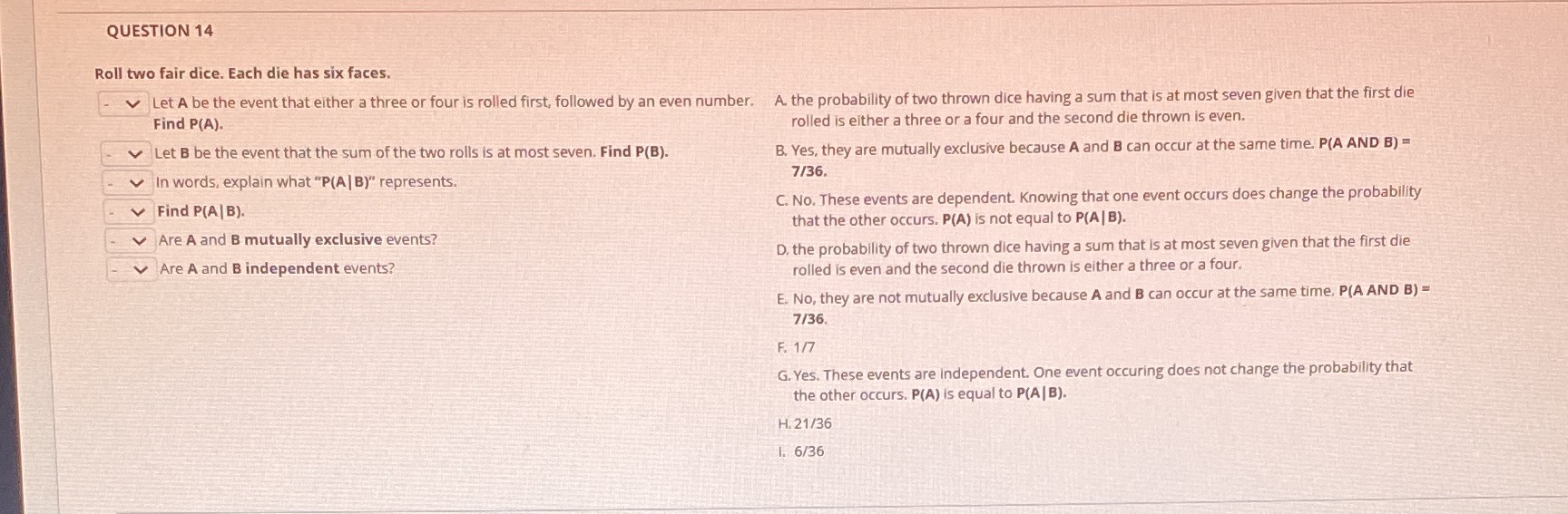
QUESTION 14 Roll two fair dice. Each die has six faces. - v Let A be the event that either a three or four is rolled first, followed by an even number. A the probability of two thrown dice having a sum that is at most seven given that the first die Find P(A). rolled is either a three or a four and the second die thrown is even. Let B be the event that the sum of the two rolls is at most seven. Find P(B). B. Yes, they are mutually exclusive because A and B can occur at the same time. P(A AND B) = In words, explain what "P(A | BY" represents. 7/36. Find P(A | B). C. No. These events are dependent. Knowing that one event occurs does change the probability that the other occurs. P(A) is not equal to P(A | B). Are A and B mutually exclusive events? D. the probability of two thrown dice having a sum that is at most seven given that the first die Are A and B independent events? rolled is even and the second die thrown is either a three or a four. E. No, they are not mutually exclusive because A and B can occur at the same time, P(A AND B) = 7/36. F. 1/7 G. Yes. These events are independent. One event occuring does not change the probability that the other occurs. P(A) is equal to P(A | B). H. 21/36 1. 6/36
Step by Step Solution
There are 3 Steps involved in it

Get step-by-step solutions from verified subject matter experts
 Study Help