







Question: Question 15 (1 point) Jmpton a Compton scattering experiment, an X-ray photon that has a wavelength of 0.130 nm is incident on a free, initially
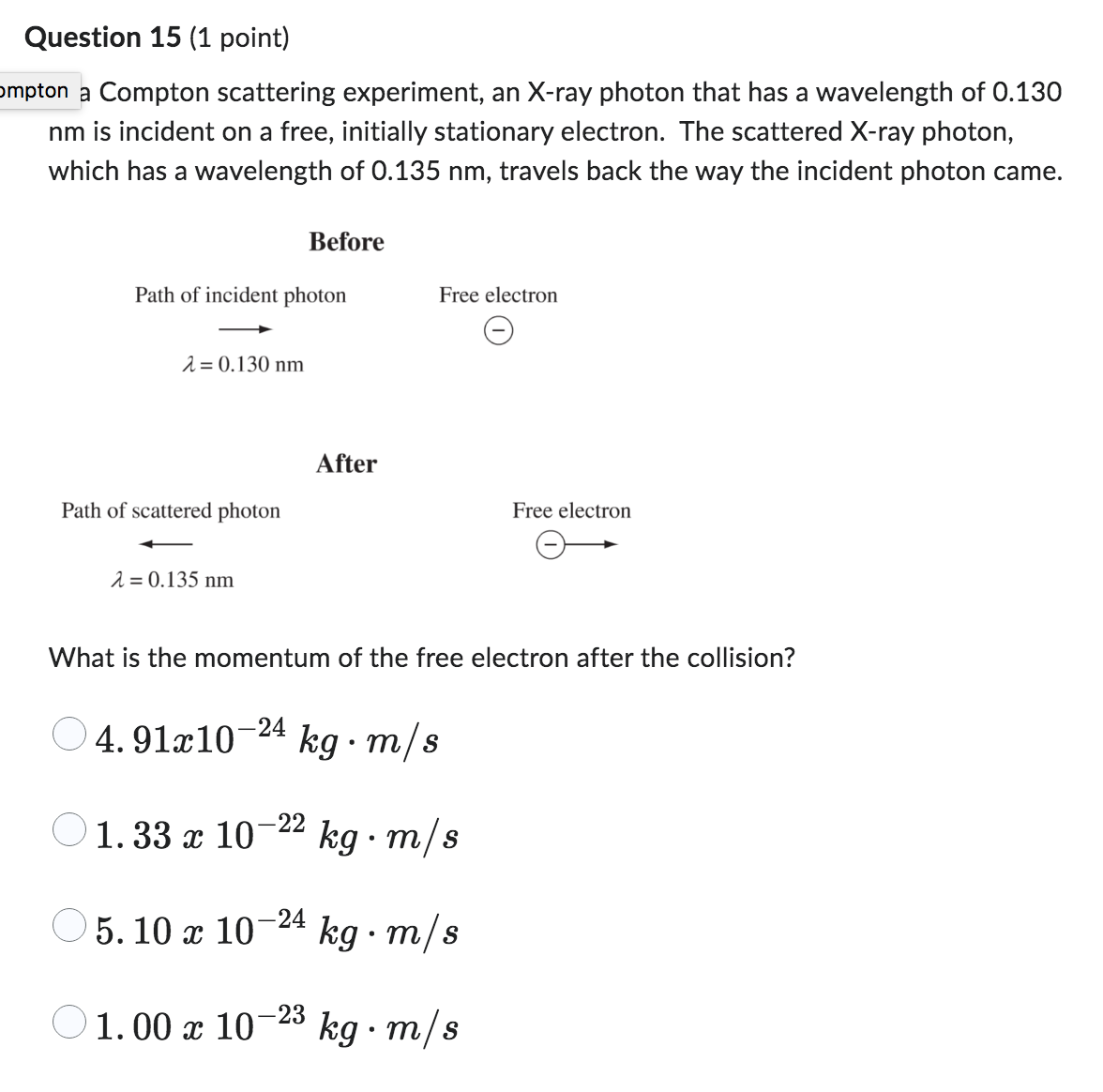
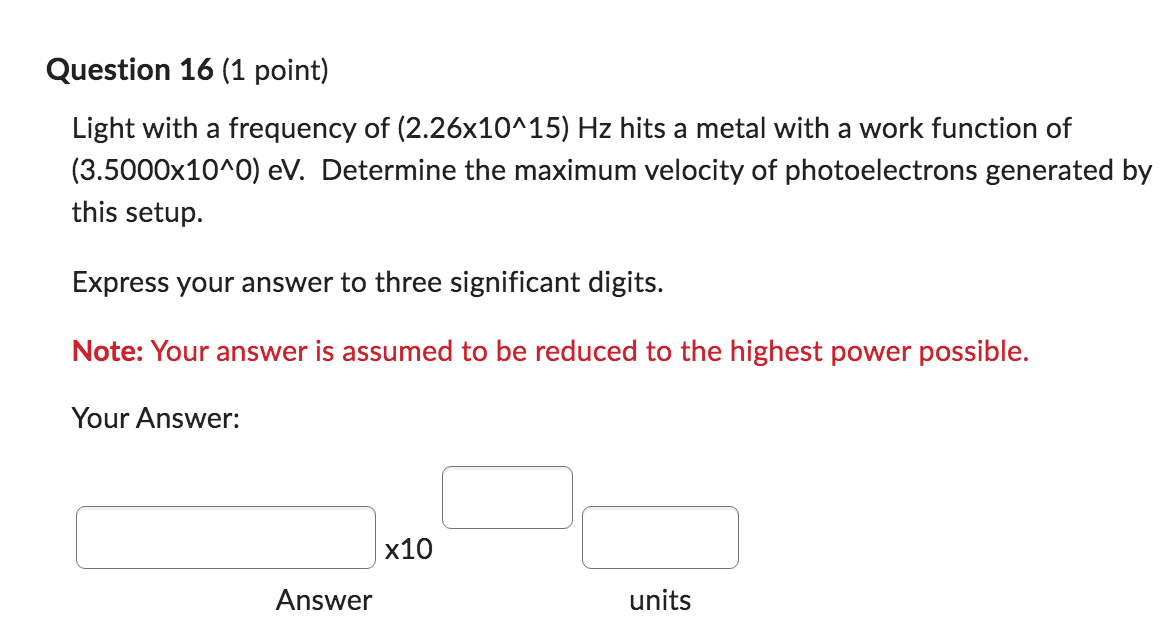
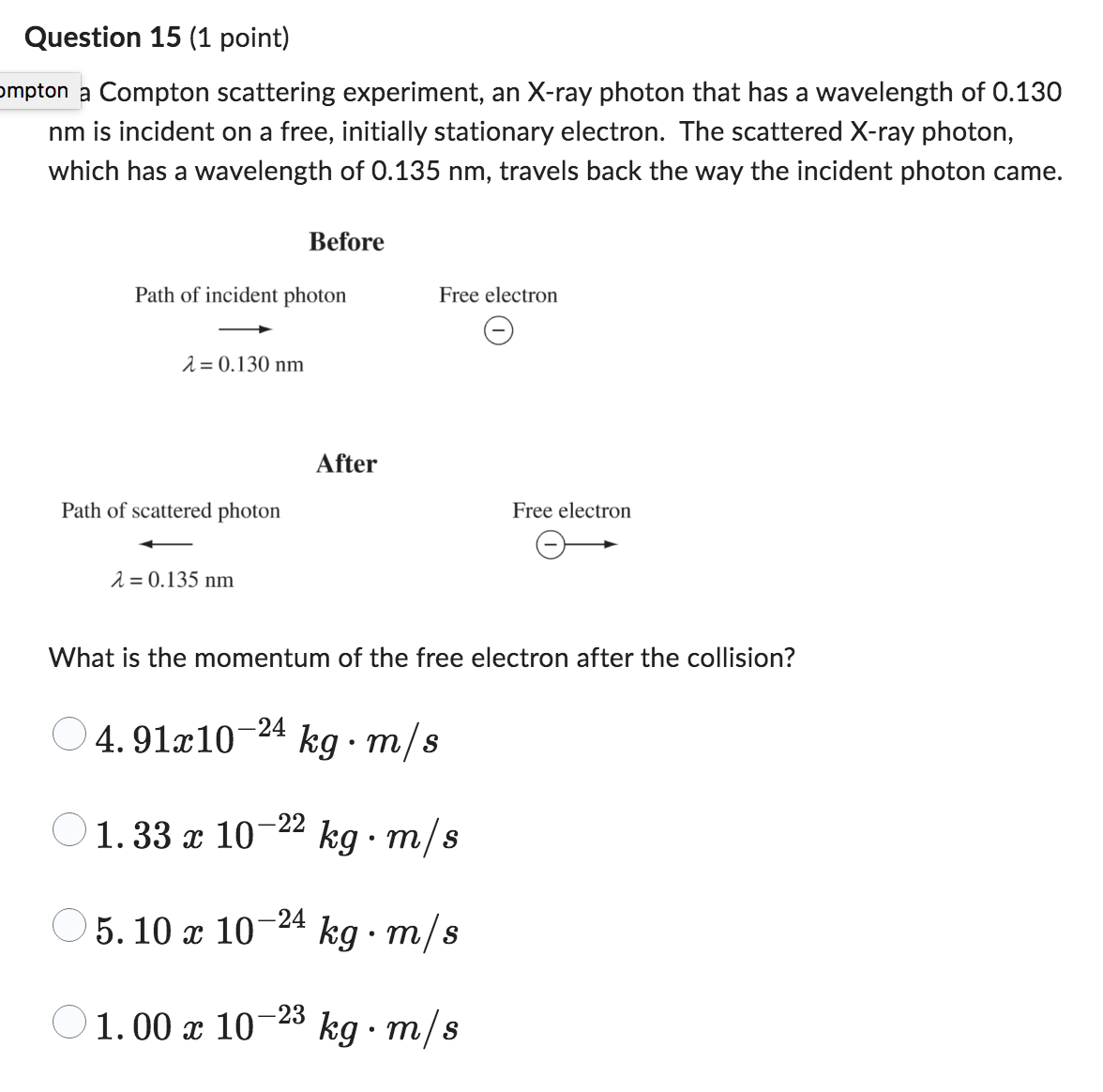
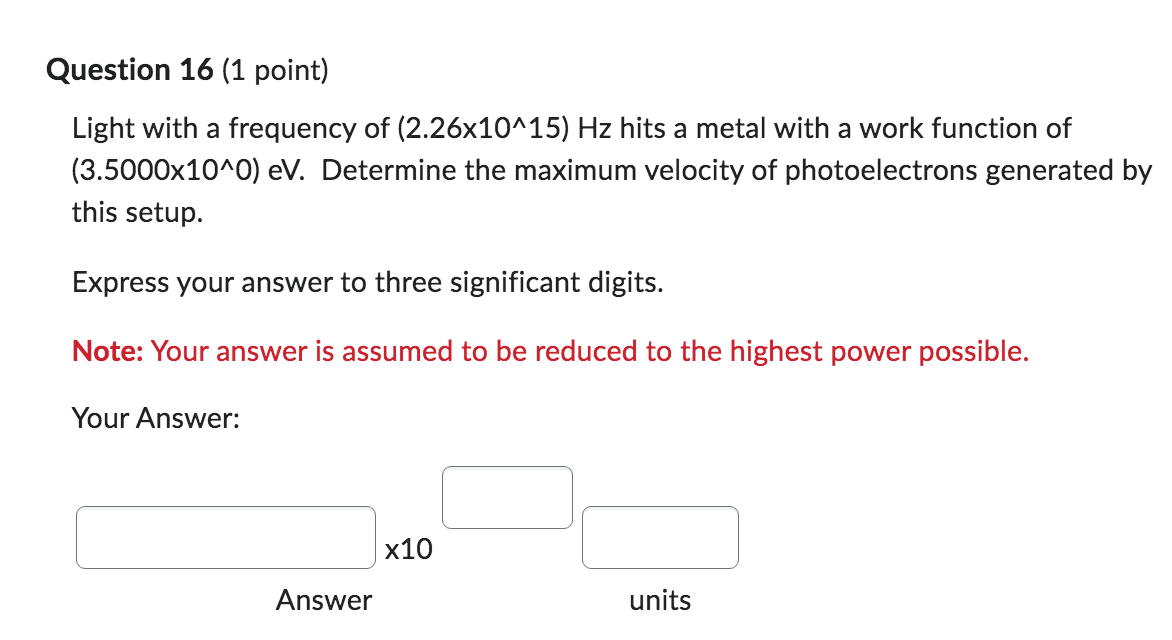
Question 15 (1 point) Jmpton a Compton scattering experiment, an X-ray photon that has a wavelength of 0.130 nm is incident on a free, initially stationary electron. The scattered Xray photon, which has a wavelength of 0.135 nm, travels back the way the incident photon came. Before Path of incident photon Free electron * (9 li = 0.130 nm After Path of scattered photon Free electron xi: 0.135 nm What is the momentum of the free electron after the collision? '37:? 4. 91331024 kg - m/s '35:? 1. 33 so 1022 kg - m/s '37::3'5. 10 :c 1024 kg - m/s it? 1.00 cc 1023 kg - m/s Question 16 (1 point) Light with a frequency of (2.26x10A15) Hz hits a metal with a work function of (3.5000x10t0) eV. Determine the maximum velocity of photoelectrons generated by this setup. Express your answer to three significant digits. Note: Your answer is assumed to be reduced to the highest power possible. Your Answer: Answer units Question 17 (1 point) A green photon has a wavelength of 550 nm. What is the energy of the photon in electronvolts? Round your answer to have 2 decimal places. Your Answer: Answer units Question 18 (1 point) Determine the energy, in eV, of a photon of visible light with a wavelength of 640 nm. Round your answer to two decimal places. Your Answer: Answer Question 19 (1 point) Monochromatic light falls on a photoelectric surface that has a work function of 3.9 eV. If the voltage required to stop the ejected electron is 0.48 V, what is the wavelength of the incident radiation? (Round answer to the nearest whole number and give your answer in nm) Your
Step by Step Solution
There are 3 Steps involved in it

Get step-by-step solutions from verified subject matter experts
 Study Help