







Question: Question 17-20. Now, suppose BMI is modeled using Multiple Linear Regression model with covariates of general health, age (in years), sex (female/male) and smoke/00, a
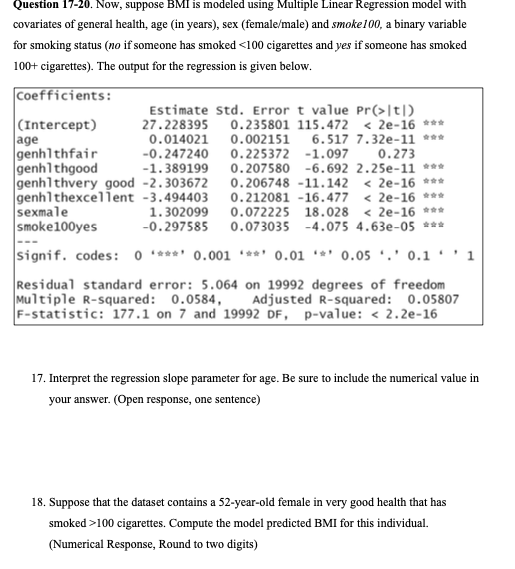
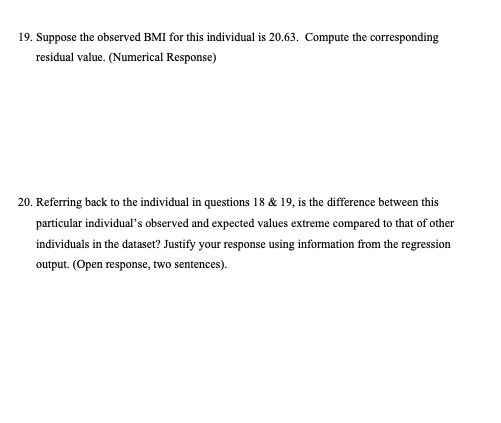
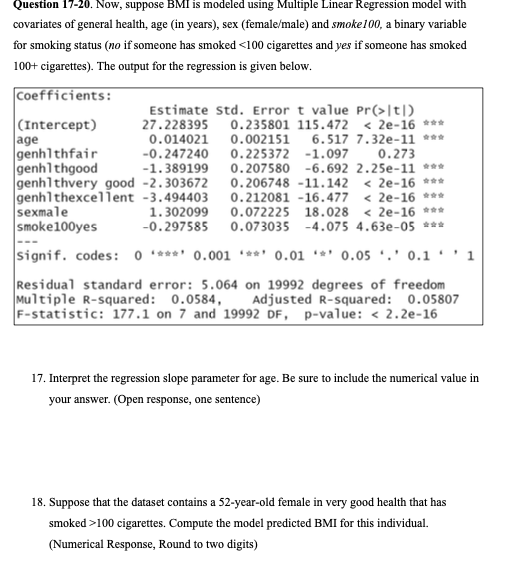
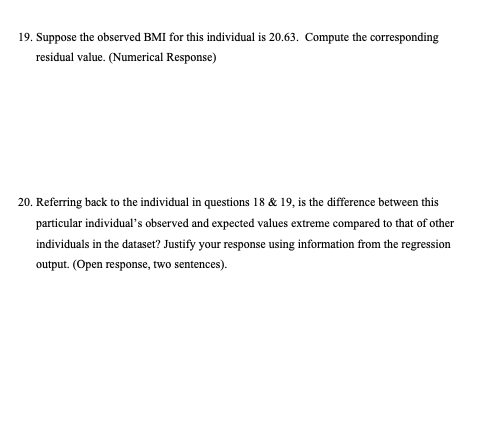
Question 17-20. Now, suppose BMI is modeled using Multiple Linear Regression model with covariates of general health, age (in years), sex (female/male) and smoke/00, a binary variable for smoking status (no if someone has smoked |t/) (Intercept) 27.228395 0. 235801 115.472 100 cigarettes. Compute the model predicted BMI for this individual. (Numerical Response, Round to two digits)19. Suppose the observed BMI for this individual is 20.63. Compute the corresponding residual value. (Numerical Response) 20. Referring back to the individual in questions 18 & 19, is the difference between this particular individual's observed and expected values extreme compared to that of other individuals in the dataset? Justify your response using information from the regression output. (Open response, two sentences)
Step by Step Solution
There are 3 Steps involved in it

Get step-by-step solutions from verified subject matter experts
 Study Help