Question: Question 18 (1 point) ) Listen What is the difference between a statute and a bill? A bill is proposed legislation that becomes a statute
Question 18 (1 point) ) Listen What is theQuestion 18 (1 point) ) Listen What is theQuestion 18 (1 point) ) Listen What is theQuestion 18 (1 point) ) Listen What is theQuestion 18 (1 point) ) Listen What is the

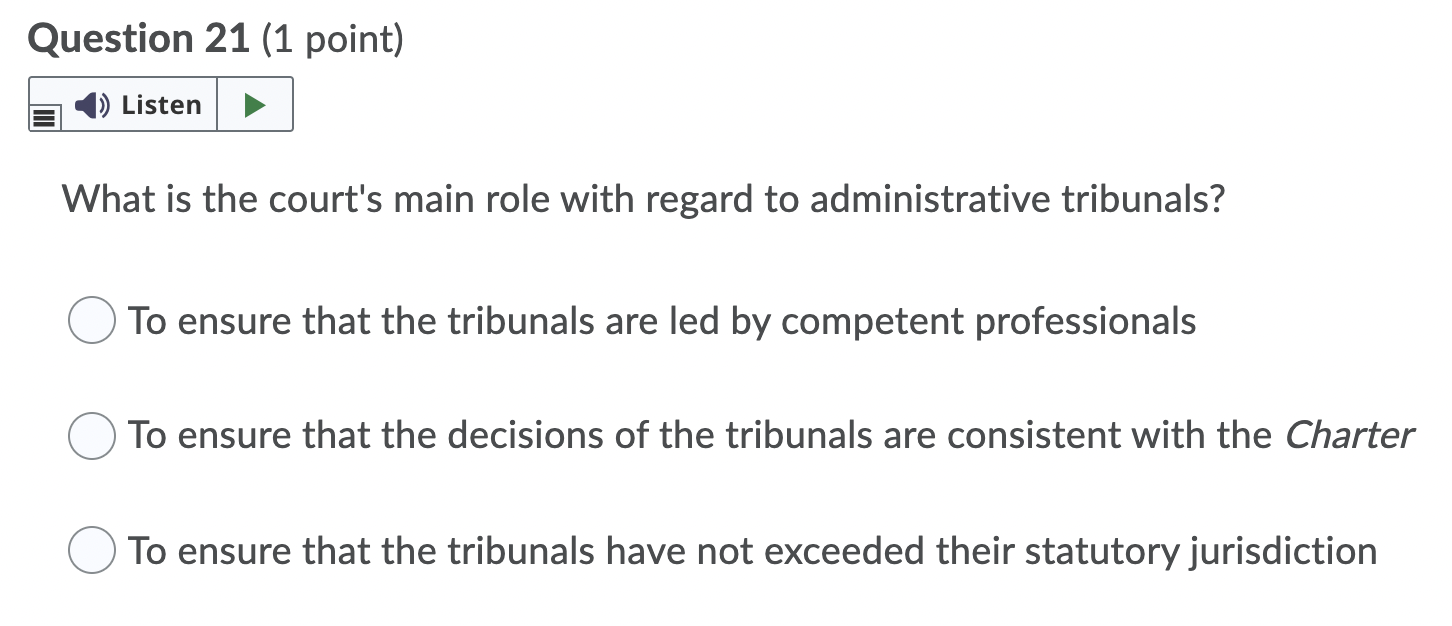
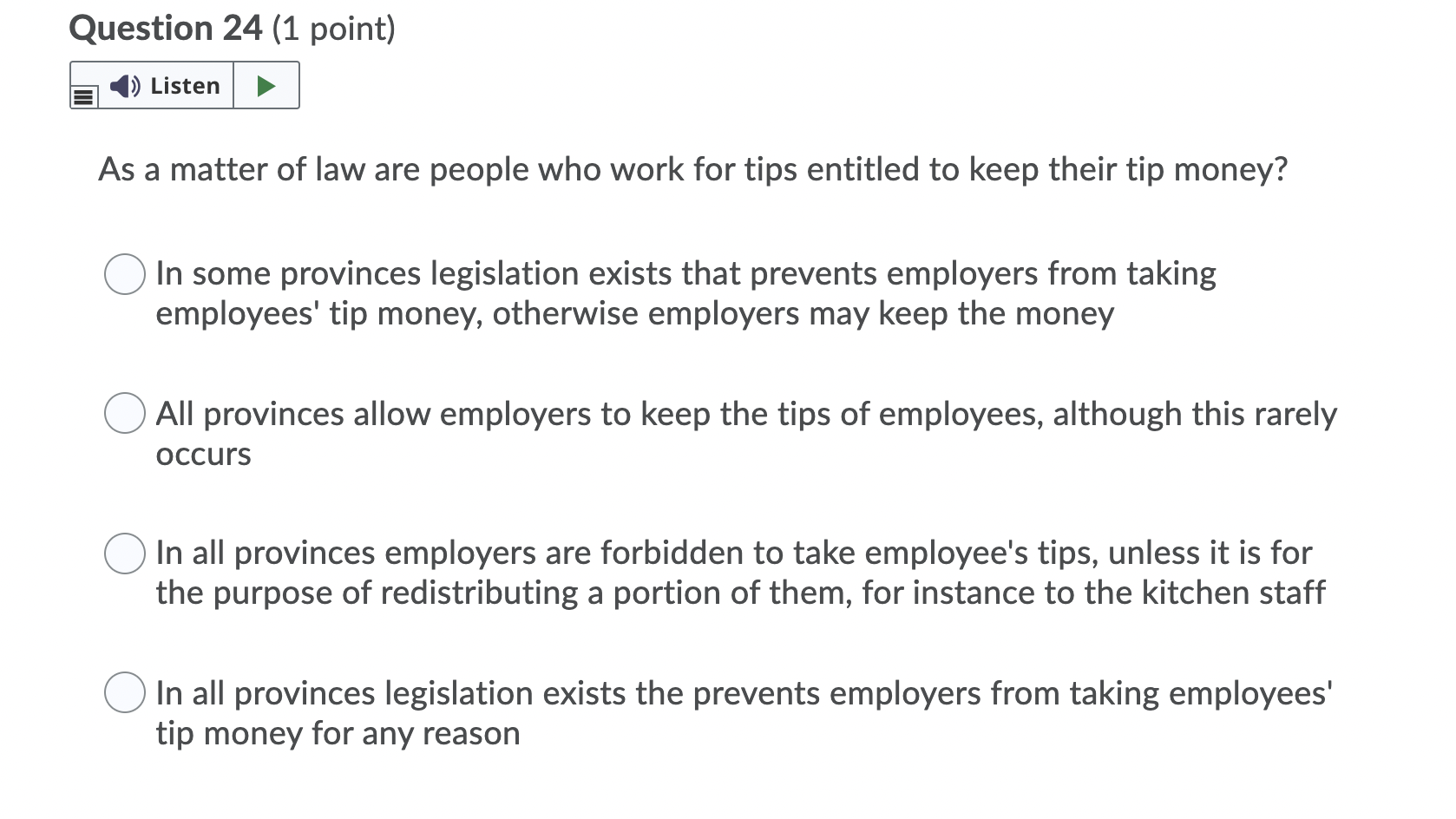
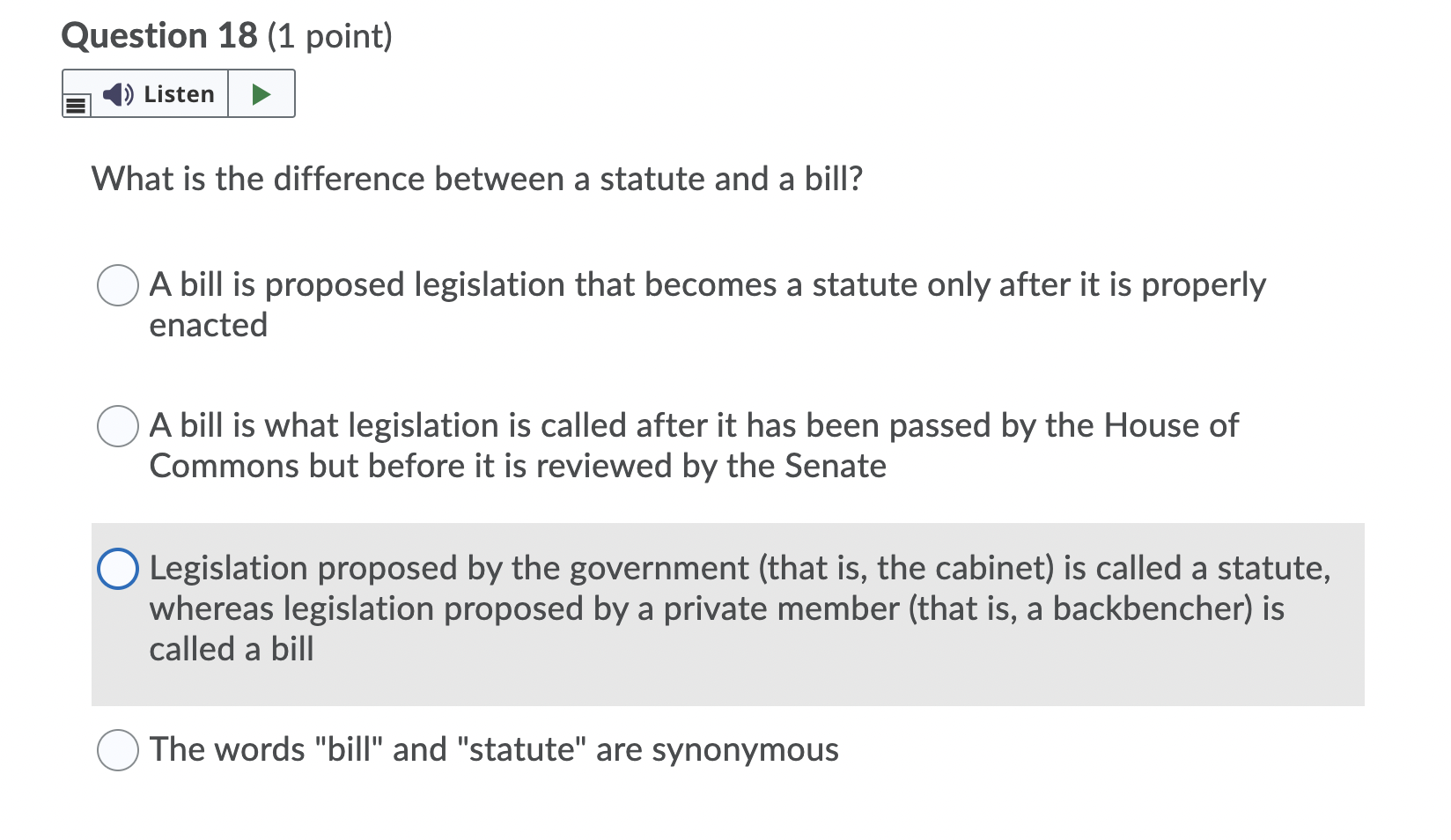
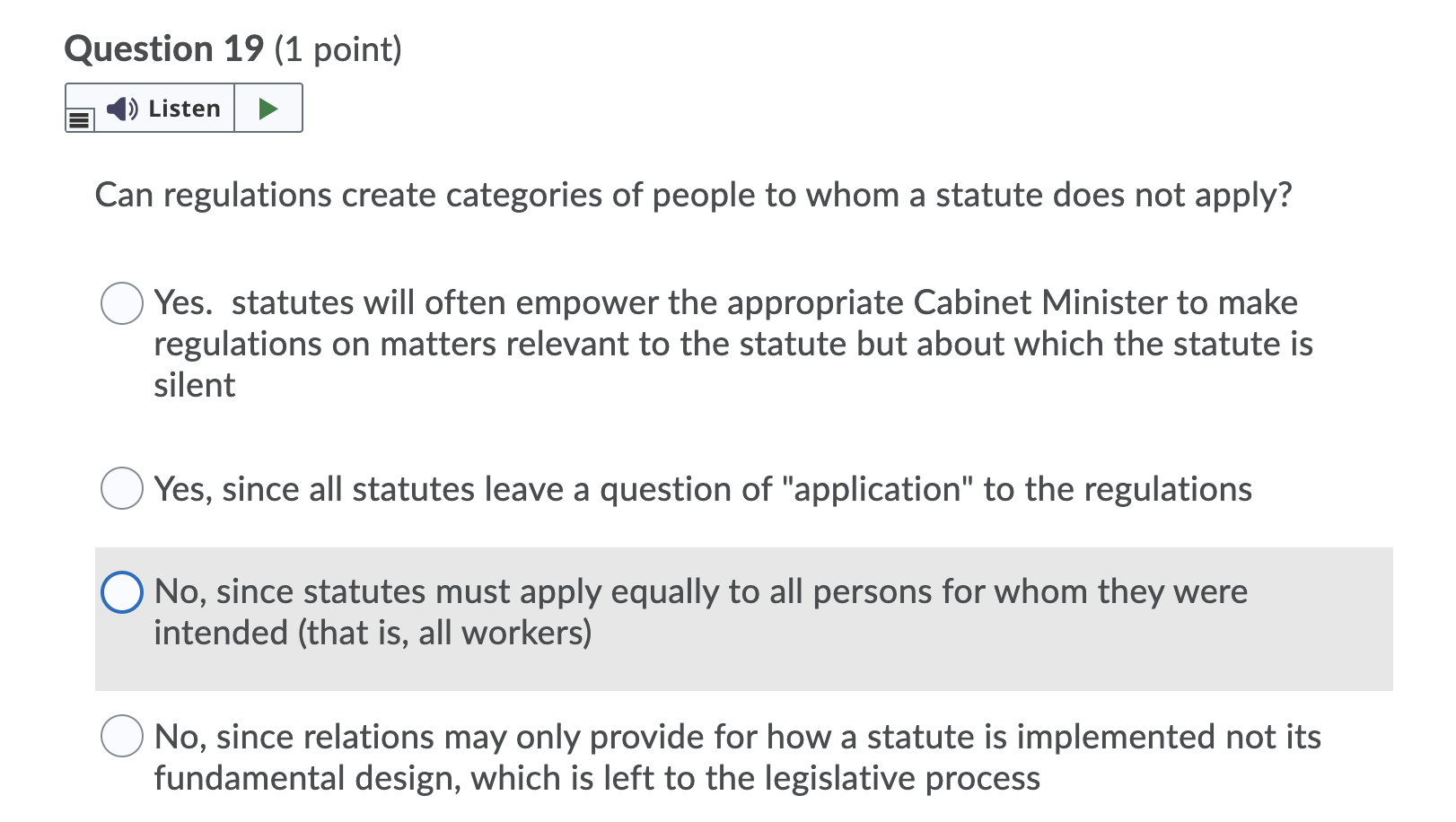
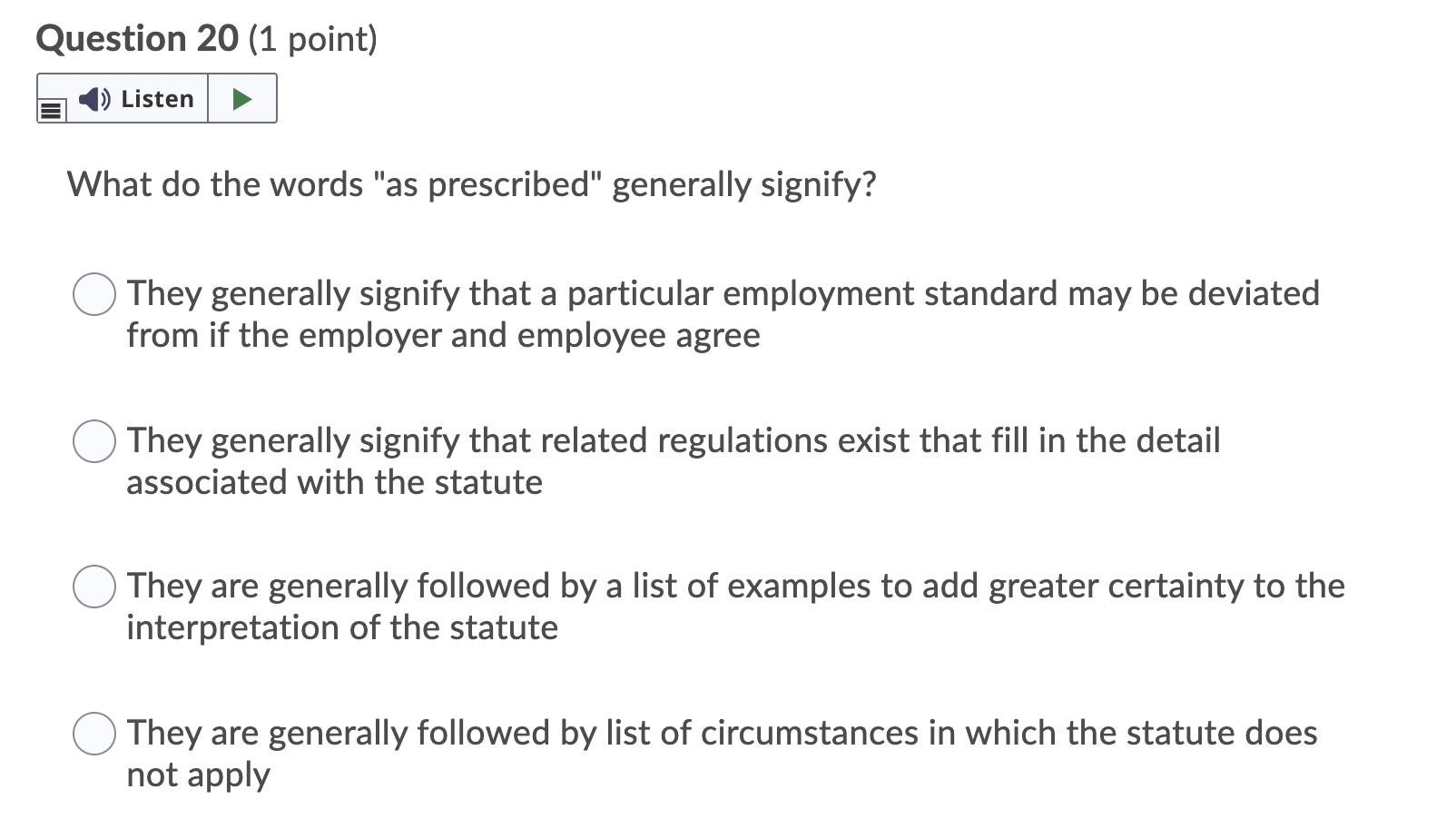
Question 18 (1 point) ) Listen What is the difference between a statute and a bill? A bill is proposed legislation that becomes a statute only after it is properly enacted A bill is what legislation is called after it has been passed by the House of Commons but before it is reviewed by the Senate Legislation proposed by the government (that is, the cabinet) is called a statute, whereas legislation proposed by a private member (that is, a backbencher) is called a bill The words "bill" and "statute" are synonymous Question 19 (1 point) Listen Can regulations create categories of people to whom a statute does not apply? Yes. statutes will often empower the appropriate Cabinet Minister to make regulations on matters relevant to the statute but about which the statute is silent Yes, since all statutes leave a question of "application" to the regulations O No, since statutes must apply equally to all persons for whom they were intended (that is, all workers) No, since relations may only provide for how a statute is implemented not its fundamental design, which is left to the legislative process Question 20 (1 point) Listen What do the words "as prescribed" generally signify? They generally signify that a particular employment standard may be deviated from if the employer and employee agree They generally signify that related regulations exist that fill in the detail associated with the statute They are generally followed by a list of examples to add greater certainty to the interpretation of the statute They are generally followed by list of circumstances in which the statute does not apply Question 21 (1 point) Listen What is the court's main role with regard to administrative tribunals? To ensure that the tribunals are led by competent professionals To ensure that the decisions of the tribunals are consistent with the Charter To ensure that the tribunals have not exceeded their statutory jurisdiction Question 24 (1 point) Listen As a matter of law are people who work for tips entitled to keep their tip money? In some provinces legislation exists that prevents employers from taking employees' tip money, otherwise employers may keep the money All provinces allow employers to keep the tips of employees, although this rarely occurs In all provinces employers are forbidden to take employee's tips, unless it is for the purpose of redistributing a portion of them, for instance to the kitchen staff In all provinces legislation exists the prevents employers from taking employees' tip money for any reason
Step by Step Solution

There are 3 Steps involved in it

1 Expert Approved Answer
Step: 1 Unlock blur-text-image

Question Has Been Solved by an Expert!

Get step-by-step solutions from verified subject matter experts

Step: 2 Unlock
Step: 3 Unlock

Students Have Also Explored These Related General Management Questions!