







Question: Question 2 [19 Marks] The strongest risk factor for breast cancer is age; as a woman gets older, her risk of developing breast cancer increases.
![Question 2 [19 Marks] The strongest risk factor for breast cancer](https://s3.amazonaws.com/si.experts.images/answers/2024/06/66806f9a30df5_21066806f9a0eea0.jpg)
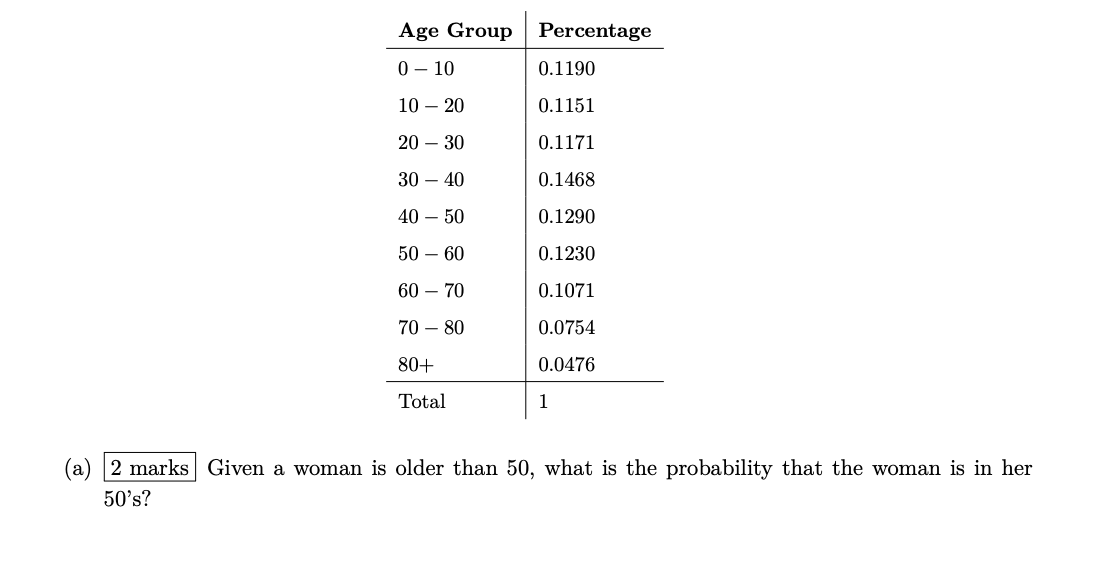
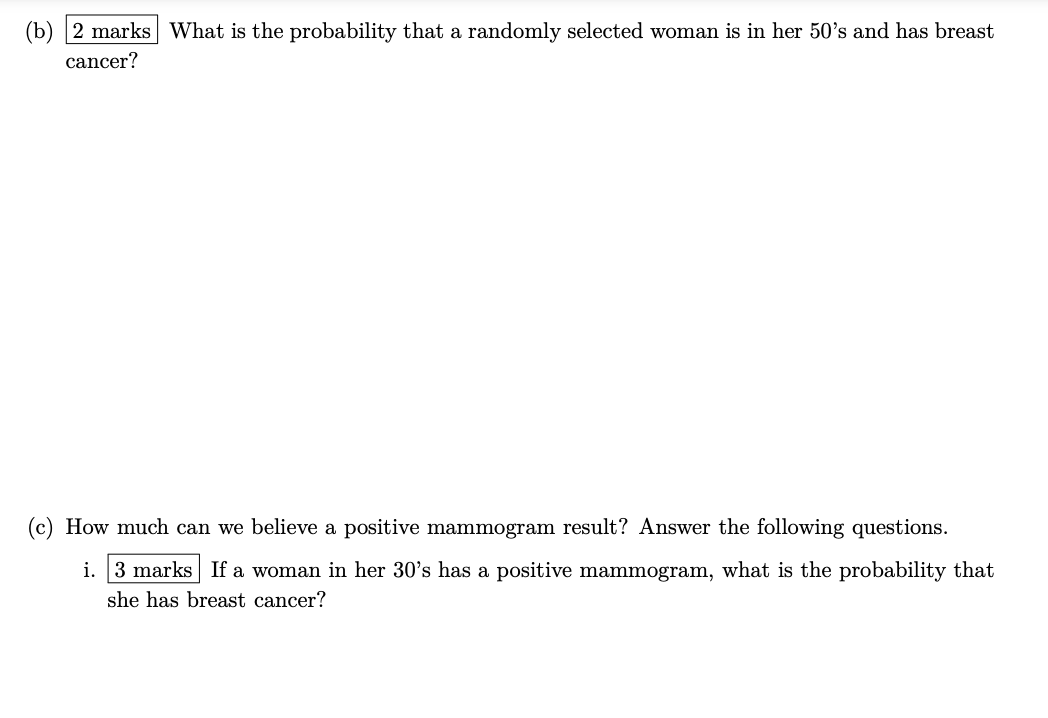
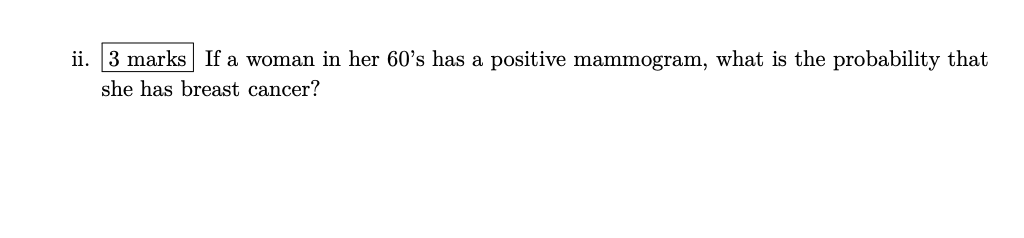
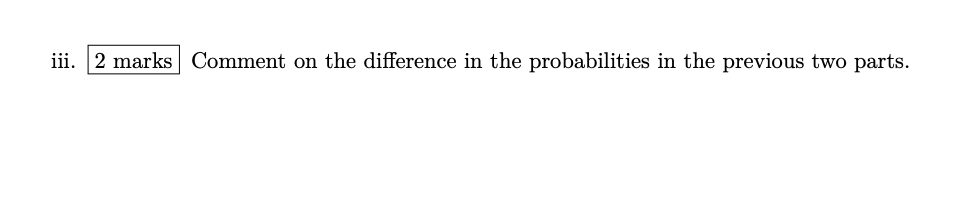
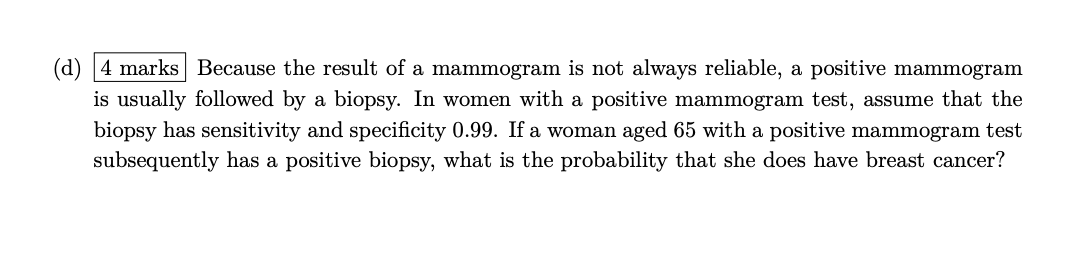
Question 2 [19 Marks] The strongest risk factor for breast cancer is age; as a woman gets older, her risk of developing breast cancer increases. The following table shows the average percentage of Australian women in each age group who develop breast cancer, according to statistics from the National Cancer Institute. For example, approximately 3.56% of women in their 60's get breast cancer. Age Group Prevalence 30 40 0.0044 40 50 0.0147 50 60 0.0298 60 70 0.0356 70 80 0.0382 A mammogram is typically used to identify breast cancer. It is known that the sensitivity of a marmnogram is 85% and the specicity is 95%. Sensitivity (True Positive Rate) refers to the probability of a positive test result, conditioned on having the disease. Specicity (True Negative Rate) refers to the probability of a negative test result, conditioned on not having the disease. The age distribution of female Australians is also given below, according to statistics from the Australian Bureau of Statistics. Age Group Percentage 0 10 0.1190 10 20 0.1151 20 30 0.1171 30 40 0.1468 40 50 0.1290 50 60 0.1230 60 70 0.1071 70 80 0.0754 80+ 0.0476 Total 1 (a) Given a woman is older than 50, what is the probability that the woman is in her 50's? (b) What is the probability that a randomly selected woman is in her 50's and has breast cancer? (c) How much can we believe a positive mammogram result? Answer the following questions. i. If a woman in her 30's has a positive mammogram, what is the probability that she has breast cancer? ii. If a woman in her 60's has a positive mammogram, what is the probability that she has breast cancer? iii. Comment on the difference in the probabilities in the previous two parts. (d) 4 marks Because the result of a mammogram is not always reliable, a positive mammogram is usually followed by a biopsy. In women with a positive mammogram test, assume that the biopsy has sensitivity and specificity 0.99. If a woman aged 65 with a positive mammogram test subsequently has a positive biopsy, what is the probability that she does have breast cancer
Step by Step Solution
There are 3 Steps involved in it

Get step-by-step solutions from verified subject matter experts
 Study Help