



Question: Question 2 A consumer buys two goods, x and y. We do not observe the consumer's preference but we know it satisfies the three assumptions,
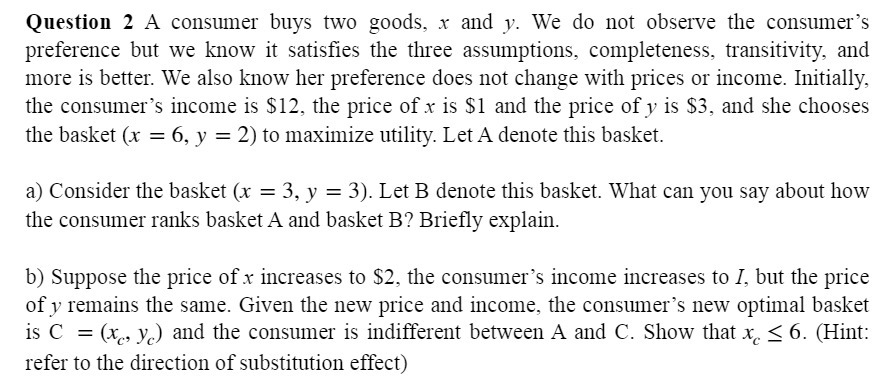
Question 2 A consumer buys two goods, x and y. We do not observe the consumer's preference but we know it satisfies the three assumptions, completeness, transitivity, and more is better. We also know her preference does not change with prices or income. Initially. the consumer's income is $12, the price of x is $1 and the price of y is $3, and she chooses the basket (x = 6, y = 2) to maximize utility. Let A denote this basket. a) Consider the basket (x = 3, y = 3). Let B denote this basket. What can you say about how the consumer ranks basket A and basket B? Briefly explain. b) Suppose the price of x increases to $2, the consumer's income increases to I, but the price of y remains the same. Given the new price and income, the consumer's new optimal basket is C = (x , y ) and the consumer is indifferent between A and C. Show that x _ 6. (Hint: refer to the direction of substitution effect)
Step by Step Solution
There are 3 Steps involved in it

Get step-by-step solutions from verified subject matter experts