







Question: Question 2 of 20 - / 5 ' Current Attempt in Progress The National Aeronautics and Space Administration (NASA) studies the physiological effects of large
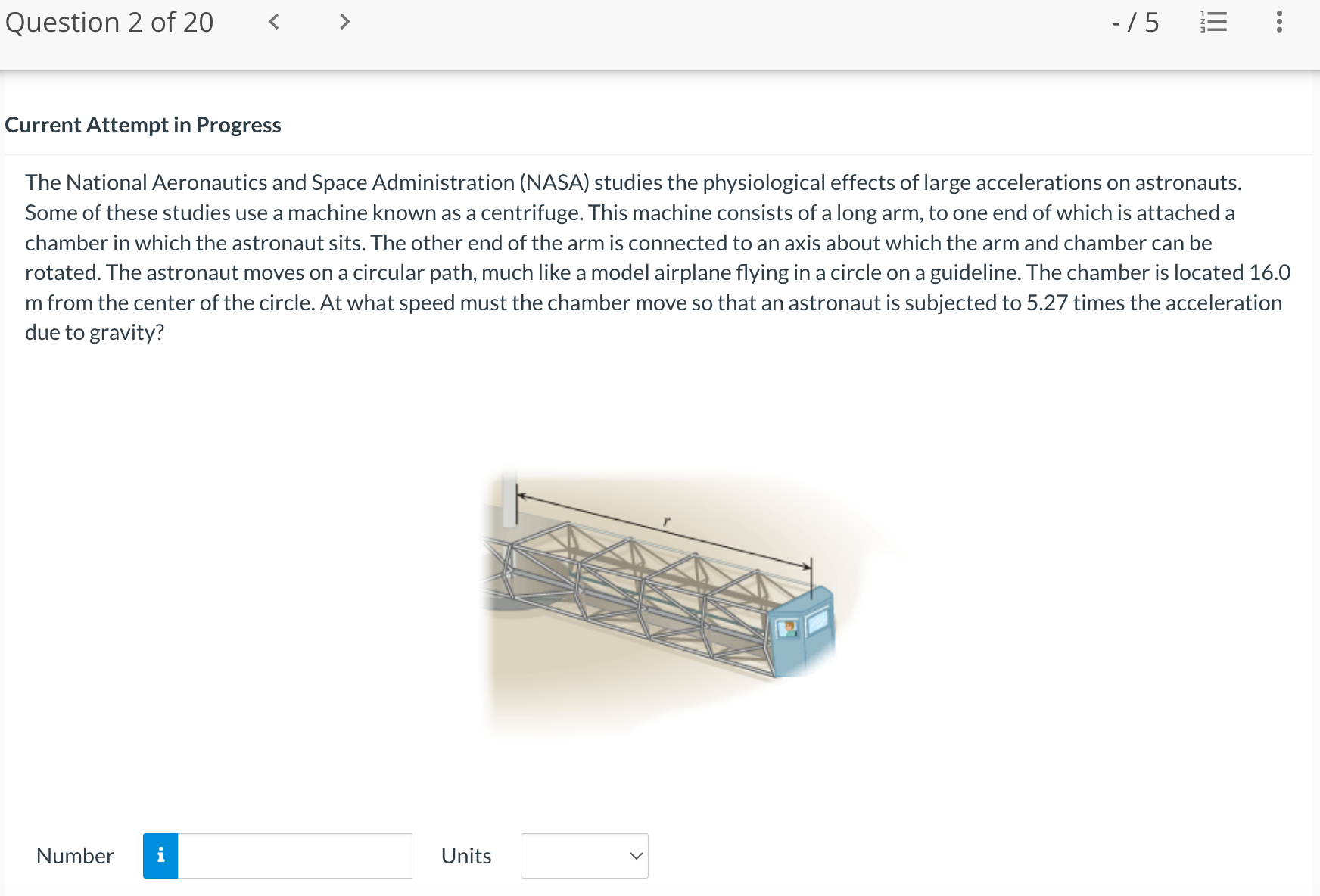
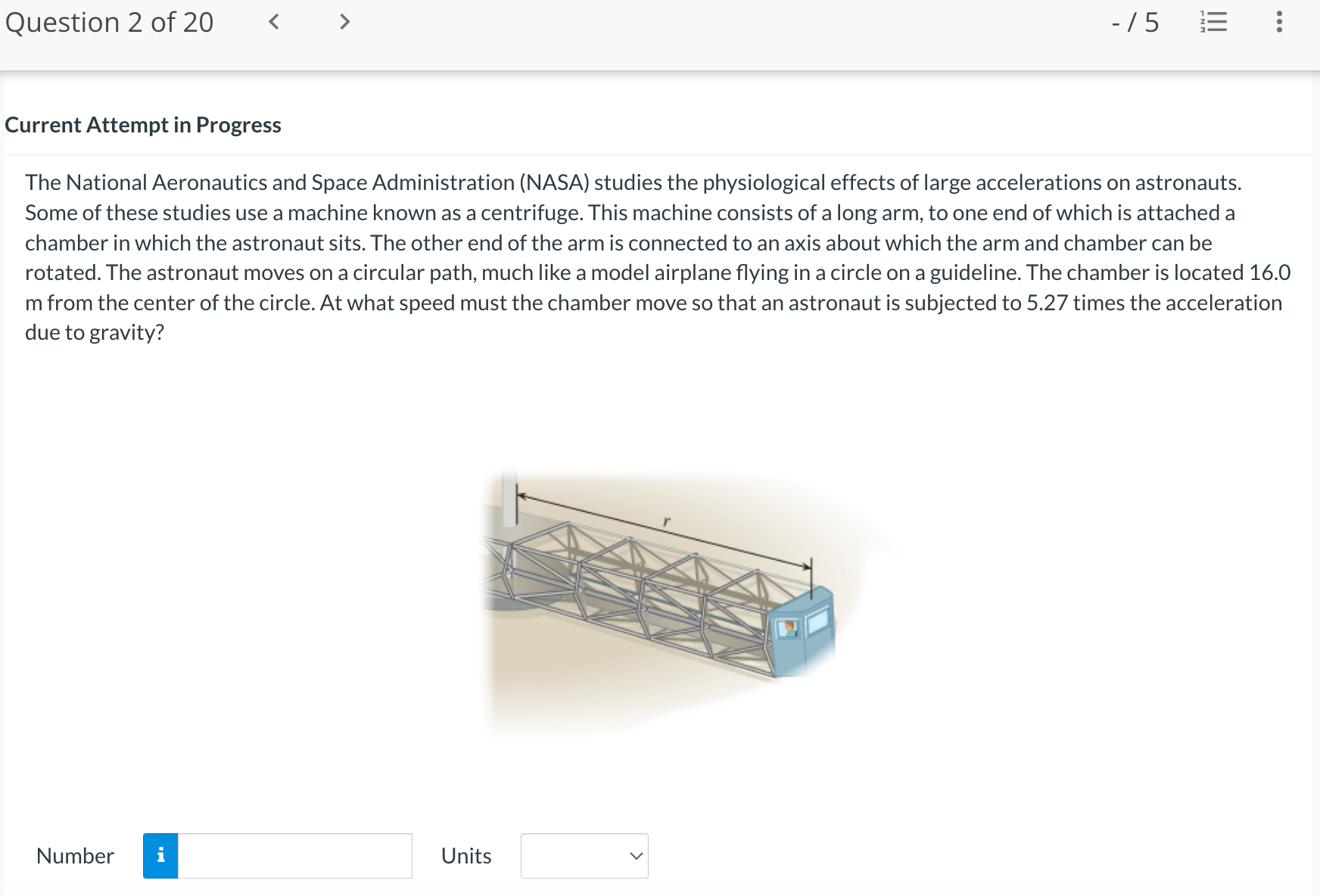
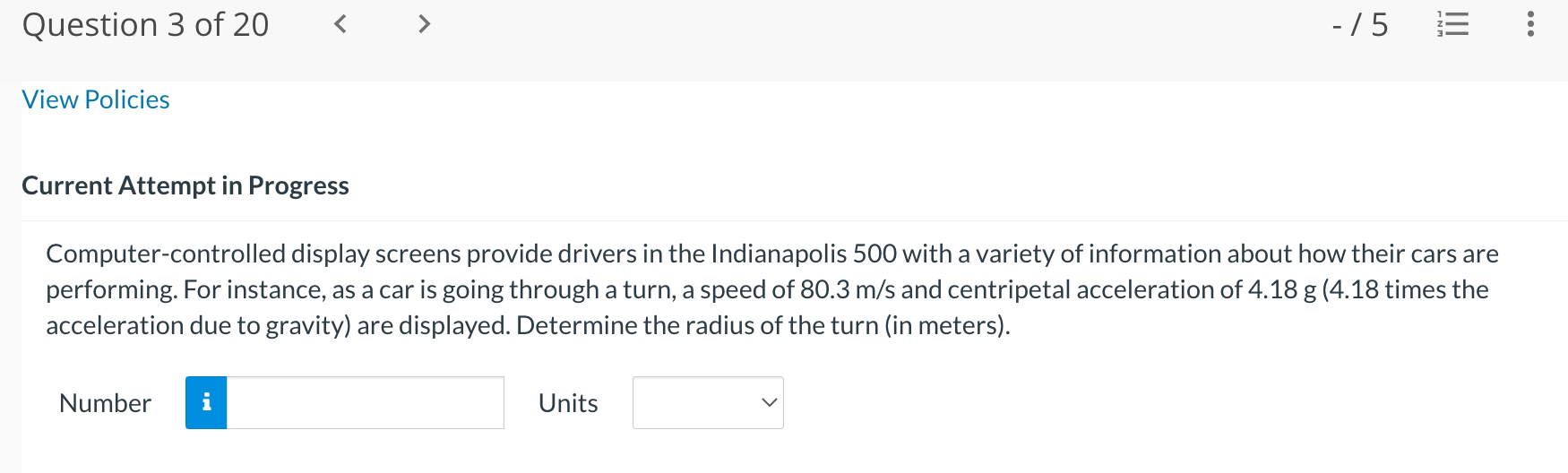
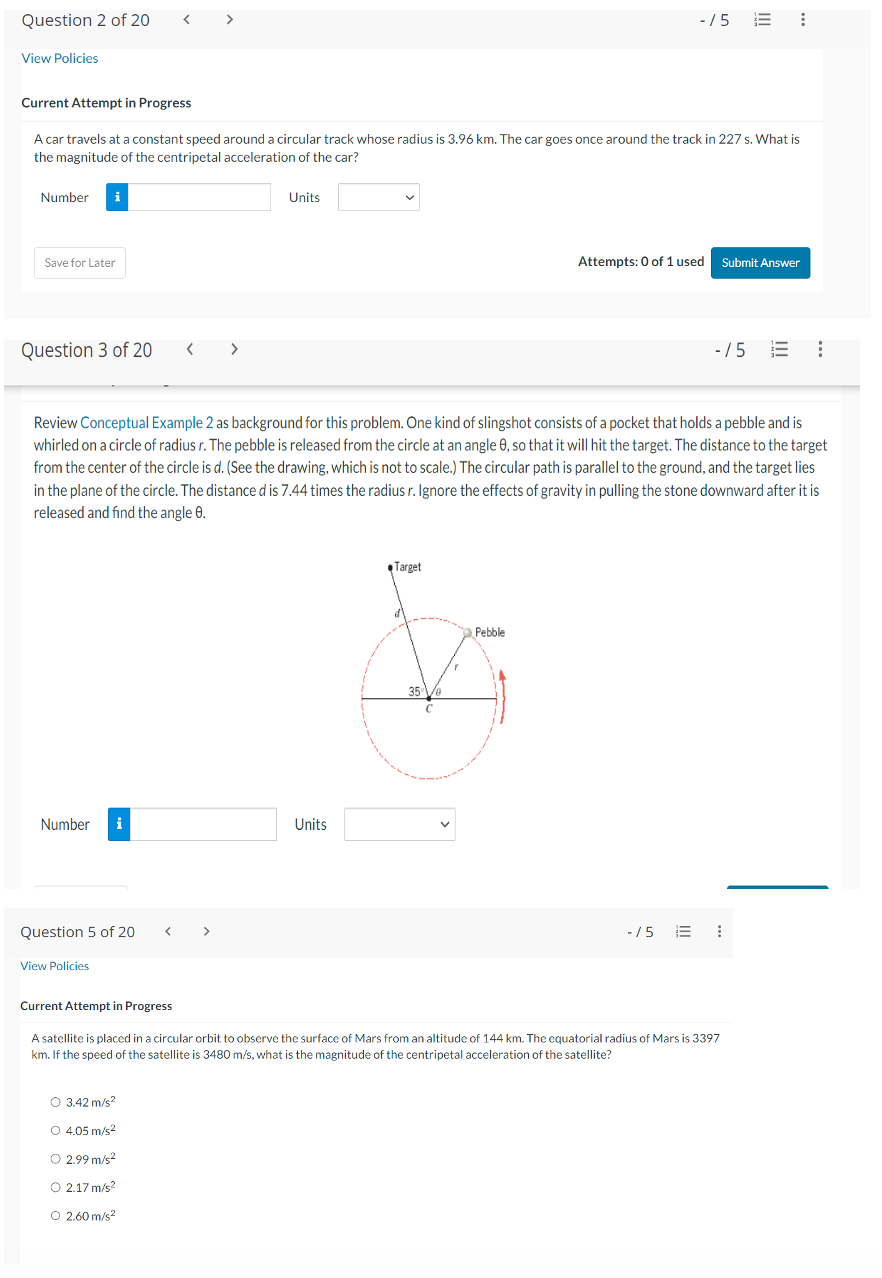
Question 2 of 20 - / 5 ' Current Attempt in Progress The National Aeronautics and Space Administration (NASA) studies the physiological effects of large accelerations on astronauts. Some of these studies use a machine known as a centrifuge. This machine consists of a long arm, to one end of which is attached a chamber in which the astronaut sits. The other end of the arm is connected to an axis about which the arm and chamber can be rotated. The astronaut moves on a circular path, much like a model airplane ying in a circle on a guideline. The chamber is located 16.0 m from the center of the circle. At what speed must the chamber move so that an astronaut is subjected to 5.27 times the acceleration due to gravity? Number a Units v Question 3 of 20 - / 5 E View Policies Current Attempt in Progress Computer-controlled display screens provide drivers in the Indianapolis 500 with a variety of information about how their cars are performing. For instance, as a car is going through a turn, a speed of 80.3 m/s and centripetal acceleration of 4.18 g (4.18 times the acceleration due to gravity) are displayed. Determine the radius of the turn (in meters). Number l Units v Question 2 of 20
Step by Step Solution
There are 3 Steps involved in it

Get step-by-step solutions from verified subject matter experts
 Study Help