







Question: Question 2. PART B (10 points) (1) According to purchasing power parity, high inflation countries tend to experience nominal appreciations. True or False? Explain in
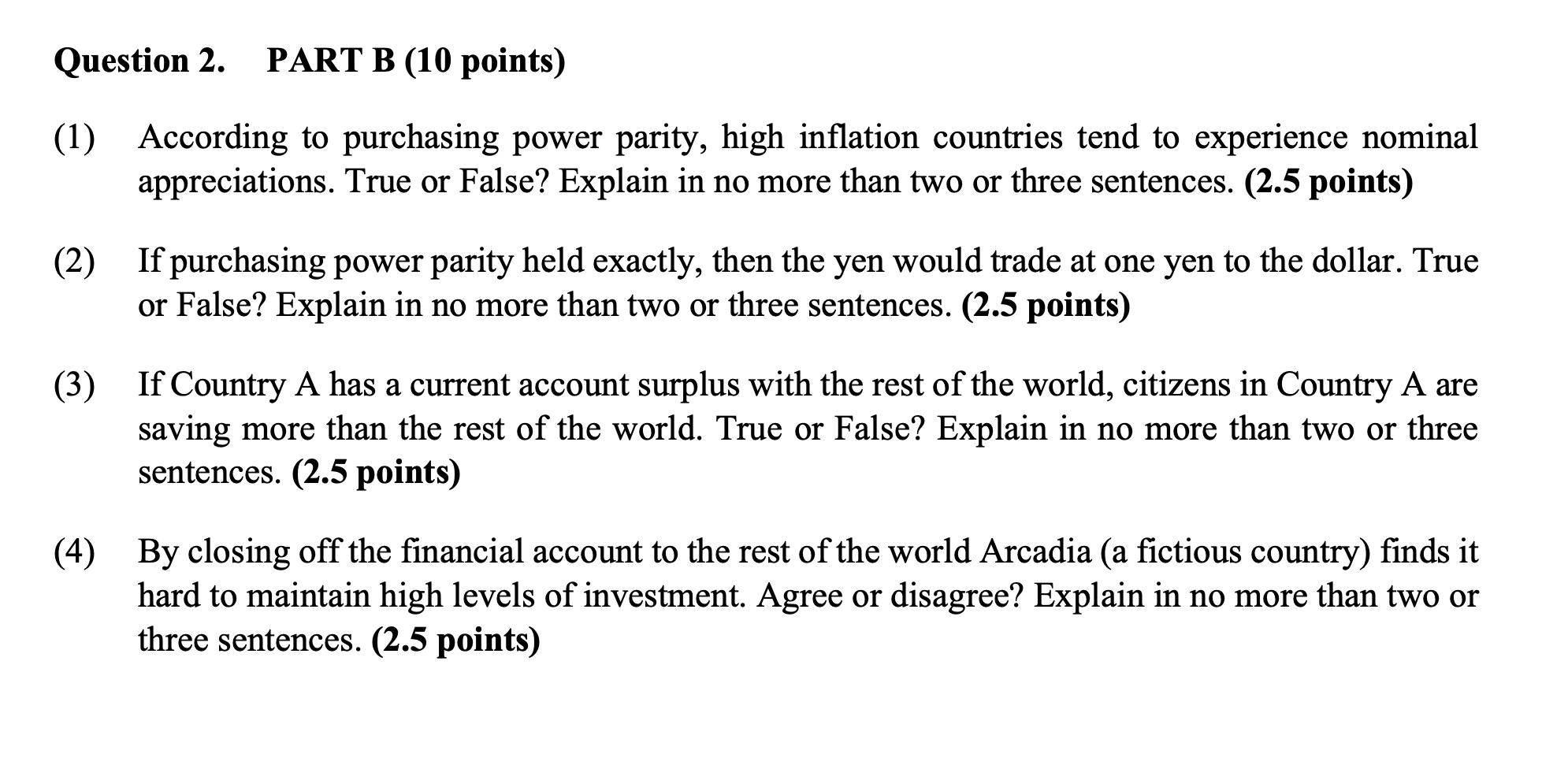
Question 2. PART B (10 points) (1) According to purchasing power parity, high inflation countries tend to experience nominal appreciations. True or False? Explain in no more than two or three sentences. (2.5 points) (2) If purchasing power parity held exactly, then the yen would trade at one yen to the dollar. True or False? Explain in no more than two or three sentences. (2.5 points) (3) If Country A has a current account surplus with the rest of the world, citizens in Country A are saving more than the rest of the world. True or False? Explain in no more than two or three sentences. (2.5 points) (4) By closing off the financial account to the rest of the world Arcadia (a fictious country) finds it hard to maintain high levels of investment. Agree or disagree? Explain in no more than two or three sentences. (2.5 points) Question 2. PART B (10 points) (1) According to purchasing power parity, high inflation countries tend to experience nominal appreciations. True or False? Explain in no more than two or three sentences. (2.5 points) (2) If purchasing power parity held exactly, then the yen would trade at one yen to the dollar. True or False? Explain in no more than two or three sentences. (2.5 points) (3) If Country A has a current account surplus with the rest of the world, citizens in Country A are saving more than the rest of the world. True or False? Explain in no more than two or three sentences. (2.5 points) (4) By closing off the financial account to the rest of the world Arcadia (a fictious country) finds it hard to maintain high levels of investment. Agree or disagree? Explain in no more than two or three sentences. (2.5 points)
Step by Step Solution
There are 3 Steps involved in it

Get step-by-step solutions from verified subject matter experts
 Study Help