Question: Question 2. Question 3. Talling . T u . estion Completion Status: APPLICATIONS MARKETING SCENARIO 1a. Population: Community A - 25,000; Community B (10,000); Community
Question 2.
Question 3.
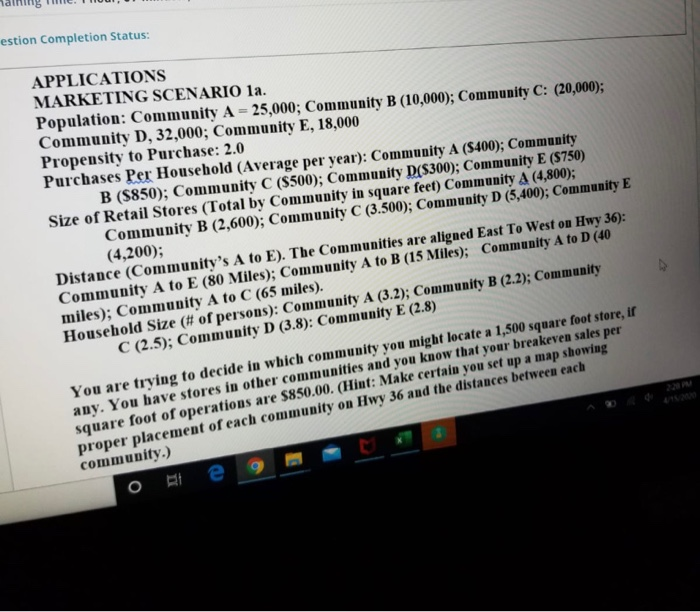
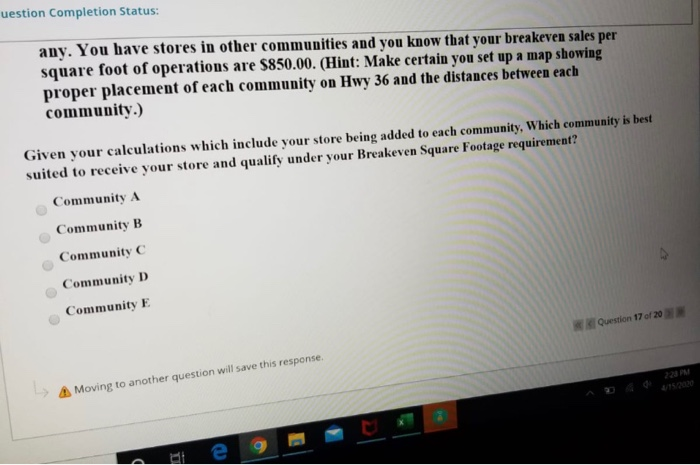
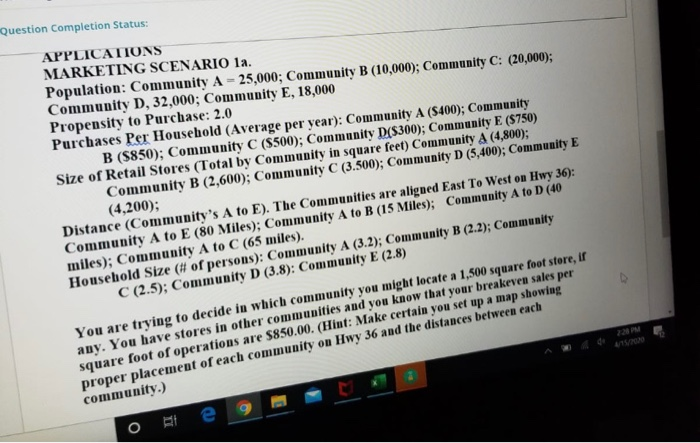
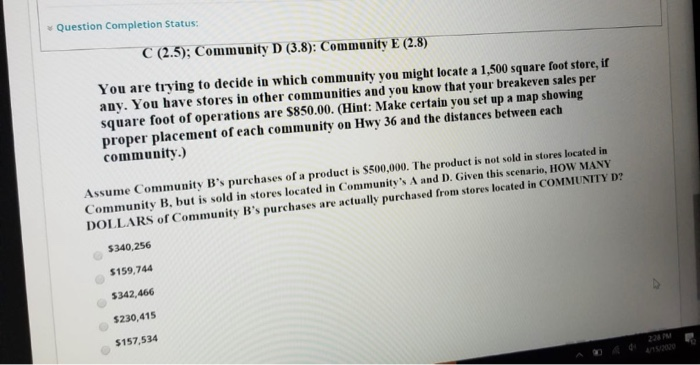
Talling . T u . estion Completion Status: APPLICATIONS MARKETING SCENARIO 1a. Population: Community A - 25,000; Community B (10,000); Community C: (20,000); Community D, 32,000; Community E, 18,000 Propensity to Purchase: 2.0 Purchases Per Household (Average per year): Community A (S400); Community B ($850); Community C($500); Community D($300); Community E (S750) Size of Retail Stores (Total by Community in square feet) Community A (4,800); Community B (2,600); Community C (3.500); Community D (5,400); Community E (4,200); Distance (Community's A to E). The Communities are aligned East To West on Hwy 36): Community A to E (80 Miles); Community A to B (15 Miles); Community A to D (40 miles); Community A to C (65 miles). Household Size (# of persons): Community A (3.2); Community B (2.2); Community C (2.5); Community D (3.8): Community E (2.8) You are trying to decide in which community you might locate a 1,500 square foot store, ir any. You have stores in other communities and you know that your breakeven sales per square foot of operations are $850.00. (Hint: Make certain you set up a map showing proper placement of each community on Hwy 36 and the distances between each community.) uestion Completion Status: any. You have stores in other communities and you know that your breakeven sales per square foot of operations are $850.00. (Hint: Make certain you set up a map showing proper placement of each community on Hwy 36 and the distances between each community.) Given your calculations which include your store being added to each community, which community is best suited to receive your store and qualify under your Breakeven Square Footage requirement? Community A Community B Community C Community D Community E Question 17 of 20 Moving to another question will save this response Question Completion Status: APPLICATIONS MARKETING SCENARIO 1a. Population: Community A -25,000; Community B (10,000); Community C: (20,000); Community D, 32,000; Community E, 18,000 Propensity to Purchase: 2.0 Purchases Per Household (Average per year): Community A (S400); Community B ($850); Community C (5500); Community D($300); Community E ($750) Size of Retail Stores (Total by Community in square feet) Community A (4,800); Community B (2,600); Community C (3.500); Community D (5,400); Community E (4,200); Distance (Community's A to E). The Communities are aligned East To West on Hwy 36): Community A to E (80 Miles); Community A to B (15 Miles); Community A to D (40 miles); Community A to C (65 miles). Household Size (# of persons): Community A (3.2); Community B (2.2); Community C (2.5); Community D (3.8): Community E (2.8) You are trying to decide in which community you might locate a 1,500 square foot store, ir any. You have stores in other communities and you know that your breakeven sales per square foot of operations are $850.00. (Hint: Make certain you set up a map showing proper placement of each community on Hwy 36 and the distances between each community.) Question Completion Status: C (2.5); Community D (3.8): Community E (2.8) You are trying to decide in which community you might locale a 1,500 square foot store, if any. You have stores in other communities and you know that your breakeven sales per square foot of operations are $850.00. (Hint: Make certain you set up a map showing proper placement of each community on Hwy 36 and the distances between each community.) Assume Community B's purchases of a product is $500,000. The product is not sold in stores located in Community B. but is sold in stores located in Community's A and D. Given this scenario, HOW MANY DOLLARS of Community B's purchases are actually purchased from stores located in COMMUNITY D: $340,256 5159,744 5342,466 5230,415 $157,534 Talling . T u . estion Completion Status: APPLICATIONS MARKETING SCENARIO 1a. Population: Community A - 25,000; Community B (10,000); Community C: (20,000); Community D, 32,000; Community E, 18,000 Propensity to Purchase: 2.0 Purchases Per Household (Average per year): Community A (S400); Community B ($850); Community C($500); Community D($300); Community E (S750) Size of Retail Stores (Total by Community in square feet) Community A (4,800); Community B (2,600); Community C (3.500); Community D (5,400); Community E (4,200); Distance (Community's A to E). The Communities are aligned East To West on Hwy 36): Community A to E (80 Miles); Community A to B (15 Miles); Community A to D (40 miles); Community A to C (65 miles). Household Size (# of persons): Community A (3.2); Community B (2.2); Community C (2.5); Community D (3.8): Community E (2.8) You are trying to decide in which community you might locate a 1,500 square foot store, ir any. You have stores in other communities and you know that your breakeven sales per square foot of operations are $850.00. (Hint: Make certain you set up a map showing proper placement of each community on Hwy 36 and the distances between each community.) uestion Completion Status: any. You have stores in other communities and you know that your breakeven sales per square foot of operations are $850.00. (Hint: Make certain you set up a map showing proper placement of each community on Hwy 36 and the distances between each community.) Given your calculations which include your store being added to each community, which community is best suited to receive your store and qualify under your Breakeven Square Footage requirement? Community A Community B Community C Community D Community E Question 17 of 20 Moving to another question will save this response Question Completion Status: APPLICATIONS MARKETING SCENARIO 1a. Population: Community A -25,000; Community B (10,000); Community C: (20,000); Community D, 32,000; Community E, 18,000 Propensity to Purchase: 2.0 Purchases Per Household (Average per year): Community A (S400); Community B ($850); Community C (5500); Community D($300); Community E ($750) Size of Retail Stores (Total by Community in square feet) Community A (4,800); Community B (2,600); Community C (3.500); Community D (5,400); Community E (4,200); Distance (Community's A to E). The Communities are aligned East To West on Hwy 36): Community A to E (80 Miles); Community A to B (15 Miles); Community A to D (40 miles); Community A to C (65 miles). Household Size (# of persons): Community A (3.2); Community B (2.2); Community C (2.5); Community D (3.8): Community E (2.8) You are trying to decide in which community you might locate a 1,500 square foot store, ir any. You have stores in other communities and you know that your breakeven sales per square foot of operations are $850.00. (Hint: Make certain you set up a map showing proper placement of each community on Hwy 36 and the distances between each community.) Question Completion Status: C (2.5); Community D (3.8): Community E (2.8) You are trying to decide in which community you might locale a 1,500 square foot store, if any. You have stores in other communities and you know that your breakeven sales per square foot of operations are $850.00. (Hint: Make certain you set up a map showing proper placement of each community on Hwy 36 and the distances between each community.) Assume Community B's purchases of a product is $500,000. The product is not sold in stores located in Community B. but is sold in stores located in Community's A and D. Given this scenario, HOW MANY DOLLARS of Community B's purchases are actually purchased from stores located in COMMUNITY D: $340,256 5159,744 5342,466 5230,415 $157,534









 Study Help