







Question: Question 2: WACC Estimation (the questions was referenced and revised from Financial Management textbook of Nelson Publishing) The balance sheet for Aurora Equipment Implements Inc
Question 2: WACC Estimation (the questions was referenced and revised from Financial Management textbook of Nelson Publishing)
The balance sheet for Aurora Equipment Implements Inc is provided below along with other selected financial data.
Balance Sheet as at December 31, 2020 ($ millions)
Cash
$10
Accounts payable
$10
Accounts Receivable
20
Accruals
10
Inventory
20
Short term debt
5
Total current assets
50
Total current liabilities
25
Long-term debt
20
Plant and equipment (net)
38
Preferred stock
3
Common equity
10
Retained earnings
30
Total Assets
$88
Total liabilities and equity
$88
The facts given:
1.Short term debt consists of bank loans that currently cost 10%, with interest payable quarterly. These loans are used to finance receivables and inventories in a seasonal basis, so in the off-season, bank loans are zero.
2.The long term debts consist of 20-years, semi-annual payment mortgage bond with a coupon rate of 8%. Currently these bonds provide a yield to investors of rd=7%. Of new bonds were sold, they would yield investors 7%.
3.The firms' perpetual preferred stock has a $25 par value, pays a quat4rly dividend of $0.45, and has a yield to investors of 6.5%. New perpetual preferred would have to provide the dame yield to investors and the company would incur a 5% flotation cost to sell them.
4.The company has 4 million shares of common stock outstanding. P0=$20, but the stock has recently traded in the range od $17 to $23. D0=$1 and EPS0=$2. ROE based om average equity was 24% in 2015, but management expects to increase this return on equity to 30%; however security analysists are nor aware of management's optimism in this regards.
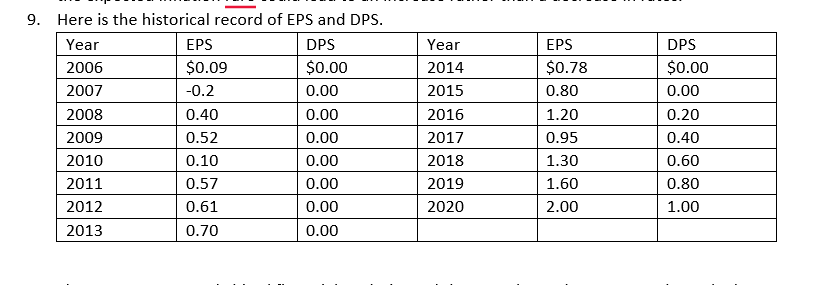
5.Betas, as reported by security analyst, range from 1.7 to 1.7; the government bond rate is 5%. Brokerage house reports forecast growth rate in the range of 4% to 8% over the forecastable future. However, some analysis does not explicitly forecast growth rates, but they indicate to their clients that they expect Aurora's historical trends. As shown in the table in fact (9), to continue.
6.At a recent conferences, Aurora's financial vice president polled some pension fund investment managers on the minimum rate of return they would have to expect pm Aurora's common to make them willing to buy the common rather than Aurora bonds, when the bonds yield 7%. The responses suggested a risk premium over Aurora bonds of 3 to 5 percentage points.
7.Aurora in in the 30% tax bracket.
8.Aurora principal investment banker, J&J Company predicts a decline in interest rats, with rd falling to 6% and the government bond rate to 4%, although J&J acknowledge that an increase in the expected inflation rare could lead to an increase rather than a decrease in rates.
9.Here is the historical record of EPS and DPS.
Step by Step Solution
There are 3 Steps involved in it

Get step-by-step solutions from verified subject matter experts
 Study Help