



Question: Question 2 We'll consider the two-period career incentives model from lecture, and add the following feature: in each of the first two periods, there is
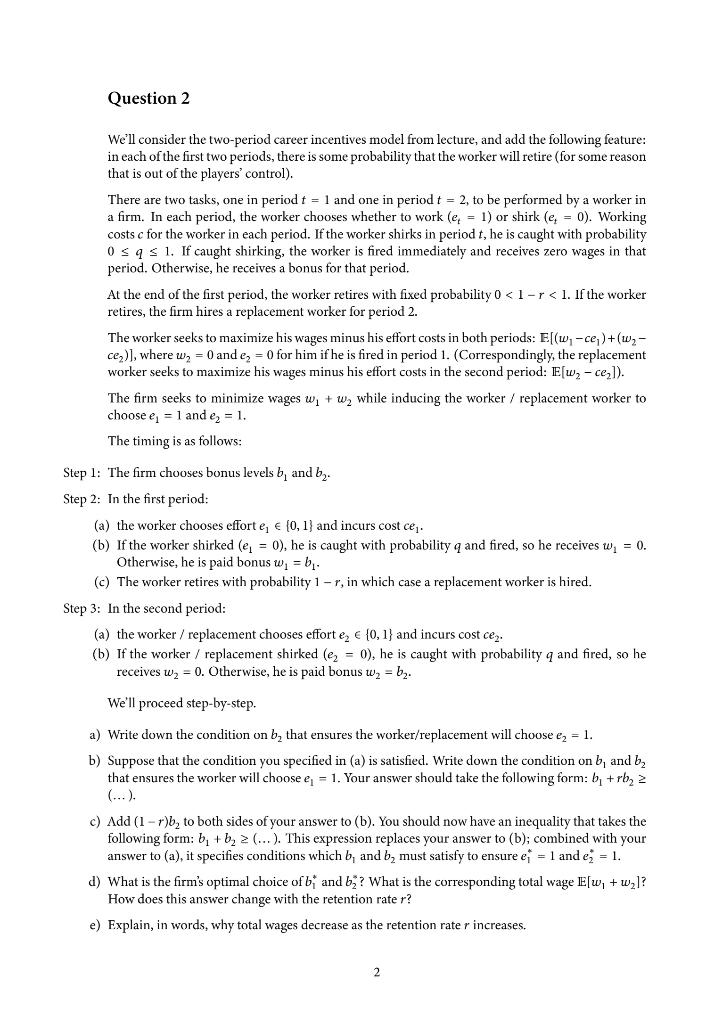
Question 2 We'll consider the two-period career incentives model from lecture, and add the following feature: in each of the first two periods, there is some probability that the worker will retire (for some reason that is out of the players' control). There are two tasks, one in period t = 1 and one in period t = 2, to be performed by a worker in a firm. In each period, the worker chooses whether to work (e = 1) or shirk (e, = 0). Working costs c for the worker in each period. If the worker shirks in period t, he is caught with probability Os qs 1. If caught shirking, the worker is fired immediately and receives zero wages in that period. Otherwise, he receives a bonus for that period. At the end of the first period, the worker retires with fixed probability 0
Step by Step Solution
There are 3 Steps involved in it

Get step-by-step solutions from verified subject matter experts