







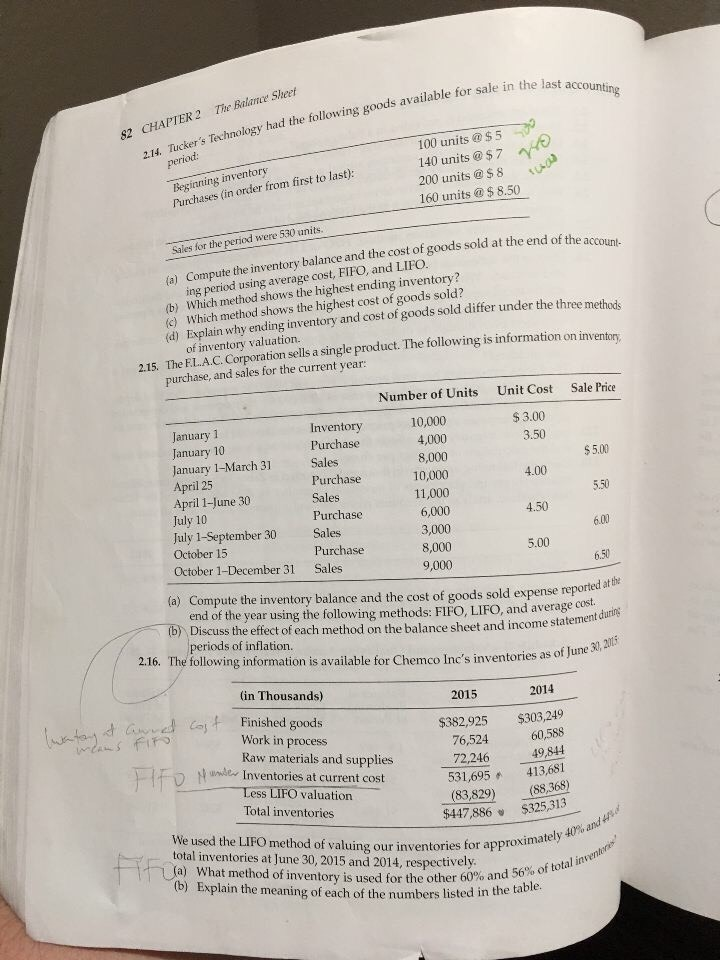
Question: Question 2.14. Using the information provided in the problem on page 82, calculate/answer the following questions: a. Compute the inventory balance at the end of
Question 2.14. Using the information provided in the problem on page 82, calculate/answer the following questions: a. Compute the inventory balance at the end of the accounting period using average cost. b. Compute the cost of goods sold at the end of the accounting period using average cost. c. Compute the inventory balance at the end of the accounting period using FIFO. d. Compute the cost of goods sold at the end of the accounting period using FIFO. e. Compute the inventory balance at the end of the accounting period using LIFO. f. Compute the cost of goods sold at the end of the accounting period using LIFO. g. Answer the multiple-choice question of which method produced the highest ending inventory h. Answer the multiple-choice question of which method produced the highest cost of goods sold
 .
.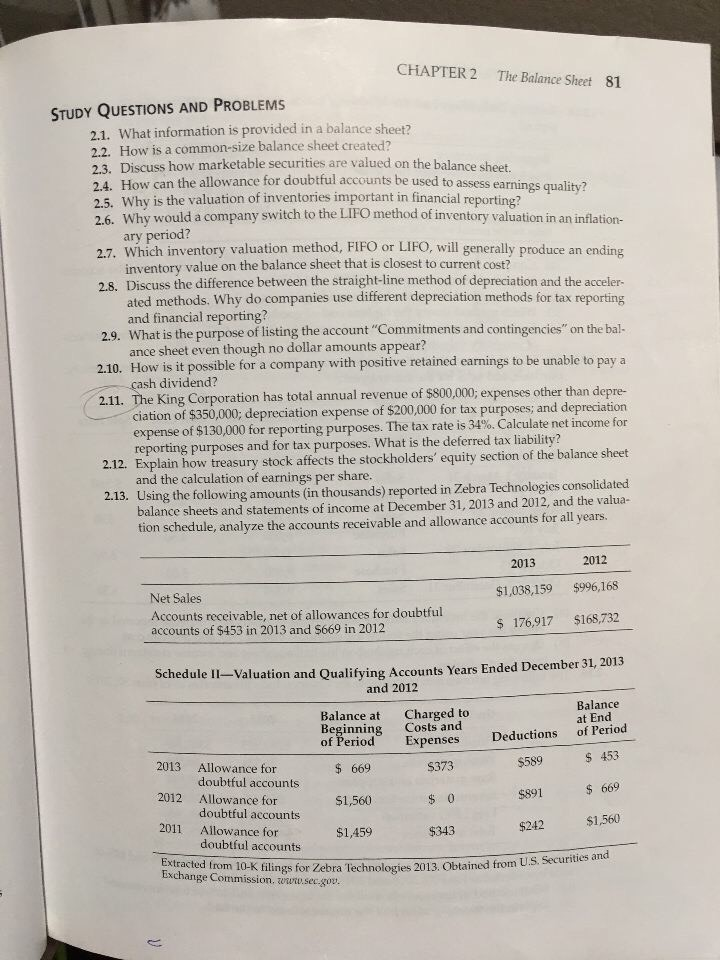
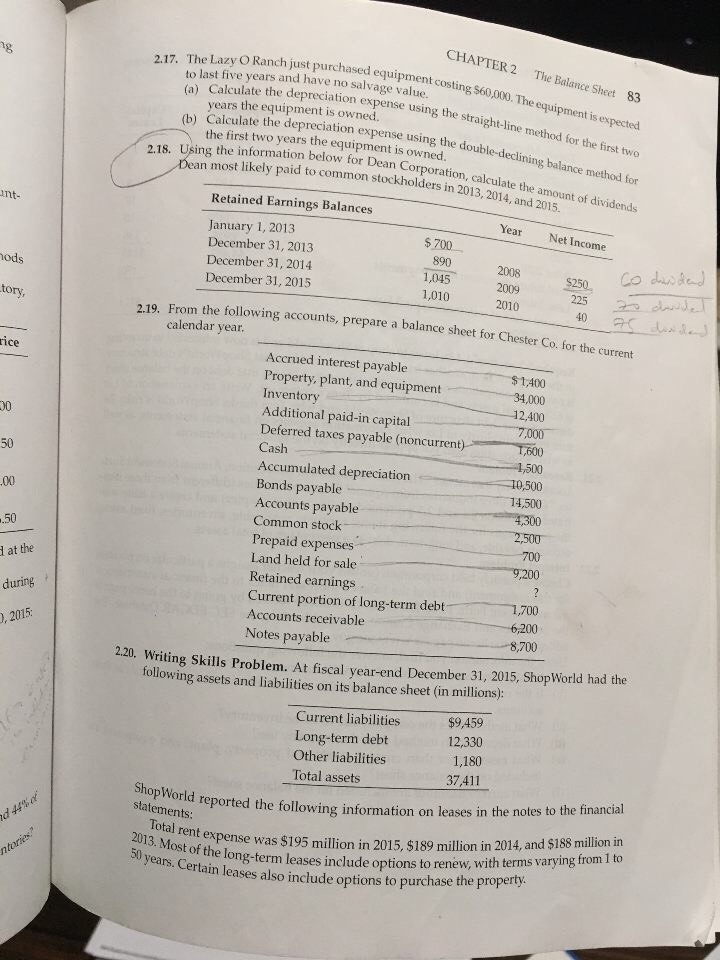
sale in the last accounting The Balance Sheet 82 CHAPTER 2 2.14. Tucker's Technology had the following goods available for sale in the period: 100 units @ $5 0 140 units @ $7 200 units @ $8 160 units @ $ 8.50 Beginning inventory Purchases (in order from first to last): the end of the account- Sales for the period were 530 units. (a) Compute the inventory balance and the cost of goods sold at the end of th ing period using average cost, FIFO, and LIFO. (b) Which method shows the highest ending inventory? (c) Which method shows the highest cost of goods sold? (d) Explain why ending inventory and cost of goods sold differ under the three method of inventory valuation. 2.15. The EL.A.C. Corporation sells a single product. The following is information on inventor purchase, and sales for the current year: Number of Units Unit Cost Sale Price 10,000 $3.00 3.50 $5.00 4,000 8,000 10,000 11,000 4.00 5.50 Inventory Purchase Sales Purchase Sales Purchase Sales Purchase Sales January 1 January 10 January 1-March 31 April 25 April 1-June 30 July 10 July 1-September 30 October 15 October 1-December 31 6,000 4.50 6.00 3,000 8,000 9,000 5.00 6.50 pense reported at the (a) Compute the inventory balance and the cost of goods sold expense report end of the year using the following methods: FIFO, LIFO, and average cos b) Discuss the effect of each method on the balance sheet and income staten periods of inflation. 2.16. The following information is available for Chemco Inc's inventories as on he statement during es as of June 30, 2015 (in Thousands) 2015 2014 it Card Cost Finished goods $303,249 60,588 49,814 fir neams Work in process Raw materials and supplies wwe Inventories at current cost Less LIFO valuation Total inventories $382,925 76,524 72,246 531,695 (83,829) $447,886 413,681 (88,368) $325,313 Proximately 40% and 4 We used the LIFO method of valuing our inventories for approx total inventories at June 30, 2015 and 2014, respectively. 1 (a) What method of inventory is used for the other 60% and 5 (b) Explain the meaning of each of the numbers listed in the na 56% of totaling CHAPTER 2 The Balance Sheet 83 purchased equipment costing $60,000. The equipment is expected sense using the straight-line method for the first two 2.17. The Lazy O Ranch just purchased to last five years and have no salvage value (a) Calculate the depreciation years the equipment is owned (b) Calculate the depreciation ex the first two years the equipment is owned 2.18. Using the information below for De epreciation expense using the double-declining balance method for below for Dean Corporation, calculate the amount of dividends tockholders in 2013, 2014, and 2015. most likely paid to common stockholders in 2013, 2014 and Year Net Income int- Retained Earnings Balances $ 700 mods January 1, 2013 December 31, 2013 December 31, 2014 December 31, 2015 890 1,045 2008 2009 tory, Co dowdend $250 1,010 From the following accounts, prepare a balance sheet for Chester Co. for the current 2010 225 40 calendar year. rice $1,400 34,000 2.00 Accrued interest payable Property, plant, and equipment Inventory Additional paid-in capital Deferred taxes payable (noncurrent) Cash Accumulated depreciation Bonds payable Accounts payable Common stock Prepaid expenses Land held for sale Retained earnings Current portion of long-term debt Accounts receivable Notes payable 12,400 7,000 7,600 1,500 10,500 14,500 4,300 2,500 700 9,200 ..50 8 at the during , 2015 1,700 6,200 8,700 Writing Skills Problem. At fiscal year-end December 31, 2015, Shop World had the following assets and liabilities on its balance sheet (in millions): Current liabilities Long-term debt Other liabilities Total assets $9,459 12,330 1,180 37,411 reported the following information on leases in the notes to the Shop World reported the to statements: Total rent expense was 2013. Most of the long-term 50 years. Certain leases also nanes Pense was $195 million in 2015, $189 million in 2014, and $188 million in ong-term leases include options to renew, with terms varying from 1 to leases also include options to purchase the property. CHAPTER 2 The Balance Sheet 81 STUDY QUESTIONS AND PROBLEMS 2.1. What information is provided in a balance sheet? 2.2. How is a common-size balance sheet created? 23. Discuss how marketable securities are valued on the balance sheet 2.4. How can the allowance for doubtful accounts be used to assess earning 25. Why is the valuation of inventories important in financial reporting? 26. Why would a company switch to the LIFO method of inventory valuation in an inflation- ary period? 2.7. Which inventory valuation method, FIFO or LIFO, will generally produce an ending inventory value on the balance sheet that is closest to current cost? 2.8. Discuss the difference between the straight-line method of depreciation and the acceler- ated methods. Why do companies use different depreciation methods for tax reporting and financial reporting? 29. What is the purpose of listing the account "Commitments and contingencies" on the bal- ance sheet even though no dollar amounts appear? 2.10. How is it possible for a company with positive retained earnings to be unable to pava cash dividend? 2.11. The King Corporation has total annual revenue of $800,000; expenses other than depre- ciation of $350,000; depreciation expense of $200,000 for tax purposes, and depreciation expense of $130,000 for reporting purposes. The tax rate is 34%. Calculate net income for reporting purposes and for tax purposes. What is the deferred tax liability? 2.12. Explain how treasury stock affects the stockholders' equity section of the balance sheet and the calculation of earnings per share. 2.13. Using the following amounts (in thousands) reported in Zebra Technologies consolidated balance sheets and statements of income at December 31, 2013 and 2012, and the valua- tion schedule, analyze the accounts receivable and allowance accounts for all years. 2013 $1,038,159 2012 9996,168 Net Sales Accounts receivable, net of allowances for doubtful accounts of $453 in 2013 and $669 in 2012 $ 176,917 $168,732 Schedule IIValuation and Qualifying Accounts Years Ended December 31, 2013 and 2012 Balance Balance at Charged to at End Beginning Costs and of Period of Period Expenses Deductions 2013 $ 453 Allowance for $ 669 $373 $589 doubtful accounts 2012 $ 669 Allowance for $1,560 $891 doubtful accounts 2011 Allowance for $1,459 $343 $242 doubtful accounts Extracted from 10-K filings for Zebra Techno Exchange Commission, www.sec.gov. 10-K filings for Zebra Technologies 2013. Obtained from U.S. Securities and $1,560
Step by Step Solution
There are 3 Steps involved in it

Get step-by-step solutions from verified subject matter experts
 Study Help