



Question: Question 3 (1 point) Saved Abnormal spoilage costs are recognized on the income statement in the period in which they occur (i.e. are not inventoried)
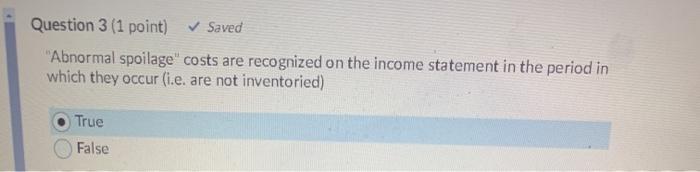
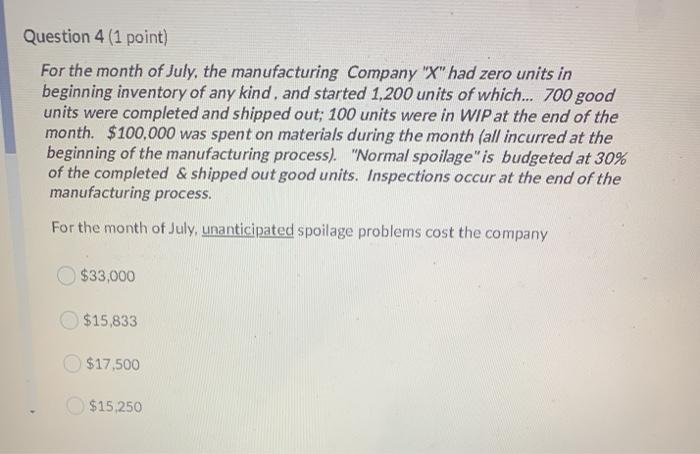
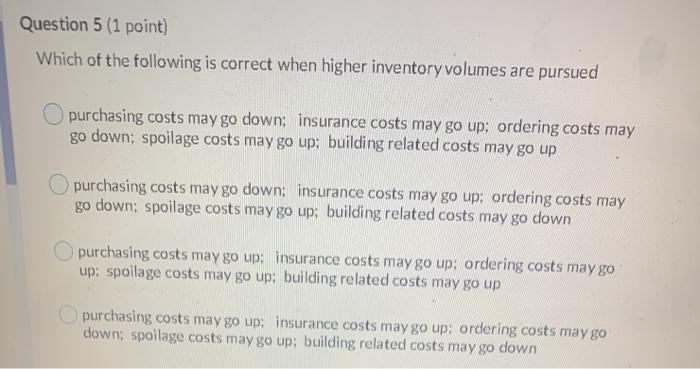
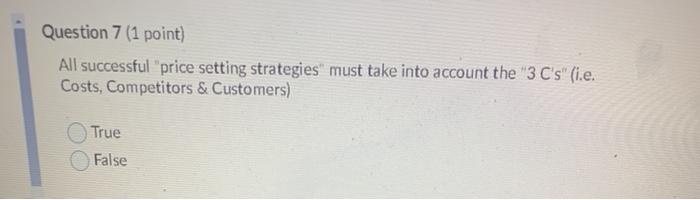
Question 3 (1 point) Saved "Abnormal spoilage" costs are recognized on the income statement in the period in which they occur (i.e. are not inventoried) True False Question 4 (1 point) For the month of July, the manufacturing Company "X" had zero units in beginning inventory of any kind, and started 1,200 units of which... 700 good units were completed and shipped out; 100 units were in WIP at the end of the month. $100,000 was spent on materials during the month (all incurred at the beginning of the manufacturing process). "Normal spoilage" is budgeted at 30% of the completed & shipped out good units. Inspections occur at the end of the manufacturing process. For the month of July, unanticipated spoilage problems cost the company $33,000 $15,833 $17.500 $15.250 Question 5 (1 point) Which of the following is correct when higher inventory volumes are pursued O purchasing costs may go down; insurance costs may go up; ordering costs may go down; spoilage costs may go up; building related costs may go up purchasing costs may go down; insurance costs may go up: ordering costs may go down; spoilage costs may go up; building related costs may go down purchasing costs may go up: insurance costs may go up: ordering costs may go up: spoilage costs may go up: building related costs may go up purchasing costs may go up; insurance costs may go up: ordering costs may go down; spoilage costs may go up: building related costs may go down Question 7 (1 point) All successful"price setting strategies" must take into account the "3 C's" (i.e. Costs, Competitors & Customers) True False
Step by Step Solution
There are 3 Steps involved in it

Get step-by-step solutions from verified subject matter experts