







Question: QUESTION 3 (15 MARKS) J.A.(i) During an internal audit (first party), the Lead Auditor kept referring to the non- fulfilment of organizational procedures as a
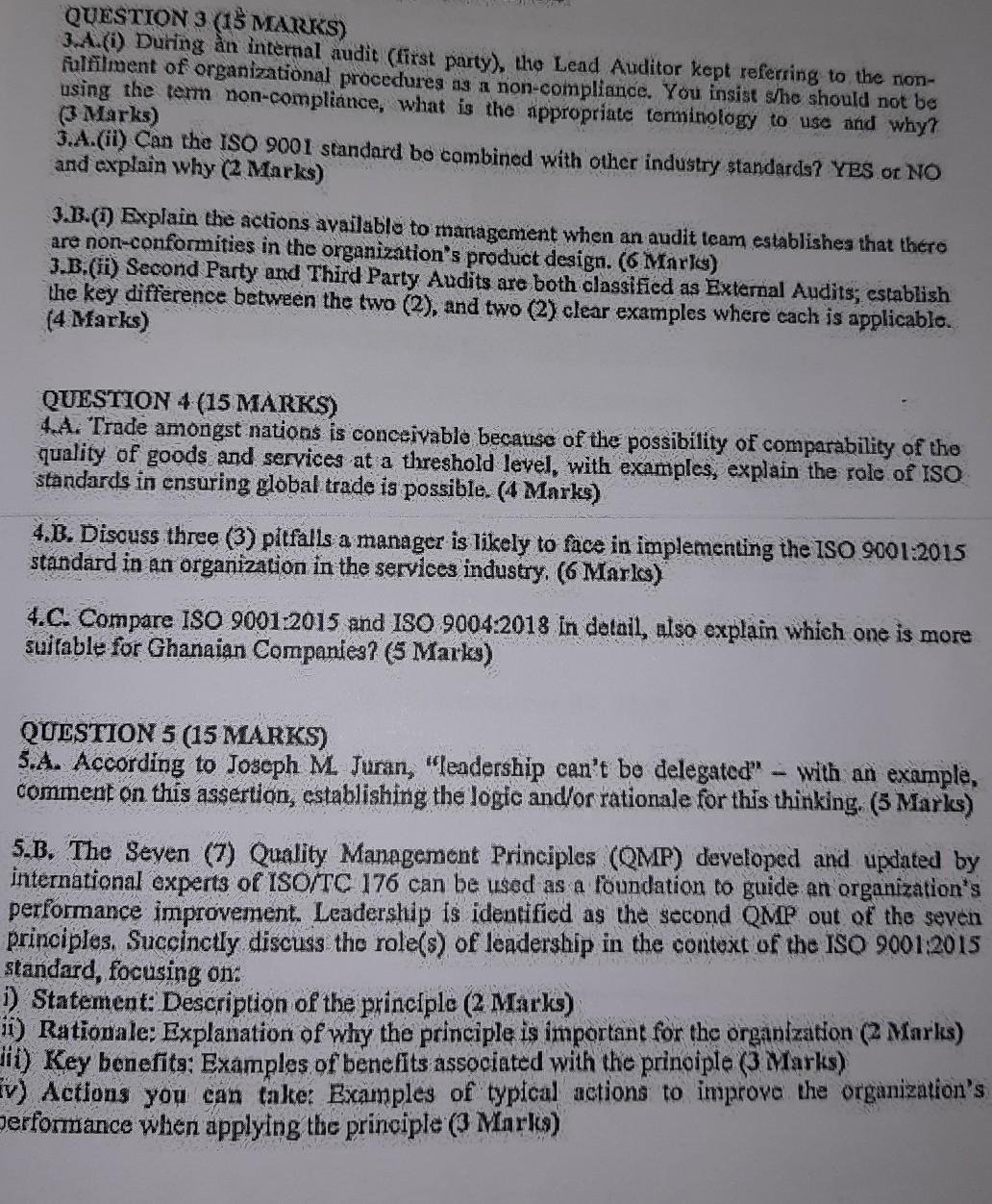
QUESTION 3 (15 MARKS) J.A.(i) During an internal audit (first party), the Lead Auditor kept referring to the non- fulfilment of organizational procedures as a non-compliance. You insist s/he should not be using the term non-compliance, what is the appropriate terminology to use and why? Marks) 3.A.(ii) Can the ISO 9001 standard be combined with other industry standards? YES or NO and explain why (2 Marks) 3.B.(1) Explain the actions available to management when an audit team establishes that there are non-conformities in the organization's product design. (6 Maris) 3.B.(ii) Second Party and Third Party Audits are both classified as External Audits; establish the key difference between the two (2), and two (2) clear examples where cach is applicable. (4 Marks) QUESTION 4 (15 MARKS) 4. A. Trade amongst nations is conceivable because of the possibility of comparability of the quality of goods and services at a threshold level, with examples, explain the role of ISO standards in ensuring global trade is possible. (4 Marks) 4.B. Discuss three (3) pitfalls a manager is likely to face in implementing the ISO 9001:2015 standard in an organization in the services industry. (6 Marls) 4.C. Compare ISO 9001:2015 and ISO 9004:2018 in detail, also explain which one is more suitable for Ghanaian Companies? (5 Marks) QUESTION 5 (15 MARKS) 5.A. According to Joseph M Juran, "leadership can't be delegated" - with an example, comment on this assertion, establishing the logic and/or rationale for this thinking. (5 Marks) 5.B. The Seven (7) Quality Management Principles (QMP) developed and updated by international experts of ISO/TC 176 can be used as a foundation to guide an organization's performance improvement. Leadership is identified as the second QMP out of the seven principles, Succinctly discuss the role(s) of leadership in the context of the ISO 9001:2015 standard, focusing on: 1) Statement: Description of the principle (2 Marks) ii) Rationale: Explanation of why the principle is important for the organization (2 Marks) 1) Key benefits: Examples of benefits associated with the principle (3 Marks) iv) Actions you can take: Examples of typical actions to improve the organization's performance when applying the principle Marks)
Step by Step Solution
There are 3 Steps involved in it
1 Expert Approved Answer
Step: 1 Unlock

Question Has Been Solved by an Expert!
Get step-by-step solutions from verified subject matter experts
Step: 2 Unlock
Step: 3 Unlock
 Study Help