







Question: Question 3 DCF with Terminal P / E There are many ways to value an asset. Valuation is a science, but it is also an
Question
DCF with Terminal PE
There are many ways to value an asset. Valuation is a science, but it is also an art. Each
method may not provide identical answers, and they can sometimes be far off.
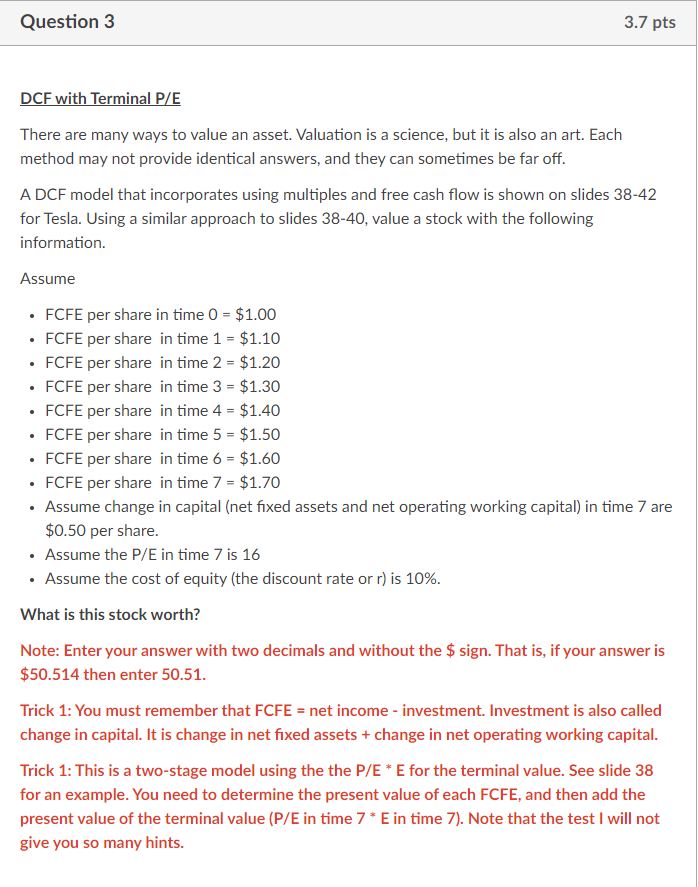
A DCF model that incorporates using multiples and free cash flow is shown on slides
for Tesla. Using a similar approach to slides value a stock with the following
information.
Assume
FCFE per share in time $
FCFE per share in time $
FCFE per share in time $
FCFE per share in time $
FCFE per share in time $
FCFE per share in time $
FCFE per share in time $
FCFE per share in time $
Assume change in capital net fixed assets and net operating working capital in time are
$ per share.
Assume the in time is
Assume the cost of equity the discount rate or is
What is this stock worth?
Note: Enter your answer with two decimals and without the $ sign. That is if your answer is
$ then enter
Trick : You must remember that FCFE net income investment. Investment is also called
change in capital. It is change in net fixed assets change in net operating working capital.
Trick : This is a twostage model using the the for the terminal value. See slide
for an example. You need to determine the present value of each FCFE, and then add the
present value of the terminal value in time in time Note that the test I will not
give you so many hints.
Step by Step Solution
There are 3 Steps involved in it
1 Expert Approved Answer
Step: 1 Unlock

Question Has Been Solved by an Expert!
Get step-by-step solutions from verified subject matter experts
Step: 2 Unlock
Step: 3 Unlock
 Study Help