Question: Question 3 From the attached Straits Times article published on Tuesday, 24 September 2024 entitled Nursing homes shouldn't be a guilt-ridden choice for overwhelmed caregivers
Question 3
From the attached Straits Times article published on Tuesday, 24 September 2024 entitled "Nursing homes shouldn't be a guilt-ridden choice for overwhelmed caregivers"consider questions a) and b).
a) Identifythe problems nursing homes have encountered with care standards and mistreatment of residents, and how these problems are being addressed.
(Total 8 marks)
b) Outlinesome ways nursing homes provide palliative and end-of-life care for their patients.
(Total 8 marks)
c) Retirement can be a scary and lonely phase of life for many people. Discusssome of the priorities you can plan for your retirement.
(Total 9 marks)
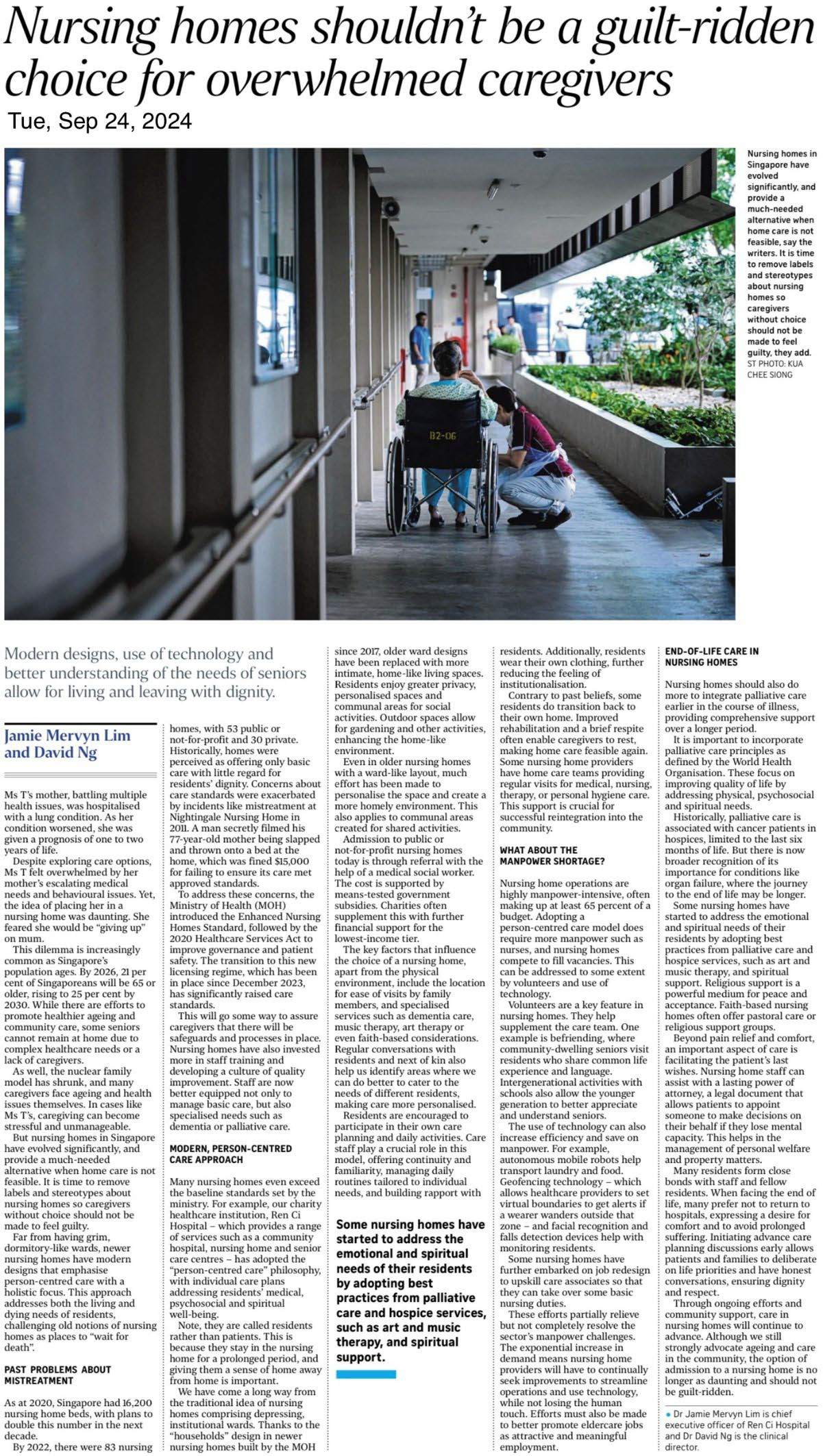
Nursing homes shouldnt be a guilt-ridden choice for overwhelmed caregivers Tue, Sep 24, 2024 Modern designs, use of technology and better understanding of the needs of seniors allow for living and leaving with dignity. Jamie Mervyn Lim and David Ng Ms T's mother, battling multiple health issues, was hospitalised with a lung condition. As her condition worsened, she was given a prognosis of one to two years of life. Despite exploring care options, Ms T felt overwhelmed by her mother's escalating medical the idea of placing her ina nursing home was daunting. She feared she would be \"giving up\" on mum. This dilemma is increasingly common as Singapore's population ages. By 2026, 21 per cent of Singaporeans will be 65 or older, rising to 25 per cent by 2030. While there are efforts to promote healthier ageing and community care, some seniors cannot remain at home due to: complex healthcare needs or a lack of caregivers. As well, the nuclear family model has shrunk, and many caregivers face ageing and health issues themselves. In cases like Ms T's, caregiving can become stressful and unmanageable. have evolved significantly, and provide a much-needed feasible. It is time to remove labels and stereotypes about nursing homes so caregivers without choice should not be made to feel guilty. Far from having grim, dormitory-like wards, newer nursing homes have modern designs that emphasise person-centred care with a holistic focus. This approach addresses both the living and dying needs of residents, challenging old notions of nursing : homes as places to \"wait for death\". PAST PROBLEMS ABOUT MISTREATMENT As at 2020, Singapore had 16,200 nursing home beds, with plans to double this number in the next decade. By 2022, there were 83 nursing homes, with 53 public or : not-for-profit and 30 private. : Historically, homes were : perceived as offering only basic : care with little regard for : residents' dignity. Concerns about : : care standards were exacerbated by incidents like mistreatment at : Nightingale Nursing Home in : 201 A man secretly filmed his : : 77-year-old mother being slapped : : and thrown onto a bed at the : home, which was fined $15,000 : for failing to ensure its care met : approved standards. needs and behavioural issues. Yet, : : Ministry of Health (MOH) : introduced the Enhanced Nursing : : Homes Standard, followed by the To address these concerns, the 2020 Healthcare Services Act to : improve governance and patient : safety. The transition to this new : licensing regime, which has been : in place since December 2023, : has significantly raised care : standards. This will go some way to assure : caregivers that there will be : safeguards and processes in place. : Nursing homes have also invested = : more in staff training and : developing a culture of quality : improvement. Staff are now better equipped not only to : manage basic care, but also : specialised needs such as dementia or palliative care. But nursing homes in Singapore : : MODERN, PERSON-CENTRED : CARE APPROACH alternative when home care is not : care centres has adopted the : \"person-centred care\" philosophy, : : with individual care plans : addressing residents' medical, : psychosocial and spiritual well-being. Note, they are called residents rather than patients. This is : because they stay in the nursing : home for a prolonged period, and : giving them a sense of home away : : from home is important. We have come a long way from : the traditional idea of nursing homes comprising depressing, : institutional wards. Thanks to the : : \"households\" design in newer : nursing homes built by the MOH : since 2017, older ward designs : have been replaced with more : intimate, home-like living spaces. : Residents enjoy greater privacy, : personalised spaces and : communal areas for social : activities. Outdoor spaces allow : for gardening and other activities : enhancing the home-like : environment. Even in older nursing homes ? with a ward-like layout, much effort has been made to : personalise the space and create a ? more homely environment. This : also applies to communal areas created for shared activities. Admission to public or : not-for-profit nursing homes : today is through referral with the : help of a medical social worker. The cost is supported by : means-tested government : sub: es. Charities often supplement this with further : financial support for the : lowest-income tier. The key factors that influence : the choice of a nursing home, : apart from the physical : environment, include the location : for ease of visits by family members, and specialised : services such as dementia care, : music therapy, art therapy or even faith-based considerations. Regular conversations with : residents and next of kin also : help us identify areas where we : can do better to cater to the needs of different residents, : making care more personalised. Residents are encouraged to : participate in their own care : planning and daily activities. Care : staff play a crucial role in this : model, offering continuity and : familiarity, managing daily Many nursing homes even exceed : : the baseline standards set by the : ministry. For example, our charii : healthcare institution, Ren Ci : Hospital - which provides a range : : of services such as a community : hospital, nursing home and senior : : emotional and spiritual routines tailored to individual needs, and building rapport with Some nursing homes have | started to address the needs of their residents : by adopting best : practices from palliative | care and hospice services, | such as art and music : therapy, and spiritual : support. CO : residents. Additionally, residents : wear their own clothing, further : reducing the feeling of : institutionalisation. Contrary to past beliefs, some : residents do transition back to heir own home. Improved rehabilitation and a brief respite : often enable caregivers to rest, : making home care feasible again. : Some nursing home providers : have home care teams providing : regular visits for medical, nursing, : therapy, or personal hygiene care. : This support is crucial for : successful reintegration into the : community. WHAT ABOUT THE : MANPOWER SHORTAGE? : Nursing home operations are : highly manpower-intensive, often : making up at least 65 percent ofa : : budget. Adopting a : person-centred care model does ; require more manpower such as : nurses, and nursing homes : compete to fill vacancies. This : can be addressed to some extent ; by volunteers and use of : technology. Volunteers are a key feature in : nursing homes. They help : supplement the care team. One : example is befriending, where : community-dwelling seniors visit : residents who share common life : experience and language. : Intergenerational activities with : schools also allow the younger : generation to better appreciate : and understand seniors. The use of technology can also : increase efficiency and save on ? manpower. For example, : autonomous mobile robots help : transport laundry and food. : Geofencing technology which : allows healthcare providers to set : virtual boundaries to get alerts if :; a wearer wanders outside that : zone - and facial recognition and : falls detection devices help with : monitoring residents. Some nursing homes have : further embarked on job redesign : to upskill care associates so that : they can take over some basic : nursing duties. These efforts partially relieve : but not completely resolve the : sector's manpower challenges. : The exponential increase in : demand means nursing home : providers will have to continually : seek improvements to streamline : Operations and use technology, : while not losing the human : touch. Efforts must also be made : to better promote eldercare jobs : as attractive and meaningful : employment. Nursing homes in Singapore have evolved significantly, and provide a much-needed alternative when home care is not feasible, say the writers. It is time to remove labels and stereotypes about nursing homes so caregivers without choice should not be made to feel guilty, they add. ST PHOTO: KUA CHEE SIONG : END-OF-LIFE CARE IN : NURSING HOMES : Nursing homes should also do : more to integrate palliative care : earlier in the course of illness, : providing comprehensive support : over a longer period It is important to incorporate : palliative care principles as : defined by the World Health : Organisation. These focus on : improving quality of life by : addressing physical, psychosocial : and spiritual needs. Historically, palliative care is : associated with cancer patients in : hospices, limited to the last six : months of life. But there is now : broader recognition of its : importance for conditions like : organ failure, where the journey : to the end of life may be longer. Some nursing homes have : started to address the emotional : and spiritual needs of their : residents by adopting best : practices from palliative care and : hospice services, such as art and : music therapy, and spiritual ; support. Religious support is a ; powerful medium for peace and : acceptance. Faith-based nursing : homes often offer pastoral care or : religious support groups. Beyond pain relief and comfort, : an important aspect of care is : facilitating the patient's last : wishes. Nursing home staff can : assist with a lasting power of : attorney, a legal document that : allows patients to appoint : someone to make decisions on : their behalf if they lose mental : capacity. This helps in the : management of personal welfare : and property matters. Many residents form close : bonds with staff and fellow : residents. When facing the end of : life, many prefer not to return to : hospitals, expressing a desire for : comfort and to avoid prolonged : suffering. Initiating advance care : planning discussions early allows : patients and families to deliberate : on life priorities and have honest : conversations, ensuring dignity : and respect. Through ongoing efforts and : community support, care in : nursing homes will continue to : advance. Although we still : strongly advocate ageing and care : in the community, the option of : admission to a nursing home is no : longer as daunting and should not : be guilt-ridden. : Dr Jamie Mervyn Lim is chief : executive officer of Ren Ci Hospital : and Dr David Ng is the clinical ? director
Step by Step Solution
There are 3 Steps involved in it
1 Expert Approved Answer
Step: 1 Unlock
Question Has Been Solved by an Expert!
Get step-by-step solutions from verified subject matter experts
Step: 2 Unlock
Step: 3 Unlock
Students Have Also Explored These Related Accounting Questions!









 Study Help