Question: Question 33 (5 points) The case below illustrates a situation that an OACETT member might encounter in the workplace: Branch Inc. has been losing ground
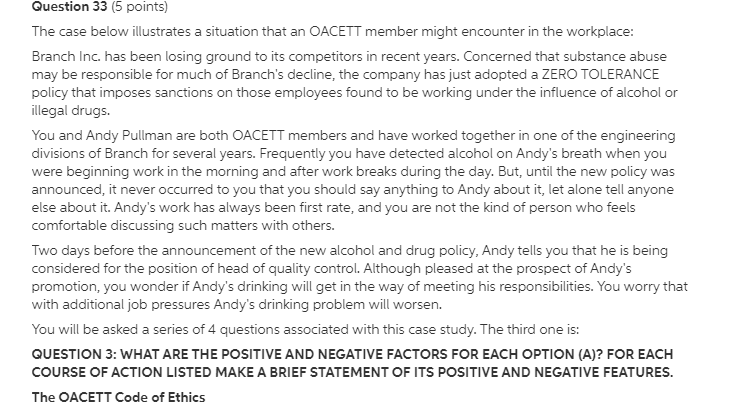
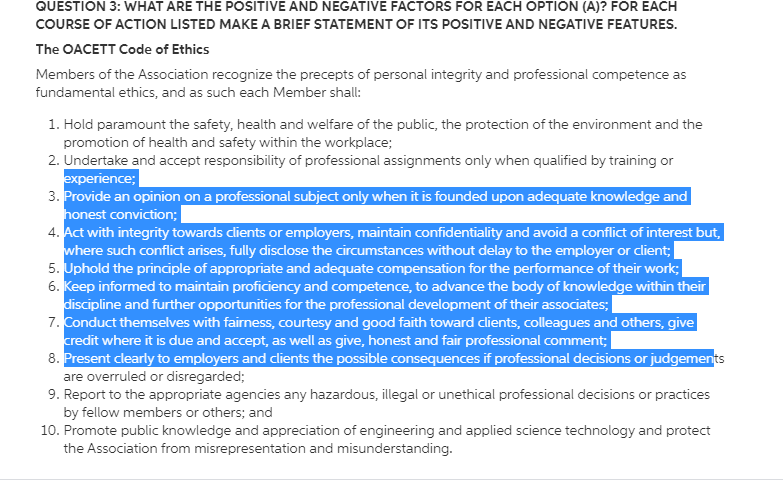
Question 33 (5 points) The case below illustrates a situation that an OACETT member might encounter in the workplace: Branch Inc. has been losing ground to its competitors in recent years. Concerned that substance abuse may be responsible for much of Branch's decline, the company has just adopted a ZERO TOLERANCE policy that imposes sanctions on those employees found to be working under the influence of alcohol or illegal drugs. You and Andy Pullman are both OACETT members and have worked together in one of the engineering divisions of Branch for several years. Frequently you have detected alcohol on Andy's breath when you were beginning work in the morning and after work breaks during the day. But, until the new policy was announced, it never occurred to you that you should say anything to Andy about it, let alone tell anyone else about it. Andy's work has always been first rate, and you are not the kind of person who feels comfortable discussing such matters with others. Two days before the announcement of the new alcohol and drug policy, Andy tells you that he is being considered for the position of head of quality control. Although pleased at the prospect of Andy's promotion, you wonder if Andy's drinking will get in the way of meeting his responsibilities. You worry that with additional job pressures Andy's drinking problem will worsen. You will be asked a series of 4 questions associated with this case study. The third one is: QUESTION 3: WHAT ARE THE POSITIVE AND NEGATIVE FACTORS FOR EACH OPTION (A)? FOR EACH COURSE OF ACTION LISTED MAKE A BRIEF STATEMENT OF ITS POSITIVE AND NEGATIVE FEATURES. The OACETT Code of Ethics QUESTION 3: WHAT ARE THE POSITIVE AND NEGATIVE FACTORS FOR EACH OPTION (A)? FOR EACH COURSE OF ACTION LISTED MAKE A BRIEF STATEMENT OF ITS POSITIVE AND NEGATIVE FEATURES. The OACETT Code of Ethics Members of the Association recognize the precepts of personal integrity and professional competence as fundamental ethics, and as such each Member shall: 1. Hold paramount the safety, health and welfare of the public, the protection of the environment and the promotion of health and safety within the workplace; 2. Undertake and accept responsibility of professional assignments only when qualified by training or experience; 3. Provide an opinion on a professional subject only when it is founded upon adequate knowledge and honest conviction; 4. Act with integrity towards clients or employers, maintain confidentiality and avoid a conflict of interest but, where such conflict arises, fully disclose the circumstances without delay to the employer or client; 5. Uphold the principle of appropriate and adequate compensation for the performance of their work; 6. Keep informed to maintain proficiency and competence, to advance the body of knowledge within their discipline and further opportunities for the professional development of their associates; 7. Conduct themselves with fairness, courtesy and good faith toward clients, colleagues and others, give credit where it is due and accept, as well as give, honest and fair professional comment; 8. Present clearly to employers and clients the possible consequences if professional decisions or judgements are overruled or disregarded; 9. Report to the appropriate agencies any hazardous, illegal or unethical professional decisions or practices by fellow members or others, and 10. Promote public knowledge and appreciation of engineering and applied science technology and protect the Association from misrepresentation and misunderstanding. Question 33 (5 points) The case below illustrates a situation that an OACETT member might encounter in the workplace: Branch Inc. has been losing ground to its competitors in recent years. Concerned that substance abuse may be responsible for much of Branch's decline, the company has just adopted a ZERO TOLERANCE policy that imposes sanctions on those employees found to be working under the influence of alcohol or illegal drugs. You and Andy Pullman are both OACETT members and have worked together in one of the engineering divisions of Branch for several years. Frequently you have detected alcohol on Andy's breath when you were beginning work in the morning and after work breaks during the day. But, until the new policy was announced, it never occurred to you that you should say anything to Andy about it, let alone tell anyone else about it. Andy's work has always been first rate, and you are not the kind of person who feels comfortable discussing such matters with others. Two days before the announcement of the new alcohol and drug policy, Andy tells you that he is being considered for the position of head of quality control. Although pleased at the prospect of Andy's promotion, you wonder if Andy's drinking will get in the way of meeting his responsibilities. You worry that with additional job pressures Andy's drinking problem will worsen. You will be asked a series of 4 questions associated with this case study. The third one is: QUESTION 3: WHAT ARE THE POSITIVE AND NEGATIVE FACTORS FOR EACH OPTION (A)? FOR EACH COURSE OF ACTION LISTED MAKE A BRIEF STATEMENT OF ITS POSITIVE AND NEGATIVE FEATURES. The OACETT Code of Ethics QUESTION 3: WHAT ARE THE POSITIVE AND NEGATIVE FACTORS FOR EACH OPTION (A)? FOR EACH COURSE OF ACTION LISTED MAKE A BRIEF STATEMENT OF ITS POSITIVE AND NEGATIVE FEATURES. The OACETT Code of Ethics Members of the Association recognize the precepts of personal integrity and professional competence as fundamental ethics, and as such each Member shall: 1. Hold paramount the safety, health and welfare of the public, the protection of the environment and the promotion of health and safety within the workplace; 2. Undertake and accept responsibility of professional assignments only when qualified by training or experience; 3. Provide an opinion on a professional subject only when it is founded upon adequate knowledge and honest conviction; 4. Act with integrity towards clients or employers, maintain confidentiality and avoid a conflict of interest but, where such conflict arises, fully disclose the circumstances without delay to the employer or client; 5. Uphold the principle of appropriate and adequate compensation for the performance of their work; 6. Keep informed to maintain proficiency and competence, to advance the body of knowledge within their discipline and further opportunities for the professional development of their associates; 7. Conduct themselves with fairness, courtesy and good faith toward clients, colleagues and others, give credit where it is due and accept, as well as give, honest and fair professional comment; 8. Present clearly to employers and clients the possible consequences if professional decisions or judgements are overruled or disregarded; 9. Report to the appropriate agencies any hazardous, illegal or unethical professional decisions or practices by fellow members or others, and 10. Promote public knowledge and appreciation of engineering and applied science technology and protect the Association from misrepresentation and misunderstanding









 Study Help