







Question: Question 44 ( 2 points): Suppose that a new breakthrough technology is invented that allows - manufacturers to produce goods at a fraction of the
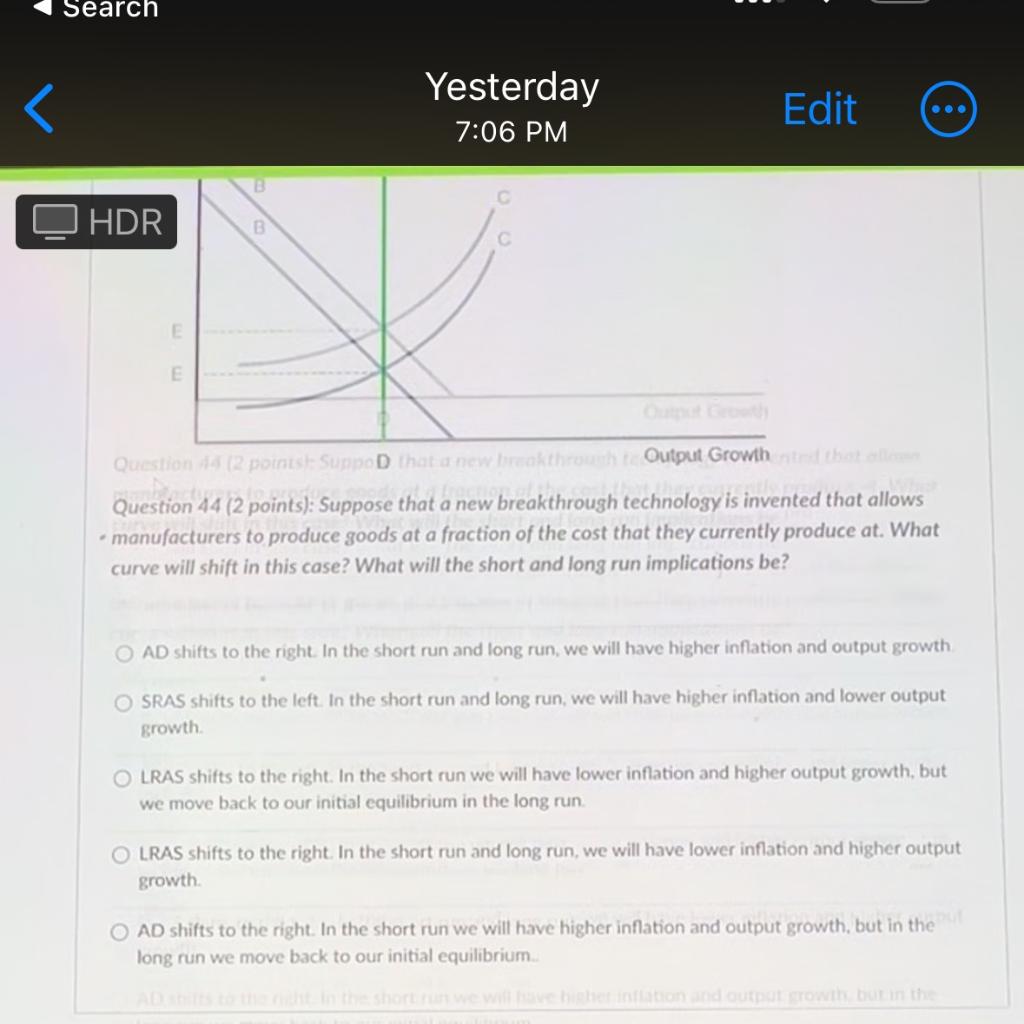
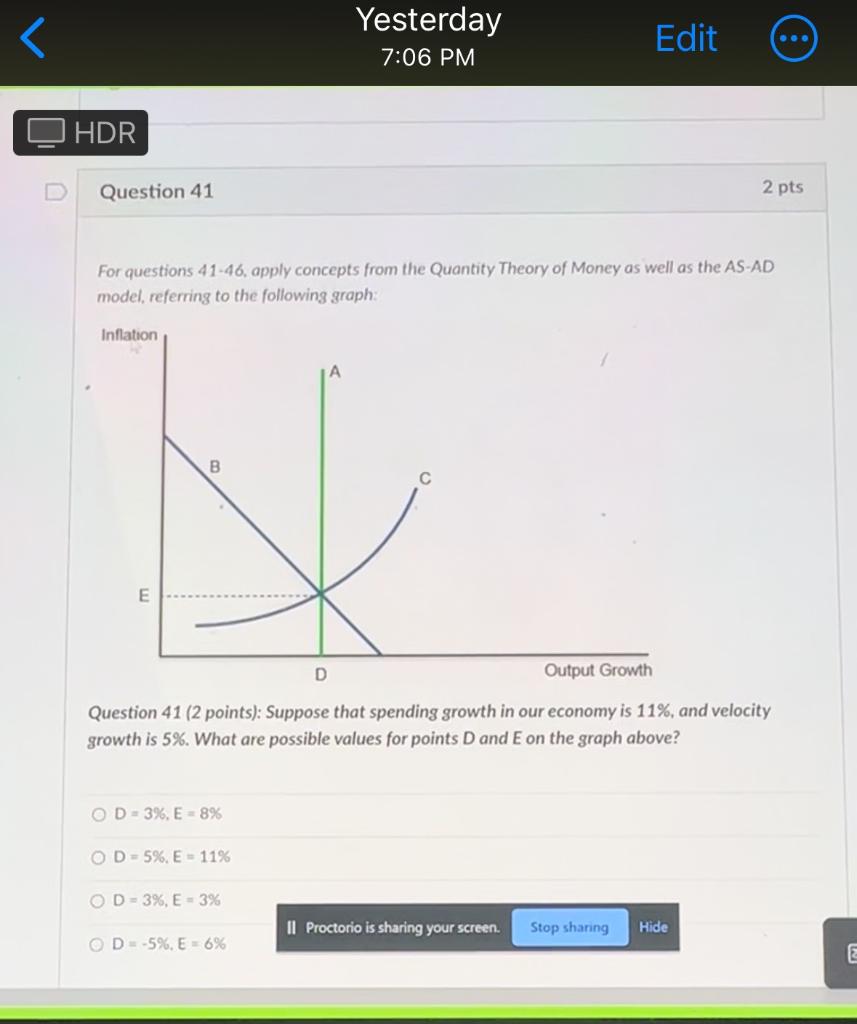
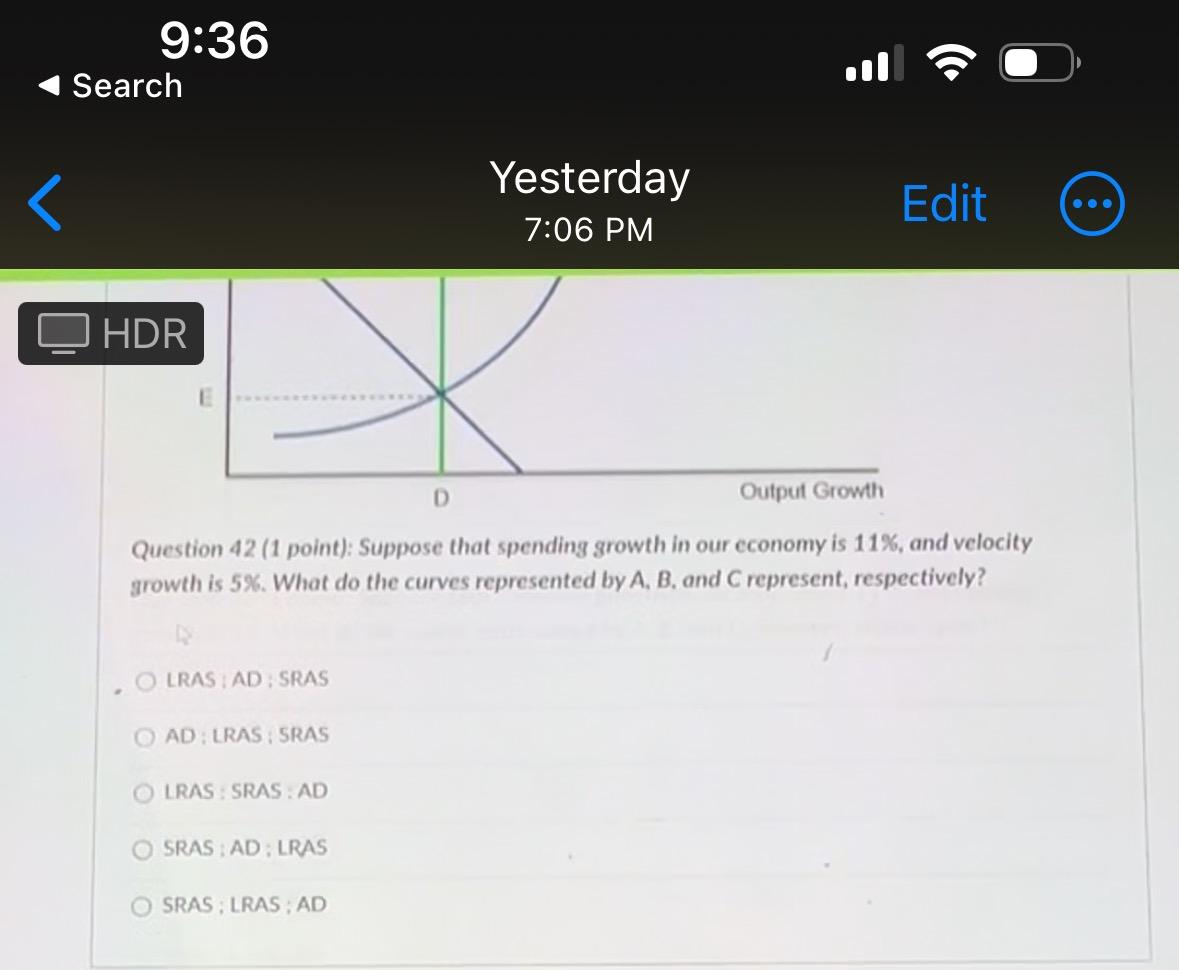
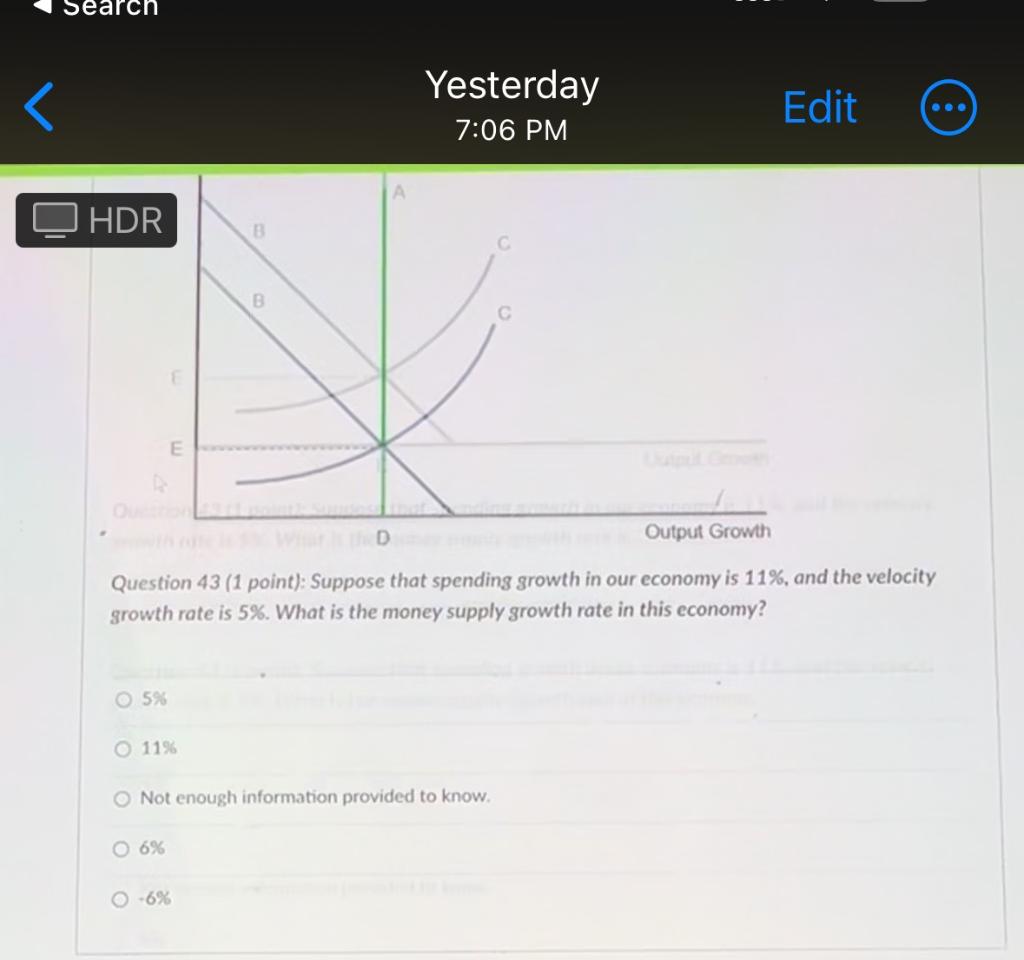
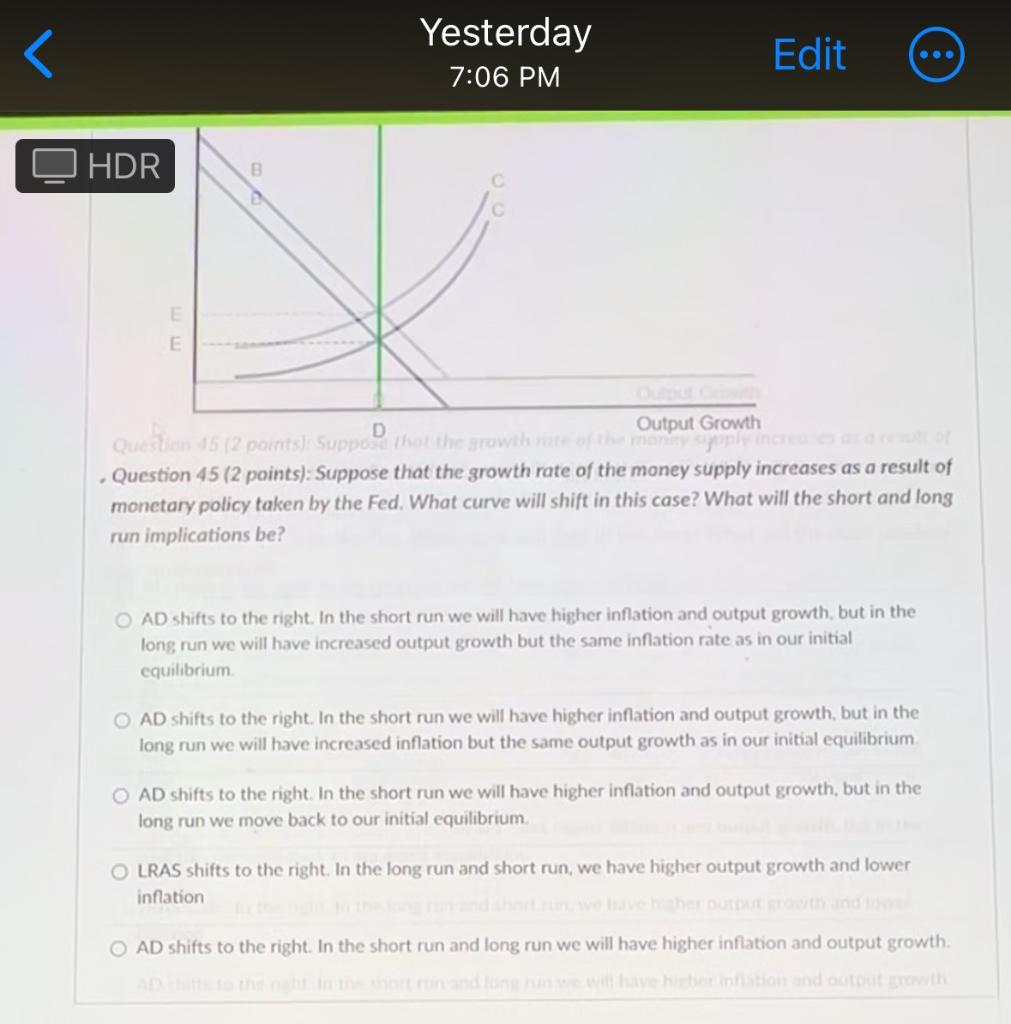
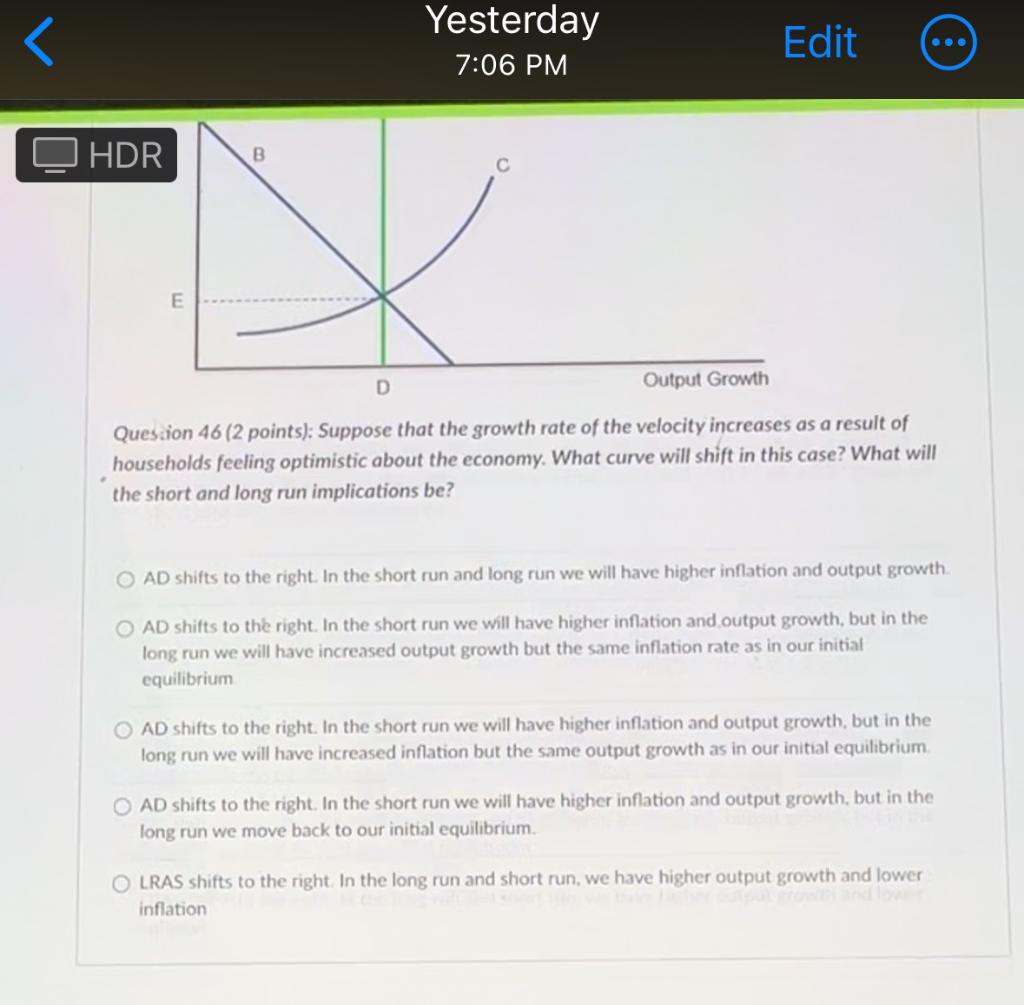
Question 44 ( 2 points): Suppose that a new breakthrough technology is invented that allows - manufacturers to produce goods at a fraction of the cost that they currently produce at. What curve will shift in this case? What will the short and long run implications be? AD shifts to the right. In the short run and long run, we will have higher inflation and output growth SRAS shifts to the left. In the short run and long run, we will have higher inflation and lower output growth. LRAS shifts to the right. In the short run we will have lower inflation and higher output growth, but we move back to our initial equilibrium in the long run. LRAS shifts to the right. In the short run and long run, we will have lower inflation and higher output growth. AD shifts to the right. In the short run we will have higher inflation and output growth, but in the long run we move back to our initial equilibrium. For questions 41-46, apply concepts from the Quantity Theory of Money as well as the AS-AD model, referring to the following graph: Question 41 ( 2 points): Suppose that spending growth in our economy is 11%, and velocity growth is 5%. What are possible values for points D and E on the graph above? D=3%,E=8%D=5%,E=11%D=3%,E=3%D=5%,E=6% Hide Question 42 (1 point): Suppose that spending growth in our economy is 11%, and velocity growth is 5%. What do the curves represented by A, B, and C represent, respectively? LRAS : AD : SRAS AD : LRAS : SRAS LRAS : SRAS : AD SRAS : AD : LRAS SRAS; LRAS ; AD Question 43 (1 point): Suppose that spending growth in our economy is 11%, and the velocity growth rate is 5%. What is the money supply growth rate in this economy? 5% 11% Not enough information provided to know. 6% 6% Question 45 (2 points): Suppose that the growth rate of the money supply increases as a result of monetary policy taken by the Fed. What curve will shift in this case? What will the short and long run implications be? AD shifts to the right. In the short run we will have higher inflation and output growth, but in the long run we will have increased output growth but the same inflation rate as in our initial equilibrium. AD shifts to the right. In the short run we will have higher inflation and output growth, but in the long run we will have increased inflation but the same output growth as in our initial equilibrium AD shifts to the right. In the short run we will have higher inflation and output growth, but in the long run we move back to our initial equilibrium. LRAS shifts to the right. In the long run and short run, we have higher output growth and lower inflation AD shifts to the right. In the short run and long run we will have higher inflation and output growth. Question 46 (2 points): Suppose that the growth rate of the velocity increases as a result of households feeling optimistic about the economy. What curve will shift in this case? What will the short and long run implications be? AD shifts to the right. In the short run and long run we will have higher inflation and output growth. AD shifts to the right. In the short run we will have higher inflation and output growth, but in the long run we will have increased output growth but the same inflation rate as in our initial equilibrium AD shifts to the right. In the short run we will have higher inflation and output growth, but in the long run we will have increased inflation but the same output growth as in our initial equilibrium. AD shifts to the right. In the short run we will have higher inflation and output growth, but in the long run we move back to our initial equilibrium. LRAS shifts to the right. In the long run and short run, we have higher output growth and lower inflation Question 44 ( 2 points): Suppose that a new breakthrough technology is invented that allows - manufacturers to produce goods at a fraction of the cost that they currently produce at. What curve will shift in this case? What will the short and long run implications be? AD shifts to the right. In the short run and long run, we will have higher inflation and output growth SRAS shifts to the left. In the short run and long run, we will have higher inflation and lower output growth. LRAS shifts to the right. In the short run we will have lower inflation and higher output growth, but we move back to our initial equilibrium in the long run. LRAS shifts to the right. In the short run and long run, we will have lower inflation and higher output growth. AD shifts to the right. In the short run we will have higher inflation and output growth, but in the long run we move back to our initial equilibrium. For questions 41-46, apply concepts from the Quantity Theory of Money as well as the AS-AD model, referring to the following graph: Question 41 ( 2 points): Suppose that spending growth in our economy is 11%, and velocity growth is 5%. What are possible values for points D and E on the graph above? D=3%,E=8%D=5%,E=11%D=3%,E=3%D=5%,E=6% Hide Question 42 (1 point): Suppose that spending growth in our economy is 11%, and velocity growth is 5%. What do the curves represented by A, B, and C represent, respectively? LRAS : AD : SRAS AD : LRAS : SRAS LRAS : SRAS : AD SRAS : AD : LRAS SRAS; LRAS ; AD Question 43 (1 point): Suppose that spending growth in our economy is 11%, and the velocity growth rate is 5%. What is the money supply growth rate in this economy? 5% 11% Not enough information provided to know. 6% 6% Question 45 (2 points): Suppose that the growth rate of the money supply increases as a result of monetary policy taken by the Fed. What curve will shift in this case? What will the short and long run implications be? AD shifts to the right. In the short run we will have higher inflation and output growth, but in the long run we will have increased output growth but the same inflation rate as in our initial equilibrium. AD shifts to the right. In the short run we will have higher inflation and output growth, but in the long run we will have increased inflation but the same output growth as in our initial equilibrium AD shifts to the right. In the short run we will have higher inflation and output growth, but in the long run we move back to our initial equilibrium. LRAS shifts to the right. In the long run and short run, we have higher output growth and lower inflation AD shifts to the right. In the short run and long run we will have higher inflation and output growth. Question 46 (2 points): Suppose that the growth rate of the velocity increases as a result of households feeling optimistic about the economy. What curve will shift in this case? What will the short and long run implications be? AD shifts to the right. In the short run and long run we will have higher inflation and output growth. AD shifts to the right. In the short run we will have higher inflation and output growth, but in the long run we will have increased output growth but the same inflation rate as in our initial equilibrium AD shifts to the right. In the short run we will have higher inflation and output growth, but in the long run we will have increased inflation but the same output growth as in our initial equilibrium. AD shifts to the right. In the short run we will have higher inflation and output growth, but in the long run we move back to our initial equilibrium. LRAS shifts to the right. In the long run and short run, we have higher output growth and lower inflation
Step by Step Solution
There are 3 Steps involved in it

Get step-by-step solutions from verified subject matter experts
 Study Help