





Question: QUESTION 5 2) Suppose you are a purchasing agent who is responsible for bar stock that your company makes into wrenches. Each bar costs $18
QUESTION 5 2) Suppose you are a purchasing agent

QUESTION 5 2) Suppose you are a purchasing agent

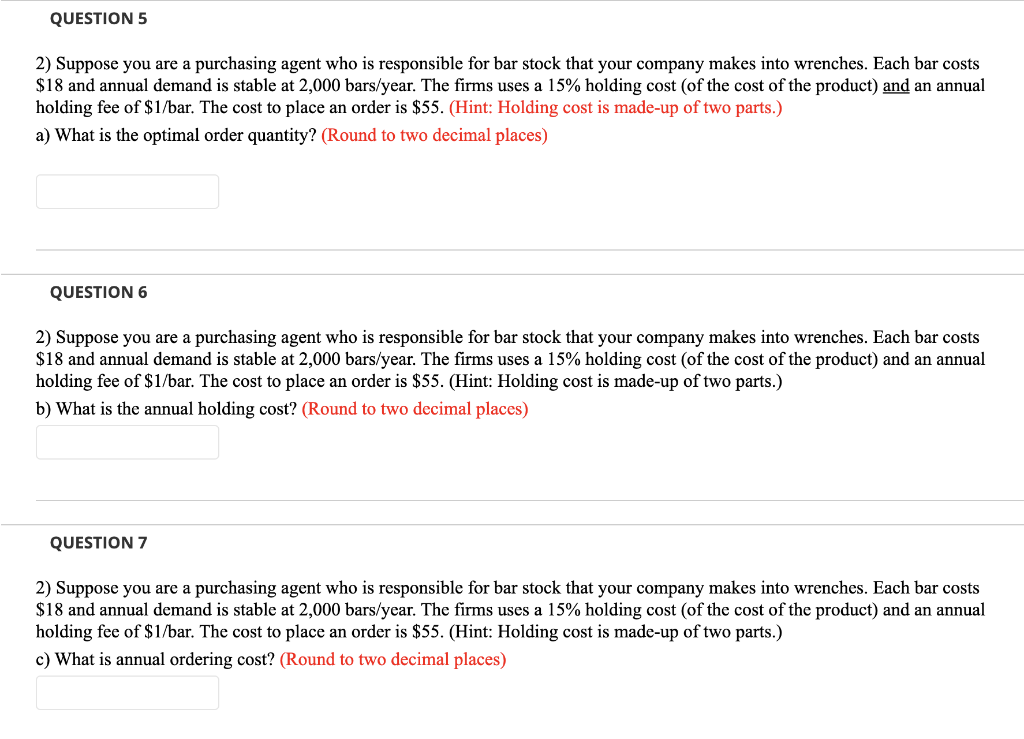
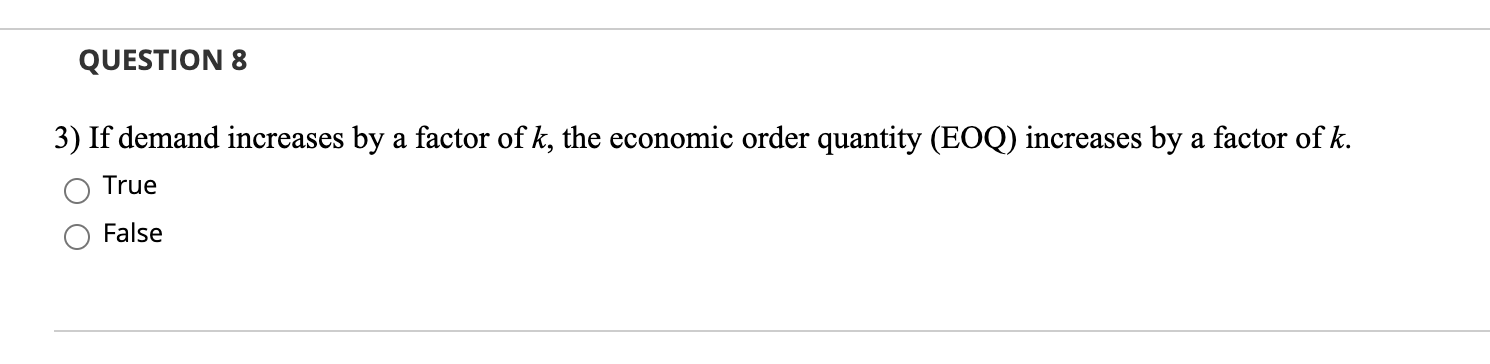
QUESTION 5 2) Suppose you are a purchasing agent who is responsible for bar stock that your company makes into wrenches. Each bar costs $18 and annual demand is stable at 2,000 bars/year. The firms uses a 15% holding cost of the cost of the product) and an annual holding fee of $1/bar. The cost to place an order is $55. (Hint: Holding cost is made up of two parts.) a) What is the optimal order quantity? (Round to two decimal places) QUESTION 6 2) Suppose you are a purchasing agent who is responsible for bar stock that your company makes into wrenches. Each bar costs $18 and annual demand is stable at 2,000 bars/year. The firms uses a 15% holding cost (of the cost of the product) and an annual holding fee of $1/bar. The cost to place an order is $55. (Hint: Holding cost is made up of two parts.) b) What is the annual holding cost? (Round to two decimal places) QUESTION 7 2) Suppose you are a purchasing agent who is responsible for bar stock that your company makes into wrenches. Each bar costs $18 and annual demand is stable at 2,000 bars/year. The firms uses a 15% holding cost (of the cost of the product) and an annual holding fee of $1/bar. The cost to place an order is $55. (Hint: Holding cost is made up of two parts.) c) What is annual ordering cost? (Round to two decimal places) QUESTION 8 3) If demand increases by a factor of k, the economic order quantity (EOQ) increases by a factor of k. True False

Step by Step Solution

There are 3 Steps involved in it

1 Expert Approved Answer
Step: 1 Unlock blur-text-image

Question Has Been Solved by an Expert!

Get step-by-step solutions from verified subject matter experts

Step: 2 Unlock
Step: 3 Unlock

Students Have Also Explored These Related General Management Questions!