







Question: Question 5 QUESTION 6 Consider the following Python function h2i() : def h2i (obj) : source = str (obj) . lower () temp = '()'
Question 5
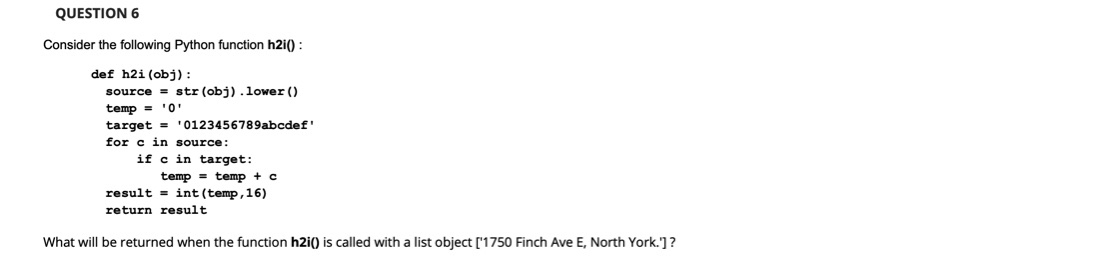
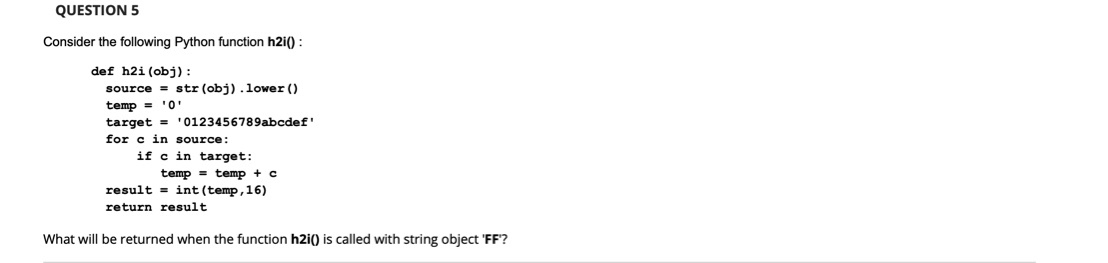
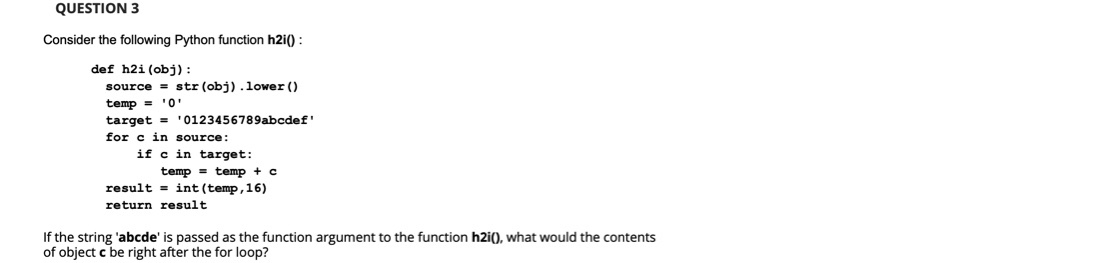
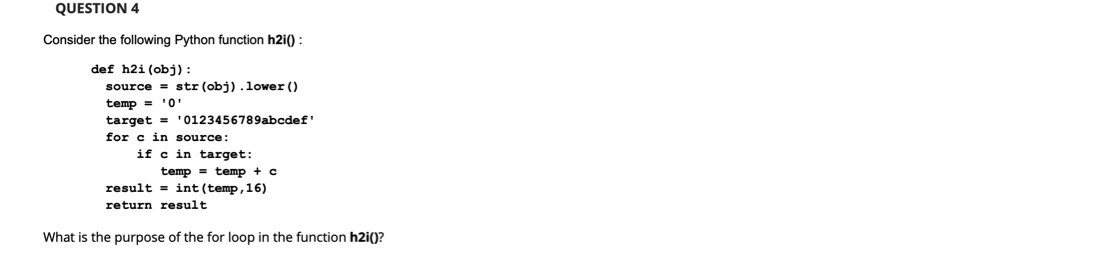
QUESTION 6 Consider the following Python function h2i() : def h2i (obj) : source = str (obj) . lower () temp = '()' target = '0123456789abcdef' for c in source: if c in target: temp = temp + c result = int (temp, 16) return result What will be returned when the function h2i() is called with a list object ['1750 Finch Ave E, North York."]?QUESTION 5 Consider the following Python function h2i() : def h2i (obj) : source = str (obj) . lower () temp = '0' target = '0123456789abcdef' for c in source: if c in target: temp = temp + c result = int (temp, 16) return result What will be returned when the function h2i() is called with string object 'FF"?QUESTION 3 Consider the following Python function h2i() : def h2i (obj) : source = str (obj) . lower () temp = '(' target = '0123456789abcdef' for c in source: if c in target: temp = temp + c result = int (temp, 16) return result If the string 'abcde' is passed as the function argument to the function h2i(), what would the contents of object c be right after the for loop?QUESTION 4 Consider the following Python function h2i() : def h2i (obj) : source = str (obj) . lower () temp = '0' target = '0123456789abcdef' for c in source: if c in target: temp = temp + c result = int (temp , 16) return result What is the purpose of the for loop in the function h2i()
Step by Step Solution
There are 3 Steps involved in it

Get step-by-step solutions from verified subject matter experts
 Study Help