







Question: Question (50 marks) Develop a project communication plan, providing a narrative explaining the content of the plan. Nestl South Africa: leading multi-stakeholder partnership response in
Question (50 marks)
Develop a project communication plan, providing a narrative explaining the content of the plan.
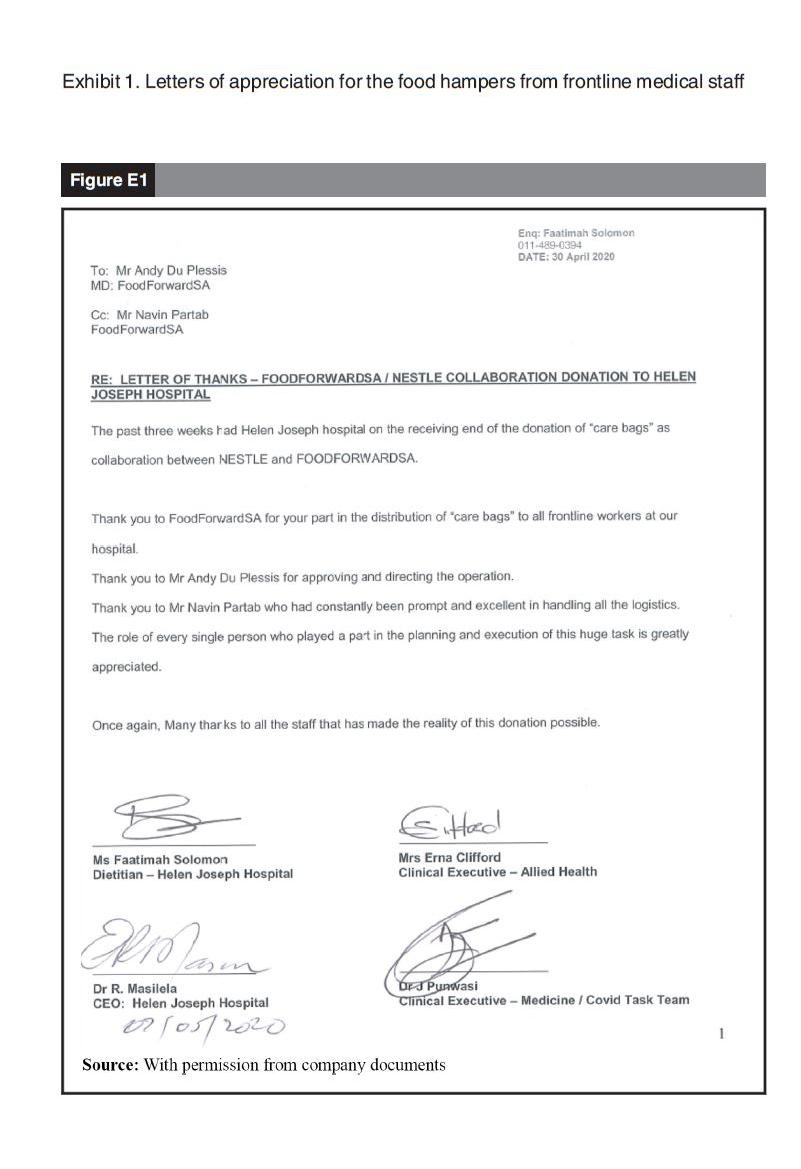
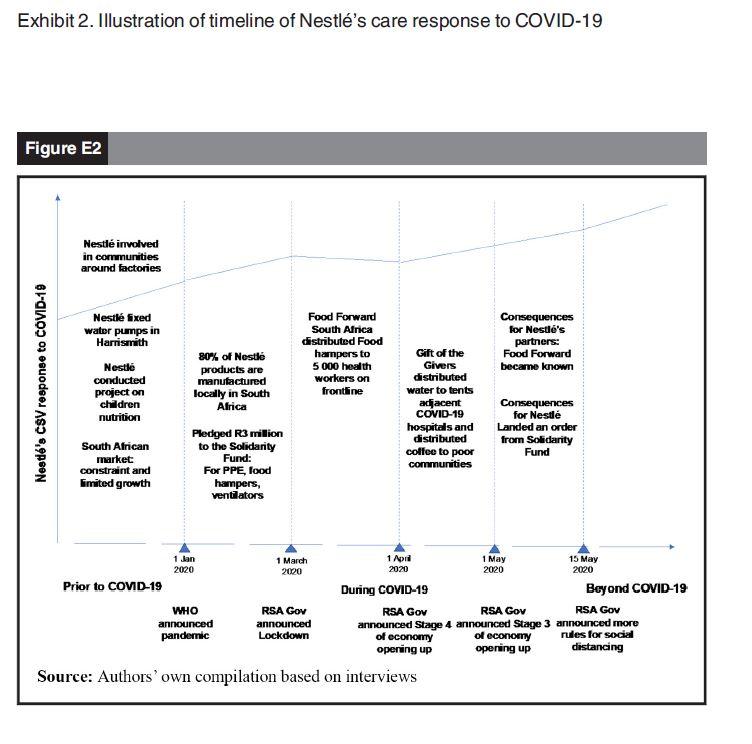
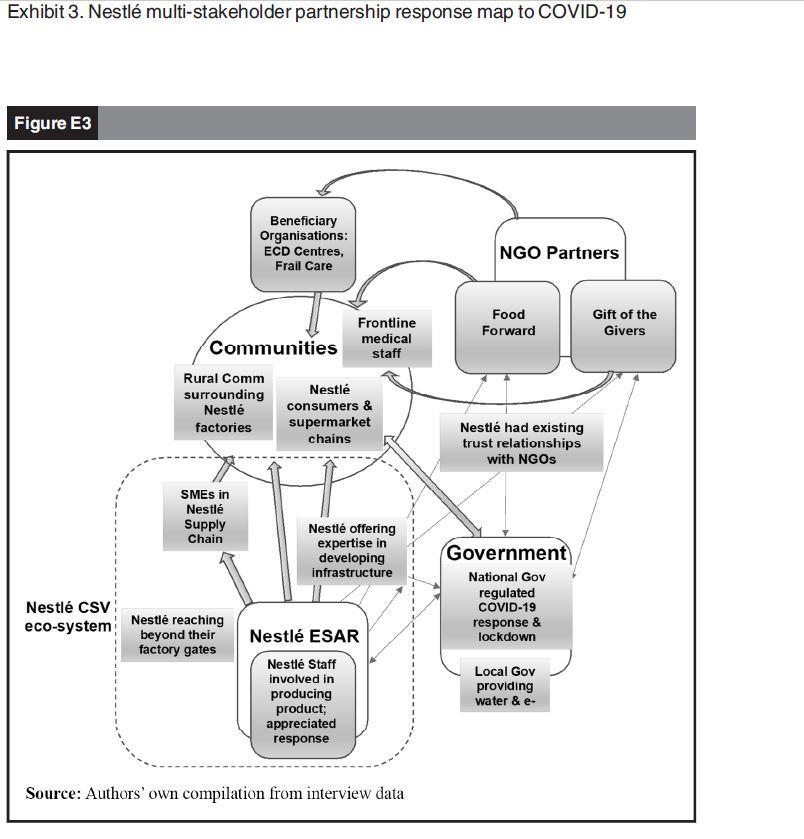
Nestl South Africa: leading multi-stakeholder partnership response in the COVID-19 context Ravi Pillay and Caren Brenda Scheepers n 15 May 2020, at 7:00 a.m., Bruno Olierhoek, Chairman and Managing Director of Nestl East and Southern Africa Region (ESAR), was on his way to work in Bryanston. He considered his dilemma of which existing or new strategic partnerships should the organisation leverage to ensure a meaningful response to the crisis? As he drove past a minibus taxi full of nurses, he was reminded of some of their initiatives taken in response to COVID-19 relating to these frontline workers at under resourced public hospitals. He thought it important to evaluate these initiatives to ascertain whether they remained true to Nestl corporate purpose of enhancing quality of life and contributing to a healthier future. He looked back at the earlier dilemma his organisation faced around February 2020, when the COVID-19 pandemic first became a reality. They contemplated then, where should Nestl's focus its community support and relief initiatives during the crisis? Olierhoek and his executives carefully considered whether Nestle South Africa should donate product, or whether this would this place its factories under too much pressure because of higher consumer and supermarket demand during the lockdown. Nestl had always been concerned with investing for the long term in the communities and society in which it operated. Creating shared value (CSV) formed part of the organisation's DNA. Nestl endeavoured to live up to the idea of CSV and wanted to contribute more than mere philanthropy, in the form of financial investment, during the pandemic, but they were not sure which partnerships to leverage for this purpose. Background on Nestl East and Southern Africa Region and its Chairman and Managing Director Olierhoek, of Dutch and French origin, began his working career at Nestl as a graduate trainee 25 years ago. In 2019, he began heading up Nestl ESAR, a region comprising 23 countries with its headquarters in Johannesburg. He had experienced similar crises to that of COVID-19. He had been working for Nestl Vietnam when SARS broke out and the country was locked down to slow the spread of the virus, and was in Cameroon during an outbreak of Ebola. Nestl was established 154 years ago in Switzerland, and its South African operation was launched 50 years later. The company was rated as the world's largest, most diversified food and beverages company [1]. It had 447 factories, employed 339,000 people and its products were sold in nearly 190 countries. Nestl globally had demonstrated consistent prosperity, with 25 consecutive years of dividend increases [2]. According to Olierhoek, however, Nestl's focus included much more than short-term dividends for its shareholders. Nestl's global response to COVID-19, for example, included a significant donation to the International Federation of the Red Cross [3] which was rolled out throughout the regions in which the group operated. Nestl was a world leader in many of the fastest-growing food and beverages categories. Nestl Group's total global sales for 2019 was CHF 92.6bn, of which the North and South America regions contributed CHF 42.3bn; Europe, Middle East and North Africa CHF 26.5bn; and Asia, Oceania and Sub-Saharan Africa CHF 23.8bn. (Nestl ESAR forms part of the Asia, Oceania and Sub-Saharan Africa geographical area.) The fast-developing emerging markets made up 42% of Group sales [4]. When the threat of the pandemic loomed, Olierhoek knew Nestle had to act quickly and decisively to ensure its efforts were appropriately directed with maximum impact. He had to make decisions that would meet both consumer and staff expectations while at the same time take business reality into account, which was that South Africa and surrounding countries were facing constrained growth. During COVID-19 When the pandemic hit South Africa, Nestle was faced with various donation options. One of these was to donate to the high-profile Solidarity Fund which was set up early on to direct business contributions [5]. Other options included donations of money, skills in terms of nutrition or Nestl products. Olierhoek considered a combination of commitments to the national Solidarity Fund which was independently administered to support several needs. Its mandate included distributing food hampers to indigent communities, providing masks to health-care workers and communities, providing sanitising equipment and ventilators as well as donating Nestl products to those in need. Health-care workers' needs especially in under resourced public hospitals were important. Stories from Italy of nurses and other medical personnel dying from exhaustion brought home the need to help this group of workers who endured difficult working conditions and had limited time to buy food. How should Nestle meet this need? The public would expect a significant gesture from a food company. What should that response entail? Food forward partnership Food Forward was an NGO and member of the Global Food Banking Network [6]. It was a non-profit entity which endeavoured to connect a world of access to a world of need by recovering edible surplus food and distributing it to community organisations that served the poor. Nestle was one of Food Forward's partner organisations. In considering possible ways of supporting those in need during COVID-19, Nestl South Africa decided to reach out to Food Forward. Ravi Pillay, former full-time employee of Nestl South Africa and currently adviser to Olierhoek, have been sitting on the board of Food Forward South Africa (FFSA) for the previous eight years [7]. Products were chosen as Nestl's predominant way of responding to the COVID-19 crisis because the organisation had direct control over these and could release them immediately. It was essential that people be adequately nourished during the pandemic and Nestl was able to distribute quality products as well as control all the decisions necessary to make that happen. The plight of health-care workers was top of mind for Nestl, which therefore focused on how to help support those on the front line of the fight against the pandemic. The company's executive team realised it could not help everyone. What it could do, however, was to send a token of appreciation to healthcare workers in the form of fortified products. Pillay identified four COVID-19-nominated hospitals, namely, Helen Joseph and Charlotte Maxeke hospitals in Johannesburg; Tygerberg Hospital in Cape Town; and Richmond Hospital in KZN. In total, 5,000 selected health-care workers, who would not have had the kind of resources available to doctors, for example, each received a basket of fortified Nestl products once a week for three weeks. The recipients were split proportionately according to the COVID-19 statistics such that 2,500 workers were chosen from the Gauteng hospitals and the rest split between the Western Cape and KZN. Fortified products containing micronutrients, including powdered milk, coffee, Maggi noodles, Cremora (a non-dairy creamer) and chocolate treats, were included in the baskets that were delivered to the 5,000 health-care workers. These saved the workers from having to visit supermarkets during the initial period of the lockdown. Nestl's Pillay used the trust relationship he had with Andy du Plessis, CEO of Food Forward SA, to expedite the project. They agreed on what had to be done and then immediately kicked off the project. Nestl was accustomed to delivering product to wholesalers and retailers, but had no experience delivering to hospitals. The organisation was also unaware of how processes would work during the lockdown; for example, which workers would be classified as "essential", was it possible to make deliveries to hospitals, and if so, what paperwork would be required? It therefore made sense for Nestle to outsource product delivery to the frontline. Food Forward SA had an extensive infrastructure, could collect goods from Nestl's various distribution centres throughout the country and package these into well formulated boxes of goods that could easily be taken home by the health-care workers. Nestl allocated a project budget sufficient to ensure efficient execution. A senior member of its executive was appointed to manage the project, testimony to the importance with which Nestle viewed the project. This ensured rapid approvals leading to efficient delivery. Per the World Health Organisation's International Code of Marketing of Breast-milk Substitutes, Nestle did not donate infant formula. In line with COVID-19 global policies, it also ensured that audit processes were strictly followed. There were some initial hiccups, such as insufficient packaging material for the first 5,000 packs. A senior exco member, however, stepped in to donate packs from his inventory to ensure timely execution. Letters of appreciation were received from the hospitals following this programme (Exhibit 1). It was gratifying for Nestl's executive and staff to see that this gesture had landed so well. Nestl did not take the seamless project execution for granted and was extremely appreciative of the work done by its project partner. Food Forward SA had to contact the hospital superintendents, explain the partnership, identify the recipients and then ensure the correct people received food parcels when they were delivered. Nestl's proactive decision-making, before lockdown began, ensured that country-wide deliveries to the health-care workers began in the first week of the lockdown. The project required careful pre-planning as well as execution, and had to be compliant. The speed with which it had to be executed put great pressure on Nestl and Food Forward SA. Both partners, however, focused on moving quickly to ensure the project rolled out efficiently, and sorted out issues as they arose. Gift of the Givers partnership The active and globally reputable NGO, Gift of the Givers[8], was another potential partner. The NGO already played a vital role in the pandemic and, using a tried and tested modus operandi, had rapidly erected tents at COVID-19-nominated hospitals to serve as isolation areas. It urgently needed supplies for patients. Ravi Pillay had been in touch with Dr Sooliman, co-founder of Gift of the Givers, for quite some time, discussing possible collaboration. The focus was on patients, their visitors and caregivers. Nestl decided to offer various products as well as many tons of coffee and bottled water in anticipation of a cold winter. The benefit of collaborating with Gift of the Givers was that it was an extremely efficient operation. Gift of the Givers shared video clips showing the distribution of Nestl's products [ 9] The structure of Nestl to execute a donation strategy Nestl was structured such that the different divisions each had a head, the equivalent of a CEO, who reported to the Chairman and MD. In the build-up to the pandemic, South Africa experienced a degree of panic buying, and there was concern from these heads about how much product could be released for donation by each division, taking into account that there also needed to be adequate quantities for supermarkets. Olierhoek appointed senior executive team member, Nicole Roos, as the internal coordinator. Her task was to consult with the individual businesses to obtain an indication of how much product would be available. Donations had to adhere to both Nestl's donations policy as well as to the policies that had specifically been put in place with regard to COVID-19. Compliance was vital and all projects had to adhere to local donation laws. In this unchartered territory of national crisis and global pandemic, leadership was tasked with making the best decisions, given the COVID-19 context, in terms of satisfying the expectations of society, consumers and Nestle employees. Olierhoek's knowledge of the South African landscape, together with his insight into other emerging markets (he had headed up Nestl in Pakistan, Cameroon and Vietnam), informed his decisions around COVID-19. He had to identify all the relevant stakeholders and role-players in the business society. This informed his decision-making, ensuring Nestl's investment would be applied sustainably. Beyond COVID-19 and moving forward Nestl's donations sent a strong signal internally and its employees responded with pride. There was an outpouring of emotion and patriotism when they saw what Nestle was doing for the communities in which it operated and served. While Nestl was a Swiss company, it was still proudly South African in the sense that 90% of its products were manufactured in the country. Another outcome that will last far beyond the current pandemic was that Food Forward SA became well-known as a reputable redistributor of food to the poor. The NGO supported government as authorities were struggling to respond rapidly to the high demand from poor communities. NGOs were able to operate where they had a mandate, and Food Forward's expertise helped support government in its efforts to ensure that millions of people, who could not work during the lockdown, and therefore had no income, had access to food. The COVID-19 crisis also created opportunities to accelerate Nestl's CSV projects. For example, COVID-19 demanded that rural communities become more entrepreneurial to support themselves. In addition, the need for more sustainable and environmentally friendly solutions required companies to find more circular economy business models and initiatives. As a result, one of Nestl's CSV projects, which uses coffee grounds to cultivate mushrooms, was accelerated by the COVID-19 crisis. Olierhoek wondered what other opportunities might exist to accelerate CSV projects in rural communities during COVID-19, and how Nestl's purpose of enhancing the quality of life and contributing to a healthier future might direct further relief assistance. Notes 1. Understanding Nestl, retrieved from www.nestle.com/investors/overview 2. Understanding Nestl, retrieved from www.nestle.com/investors/overview 3. International Committee from the Red Cross is an independent, neutral organisation, ensuring humanitarian protection and assistance for victims in times of emergencies, retrieved from www. icrc.org/en/who-we-are/mandate 4. Understanding Nestl, retrieved from www.nestle.com/investors/overview 5. www.solidarityfund.co.za/; Video clip of the water system repairs available at https://youtu.be/ ExXM11Xy4M4 6. Food Forward South Africa was a non-profit company in South Africa which endeavours to connect a world of access to a world of need by recovering edible surplus food and distributing it to community organisations that serve the poor, https://foodforwardsa.org/ . See video clip on the packing in action at https://youtu.be/Mj6u1p-jyQk 7. The Global FoodBanking Network was an international nonprofit with a presence in 40 countries, uniting and strengthening food banks, retrieved from www.foodbanking.org/what-we-do/ on 20 May 2020. 8. The Gift of the Givers Foundation is an NGO who is specialising in disaster management, water provision and hunger alleviation, https://giftofthegivers.org/disaster-response/ 9. See clips of the handing out of Nestl water and coffee by the Gift of the Givers at https://youtu.be/ TDSd4Z5AJ4s Exhibit 1. Letters of appreciation for the food hampers from frontline medical staff Figure E1 Enq: Faatimah Solomon 011.4899394 DATE: 30 Apri 2020 To: Mr Andy Du Plessis MD: FoodForwardSA Cc: Mr Navin Partab FoodForwardSA RE: LETTER OF THANKS - FOODFORWARDSA / NESTLE COLLABORATION DONATION TO HELEN JOSEPH HOSPITAL The past three weeks rad Helen Joseph hospital on the receiving end of the donation of "care bags" as collaboration between NESTLE and FOODFORWARDSA. Thank you to FoodForvardSA for your part in the distribution of "care bags" to all frontline workers at our hospital. Thank you to Mr Andy Du Plessis for approving and directing the operation. Thank you to Mr Navin Partab who had constantly been prompt and excellent in handling all the logistics. The role of every single person who played a pat in the planning and execution of this huge task is greatly appreciated. Once again, Many thar ks to all the staff that has made the reality of this donation possible. Ms Faatimah Solomon Dietitian - Helen Joseph Hospital Mrs Erna Clifford Clinical Executive - Allied Health Dr R. Masilela CEO: Helen Joseph Hospital Clinical Executive - Medicine / Covid Task Team 1 Source: With permission from company documents Exhibit 2. Illustration of timeline of Nestl's care response to COVID-19 Eioure E? Exhibit 3. Nestl multi-stakeholder partnership response map to COVID-19
Step by Step Solution
There are 3 Steps involved in it

Get step-by-step solutions from verified subject matter experts
 Study Help