Question: Question 6 0/2 points Clinical correlation: A patient had damage to the left optic tract. What would you predict to be the effect? There would
Question 6 0/2 points Clinical correlation: AQuestion 6 0/2 points Clinical correlation: AQuestion 6 0/2 points Clinical correlation: AQuestion 6 0/2 points Clinical correlation: AQuestion 6 0/2 points Clinical correlation: AQuestion 6 0/2 points Clinical correlation: A
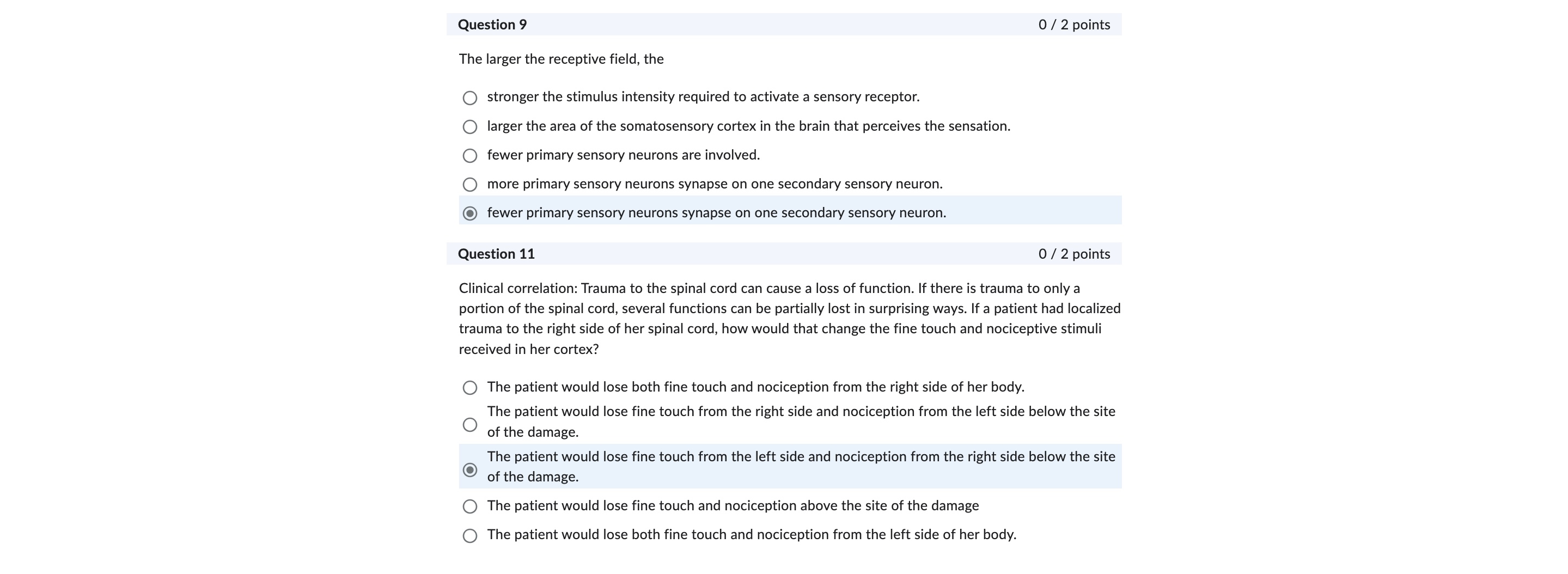
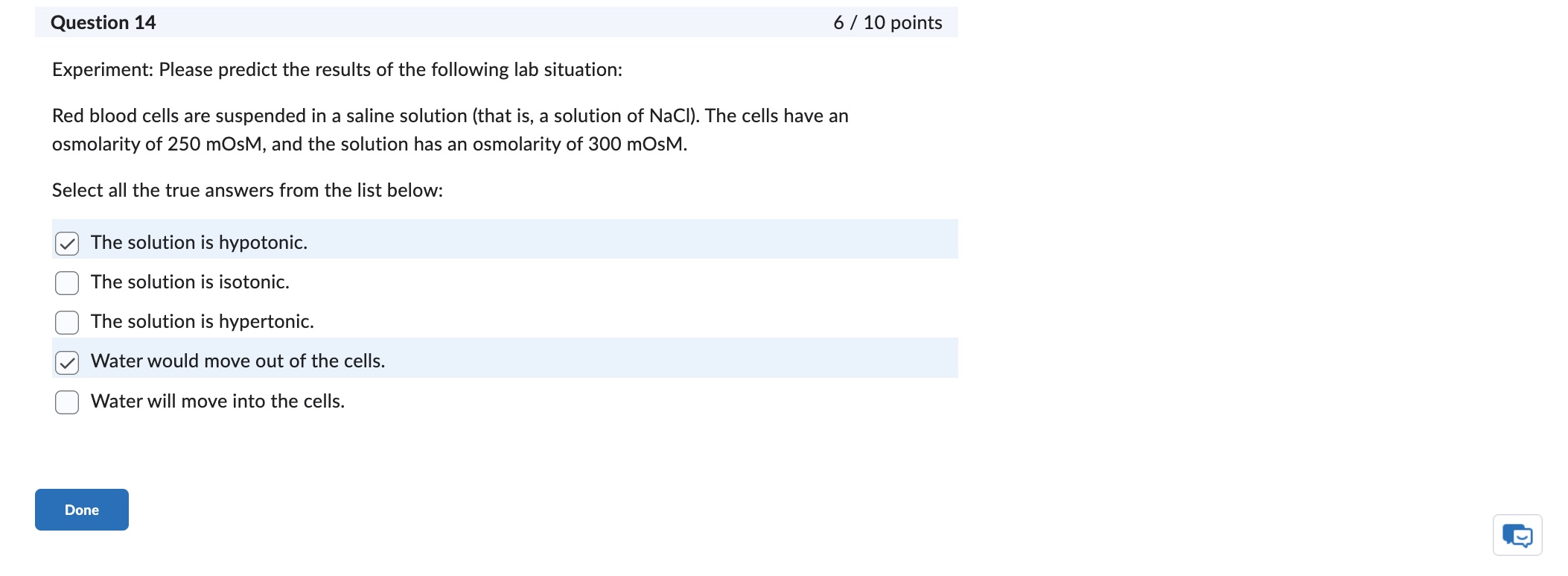
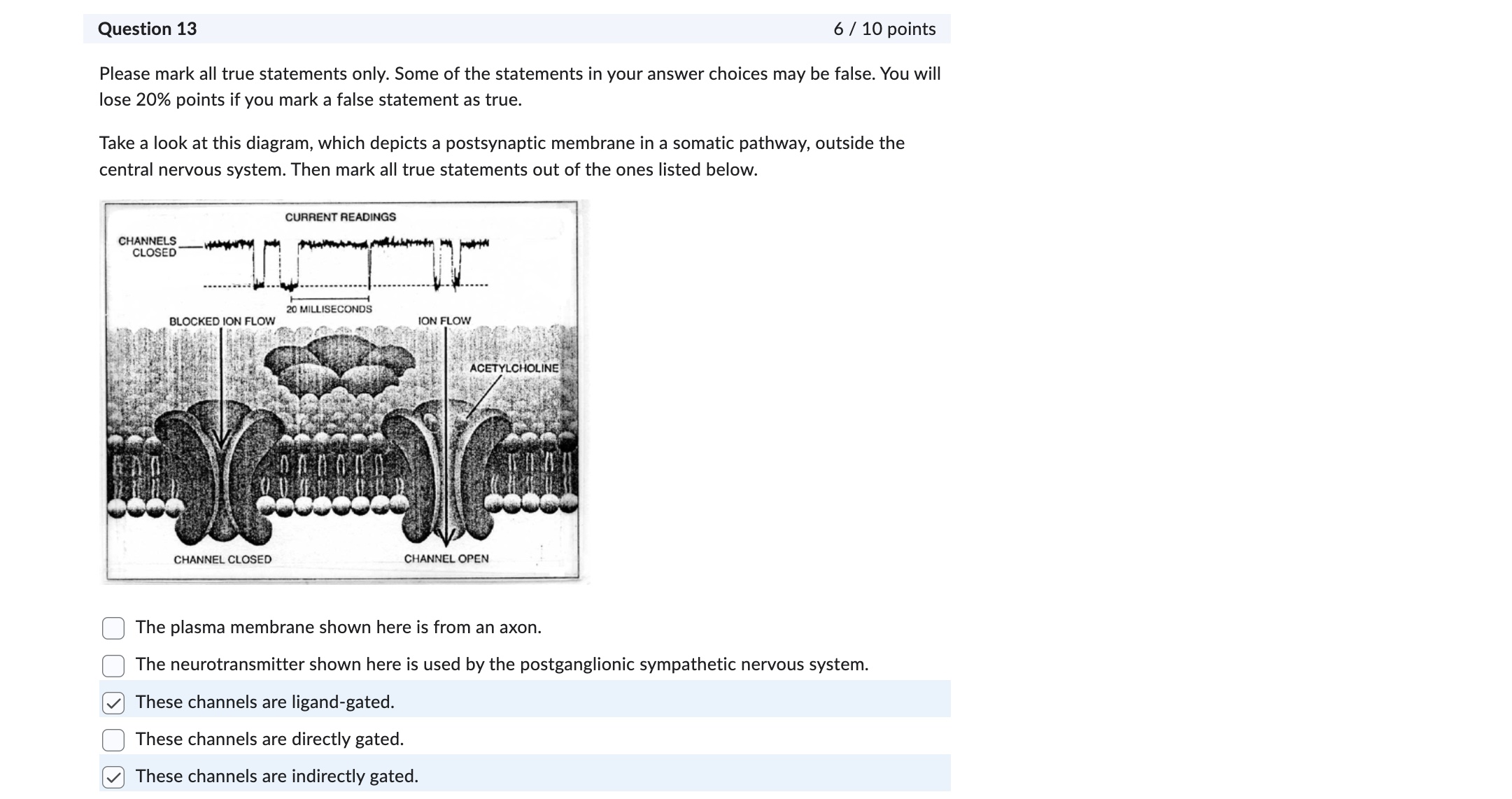
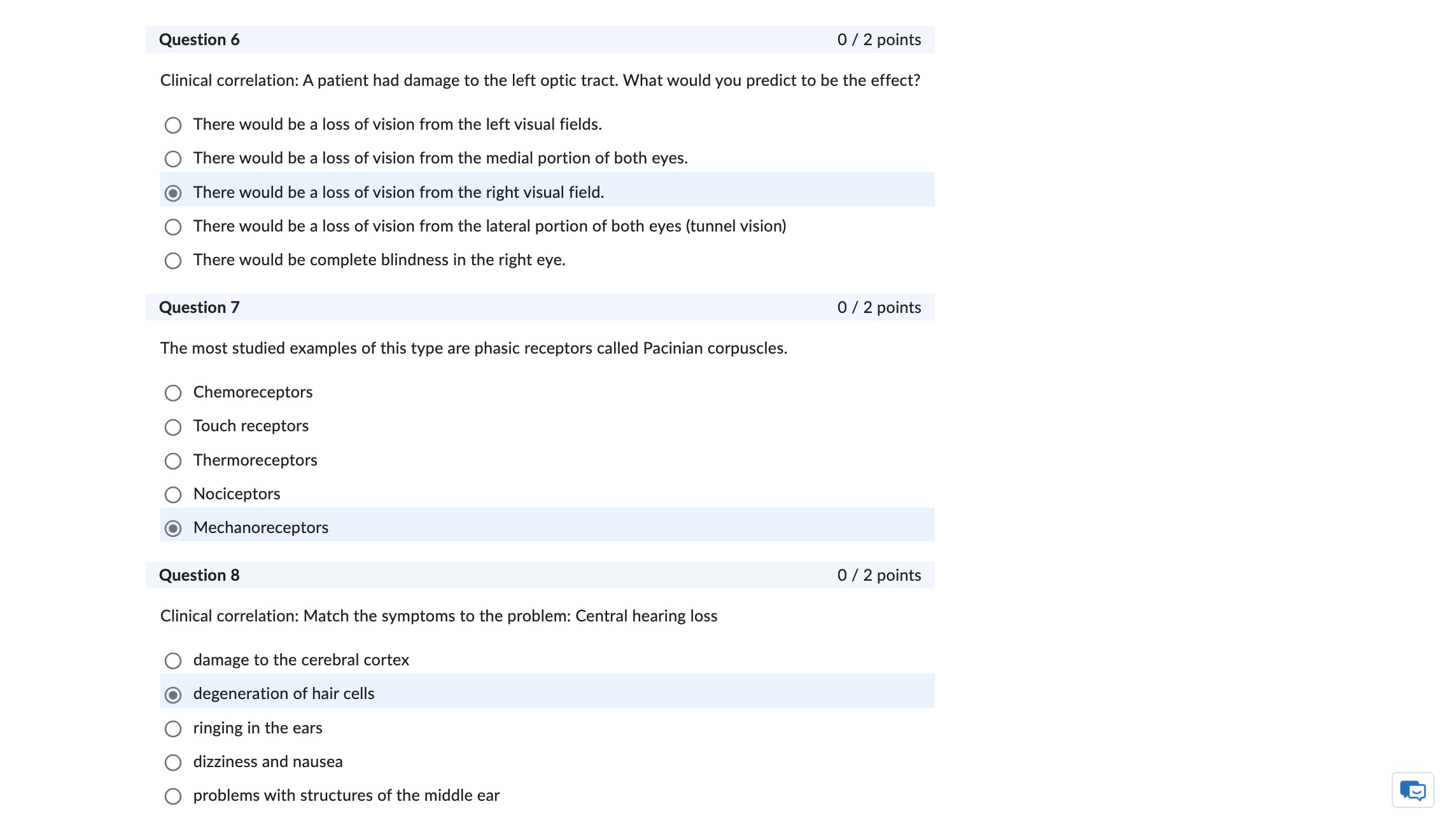
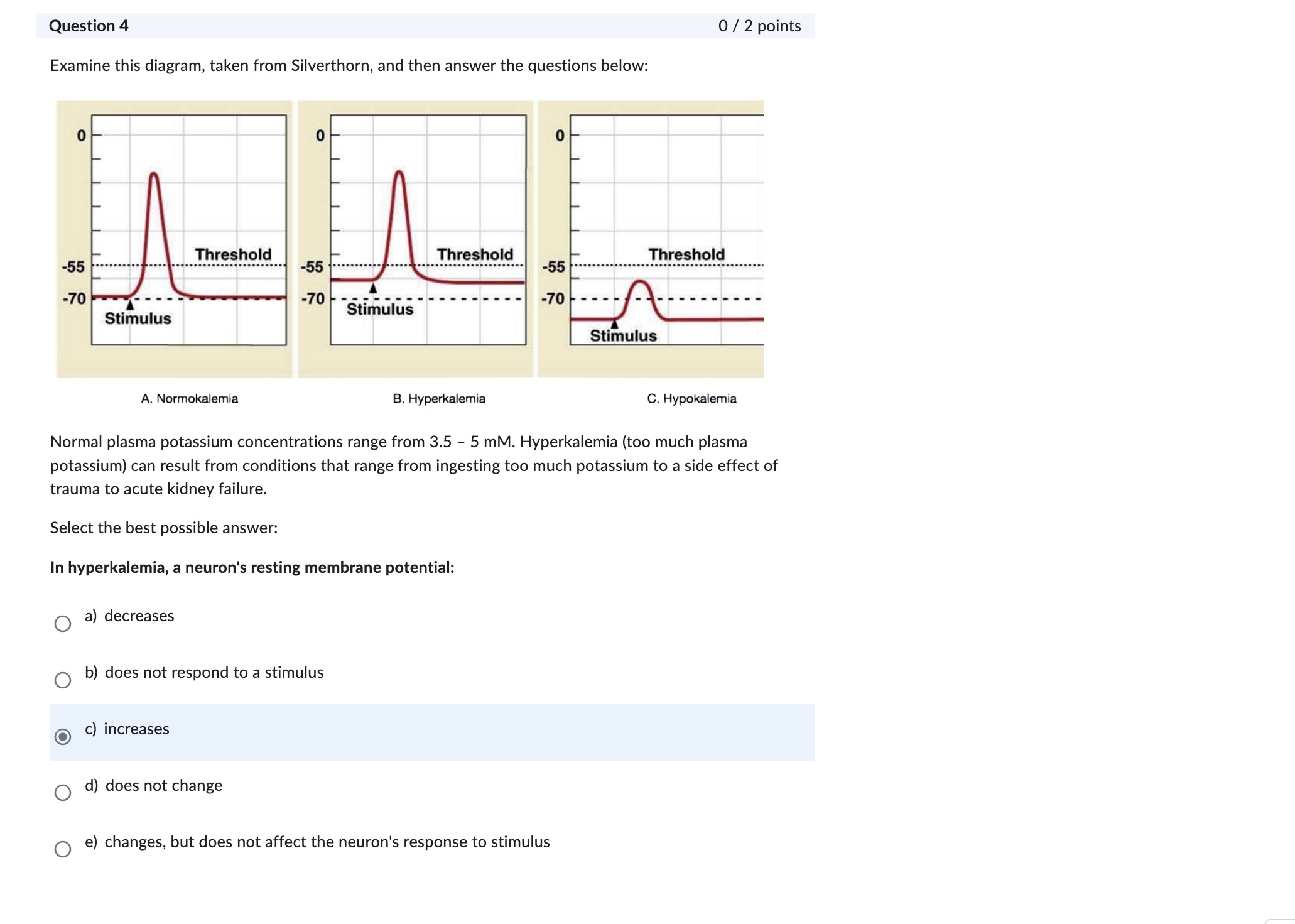
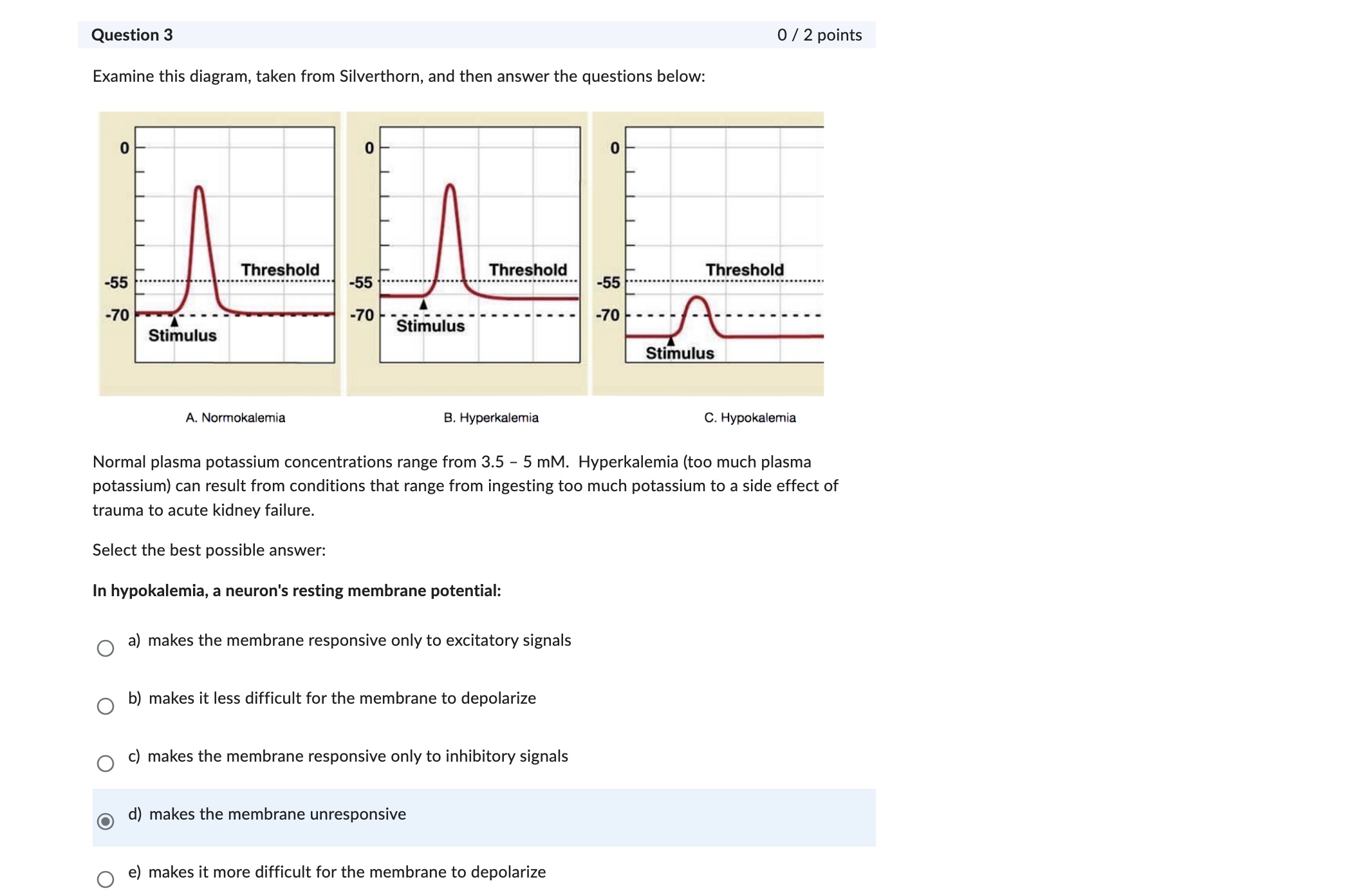
Question 6 0/2 points Clinical correlation: A patient had damage to the left optic tract. What would you predict to be the effect? There would be a loss of vision from the left visual fields. There would be a loss of vision from the medial portion of both eyes. @ There would be a loss of vision from the right visual field. There would be a loss of vision from the lateral portion of both eyes (tunnel vision) There would be complete blindness in the right eye. Question 7 0/2 points The most studied examples of this type are phasic receptors called Pacinian corpuscles. Chemoreceptors Touch receptors Thermoreceptors Nociceptors @ Mechanoreceptors Question 8 0/2 points Clinical correlation: Match the symptoms to the problem: Central hearing loss damage to the cerebral cortex @ degeneration of hair cells ringing in the ears dizziness and nausea problems with structures of the middle ear Question 4 0 / 2 points Examine this diagram, taken from Silverthorn, and then answer the questions below: Threshold -55 ......... Threshold Threshold -55 - -70 -70 -70 Stimulus Stimulus Stimulus A. Normokalemia B. Hyperkalemia C. Hypokalemia Normal plasma potassium concentrations range from 3.5 - 5 mM. Hyperkalemia (too much plasma potassium) can result from conditions that range from ingesting too much potassium to a side effect of trauma to acute kidney failure. Select the best possible answer: In hyperkalemia, a neuron's resting membrane potential: a) decreases b) does not respond to a stimulus c) increases ( d) does not change ( e) changes, but does not affect the neuron's response to stimulusQuestion 3 0/2 points Examine this diagram, taken from Silverthorn, and then answer the questions below: Threshold Stimulus A. Normokalemia B. Hyperkalemia C. Hypokalemia Normal plasma potassium concentrations range from 3.5 - 5 mM. Hyperkalemia (too much plasma potassium) can result from conditions that range from ingesting too much potassium to a side effect of trauma to acute kidney failure. Select the best possible answer: In hypokalemia, a neuron's resting membrane potential: O a) makes the membrane responsive only to excitatory signals b) makes it less difficult for the membrane to depolarize c) makes the membrane responsive only to inhibitory signals d) makes the membrane unresponsive e) makes it more difficult for the membrane to depolarize Oo O O Question 9 0/2 points The larger the receptive field, the stronger the stimulus intensity required to activate a sensory receptor. larger the area of the somatosensory cortex in the brain that perceives the sensation. fewer primary sensory neurons are involved. more primary sensory neurons synapse on one secondary sensory neuron. @ fewer primary sensory neurons synapse on one secondary sensory neuron. Question 11 0/2 points Clinical correlation: Trauma to the spinal cord can cause a loss of function. If there is trauma to only a portion of the spinal cord, several functions can be partially lost in surprising ways. If a patient had localized trauma to the right side of her spinal cord, how would that change the fine touch and nociceptive stimuli received in her cortex? The patient would lose both fine touch and nociception from the right side of her body. The patient would lose fine touch from the right side and nociception from the left side below the site of the damage. The patient would lose fine touch from the left side and nociception from the right side below the site of the damage. O (0) The patient would lose fine touch and nociception above the site of the damage O The patient would lose both fine touch and nociception from the left side of her body. Question 14 6/ 10 points Experiment: Please predict the results of the following lab situation: Red blood cells are suspended in a saline solution (that is, a solution of NaCl). The cells have an osmolarity of 250 mOsM, and the solution has an osmolarity of 300 mOsM. Select all the true answers from the list below: The solution is hypotonic. (_) The solution is isotonic. O The solution is hypertonic. Water would move out of the cells. C) Water will move into the cells. Question 13 6 / 10 points Please mark all true statements only. Some of the statements in your answer choices may be false. You will lose 20% points if you mark a false statement as true. Take a look at this diagram, which depicts a postsynaptic membrane in a somatic pathway, outside the central nervous system. Then mark all true statements out of the ones listed below. CURRENT READINGS CHANNELS CLOSED 20 MILLISECONDS BLOCKED ION FLOW ION FLOW ACETYLCHOLINE CHANNEL CLOSED CHANNEL OPEN O The plasma membrane shown here is from an axon. O The neurotransmitter shown here is used by the postganglionic sympathetic nervous system. V These channels are ligand-gated. O These channels are directly gated. These channels are indirectly gated
Step by Step Solution

There are 3 Steps involved in it

1 Expert Approved Answer
Step: 1 Unlock blur-text-image
Question Has Been Solved by an Expert!

Get step-by-step solutions from verified subject matter experts

Step: 2 Unlock
Step: 3 Unlock

Students Have Also Explored These Related Accounting Questions!