







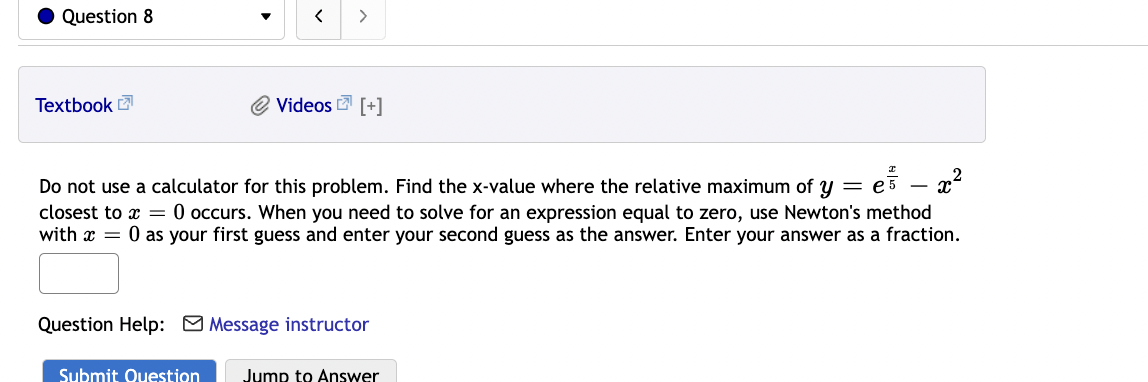
Question: . Question 8 Textbook @ Videos ' [+] Do not use a calculator for this problem. Find the x-value where the relative maximum of y
![. Question 8 Textbook @ Videos ' [+] Do not use](https://s3.amazonaws.com/si.experts.images/answers/2024/06/66798d2619bbf_02166798d25d9754.jpg)
![If @ Videos I: [+] Do not use a calculator for this](https://s3.amazonaws.com/si.experts.images/answers/2024/06/66798d2a5d3a4_02666798d2a308e2.jpg)
![Answer Question 6 Textbook 1: @ Videos I: [+] Use Newton's method](https://s3.amazonaws.com/si.experts.images/answers/2024/06/66798d2e5b1d6_03066798d2e11f00.jpg)
![@ Videos 5 [+] Use Newton's method to approximate a root of](https://s3.amazonaws.com/si.experts.images/answers/2024/06/66798d31b1ade_03366798d317faa8.jpg)
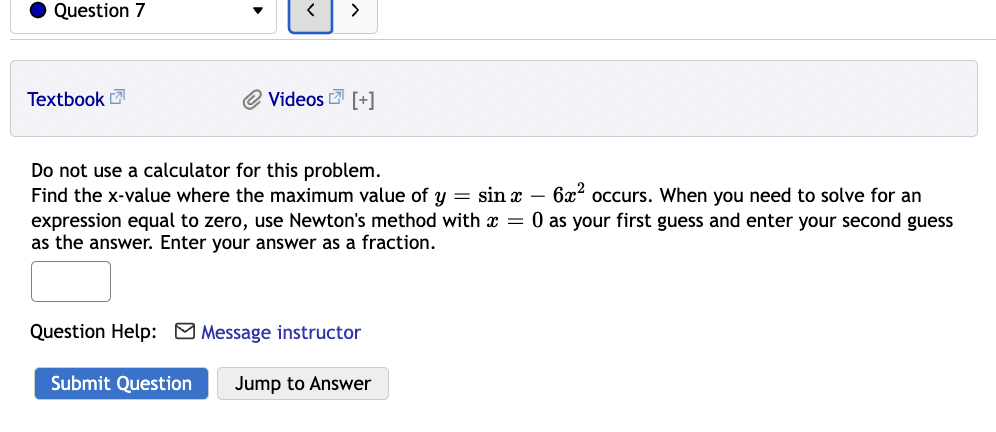
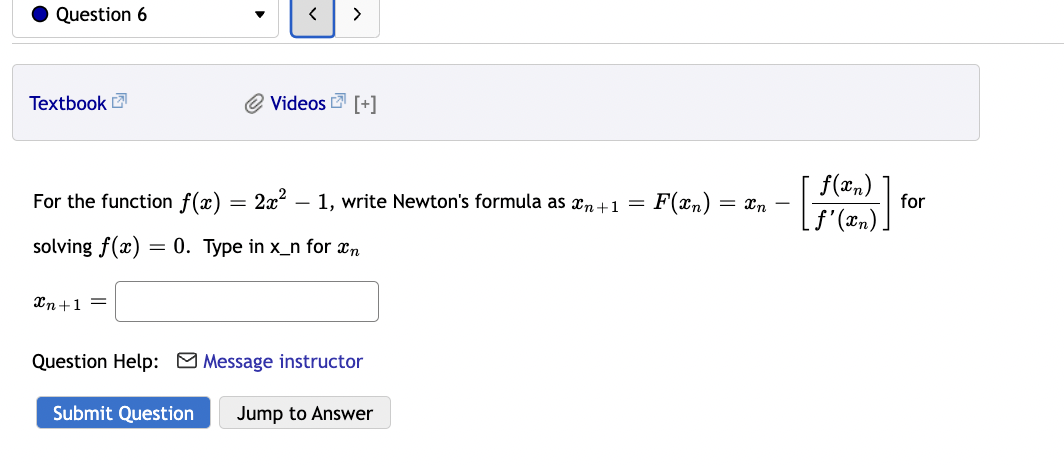
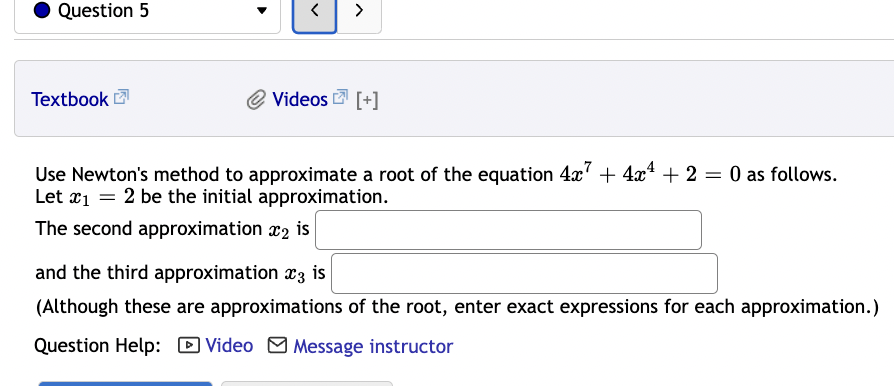
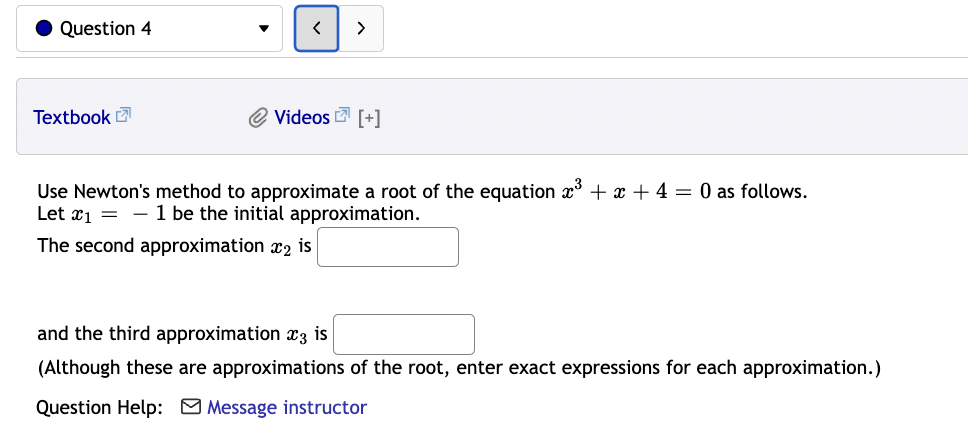
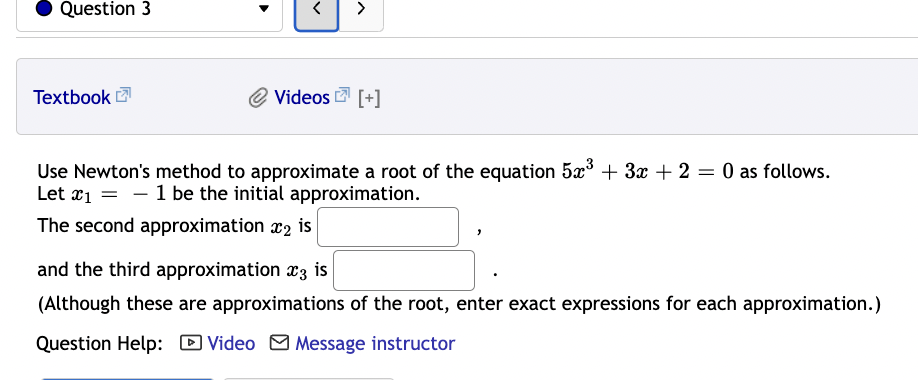
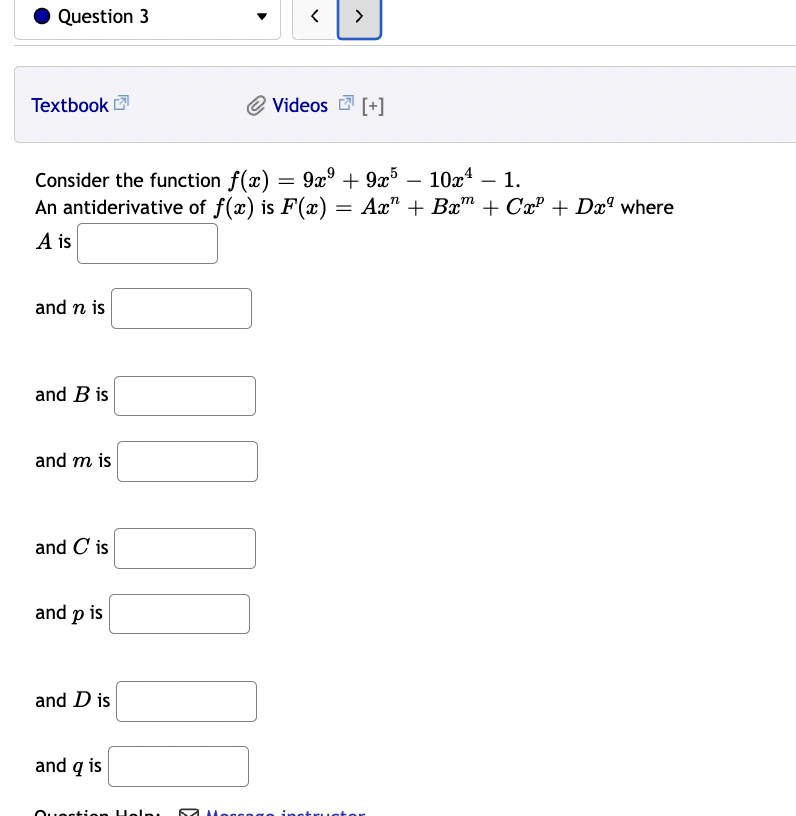
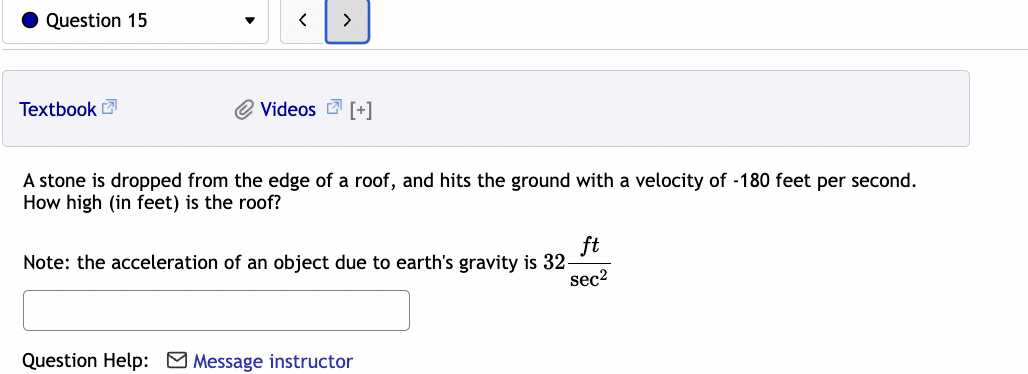
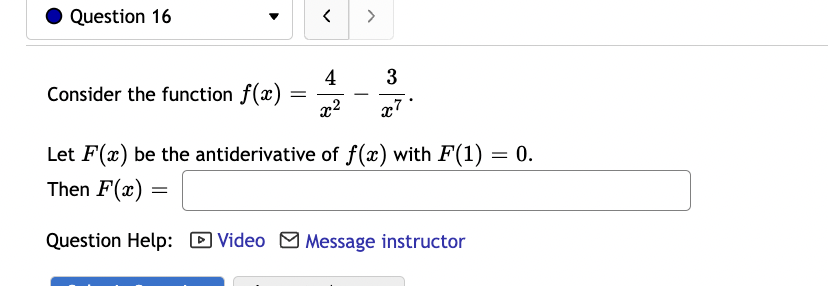
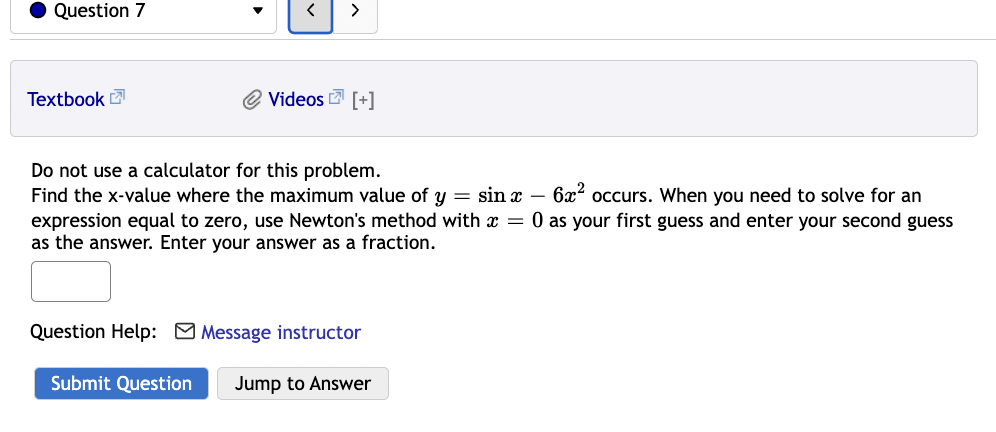
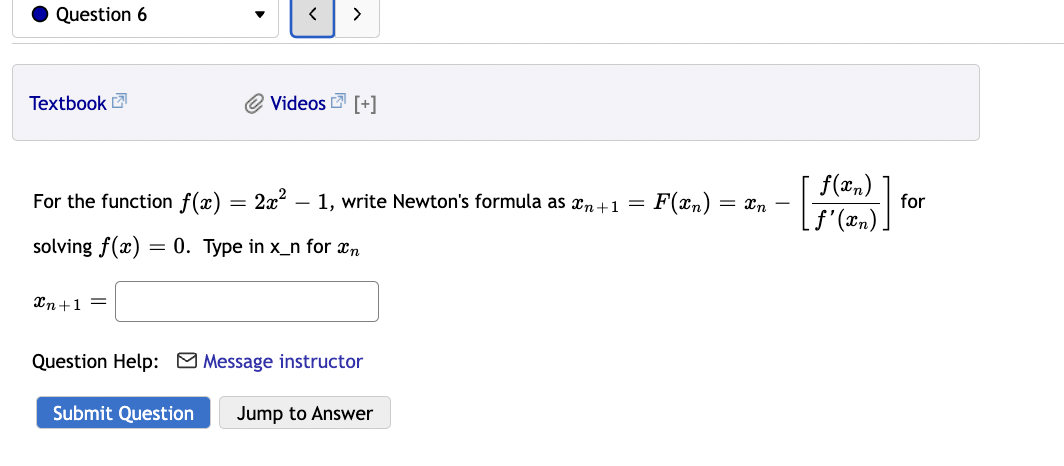
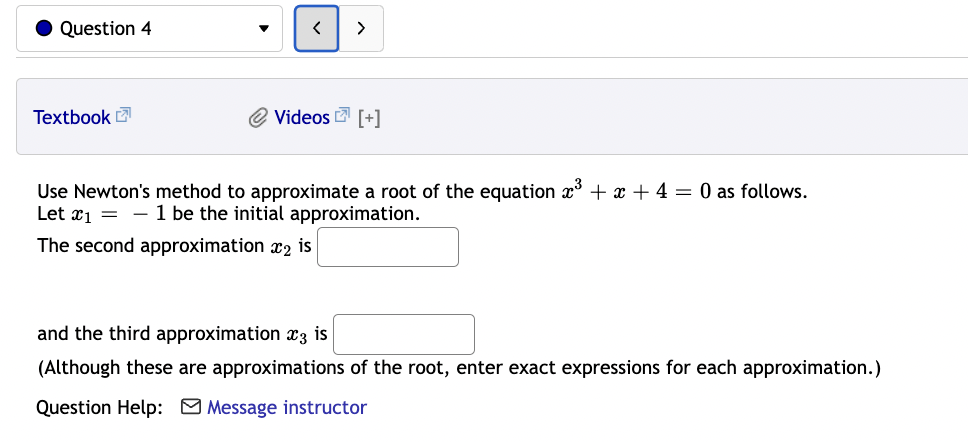
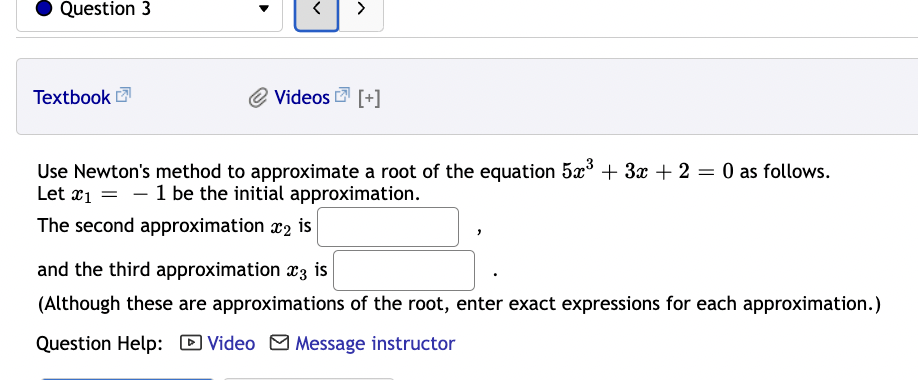
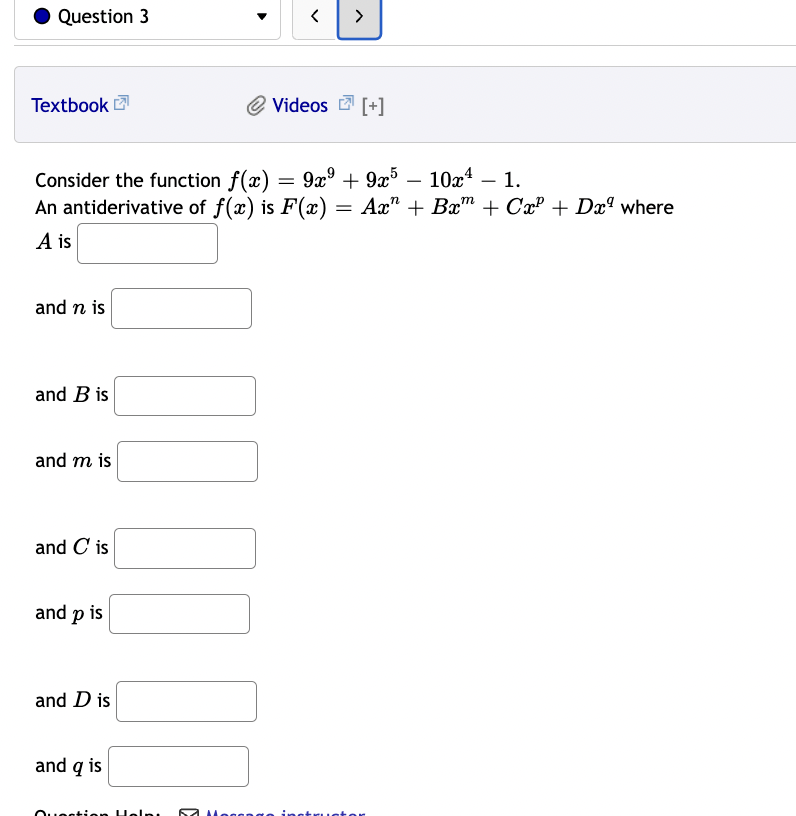
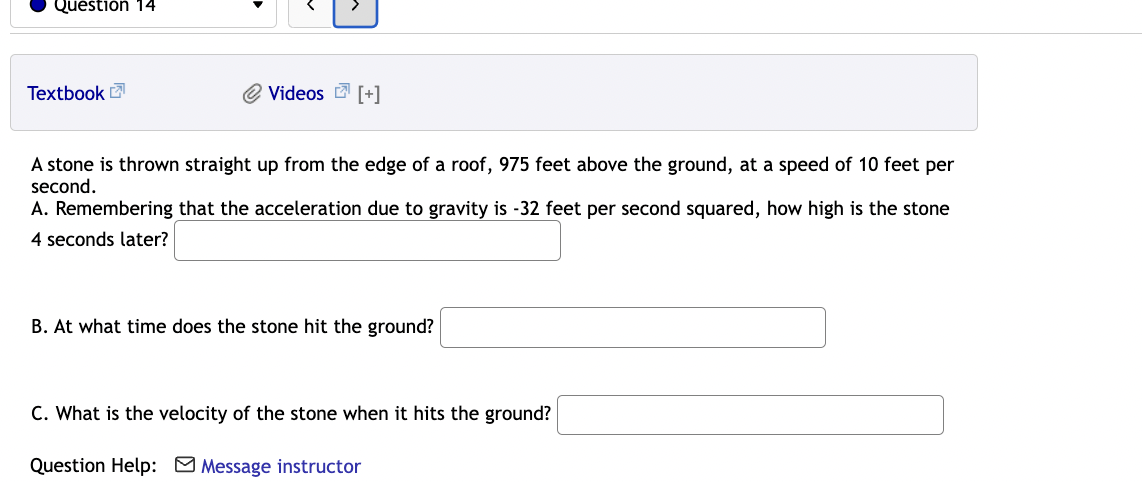
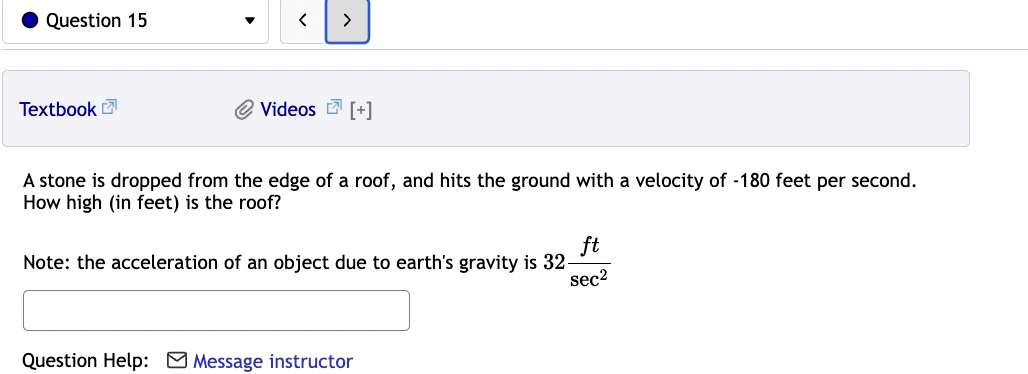
. Question 8 Textbook @ Videos ' [+] Do not use a calculator for this problem. Find the x-value where the relative maximum of y = e5 - x2 closest to x = 0 occurs. When you need to solve for an expression equal to zero, use Newton's method with x = 0 as your first guess and enter your second guess as the answer. Enter your answer as a fraction. Question Help: Message instructor Submit Question Jump to Answer.QuestionT v I Textbook If @ Videos I: [+] Do not use a calculator for this problem. Find the x-value where the maximum value of y = sin a: 52:2 occurs. When you need to solve for an expression equal to zero, use Newton's method with :1: = U as your first guess and enter your second guess as the answer. Enter your answer as a fraction. Question Help: 8 Message instructor Submit Question Jump to Answer Question 6 Textbook 1: @ Videos I: [+] Use Newton's method to approximate a root of the equation 2:3 + a: + 4 = U as follows. Let 271 = 1 be the initial approximation. The second approximation :32 is' l and the third approximation :33 is' ' (Although these are approximations of the root, enter exact expressions for each approximation.) Question Help: a Message instructor .Question3 v I Textbook LT @ Videos 5 [+] Use Newton's method to approximate a root of the equation 52:3 + 32: + 2 = 0 as follows. Let 271 = 1 be the initial approximation. The second approximation :32 is' l , and the third approximation :83 isl ' (Although these are approximations of the root, enter exact expressions for each approximation.) Question Help: III Video :3 Message instructor . Question 3 > Textbook @ Videos _' [+] Consider the function f(a) = 9x + 9x5 - 10x4 - 1. An antiderivative of f(x) is F(x) = Ax" + Ba" + Cal + Da' where A is and n is and B is and m is and C is and p is and D is and q is'Question 14 v I Textbookf @ Videos C [+] A stone is thrown straight up from the edge of a roof, 975 feet above the ground, at a speed of 10 feet per second. A. Remembering'that the acceleration due to gravity is -32 feet per second squared, how high is the stone 4 seconds later? B. At what time does the stone hit the ground? C. What is the velocity of the stone when it hits the ground? ' Question Help: E Message instructor .Question15 v | Textbook LT @ Videos if H A stone is dropped from the edge of a roof, and hits the ground with a velocity of -180 feet per second. How high (in feet) is the roof? ft sec2 Note: the acceleration of an object due to earth's gravity is 32 Question Help: 8 Message instructor . Question 16 > 4 Consider the function f(a ) = 7 Let F(x) be the antiderivative of f(a ) with F(1) = 0. Then F(x) = Question Help: Video Message instructor
Step by Step Solution
There are 3 Steps involved in it

Get step-by-step solutions from verified subject matter experts
 Study Help