







Question: Question: Assuming that the population standard deviation is 60, how large a sample would be needed to provide a 95% confidence interval with a margin
Question:
Assuming that the population standard deviation is 60, how large a sample would be needed to provide a 95% confidence interval with a margin of error of 5??
?
Question 19 options:?
?
?
?
959?
?
?
?
554?
?
?
?
24?
?
?
?
390?
?
?
?
The symbol p0 refers to which of the following??
?
Question 21 options:?
?
?
?
the population proportion under the null hypothesis?
?
?
?
the actual population proportion?
?
?
?
the sample proportion under the null hypothesis?
?
?
?
the observed sample proportion?
?
?
?
You are testing the null hypothesis that the population mean is equal to 200. What is the rule for rejecting the null hypothesis??
?
Question 22 options:?
?
p val >= a?
?
p val
?
p val >= a/2?
?
p val
?
?
?
In ANOVA, the degrees of freedom associated with the sum of squares error are:?
?
Question 23 options:?
?
k-1?
?
nt - 1?
?
nt - k?
?
nt - k - 1?
?
?
?
In ANOVA, when the observed value of F is less than 1, it means that:?
?
Question 26 options:?
?
?
?
One of the assumptions of ANOVA was violated?
?
?
?
For some reason, there is more variability amongst treatment means that one would have expected by chance?
?
?
?
This is impossible and a calculation error was made?
?
?
?
For some reason, there is less variability amongst treatment means that one would have expected by chance?
?
?
?
With 10 degrees pf freedom and .01 in the upper tail, which is the critical value of x2??
?
2.558?
?
23.209?
?
2.765?
?
25.188?
?
?
?
When is the t distribution symmetrical??
?
Question 30 options:?
?
?
?
Only when n ? 30?
?
?
?
Only when np and n(1-p) are both equal or greater than 5?
?
?
?
Only when population is normal?
?
?
?
Always?
?
?
?
The probability of observing a value for a test statistic under the null hypothesis which is as extreme as, or more extreme than, the observed value of the test statistic in a given sample is called:?
?answee the following
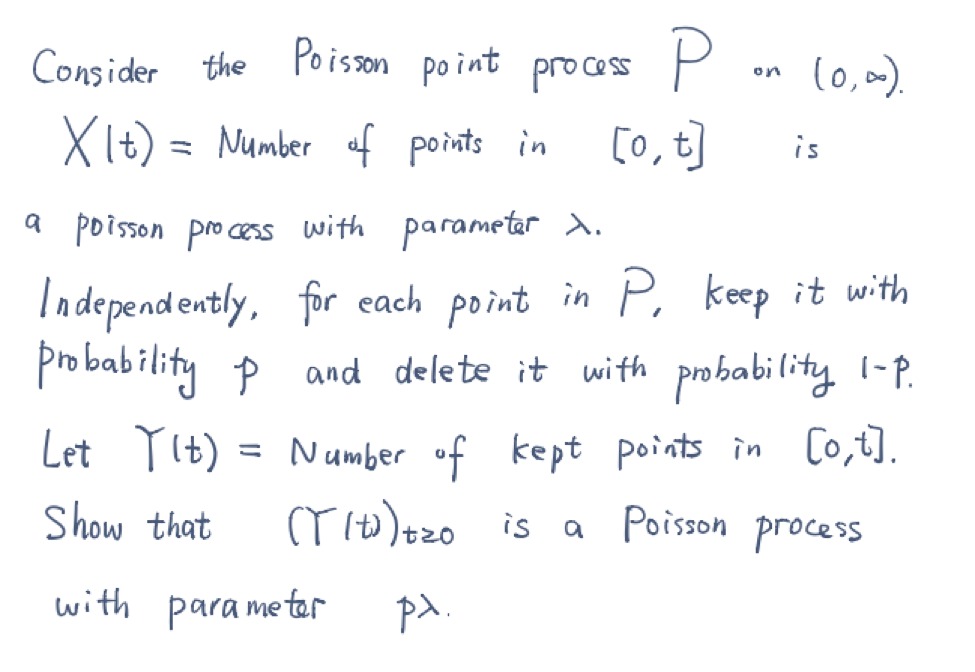
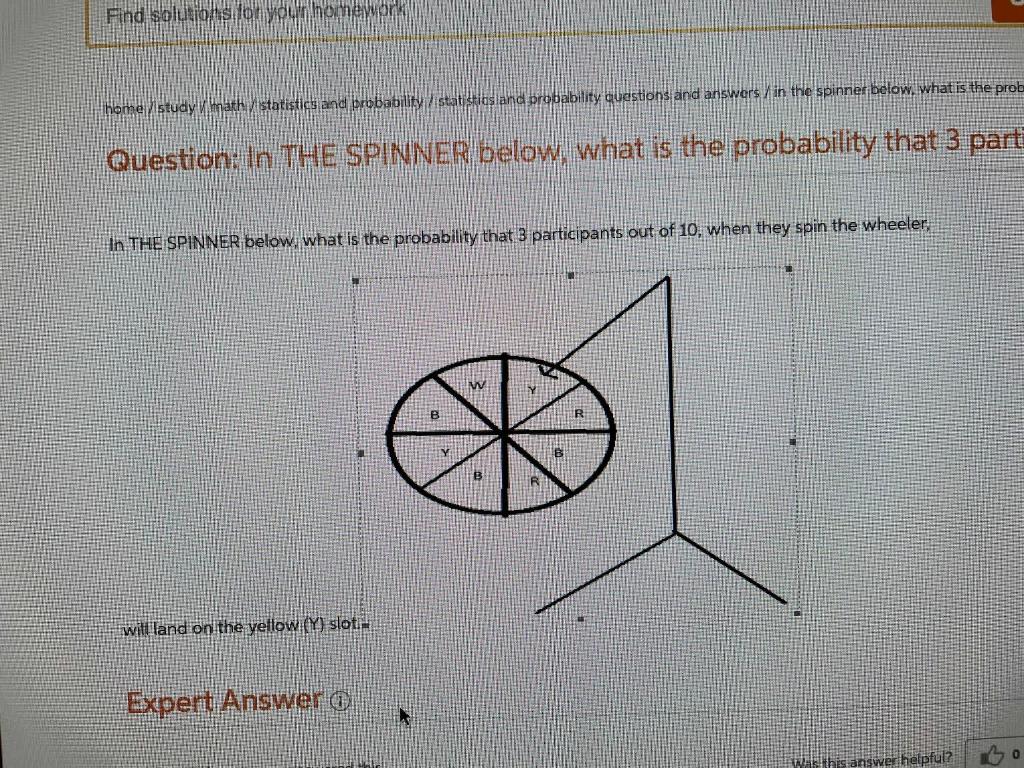
Consider the Poisson point process on (0 , 0 ). XIt) = Number of points in [o, t] is a poisson process with parameter X. Independently, for each point in P, keep it with Probability p and delete it with probability ty I - P. Let [ It) = Number of kept points in Co, t]. Show that (rit) ) +zo is a Poisson process with parameter pd.Find solutions for your home /study Withath/ statistics and probability / statisticsland probability questions and answers / in the spinner below, what is the prob Question: In THE SPINNER below, what is the probability that 3 part In THE SPINNER below, what is the probability that 3 participants out of 10, when they spin the wheeler, will land on the yellow (Y) slot Expert Answer @ helpful
Step by Step Solution
There are 3 Steps involved in it

Get step-by-step solutions from verified subject matter experts
 Study Help