







Question: Question Cardinal Company is considering a project that would require a $2,915,000 investment in equipment with a useful life of five years. At the end
Question
| Cardinal Company is considering a project that would require a $2,915,000 investment in equipment with a useful life of five years. At the end of five years, the project would terminate and the equipment would be sold for its salvage value of $300,000. The companys discount rate is 12%. The project would provide net operating income each year as follows: Sales $2,746,000 Variable expenses 1,126,000 Contribution margin 1,620,000 Fixed expenses: Advertising, salaries, and other fixed out-of-pocket costs $ 615,000 Depreciation 523,000 Total fixed expenses 1,138,000 Net operating income $ 482,000
|
1. Which item(s) in the income statement shown above will not affect cash flows?
Sales
Variable expenses
Advertising, salaries, and other fixed out-of-pocket costs expenses
Depreciation expense
2. What is the present value of the projects annual net cash inflows? (Use the table 11B-2 to determine the discount factor(s) and final answer to the nearest dollar amount.)
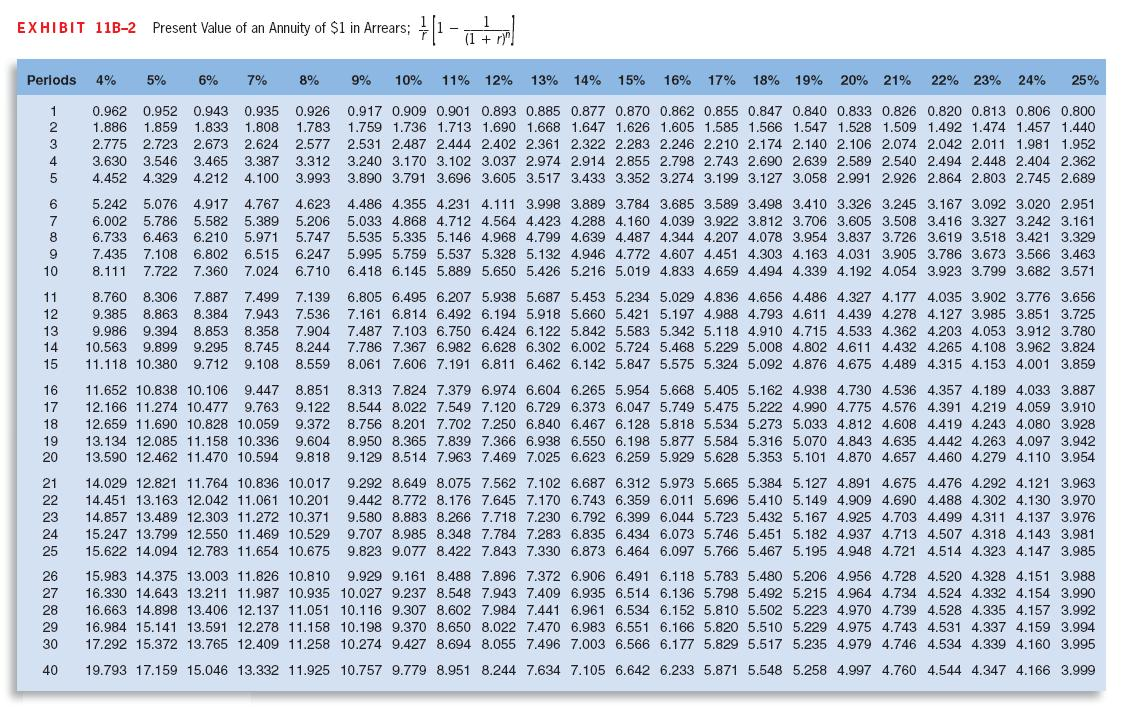 3.What is the present value of the equipments salvage value at the end of five years? (Use the table 11 B1 below to determine the discount factor(s) and final answer to the nearest dollar amount.)
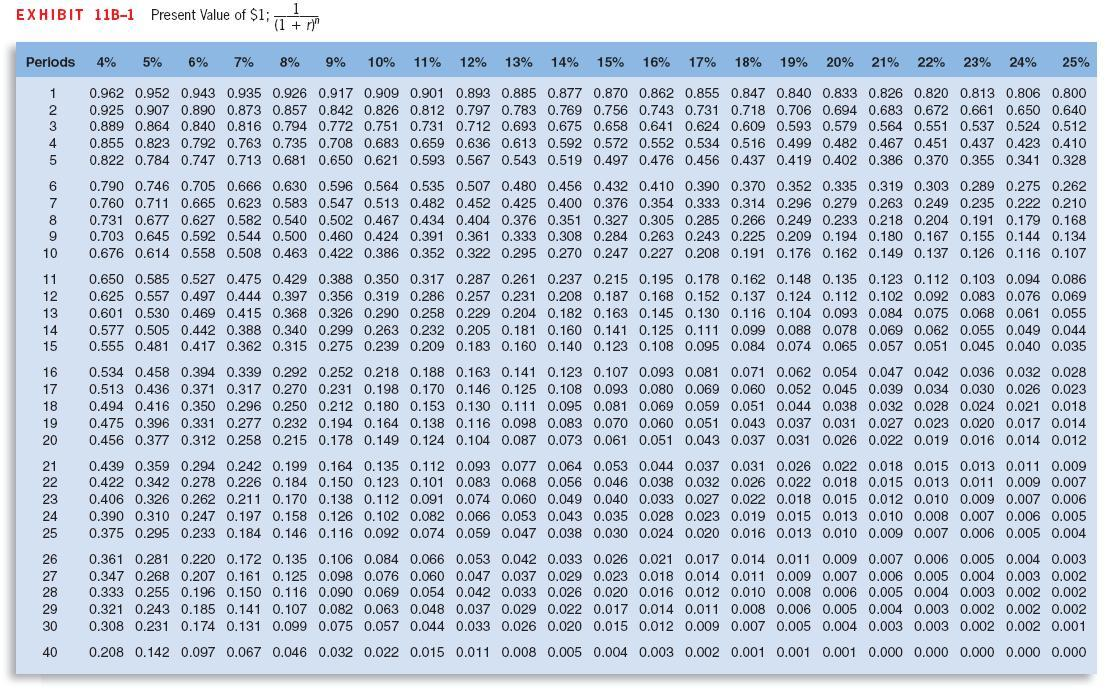
4.What is the projects net present value? (Use the appropriate table to determine the discount factor(s).)
5.What is the project profitability index for this project? (Use the appropriate table to determine the discount factor(s).)
6.What is the projects payback period?
7.What is the projects simple rate of return for each of the five years?
8.If the equipments salvage value was $500,000 instead of $300,000, what would be the projects simple rate of return?
9.Assume a postaudit showed that all estimates (including total sales) were exactly correct except for the variable expense ratio, which actually turned out to be 50%. What was the projects actual net present value?
10.Assume a postaudit showed that all estimates (including total sales) were exactly correct except for the variable expense ratio, which actually turned out to be 50%. What was the projects actual payback period?
11.Assume a postaudit showed that all estimates (including total sales) were exactly correct except for the variable expense ratio, which actually turned out to be 50%. What was the projects actual simple rate of return?
Step by Step Solution
There are 3 Steps involved in it

Get step-by-step solutions from verified subject matter experts
 Study Help