







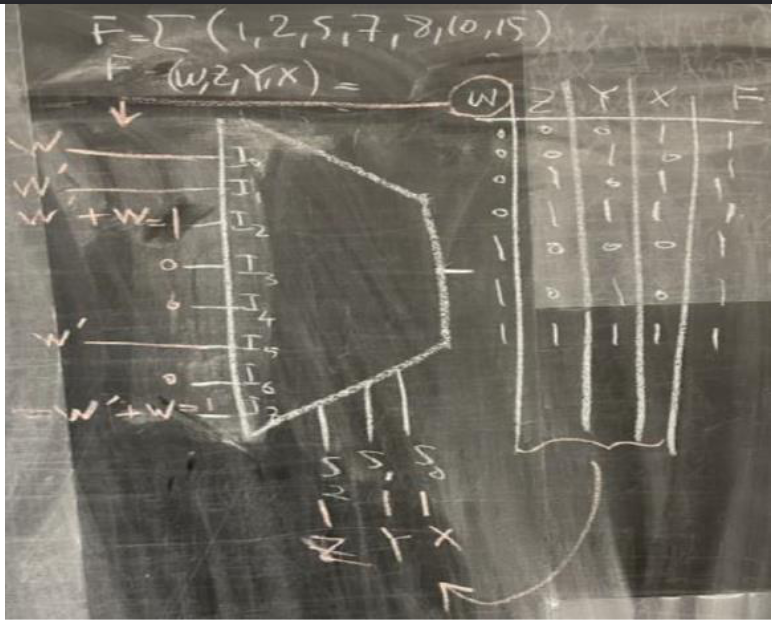
Question: QUESTION : Design F = ( 1 , 2 , 5 , 7 , 8 , 1 0 , 1 5 ) using only one
QUESTION : Design F using only one of the options below:
ato MUX to get the full marks.
the image is the answer
Ive seen the given question and the answer youve provided for designing F using an to MUX, but Im having a hard time understanding the reasoning behind the final arrangement. Could you please break down the steps, like taking lecturestyle notes, to explain how and why the solution was obtained?
Specifically, I want to understand:
How the original functions minterms translate to which inputs of the MUX should be high or low.
Why certain input lines of the MUX correspond to certain minterm indices.
How the select lines W Z Y are chosen and how the mapping from W Z Y to the inputs relates to the minterm numbers.
The logical process or algorithm for deciding what goes where on the MUX inputs and why that gives the correct output for all combinations.
In short, Im not just looking for the final wiring diagram. Id like a clear, stepbystep explanation of the thought process behind it written as if it were organized classroom notes. Thanks!
Step by Step Solution
There are 3 Steps involved in it
1 Expert Approved Answer
Step: 1 Unlock

Question Has Been Solved by an Expert!
Get step-by-step solutions from verified subject matter experts
Step: 2 Unlock
Step: 3 Unlock
 Study Help