







Question: Question In Operation Management .. IF YOU DO NOT KNOW THE HEHRA FORMAT, SKIP THE QUESTION AND DON'T WASTE YOUR TIME... Answer Quickly And Urgently,
Question In Operation Management ..
IF YOU DO NOT KNOW THE HEHRA FORMAT, SKIP THE QUESTION AND DON'T WASTE YOUR TIME...
Answer Quickly And Urgently, But In " HEHRA Format ", i.e. JITT IK .
If you do not respond in HEHRA format and waste my question, you will receive a DOWNVOTE ...
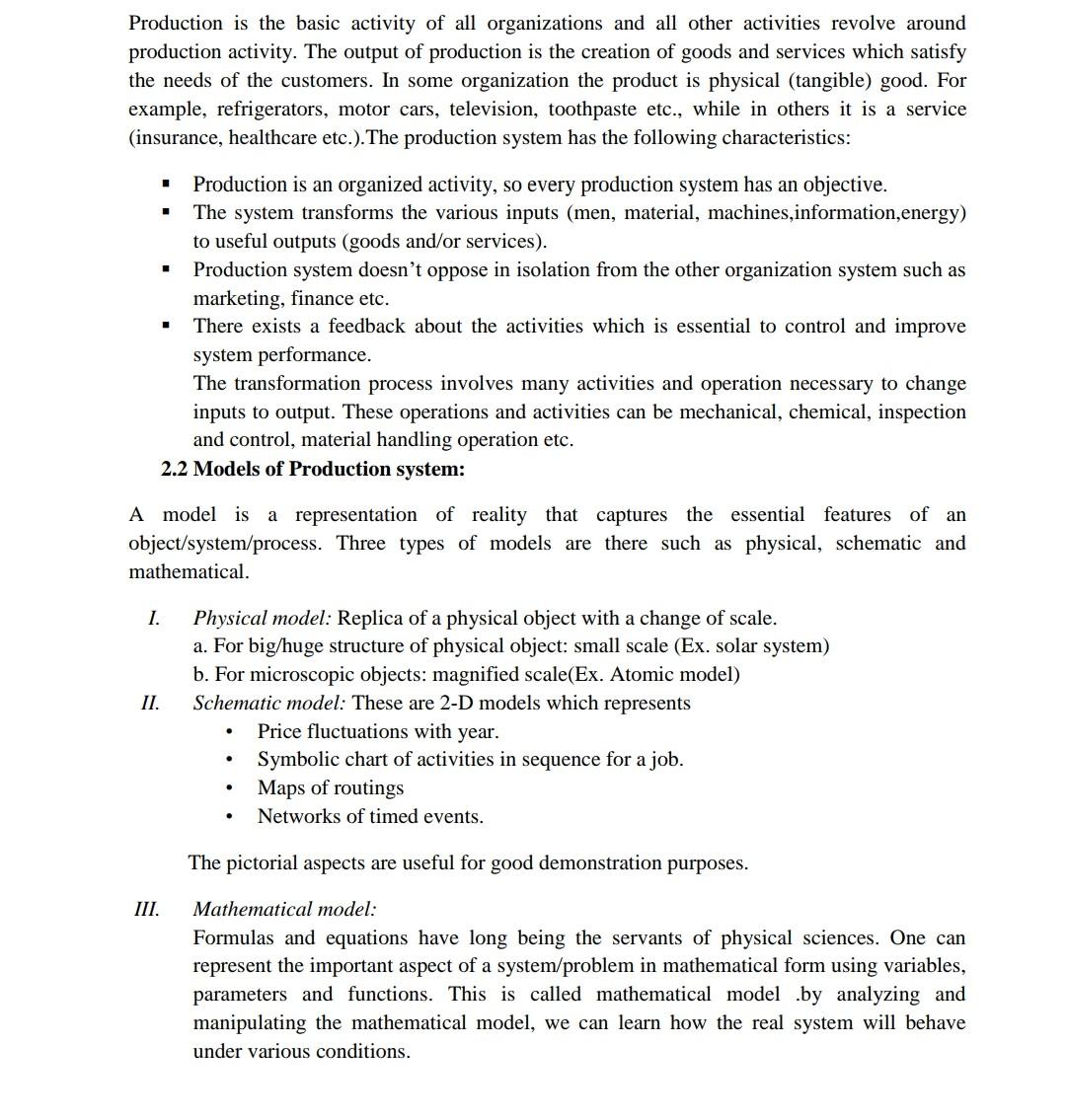
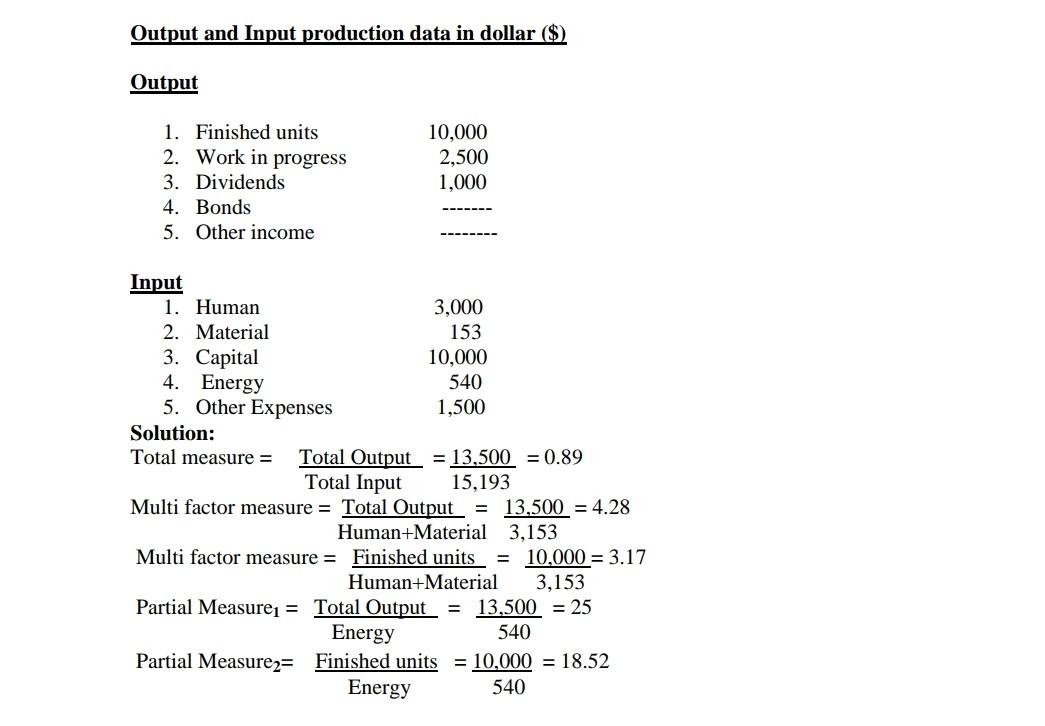

Production is the basic activity of all organizations and all other activities revolve around production activity. The output of production is the creation of goods and services which satisfy the needs of the customers. In some organization the product is physical (tangible) good. For example, refrigerators, motor cars, television, toothpaste etc., while in others it is a service (insurance, healthcare etc.). The production system has the following characteristics: . . Production is an organized activity, so every production system has an objective. The system transforms the various inputs (men, material, machines, information,energy) to useful outputs (goods and/or services). Production system doesn't oppose in isolation from the other organization system such as marketing, finance etc. There exists a feedback about the activities which is essential to control and improve system performance. The transformation process involves many activities and operation necessary to change inputs to output. These operations and activities can be mechanical, chemical, inspection and control, material handling operation etc. 2.2 Models of Production system: A model is a representation of reality that captures the essential features of an object/system/process. Three types of models are there such as physical, schematic and mathematical. 1. II. Physical model: Replica of a physical object with a change of scale. a. For big/huge structure of physical object: small scale (Ex. solar system) b. For microscopic objects: magnified scale(Ex. Atomic model) Schematic model: These are 2-D models which represents Price fluctuations with year. Symbolic chart of activities in sequence for a job. Maps of routings Networks of timed events. . . The pictorial aspects are useful for good demonstration purposes. III. Mathematical model: Formulas and equations have long being the servants of physical sciences. One can represent the important aspect of a system/problem in mathematical form using variables, parameters and functions. This is called mathematical model by analyzing and manipulating the mathematical model, we can learn how the real system will behave under various conditions. Output and Input production data in dollar ($) Output 1. Finished units 2. Work in progress 3. Dividends 4. Bonds 5. Other income 10,000 2,500 1,000 Input 1. Human 3,000 2. Material 153 3. Capital 10,000 4. Energy 540 5. Other Expenses 1,500 Solution: Total measure = Total Output = 13,500 = 0.89 Total Input 15,193 Multi factor measure = Total Output = 13,500 = 4.28 Human+Material 3,153 Multi factor measure = Finished units = 10,000 = 3.17 Human+Material 3,153 Partial Measure1 = Total Output = 13,500 = 25 Energy 540 Partial Measure2= Finished units = 10,000 = 18.52 Energy 540 6. Describe any four characteristics of WTO
Step by Step Solution
There are 3 Steps involved in it
1 Expert Approved Answer
Step: 1 Unlock

Question Has Been Solved by an Expert!
Get step-by-step solutions from verified subject matter experts
Step: 2 Unlock
Step: 3 Unlock
 Study Help