







Question: Question not attempted. 7. Prepare an adjusted trial balance. Instructions Chart of Accounts ! Journal Ledger ! Unadjusted Trial Balance ! Adjusted Trial Balance Arborvite
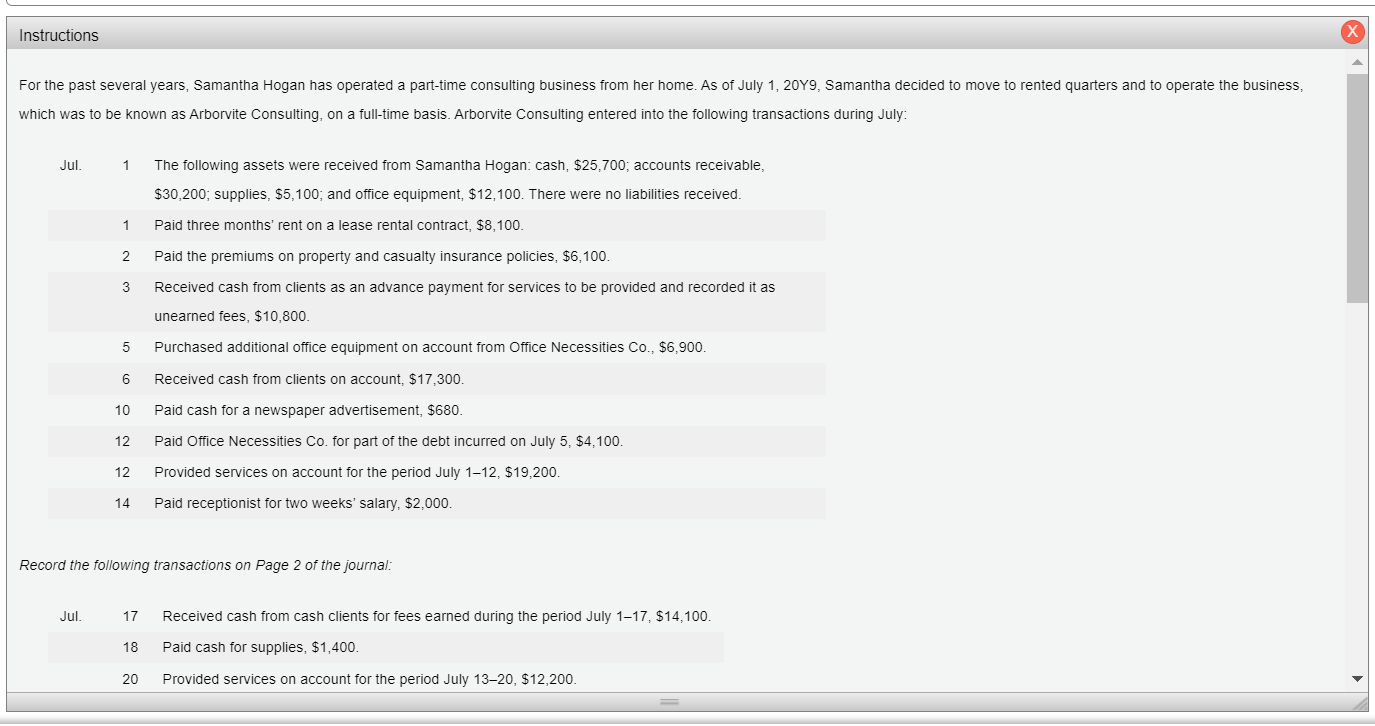
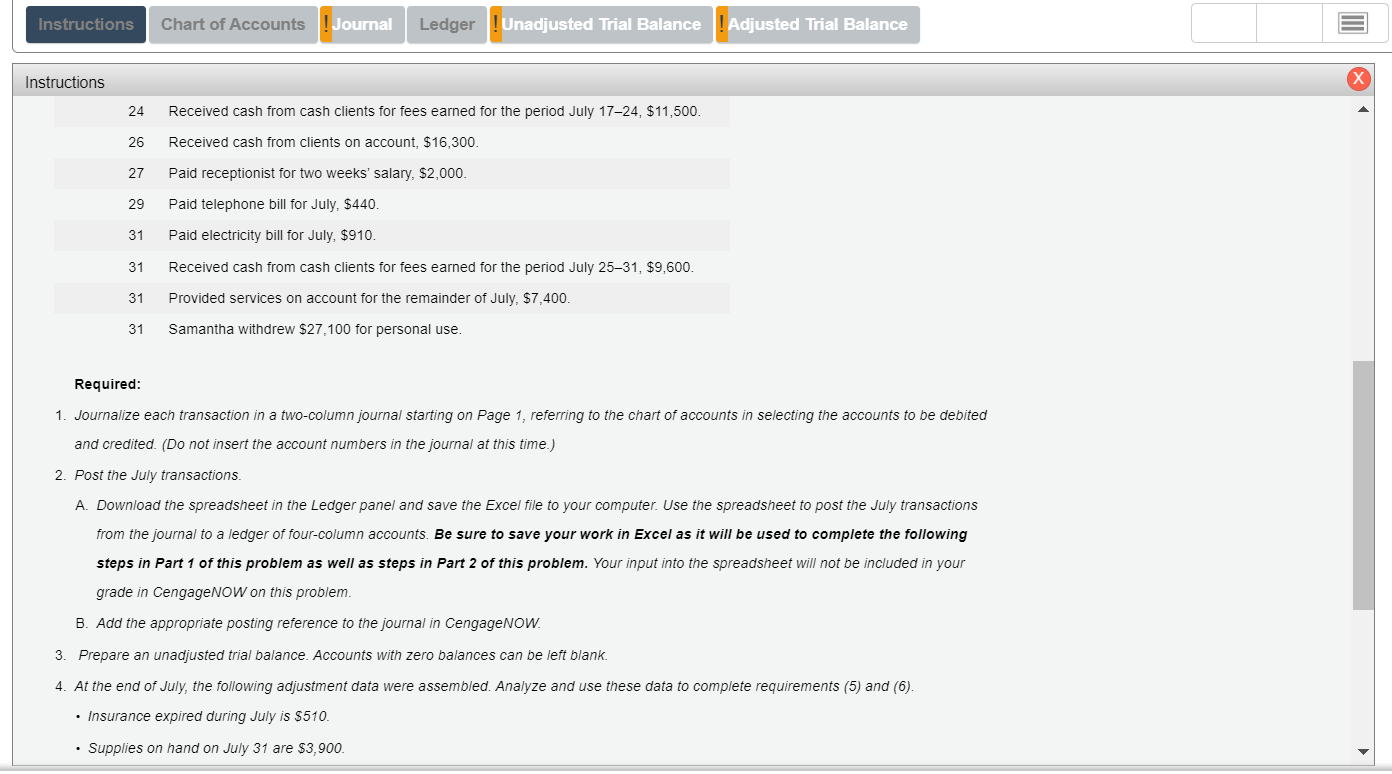
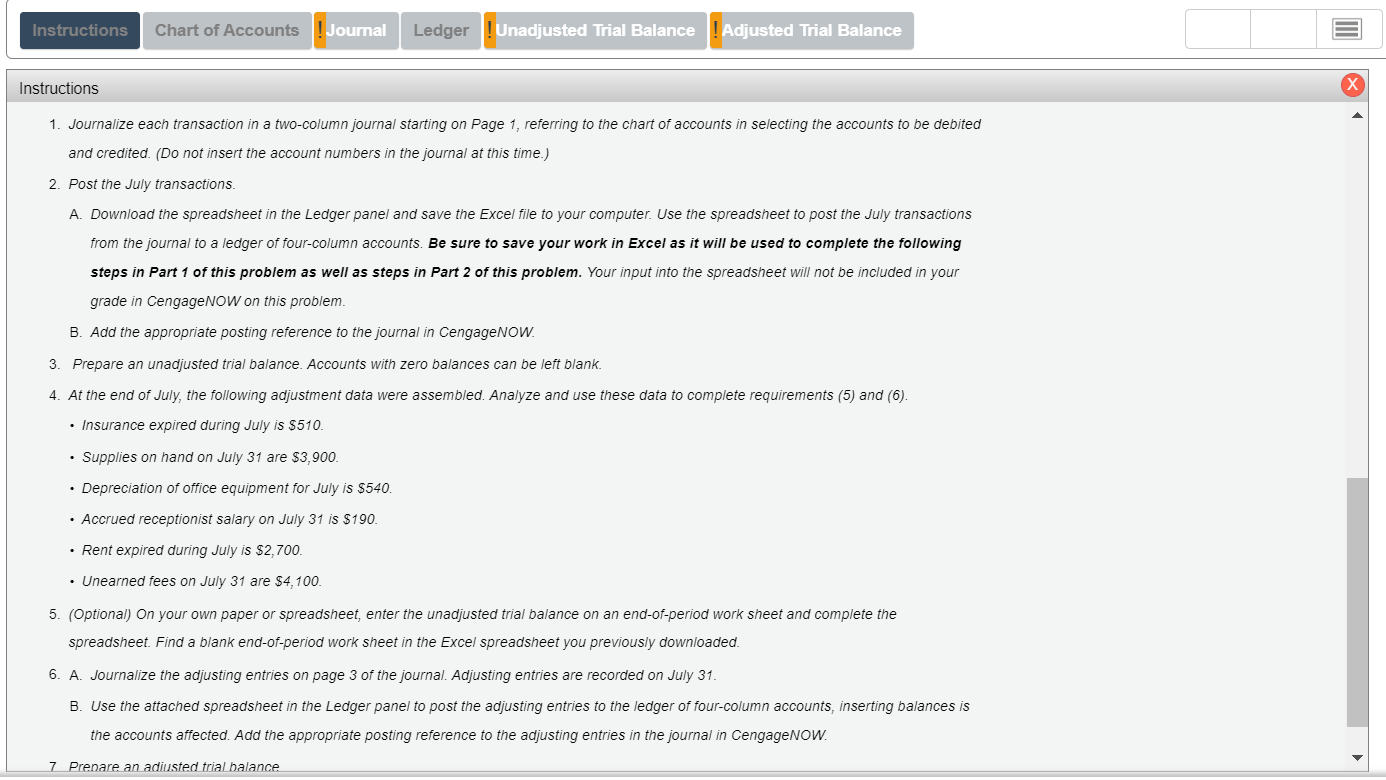
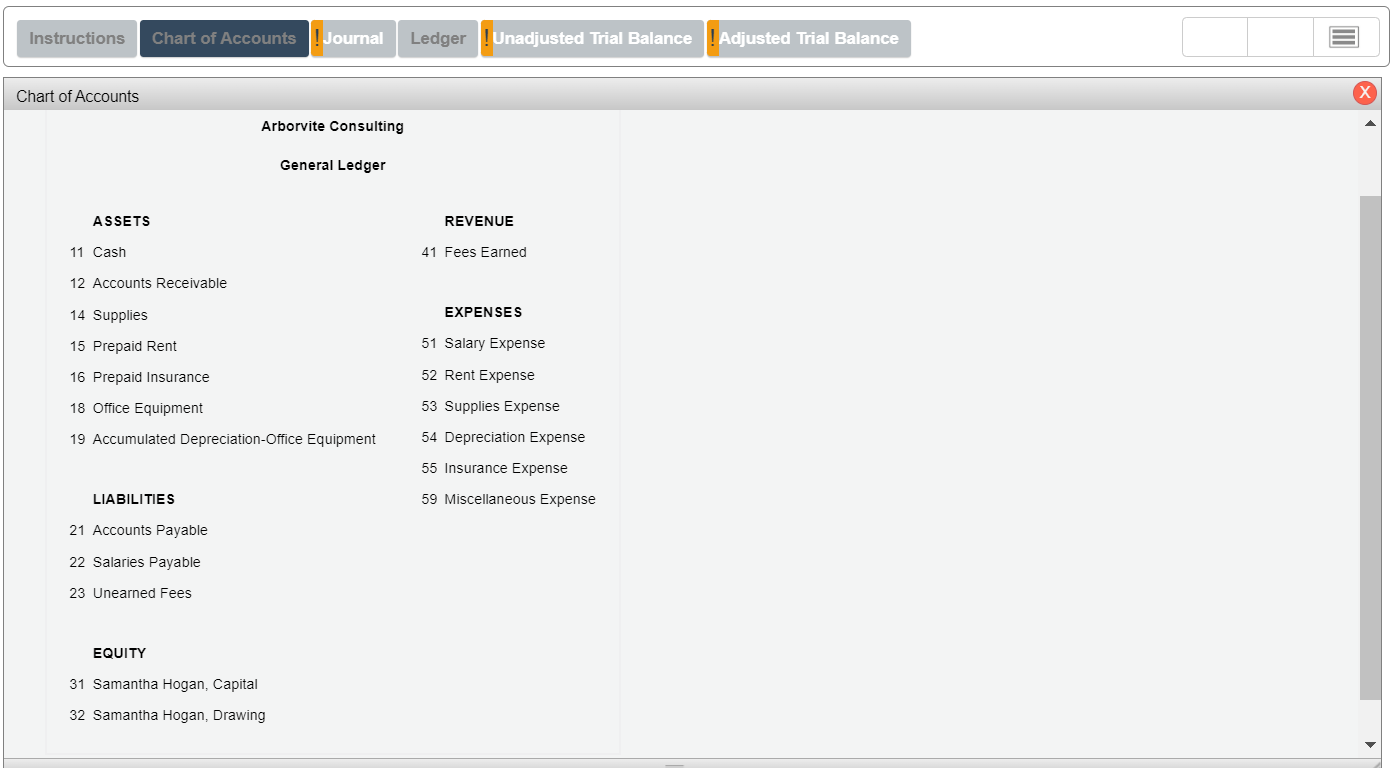
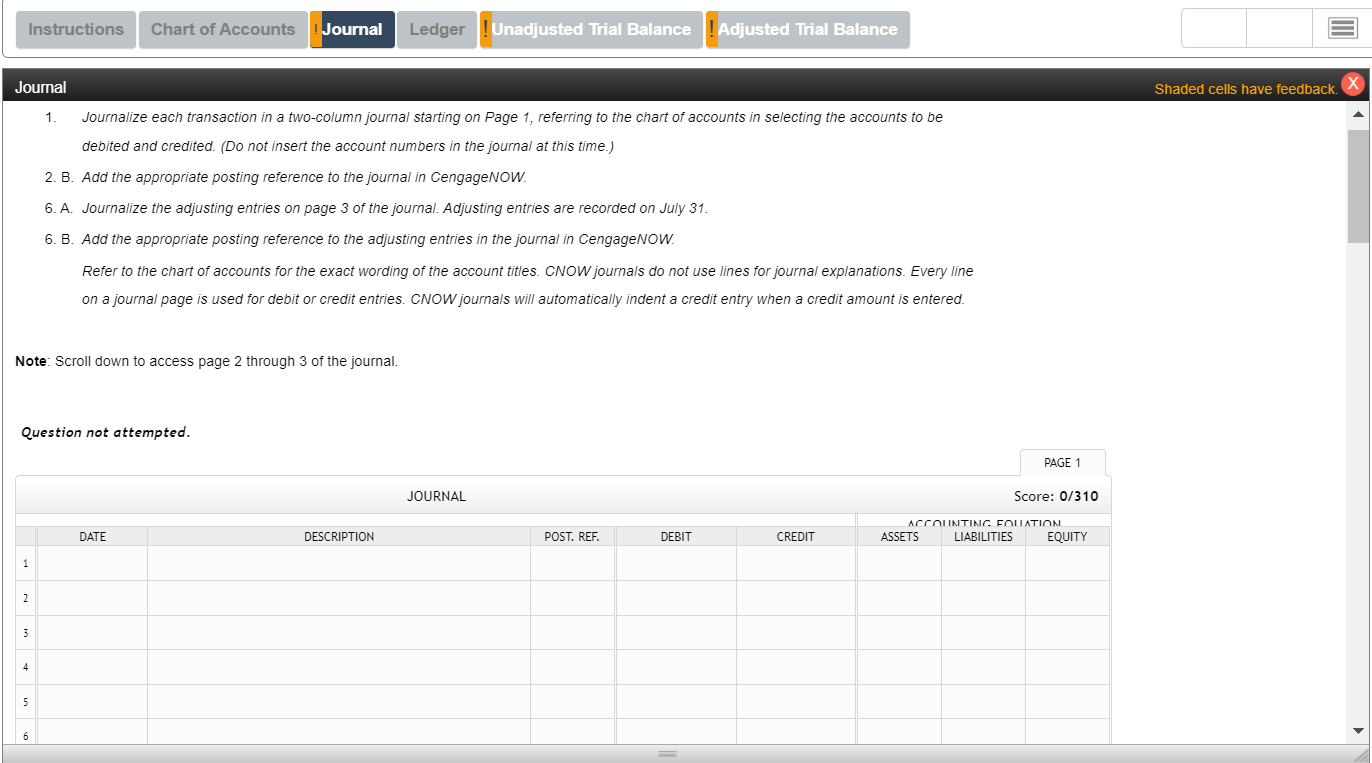
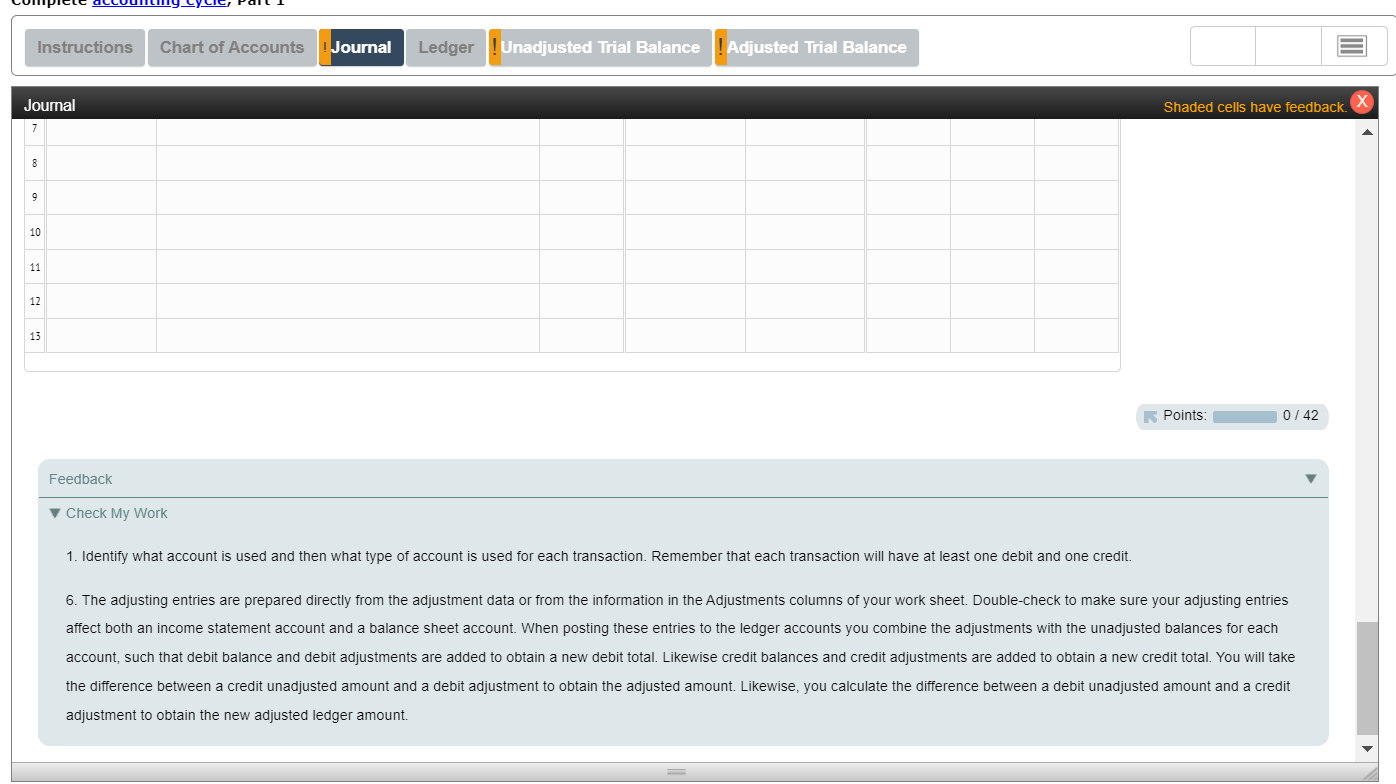
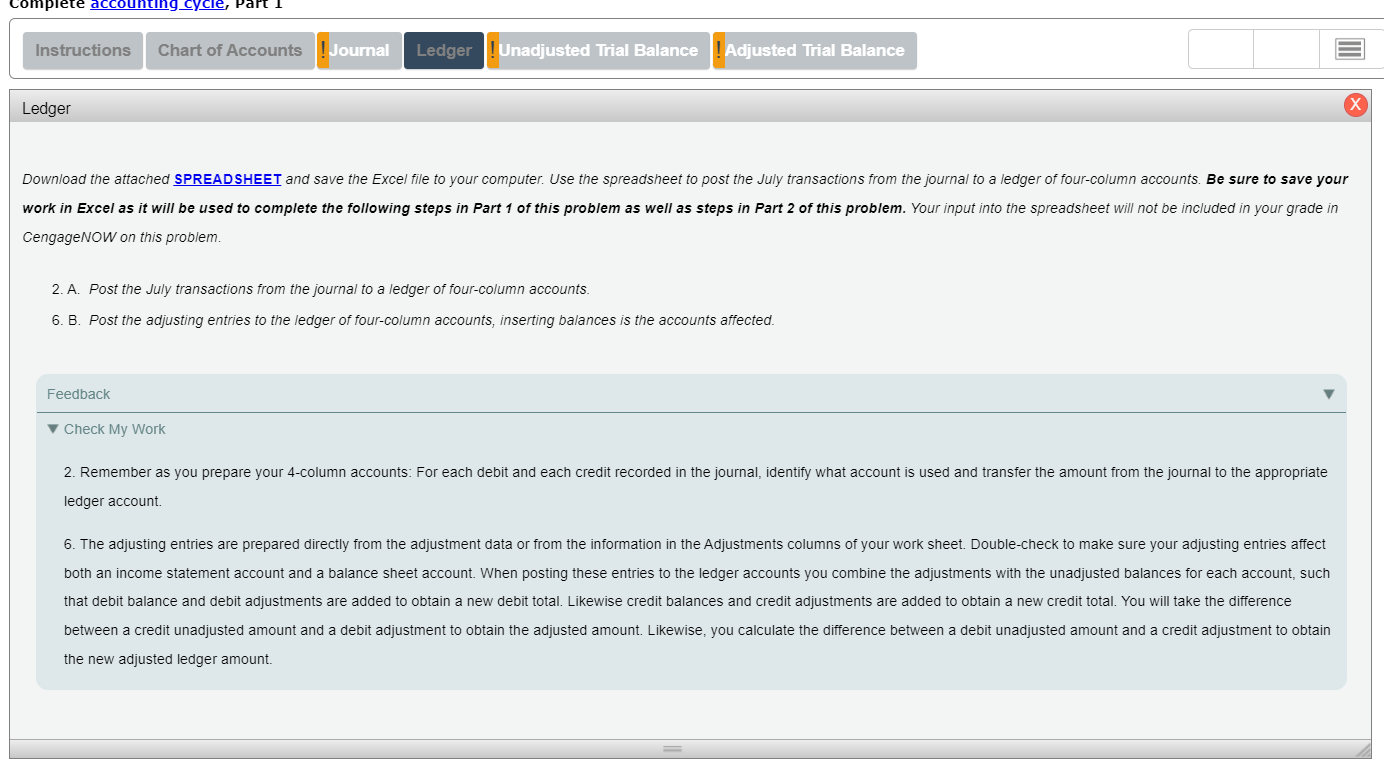
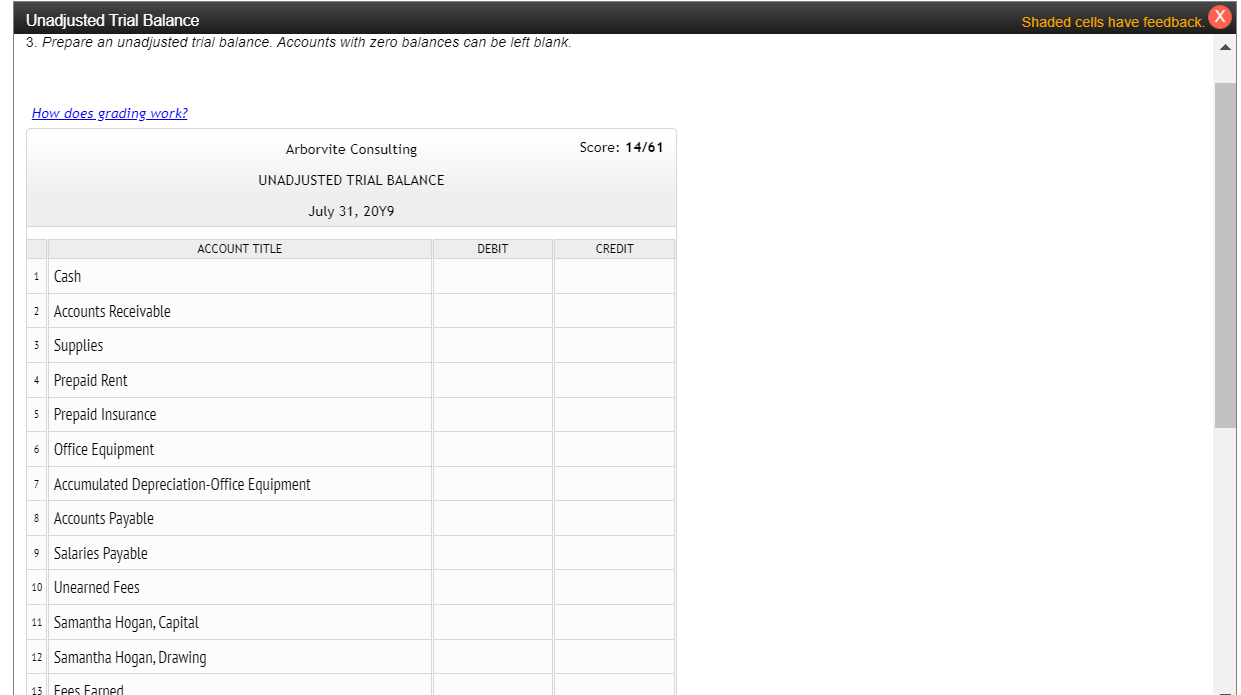
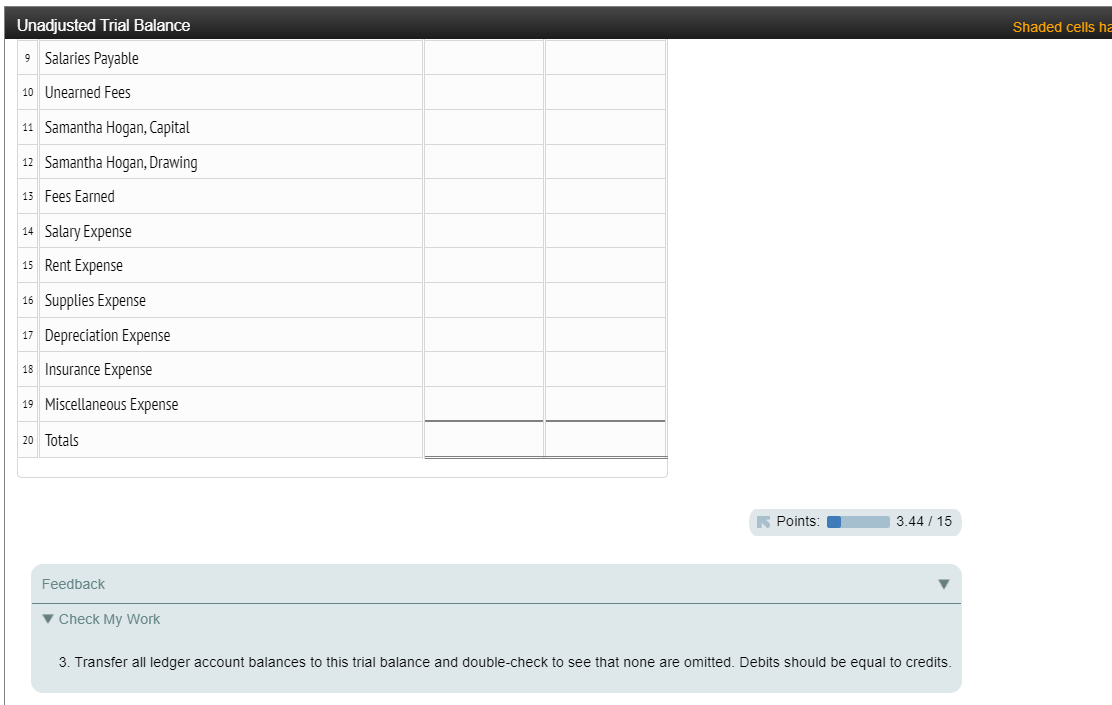
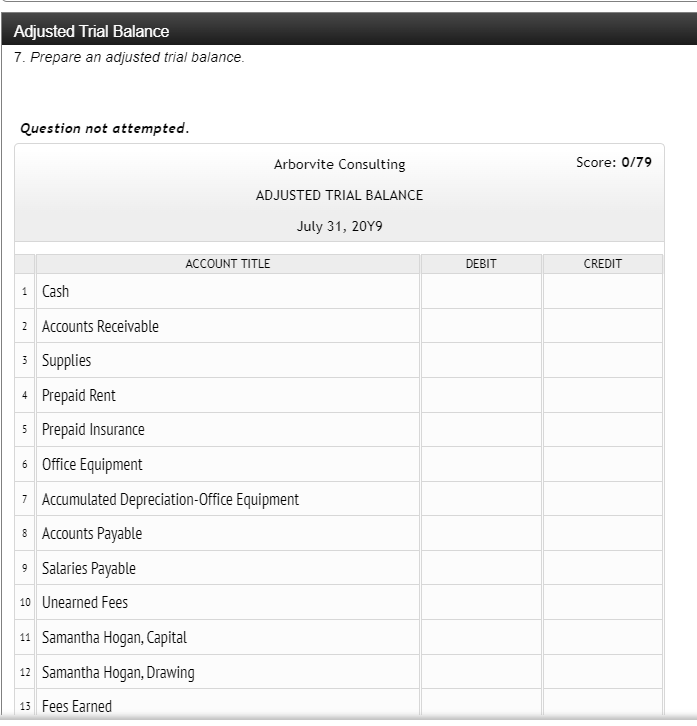
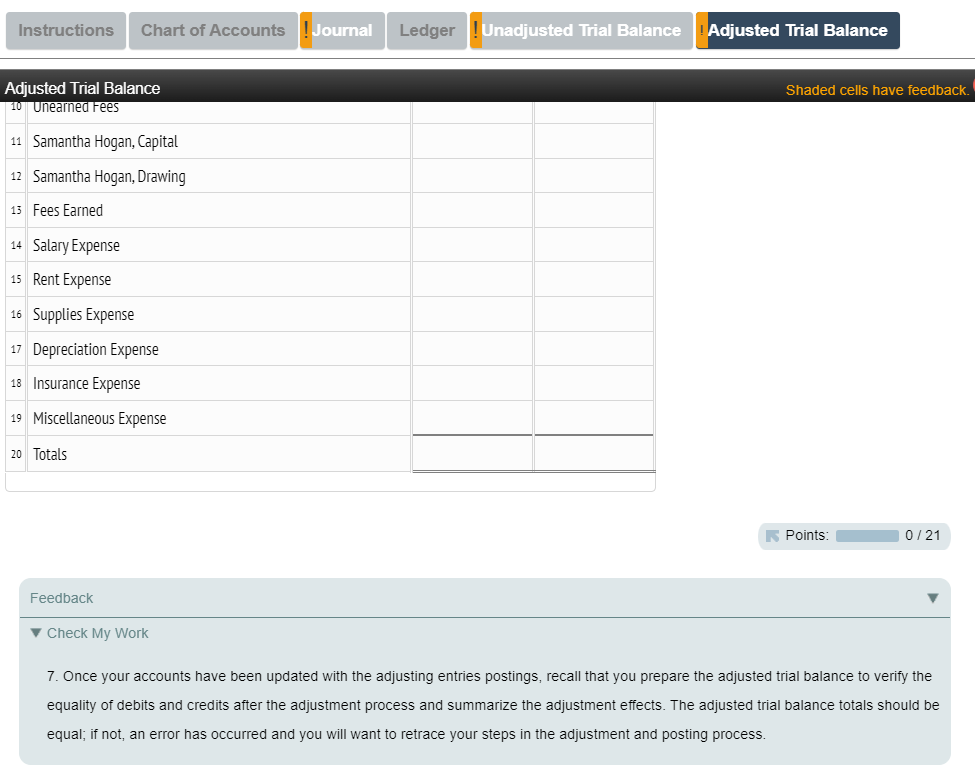
Question not attempted. 7. Prepare an adjusted trial balance. Instructions Chart of Accounts ! Journal Ledger ! Unadjusted Trial Balance ! Adjusted Trial Balance Arborvite Consulting General Ledger ASSETS 11 Cash 12 Accounts Receivable 14 Supplies 15 Prepaid Rent 16 Prepaid Insurance 18 Office Equipment 19 Accumulated Depreciation-Office Equipment LIABILITIES 21 Accounts Payable 22 Salaries Payable 23 Unearned Fees EQUITY 31 Samantha Hogan, Capital 32 Samantha Hogan, Drawing REVENUE 41 Fees Earned EXPENSES 51 Salary Expense 52 Rent Expense 53 Supplies Expense 54 Depreciation Expense 55 Insurance Expense 59 Miscellaneous Expense Feedback Check My Work 3. Transfer all ledger account balances to this trial balance and double-check to see that none are omitted. Debits should be equal to credits. Check My Work 1. Identify what account is used and then what type of account is used for each transaction. Remember that each transaction will have at least one debit and one credit. 6. The adjusting entries are prepared directly from the adjustment data or from the information in the Adjustments columns of your work sheet. Double-check to make sure your adjusting entries affect both an income statement account and a balance sheet account. When posting these entries to the ledger accounts you combine the adjustments with the unadjusted balances for each account, such that debit balance and debit adjustments are added to obtain a new debit total. Likewise credit balances and credit adjustments are added to obtain a new credit total. You will take the difference between a credit unadjusted amount and a debit adjustment to obtain the adjusted amount. Likewise, you calculate the difference between a debit unadjusted amount and a credit adjustment to obtain the new adjusted ledger amount. Download the attached SPREADSHEET and save the Excel file to your computer. Use the spreadsheet to post the July transactions from the journal to a ledger of four-column accounts. Be sure to save your work in Excel as it will be used to complete the following steps in Part 1 of this problem as well as steps in Part 2 of this problem. Your input into the spreadsheet will not be included in your grade in Cengage NOW on this problem. 2. A. Post the July transactions from the journal to a ledger of four-column accounts. 6. B. Post the adjusting entries to the ledger of four-column accounts, inserting balances is the accounts affected. Feedback Check My Work 2. Remember as you prepare your 4-column accounts: For each debit and each credit recorded in the journal, identify what account is used and transfer the amount from the journal to the appropriate ledger account. 6. The adjusting entries are prepared directly from the adjustment data or from the information in the Adjustments columns of your work sheet. Double-check to make sure your adjusting entries affect both an income statement account and a balance sheet account. When posting these entries to the ledger accounts you combine the adjustments with the unadjusted balances for each account, such that debit balance and debit adjustments are added to obtain a new debit total. Likewise credit balances and credit adjustments are added to obtain a new credit total. You will take the difference between a credit unadjusted amount and a debit adjustment to obtain the adjusted amount. Likewise, you calculate the difference between a debit unadjusted amount and a credit adjustment to obtain the new adjusted ledger amount. Question not attempted. 3. Prepare an unadjusted trial balance. Accounts with zero balances can be left blank. ! Adjusted Trial Balance Adjusted Trial Balance 10 Unearned rees 11 Samantha Hogan, Capital 12 Samantha Hogan, Drawing 13 Fees Earned 14 Salary Expense 15 Rent Expense 16 Supplies Expense 17 Depreciation Expense 18 Insurance Expense 19 Miscellaneous Expense 20 Totals Shaded cells have feedback. Points: 0/21 Feedback Check My Work 7. Once your accounts have been updated with the adjusting entries postings, recall that you prepare the adjusted trial balance to verify the equality of debits and credits after the adjustment process and summarize the adjustment effects. The adjusted trial balance totals should be equal; if not, an error has occurred and you will want to retrace your steps in the adjustment and posting process. 1. Journalize each transaction in a two-column journal starting on Page 1, referring to the chart of accounts in selecting the accounts to be debited and credited. (Do not insert the account numbers in the journal at this time.) 2. Post the July transactions. A. Download the spreadsheet in the Ledger panel and save the Excel file to your computer. Use the spreadsheet to post the July transactions from the journal to a ledger of four-column accounts. Be sure to save your work in Excel as it will be used to complete the following steps in Part 1 of this problem as well as steps in Part 2 of this problem. Your input into the spreadsheet will not be included in your grade in CengageNOW on this problem. B. Add the appropriate posting reference to the journal in CengageNOW. 3. Prepare an unadjusted trial balance. Accounts with zero balances can be left blank. 4. At the end of July, the following adjustment data were assembled. Analyze and use these data to complete requirements (5) and (6). - Insurance expired during July is $510. - Supplies on hand on July 31 are $3,900. - Depreciation of office equipment for July is $540. - Accrued receptionist salary on July 31 is $190. - Rent expired during July is $2,700. - Unearned fees on July 31 are $4,100. 24 Received cash from cash clients for fees earned for the period July 1724,$11,500. 26 Received cash from clients on account, $16,300. 27 Paid receptionist for two weeks' salary, $2,000. 29 Paid telephone bill for July, $440. 31 Paid electricity bill for July, $910. 31 Received cash from cash clients for fees earned for the period July 2531,$9,600. 31 Provided services on account for the remainder of July, $7,400. 31 Samantha withdrew $27,100 for personal use. Required: 1. Journalize each transaction in a two-column journal starting on Page 1 , referring to the chart of accounts in selecting the accounts to be debited and credited. (Do not insert the account numbers in the journal at this time.) 2. Post the July transactions. A. Download the spreadsheet in the Ledger panel and save the Excel file to your computer. Use the spreadsheet to post the July transactions from the journal to a ledger of four-column accounts. Be sure to save your work in Excel as it will be used to complete the following steps in Part 1 of this problem as well as steps in Part 2 of this problem. Your input into the spreadsheet will not be included in your grade in CengageNOW on this problem. B. Add the appropriate posting reference to the journal in CengageNOW. 3. Prepare an unadjusted trial balance. Accounts with zero balances can be left blank. 4. At the end of July, the following adjustment data were assembled. Analyze and use these data to complete requirements (5) and (6). - Insurance expired during July is $510. which was to be known as Arborvite Consulting, on a full-time basis. Arborvite Consulting entered into the following transactions during July: Jul. 1 The following assets were received from Samantha Hogan: cash, $25,700; accounts receivable, $30,200; supplies, $5,100; and office equipment, $12,100. There were no liabilities received. 1 Paid three months' rent on a lease rental contract, $8,100. 2 Paid the premiums on property and casualty insurance policies, $6,100. 3 Received cash from clients as an advance payment for services to be provided and recorded it as unearned fees, $10,800. 5 Purchased additional office equipment on account from Office Necessities Co., $6,900. 6 Received cash from clients on account, $17,300. 10 Paid cash for a newspaper advertisement, $680. 12 Paid Office Necessities Co. for part of the debt incurred on July 5,$4,100. 12 Provided services on account for the period July 112,$19,200. 14 Paid receptionist for two weeks' salary, $2,000. Record the following transactions on Page 2 of the journal: Jul. 17 Received cash from cash clients for fees earned during the period July 117,$14,100. Paid cash for supplies, $1,400. 20 Provided services on account for the period July 1320,$12,200. 1. Journalize each transaction in a two-column journal starting on Page 1, referring to the chart of accounts in selecting the accounts to be debited and credited. (Do not insert the account numbers in the journal at this time.) 2. B. Add the appropriate posting reference to the journal in CengageNOW. 6. A. Journalize the adjusting entries on page 3 of the journal. Adjusting entries are recorded on July 31. 6. B. Add the appropriate posting reference to the adjusting entries in the journal in CengageNOW. Refer to the chart of accounts for the exact wording of the account titles. CNOW journals do not use lines for journal explanations. Every line on a journal page is used for debit or credit entries. CNOW journals will automatically indent a credit entry when a credit amount is entered. Note: Scroll down to access page 2 through 3 of the journal. Question not attempted. Question not attempted. 7. Prepare an adjusted trial balance. Instructions Chart of Accounts ! Journal Ledger ! Unadjusted Trial Balance ! Adjusted Trial Balance Arborvite Consulting General Ledger ASSETS 11 Cash 12 Accounts Receivable 14 Supplies 15 Prepaid Rent 16 Prepaid Insurance 18 Office Equipment 19 Accumulated Depreciation-Office Equipment LIABILITIES 21 Accounts Payable 22 Salaries Payable 23 Unearned Fees EQUITY 31 Samantha Hogan, Capital 32 Samantha Hogan, Drawing REVENUE 41 Fees Earned EXPENSES 51 Salary Expense 52 Rent Expense 53 Supplies Expense 54 Depreciation Expense 55 Insurance Expense 59 Miscellaneous Expense Feedback Check My Work 3. Transfer all ledger account balances to this trial balance and double-check to see that none are omitted. Debits should be equal to credits. Check My Work 1. Identify what account is used and then what type of account is used for each transaction. Remember that each transaction will have at least one debit and one credit. 6. The adjusting entries are prepared directly from the adjustment data or from the information in the Adjustments columns of your work sheet. Double-check to make sure your adjusting entries affect both an income statement account and a balance sheet account. When posting these entries to the ledger accounts you combine the adjustments with the unadjusted balances for each account, such that debit balance and debit adjustments are added to obtain a new debit total. Likewise credit balances and credit adjustments are added to obtain a new credit total. You will take the difference between a credit unadjusted amount and a debit adjustment to obtain the adjusted amount. Likewise, you calculate the difference between a debit unadjusted amount and a credit adjustment to obtain the new adjusted ledger amount. Download the attached SPREADSHEET and save the Excel file to your computer. Use the spreadsheet to post the July transactions from the journal to a ledger of four-column accounts. Be sure to save your work in Excel as it will be used to complete the following steps in Part 1 of this problem as well as steps in Part 2 of this problem. Your input into the spreadsheet will not be included in your grade in Cengage NOW on this problem. 2. A. Post the July transactions from the journal to a ledger of four-column accounts. 6. B. Post the adjusting entries to the ledger of four-column accounts, inserting balances is the accounts affected. Feedback Check My Work 2. Remember as you prepare your 4-column accounts: For each debit and each credit recorded in the journal, identify what account is used and transfer the amount from the journal to the appropriate ledger account. 6. The adjusting entries are prepared directly from the adjustment data or from the information in the Adjustments columns of your work sheet. Double-check to make sure your adjusting entries affect both an income statement account and a balance sheet account. When posting these entries to the ledger accounts you combine the adjustments with the unadjusted balances for each account, such that debit balance and debit adjustments are added to obtain a new debit total. Likewise credit balances and credit adjustments are added to obtain a new credit total. You will take the difference between a credit unadjusted amount and a debit adjustment to obtain the adjusted amount. Likewise, you calculate the difference between a debit unadjusted amount and a credit adjustment to obtain the new adjusted ledger amount. Question not attempted. 3. Prepare an unadjusted trial balance. Accounts with zero balances can be left blank. ! Adjusted Trial Balance Adjusted Trial Balance 10 Unearned rees 11 Samantha Hogan, Capital 12 Samantha Hogan, Drawing 13 Fees Earned 14 Salary Expense 15 Rent Expense 16 Supplies Expense 17 Depreciation Expense 18 Insurance Expense 19 Miscellaneous Expense 20 Totals Shaded cells have feedback. Points: 0/21 Feedback Check My Work 7. Once your accounts have been updated with the adjusting entries postings, recall that you prepare the adjusted trial balance to verify the equality of debits and credits after the adjustment process and summarize the adjustment effects. The adjusted trial balance totals should be equal; if not, an error has occurred and you will want to retrace your steps in the adjustment and posting process. 1. Journalize each transaction in a two-column journal starting on Page 1, referring to the chart of accounts in selecting the accounts to be debited and credited. (Do not insert the account numbers in the journal at this time.) 2. Post the July transactions. A. Download the spreadsheet in the Ledger panel and save the Excel file to your computer. Use the spreadsheet to post the July transactions from the journal to a ledger of four-column accounts. Be sure to save your work in Excel as it will be used to complete the following steps in Part 1 of this problem as well as steps in Part 2 of this problem. Your input into the spreadsheet will not be included in your grade in CengageNOW on this problem. B. Add the appropriate posting reference to the journal in CengageNOW. 3. Prepare an unadjusted trial balance. Accounts with zero balances can be left blank. 4. At the end of July, the following adjustment data were assembled. Analyze and use these data to complete requirements (5) and (6). - Insurance expired during July is $510. - Supplies on hand on July 31 are $3,900. - Depreciation of office equipment for July is $540. - Accrued receptionist salary on July 31 is $190. - Rent expired during July is $2,700. - Unearned fees on July 31 are $4,100. 24 Received cash from cash clients for fees earned for the period July 1724,$11,500. 26 Received cash from clients on account, $16,300. 27 Paid receptionist for two weeks' salary, $2,000. 29 Paid telephone bill for July, $440. 31 Paid electricity bill for July, $910. 31 Received cash from cash clients for fees earned for the period July 2531,$9,600. 31 Provided services on account for the remainder of July, $7,400. 31 Samantha withdrew $27,100 for personal use. Required: 1. Journalize each transaction in a two-column journal starting on Page 1 , referring to the chart of accounts in selecting the accounts to be debited and credited. (Do not insert the account numbers in the journal at this time.) 2. Post the July transactions. A. Download the spreadsheet in the Ledger panel and save the Excel file to your computer. Use the spreadsheet to post the July transactions from the journal to a ledger of four-column accounts. Be sure to save your work in Excel as it will be used to complete the following steps in Part 1 of this problem as well as steps in Part 2 of this problem. Your input into the spreadsheet will not be included in your grade in CengageNOW on this problem. B. Add the appropriate posting reference to the journal in CengageNOW. 3. Prepare an unadjusted trial balance. Accounts with zero balances can be left blank. 4. At the end of July, the following adjustment data were assembled. Analyze and use these data to complete requirements (5) and (6). - Insurance expired during July is $510. which was to be known as Arborvite Consulting, on a full-time basis. Arborvite Consulting entered into the following transactions during July: Jul. 1 The following assets were received from Samantha Hogan: cash, $25,700; accounts receivable, $30,200; supplies, $5,100; and office equipment, $12,100. There were no liabilities received. 1 Paid three months' rent on a lease rental contract, $8,100. 2 Paid the premiums on property and casualty insurance policies, $6,100. 3 Received cash from clients as an advance payment for services to be provided and recorded it as unearned fees, $10,800. 5 Purchased additional office equipment on account from Office Necessities Co., $6,900. 6 Received cash from clients on account, $17,300. 10 Paid cash for a newspaper advertisement, $680. 12 Paid Office Necessities Co. for part of the debt incurred on July 5,$4,100. 12 Provided services on account for the period July 112,$19,200. 14 Paid receptionist for two weeks' salary, $2,000. Record the following transactions on Page 2 of the journal: Jul. 17 Received cash from cash clients for fees earned during the period July 117,$14,100. Paid cash for supplies, $1,400. 20 Provided services on account for the period July 1320,$12,200. 1. Journalize each transaction in a two-column journal starting on Page 1, referring to the chart of accounts in selecting the accounts to be debited and credited. (Do not insert the account numbers in the journal at this time.) 2. B. Add the appropriate posting reference to the journal in CengageNOW. 6. A. Journalize the adjusting entries on page 3 of the journal. Adjusting entries are recorded on July 31. 6. B. Add the appropriate posting reference to the adjusting entries in the journal in CengageNOW. Refer to the chart of accounts for the exact wording of the account titles. CNOW journals do not use lines for journal explanations. Every line on a journal page is used for debit or credit entries. CNOW journals will automatically indent a credit entry when a credit amount is entered. Note: Scroll down to access page 2 through 3 of the journal. Question not attempted
Step by Step Solution
There are 3 Steps involved in it

Get step-by-step solutions from verified subject matter experts
 Study Help