



Question: QUESTION ONE [25] Case Study Title: The South African Textile Workers' Strike and the Mill Owner's Lockout In the bustling textile industry of South Africa,
![QUESTION ONE [25] Case Study Title: "The South African Textile Workers'](https://dsd5zvtm8ll6.cloudfront.net/si.experts.images/questions/2024/11/673594ada5e97_717673594ad1c252.jpg)
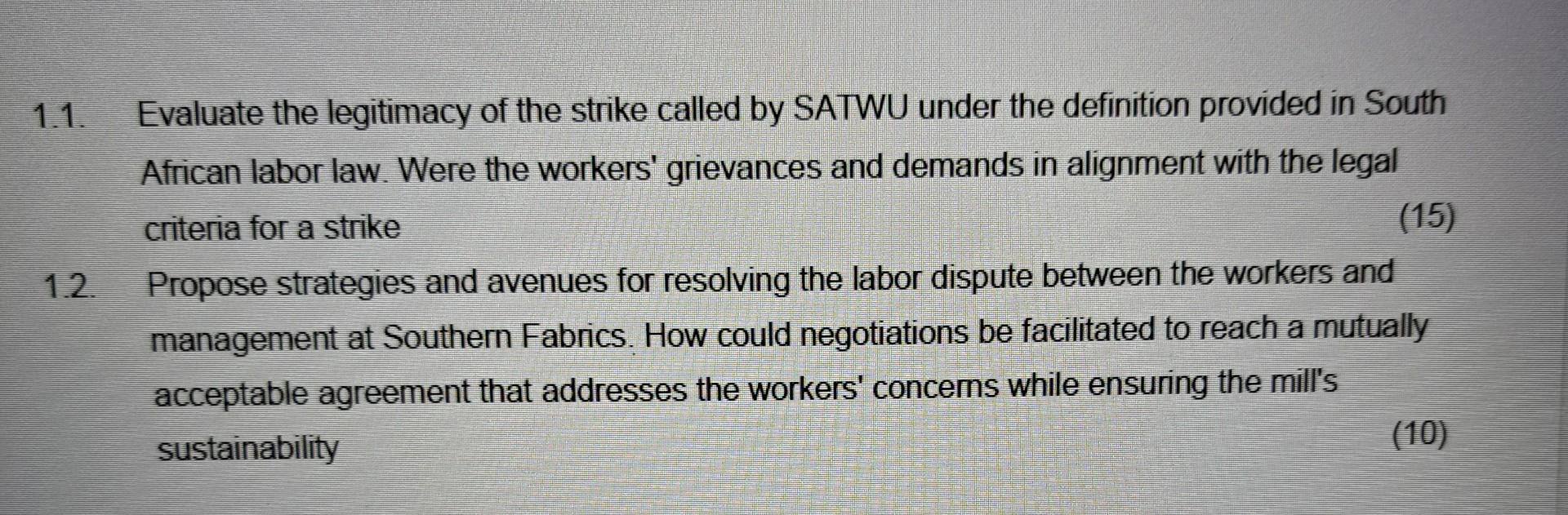
QUESTION ONE [25] Case Study Title: "The South African Textile Workers' Strike and the Mill Owner's Lockout" In the bustling textile industry of South Africa, tensions had been brewing for months between the employees and the mill owners. The textile mill, Southern Fabrics (Pty) Ltd, had been a cornerstone of the local economy for decades. However, issues related to wages, working conditions, and a recent shift restructuring had strained the employer-employee relationship. In early winter, the South African Textile Workers Union (SATWU) formally lodged a list of grievances on behalf of the mill's employees. The main points of contention were: 1. Wages: Workers demanded a 15% wage increase, citing inflation and the rising cost of living in their negotiations with the management. 2. Working Conditions: Employees expressed concerns about the factory's outdated machinery, inadequate safety measures, and uncomfortable working environment, which they believed impacted their health and productivity. 3. Shift Restructuring: The mill's recent shift restructuring led to longer working hours and irregular schedules, creating dissatisfaction among the workforce. As the negotiations progressed, it became apparent that the two parties were at an impasse. SATWU called for a strike, invoking their right to take industrial action as stipulated in the South African laborlaws. Workers, including machine operators, weavers, and quality control personnel, downed their tools, causing a partial cessation of production at Southern Fabrics. In response to the strike, Southern Fabrics' management, led by the owner, Mr. Daniel Johnson, decided to lock out all employees and cease operations temporarily. Their decision was based on the belief that the strike was causing significant financial losses and that the demands made by the workers were unaffordable. Mr. Johnson issued a statement that the lockout would continue until the workers agreed to retum to work under the previous terms and conditions, including wages and working hours 1.1. Evaluate the legitimacy of the strike called by SATWU under the definition provided in South African labor law. Were the workers' grievances and demands in alignment with the legal criteria for a strike (15) 1.2. Propose strategies and avenues for resolving the labor dispute between the workers and management at Southern Fabrics. How could negotiations be facilitated to reach a mutually acceptable agreement that addresses the workers' concerns while ensuring the mill's sustainability
Step by Step Solution
There are 3 Steps involved in it

Get step-by-step solutions from verified subject matter experts