Question: Question one. Please use the most recent data available for Home Depot. Thank you! *Excel not necessary if you can't attach, a word doc is

Question one.

Please use the most recent data available for Home Depot. Thank you!

*Excel not necessary if you can't attach, a word doc is fine*

Capital Structure in a Perfect Market You work in the corporate finance division of The Home Depot and your boss has asked you to review the firm's capital structure. Specifically, your boss is considering changing the firm's debt level. Your boss remembers something from his MBA program about capital structure being irrelevant, but isn't quite sure what that means. You know that capital structure is irrelevant under the conditions of perfect markets and will demonstrate this point for your boss by showing that the weighted average cost of capital remains constant under various levels of debt. So, for now, suppose that capital markets are perfect as you prepare responses for your boss. You would like to analyze relatively modest changes to Home Depot's capital structure. You would like to consider two scenarios: the firm issues $1 billion in new debt to repurchase stock, and the firm issues $1 billion in new stock to repurchase debt. Use Excel to answer the following questions using Eq. 14.5 and Eq. 14.6, and assuming a cost of unlevered equity (rU) of 12%.

1. Obtain the financial information you need for Home Depot.

a. Go to www.nasdaq.com, and under "Quotes and Research" click "Summary Quotes." Enter Home Depot's stock symbol (HD) and click "Go Now." From the Stock Quote & Summary Data page, get the current stock price. Click "Stock Report" in the left column and find the number of shares outstanding.

b. Click "Income Statement" and the annual income statement should appear. Put the cursor in the middle of the statement, right-click your mouse, and select "Export to Microsoft Excel." (You will not need the income statement until Chapter 15, but collect all of the background data in one step.) On the Web page, click the Balance Sheet tab. Export the balance sheet to Excel as well and then cut and paste the balance sheet to the same worksheet as the income statement.

c. To get the cost of debt for Home Depot, go to FINRA's Bond Center (http://finra- markets.morningstar.com/BondCenter/). Select the "Corporate" option, enter Home Depot's symbol, and click "Search." The next page will contain information for all of Home Depot's outstanding and recently matured bonds. Select the latest yield on an outstanding bond with the shortest remaining maturity (the maturity date is on the line describing each issue; sometimes the list also contains recently retired bonds, so make sure not to use one of those). For simplicity, since you are just trying to illustrate the main concepts for your boss, you may use the existing yield on the outstanding bond as rD.

2. Compute the market D/E ratio for Home Depot. Approximate the market value of debt by the book value of net debt; include both Long-Term Debt and Short-Term Debt/Current Portion of Long-Term Debt from the balance sheet and subtract any cash holdings. Use the stock price and number of shares outstanding to calculate the market value of equity.

3. Compute the cost of levered equity (rE) for Home Depot using their current market debt-to- equity ratio and Eq. 14.5.

4. Compute the current weighted average cost of capital (WACC) for Home Depot using Eq. 14.6 given their current debt-to-equity ratio.

5. Repeat Steps 3 and 4 for the two scenarios you would like to analyze, issuing $1 billion in debt to repurchase stock, and issuing $1 billion in stock to repurchase debt. (Although you realize that the cost of debt capital rDmay change with changes in leverage, for these modestly small changes you decide to assume that rDremains constant. We will explore the relation between changing leverage and changing rD more fully in Chapter 24.) What is the market D/E ratio in each of these cases?

6. Prepare written explanation for your boss explaining the relationship between capital structure and the cost of capital in this exercise.

7. What implicit assumptions in this exercise generate the results found in Question 5? How might your results differ in the "real world"?

Section b

Work on the following questions.

Calculate the NPV.
Question one. Please use the most recent dataQuestion one. Please use the most recent dataQuestion one. Please use the most recent data
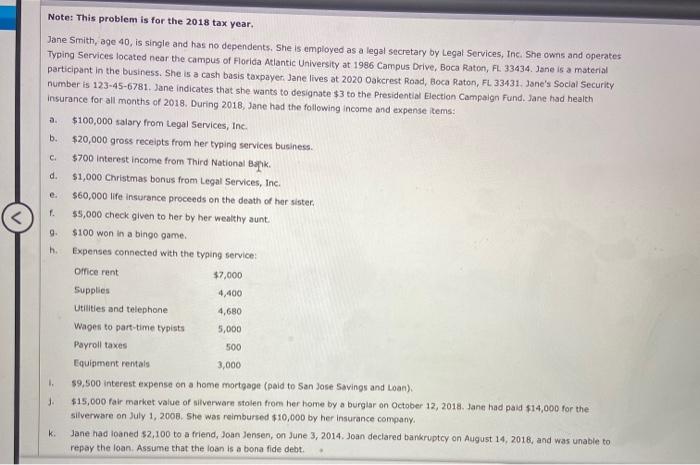
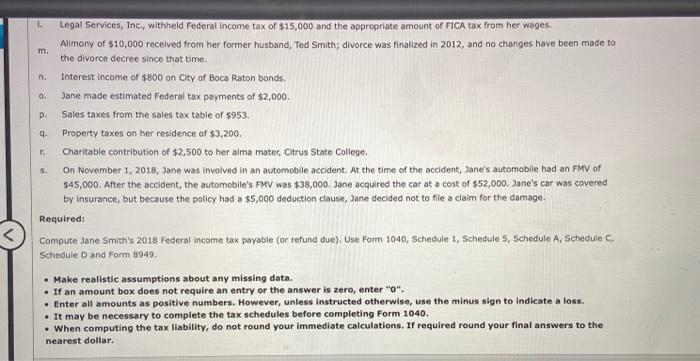
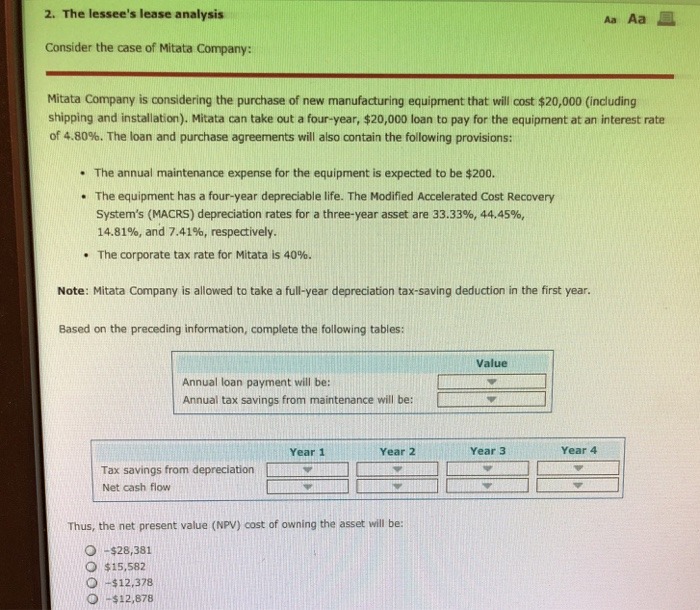
2. The lessee's lease analysis Aa Aa Consider the case of Mitata Company: Mitata Company is considering the purchase of new manufacturing equipment that will cost $20,000 (including shipping and installation). Mitata can take out a four-year, $20,000 loan to pay for the equipment at an interest rate of 4.80%. The loan and purchase agreements will also contain the following provisions: . The annual maintenance expense for the equipment is expected to be $200. . The equipment has a four-year depreciable life. The Modified Accelerated Cost Recovery System's (MACRS) depreciation rates for a three-year asset are 33.33%, 44.45%, 14.81%, and 7.41%, respectively. . The corporate tax rate for Mitata is 40%. Note: Mitata Company is allowed to take a full-year depreciation tax-saving deduction in the first year. Based on the preceding information, complete the following tables: Value Annual loan payment will be: Annual tax savings from maintenance will be: Year 1 Year 2 Year 3 Year 4 Tax savings from depreciation Net cash flow Thus, the net present value (NPV) cost of owning the asset will be: -$28,381 $15,582 -$12,378 O -$12,678Note: This problem is for the 2018 tax year, Jane Smith, age 40, is single and has no dependents, She is employed as a legal secretary by Legal Services, Inc. She owns and operates Typing Services located near the campus of Florida Atlantic University at 1986 Campus Drive, Boca Raton, FL 33434. Jane is a material participant in the business. She is a cash basis taxpayer Jane lives at 2020 Oakcrest Road, Boca Raton, FL 33431, Jane's Social Security number is 123-45-6781. Jane indicates that she wants to designate $3 to the Presidential Election Campaign Fund. Jane had health insurance for all months of 2018. During 2018, Jane had the following Income and expense items: $100,000 salary from Legal Services, Inc. b. $20,000 gross receipts from her typing services business. C. $700 Interest Income from Third National Bank. d $1,000 Christmas bonus from Legal Services, Inc. $60,000 life Insurance proceeds on the death of her sister. $5,000 check given to her by her wealthy aunt. $100 won in a bingo game. H. Expenses connected with the typing service: Office rent 47,000 Supplies 4,400 Utilities and telephone 4,G80 Wages to part-time typists 5,000 Payroll taxes 500 Equipment rentals 3,000 $9,500 Interest expense on a home mortgage (paid to San Jose Savings and Loan). $15,000 fair market value of silverware stolen from her home by a burglar on October 12, 2018. Jane had paid $14,000 for the silverware on July 1, 2008. She was reimbursed $10,060 by her insurance company. K: Jane had loaned $2,100 to a friend, Joan Jensen, on June 3, 2014. Joan declared bankruptcy on August 14, 2018, and was unable to repay the loan. Assume that the loan is a bona fide debt.Legal Services, Inc., withheld Federal income tax of $15,000 and the appropriate amount of FICA tax from her wages. Allmony of $10,000 received from her former husband, Ted Smith; divorce was finalized in 2012, and no changes have been made to the divorce decree since that time. Interest income of $500 on City of Boca Raton bonds. Jane made estimated Federal tax payments of $2,000. P. Sales taxes from the sales tax table of $953. Property taxes on her residence of $3,200. Charitable contribution of $2,500 to her alma mater, Citrus State College, On November 1, 2018, Jane was Involved In an automobile accident. At the time of the accident, Jane's automobile had an FMY of $45,000. After the accident, the automobile's FMV was $38,000. Jane acquired the car at a cost of $52,000. Jane's car was covered by insurance, but because the policy had a $5,000 deduction clause, Jane decided not to file a claim for the damage. Required: Compute Jane Smith's 2018 Federal income tax payable (or refund due). Use Form 1040, Schedule 1, Schedule 5, Schedule A, Schedule C, Schedule D and Form 8949. Make realistic assumptions about any missing data. If an amount box does not require an entry or the answer is zero, enter "0". Enter all amounts as positive numbers. However, unless Instructed otherwise, use the minus sign to indicate a loss. . It may be necessary to complete the tax schedules before completing Form 1040. . When computing the tax liability, do not round your Immediate calculations. If required round your final answers to the nearest dollar

Step by Step Solution

There are 3 Steps involved in it

1 Expert Approved Answer
Step: 1 Unlock blur-text-image
Question Has Been Solved by an Expert!

Get step-by-step solutions from verified subject matter experts

Step: 2 Unlock
Step: 3 Unlock

Students Have Also Explored These Related Finance Questions!