







Question: QUESTION Read the case study on Agile Supply Chain: Zara's case study analysis' Fashion is a fast-paced industry. You need to be fast to deliver
QUESTION
Read the case study on Agile Supply Chain: Zara's case study analysis'
Fashion is a fast-paced industry. You need to be fast to deliver the products that will satisfy the consumers fashion needs when it is still hot in the market. You do not want your product to enter the market when fashion is in the declining trend. Zara, one of the major fashion retailers had to strategize their Supply Chain to achieve this.
- Identify and briefly explain ONE (1) strategy implemented by Zara in becoming an agile supply chain structure.
- Do you think it is possible for a local Malaysian company to implement the strategy implemented by Zara that you had pointed out? Give your opinion. Your opinion can be on the advantages/disadvantages/difficulties faced/ benefits enjoyed by our local companies in Malaysian environment. Will you agree with your other classmates opinions on their points?
Instructions:
i) Using forum format, each student is to have TWO (2) forum posts.
- The initial post is to discuss the above issues by giving your own opinion for questions (a) and (b).
- Another post is to comment on ONE (1) of your friends forum posts. You may comment on their initial post or their second post. The comments must be supported by an argument or reasons for agreeing or disagree with the post. A comment without support will not be entitled to any marks.
ii) All the comments must be in your own word based on your opinion and knowledge. Do not copy and paste the phrases in the article as your answer.
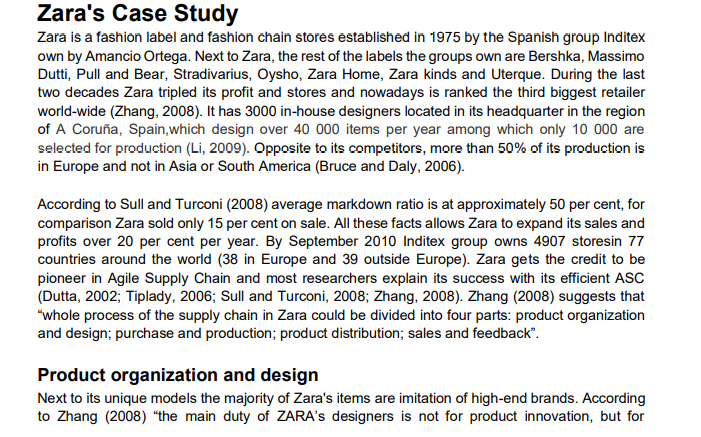
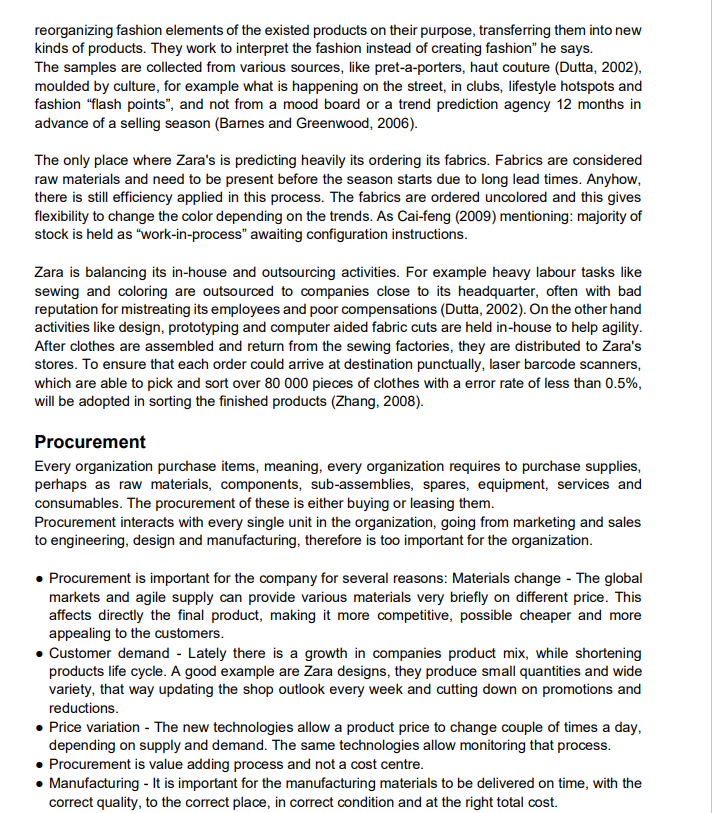
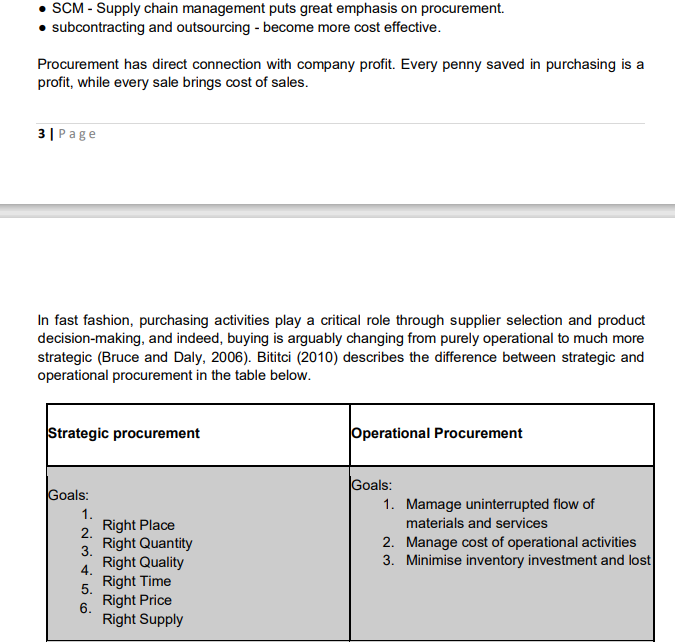
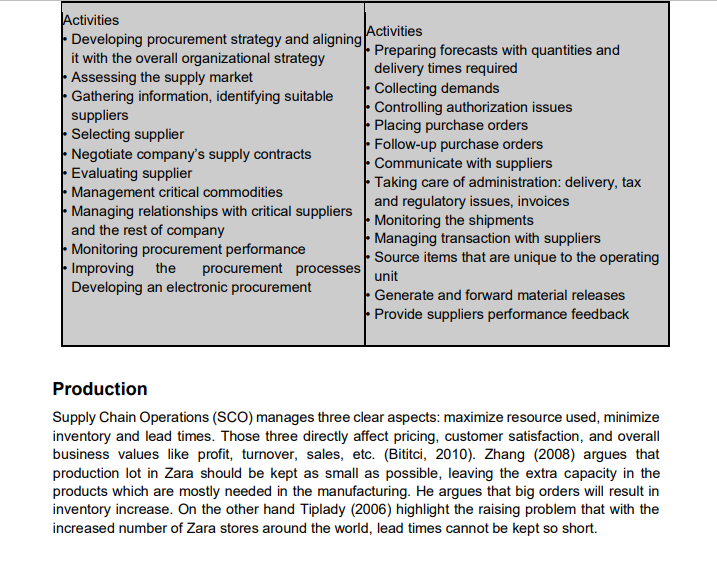
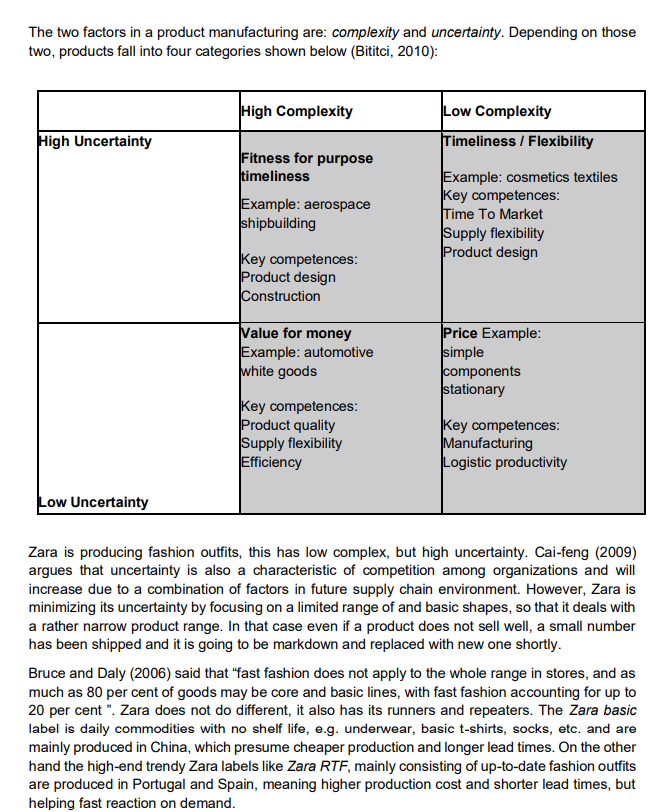
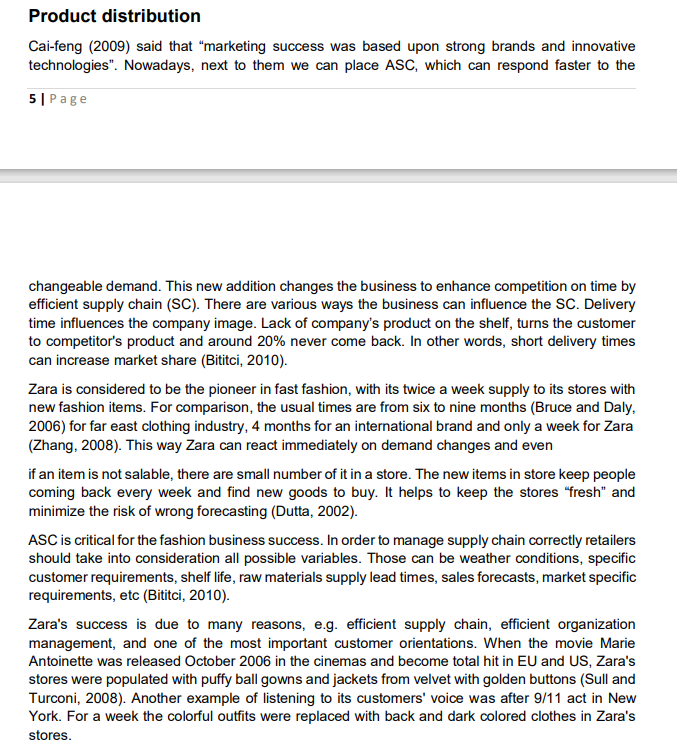
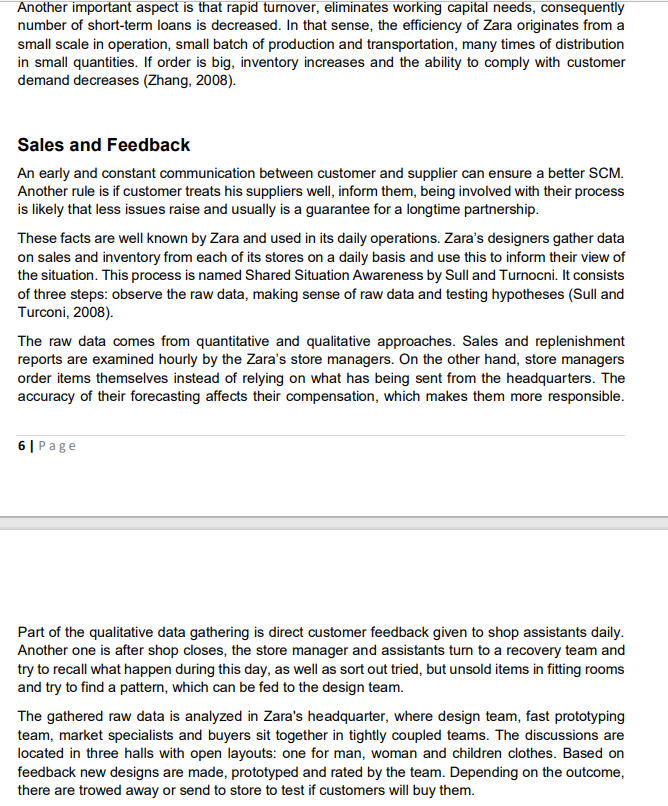
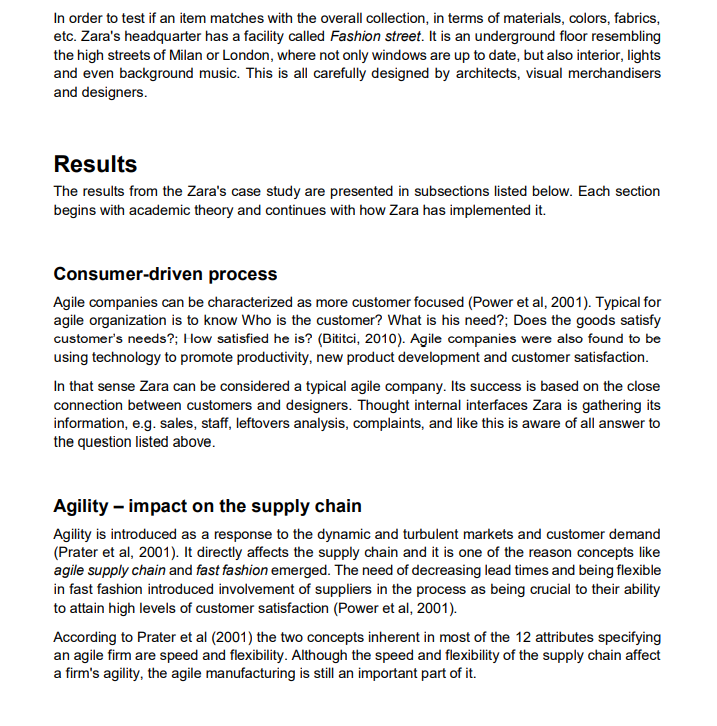
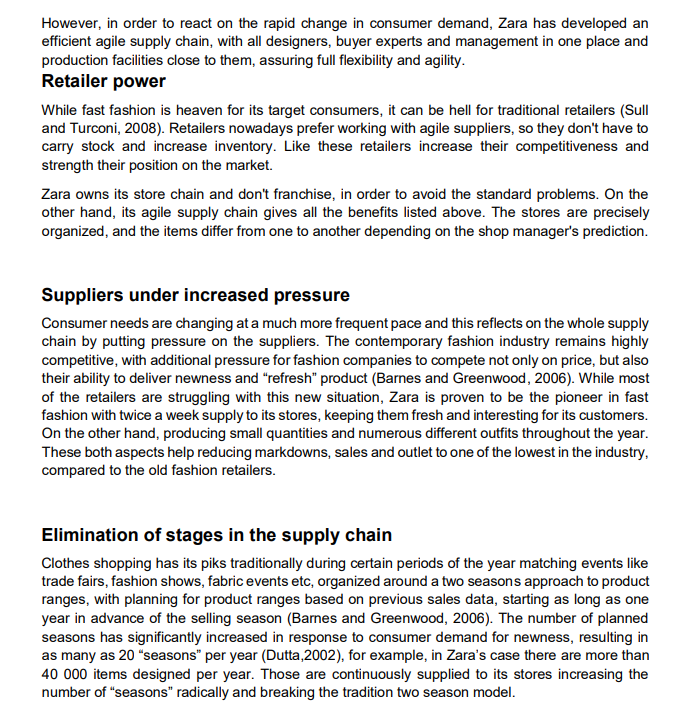
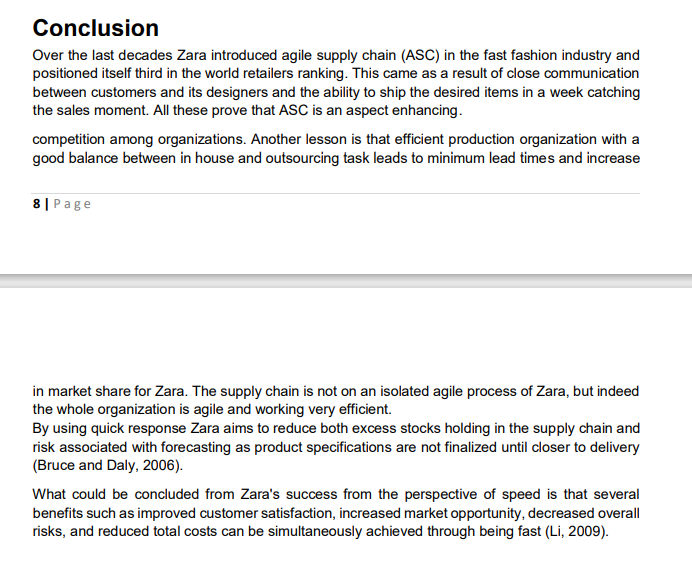
Zara's Case Study Zara is a fashion label and fashion chain stores established in 1975 by the Spanish group Inditex own by Amancio Ortega. Next to Zara, the rest of the labels the groups own are Bershka, Massimo Dutti, Pull and Bear, Stradivarius, Oysho, Zara Home, Zara kinds and Uterque. During the last two decades Zara tripled its profit and stores and nowadays is ranked the third biggest retailer world-wide (Zhang, 2008). It has 3000 in-house designers located in its headquarter in the region of A Corua, Spain, which design over 40 000 items per year among which only 10 000 are selected for production (Li, 2009). Opposite to its competitors, more than 50% of its production is in Europe and not in Asia or South America (Bruce and Daly, 2006). According to Sull and Turconi (2008) average markdown ratio is at approximately 50 per cent, for comparison Zara sold only 15 per cent on sale. All these facts allows Zara to expand its sales and profits over 20 per cent per year. By September 2010 Inditex group owns 4907 storesin 77 countries around the world (38 in Europe and 39 outside Europe). Zara gets the credit to be pioneer in Agile Supply Chain and most researchers explain its success with its efficient ASC (Dutta, 2002; Tiplady, 2006; Sull and Turconi, 2008; Zhang, 2008). Zhang (2008) suggests that "whole process of the supply chain in Zara could be divided into four parts: product organization and design; purchase and production; product distribution; sales and feedback. Product organization and design Next to its unique models the majority of Zara's items are imitation of high-end brands. According to Zhang (2008) "the main duty of ZARA's designers is not for product innovation, but for reorganizing fashion elements of the existed products on their purpose, transferring them into new kinds of products. They work to interpret the fashion instead of creating fashion" he says. The samples are collected from various sources, like pret-a-porters, haut couture (Dutta, 2002), moulded by culture, for example what is happening on the street, in clubs, lifestyle hotspots and fashion "flash points, and not from a mood board or a trend prediction agency 12 months in advance of a selling season (Bames and Greenwood, 2006). The only place where Zara's is predicting heavily its ordering its fabrics. Fabrics are considered raw materials and need to be present before the season starts due to long lead times. Anyhow, there is still efficiency applied in this process. The fabrics are ordered uncolored and this gives flexibility to change the color depending on the trends. As Cai-feng (2009) mentioning: majority of stock is held as "work-in-process" awaiting configuration instructions. Zara is balancing its in-house and outsourcing activities. For example heavy labour tasks like sewing and coloring are outsourced to companies close to its headquarter, often with bad reputation for mistreating its employees and poor compensations (Dutta, 2002). On the other hand activities like design, prototyping and computer aided fabric cuts are held in-house to help agility. After clothes are assembled and return from the sewing factories, they are distributed to Zara's stores. To ensure that each order could arrive at destination punctually, laser barcode scanners, which are able to pick and sort over 80 000 pieces of clothes with a error rate of less than 0.5%, will be adopted in sorting the finished products (Zhang, 2008). Procurement Every organization purchase items, meaning, every organization requires to purchase supplies, perhaps as raw materials, components, sub-assemblies, spares, equipment, services and consumables. The procurement of these is either buying or leasing them. Procurement interacts with every single unit in the organization, going from marketing and sales to engineering, design and manufacturing, therefore is too important for the organization. Procurement is important for the company for several reasons: Materials change - The global markets and agile supply can provide various materials very briefly on different price. This affects directly the final product, making it more competitive, possible cheaper and more appealing to the customers. Customer demand - Lately there is a growth in companies product mix, while shortening products life cycle. A good example are Zara designs, they produce small quantities and wide variety, that way updating the shop outlook every week and cutting down on promotions and reductions. Price variation - The new technologies allow a product price to change couple of times a day, depending on supply and demand. The same technologies allow monitoring that process. Procurement is value adding process and not a cost centre. Manufacturing - It is important for the manufacturing materials to be delivered on time, with the correct quality, to the correct place, in correct condition and at the right total cost. SCM - Supply chain management puts great emphasis on procurement. subcontracting and outsourcing - become more cost effective. Procurement has direct connection with company profit. Every penny saved in purchasing is a profit, while every sale brings cost of sales. 3 Page In fast fashion, purchasing activities play a critical role through supplier selection and product decision-making, and indeed, buying is arguably changing from purely operational to much more strategic (Bruce and Daly, 2006). Bititci (2010) describes the difference between strategic and operational procurement in the table below. Strategic procurement Operational Procurement Goals: 1. 2. 3. 4. 5. 6. Goals: 1. Mamage uninterrupted flow of materials and services 2. Manage cost of operational activities 3. Minimise inventory investment and lost Right Place Right Quantity Right Quality Right Time Right Price Right Supply Activities |Activities Developing procurement strategy and aligning| - Preparing forecasts with quantities and it with the overall organizational strategy delivery times required | Assessing the supply market Gathering information, identifying suitable Collecting demands suppliers Controlling authorization issues - Placing purchase orders Selecting supplier Follow-up purchase orders Negotiate company's supply contracts Communicate with suppliers |Evaluating supplier - Taking care of administration: delivery, tax Management critical commodities and regulatory issues, invoices - Managing relationships with critical suppliers and the rest of company Monitoring the shipments Managing transaction with suppliers Monitoring procurement performance Source items that are unique to the operating - Improving the procurement processes unit Developing an electronic procurement | Generate and forward material releases - Provide suppliers performance feedback Production Supply Chain Operations (SCO) manages three clear aspects: maximize resource used, minimize inventory and lead times. Those three directly affect pricing, customer satisfaction, and overall business values like profit, turnover, sales, etc. (Bititci, 2010). Zhang (2008) argues that production lot in Zara should be kept as small as possible, leaving the extra capacity in the products which are mostly needed in the manufacturing. He argues that big orders will result in inventory increase. On the other hand Tiplady (2006) highlight the raising problem that with the increased number of Zara stores around the world, lead times cannot be kept so short. The two factors in a product manufacturing are: complexity and uncertainty. Depending on those two, products fall into four categories shown below (Bititci, 2010): High Complexity Low Complexity Timeliness / Flexibility High Uncertainty Fitness for purpose timeliness Example: aerospace shipbuilding Example: cosmetics textiles Key competences: Time To Market Supply flexibility Product design Key competences: Product design Construction Value for money Example: automotive white goods Price Example: simple components stationary Key competences: Product quality Supply flexibility Efficiency Key competences: Manufacturing Logistic productivity Low Uncertainty Zara is producing fashion outfits, this has low complex, but high uncertainty. Cai-feng (2009) argues that uncertainty is also a characteristic of competition among organizations and will increase due to a combination of factors in future supply chain environment. However, Zara is minimizing its uncertainty by focusing on a limited range of and basic shapes, so that it deals with a rather narrow product range. In that case even if a product does not sell well, a small number has been shipped and it is going to be markdown and replaced with new one shortly. Bruce and Daly (2006) said that "fast fashion does not apply to the whole range in stores, and as much as 80 per cent of goods may be core and basic lines, with fast fashion accounting for up to 20 per cent ". Zara does not do different, it also has its runners and repeaters. The Zara basic label is daily commodities with no shelf life, e.g. underwear, basic t-shirts, socks, etc. and are mainly produced in China, which presume cheaper production and longer lead times. On the other hand the high-end trendy Zara labels like Zara RTF, mainly consisting of up-to-date fashion outfits are produced in Portugal and Spain, meaning higher production cost and shorter lead times, but helping fast reaction on demand. Product distribution Cai-feng (2009) said that "marketing success was based upon strong brands and innovative technologies". Nowadays, next to them we can place ASC, which can respond faster to the 5 Page changeable demand. This new addition changes the business to enhance competition on time by efficient supply chain (SC). There are various ways the business can influence the SC. Delivery time influences the company image. Lack of company's product on the shelf, turns the customer to competitor's product and around 20% never come back. In other words, short delivery times can increase market share (Bititci, 2010). Zara is considered to be the pioneer in fast fashion, with its twice a week supply to its stores with new fashion items. For comparison, the usual times are from six to nine months (Bruce and Daly, 2006) for far east clothing industry, 4 months for an international brand and only a week for Zara (Zhang, 2008). This way Zara can react immediately on demand changes and even if an item is not salable, there are small number of it in a store. The new items in store keep people coming back every week and find new goods to buy. It helps to keep the stores "fresh" and minimize the risk of wrong forecasting (Dutta, 2002). ASC is critical for the fashion business success. In order to manage supply chain correctly retailers should take into consideration all possible variables. Those can be weather conditions, specific customer requirements, shelf life, raw materials supply lead times, sales forecasts, market specific requirements, etc (Bititci, 2010). Zara's success is due to many reasons, e.g. efficient supply chain, efficient organization management, and one of the most important customer orientations. When the movie Marie Antoinette was released October 2006 in the cinemas and become total hit in EU and US, Zara's stores were populated with puffy ball gowns and jackets from velvet with golden buttons (Sull and Turconi, 2008). Another example of listening to its customers' voice was after 9/11 act in New York. For a week the colorful outfits were replaced with back and dark colored clothes in Zara's stores. Another important aspect is that rapid turnover, eliminates working capital needs, consequently number of short-term loans is decreased. In that sense, the efficiency of Zara originates from a small scale in operation, small batch of production and transportation, many times of distribution in small quantities. If order is big, inventory increases and the ability to comply with customer demand decreases (Zhang, 2008). Sales and Feedback An early and constant communication between customer and supplier can ensure a better SCM. Another rule is if customer treats his suppliers well, inform them, being involved with their process is likely that less issues raise and usually is a guarantee for a longtime partnership. These facts are well known by Zara and used in its daily operations. Zara's designers gather data on sales and inventory from each of its stores on a daily basis and use this to inform their view of the situation. This process is named Shared Situation Awareness by Sull and Turnocni. It consists of three steps: observe the raw data, making sense of raw data and testing hypotheses (Sull and Turconi, 2008). The raw data comes from quantitative and qualitative approaches. Sales and replenishment reports are examined hourly by the Zara's store managers. On the other hand, store managers order items themselves instead of relying on what has being sent from the headquarters. The accuracy of their forecasting affects their compensation, which makes them more responsible. 6 Page Part of the qualitative data gathering is direct customer feedback given to shop assistants daily. Another one is after shop closes, the store manager and assistants turn to a recovery team and try to recall what happen during this day, as well as sort out tried, but unsold items in fitting rooms and try to find a pattern, which can be fed to the design team. The gathered raw data is analyzed in Zara's headquarter, where design team, fast prototyping team, market specialists and buyers sit together in tightly coupled teams. The discussions are located in three halls with open layouts: one for man, woman and children clothes. Based on feedback new designs are made, prototyped and rated by the team. Depending on the outcome, there are trowed away or send to store to test if customers will buy them. In order to test if an item matches with the overall collection, in terms of materials, colors, fabrics, etc. Zara's headquarter has a facility called Fashion street. It is an underground floor resembling the high streets of Milan or London, where not only windows are up to date, but also interior, lights and even background music. This is all carefully designed by architects, visual merchandisers and designers. Results The results from the Zara's case study are presented in subsections listed below. Each section begins with academic theory and continues with how Zara has implemented it. Consumer-driven process Agile companies can be characterized as more customer focused (Power et al, 2001). Typical for agile organization is to know Who is the customer? What is his need?; Does the goods satisfy customer's needs?; How satisfied he is? (Bititci, 2010). Agile companies were also found to be using technology to promote productivity, new product development and customer satisfaction. In that sense Zara can be considered a typical agile company. Its success is based on the close connection between customers and designers. Thought internal interfaces Zara is gathering its information, e.g. sales, staff, leftovers analysis, complaints, and like this is aware of all answer to the question listed above. Agility - impact on the supply chain Agility is introduced as a response to the dynamic and turbulent markets and customer demand (Prater et al, 2001). It directly affects the supply chain and it is one of the reason concepts like agile supply chain and fast fashion emerged. The need of decreasing lead times and being flexible in fast fashion introduced involvement of suppliers in the process as being crucial to their ability to attain high levels of customer satisfaction (Power et al, 2001). According to Prater et al (2001) the two concepts inherent in most of the 12 attributes specifying an agile firm are speed and flexibility. Although the speed and flexibility of the supply chain affect a firm's agility, the agile manufacturing is still an important part of it. However, in order to react on the rapid change in consumer demand, Zara has developed an efficient agile supply chain, with all designers, buyer experts and management in one place and production facilities close to them, assuring full flexibility and agility. Retailer power While fast fashion is heaven for its target consumers, it can be hell for traditional retailers (Sull and Turconi, 2008). Retailers nowadays prefer working with agile suppliers, so they don't have to carry stock and increase inventory. Like these retailers increase their competitiveness and strength their position on the market. Zara owns its store chain and don't franchise, in order to avoid the standard problems. On the other hand, its agile supply chain gives all the benefits listed above. The stores are precisely organized, and the items differ from one to another depending on the shop manager's prediction. Suppliers under increased pressure Consumer needs are changing at a much more frequent pace and this reflects on the whole supply chain by putting pressure on the suppliers. The contemporary fashion industry remains highly competitive, with additional pressure for fashion companies to compete not only on price, but also their ability to deliver newness and "refresh" product (Barnes and Greenwood, 2006). While most of the retailers are struggling with this new situation, Zara is proven to be the pioneer in fast fashion with twice a week supply to its stores, keeping them fresh and interesting for its customers. On the other hand, producing small quantities and numerous different outfits throughout the year. These both aspects help reducing markdowns, sales and outlet to one of the lowest in the industry, compared to the old fashion retailers. Elimination of stages in the supply chain Clothes shopping has its piks traditionally during certain periods of the year matching events like trade fairs, fashion shows, fabric events etc, organized around a two seasons approach to product ranges, with planning for product ranges based on previous sales data, starting as long as one year in advance of the selling season (Barnes and Greenwood, 2006). The number of planned seasons has significantly increased in response to consumer demand for newness, resulting in as many as 20 "seasons" per year (Dutta, 2002), for example, in Zara's case there are more than 40 000 items designed per year. Those are continuously supplied to its stores increasing the number of seasons" radically and breaking the tradition two season model. Conclusion Over the last decades Zara introduced agile supply chain (ASC) in the fast fashion industry and positioned itself third in the world retailers ranking. This came as a result of close communication between customers and its designers and the ability to ship the desired items in a week catching the sales moment. All these prove that ASC is an aspect enhancing. competition among organizations. Another lesson is that efficient production organization with a good balance between in house and outsourcing task leads to minimum lead times and increase 8 Page in market share for Zara. The supply chain is not on an isolated agile process of Zara, but indeed the whole organization is agile and working very efficient. By using quick response Zara aims to reduce both excess stocks holding in the supply chain and risk associated with forecasting as product specifications are not finalized until closer to delivery (Bruce and Daly, 2006). What could be concluded from Zara's success from the perspective of speed is that several benefits such as improved customer satisfaction, increased market opportunity, decreased overall risks, and reduced total costs can be simultaneously achieved through being fast (Li, 2009)Step by Step Solution
There are 3 Steps involved in it

Get step-by-step solutions from verified subject matter experts
 Study Help