



Question: Question: The Company uses a periodic inventory system. For specific identification, ending inventory consists of 270 units from the January 30 purchase, 5 units from
Question: 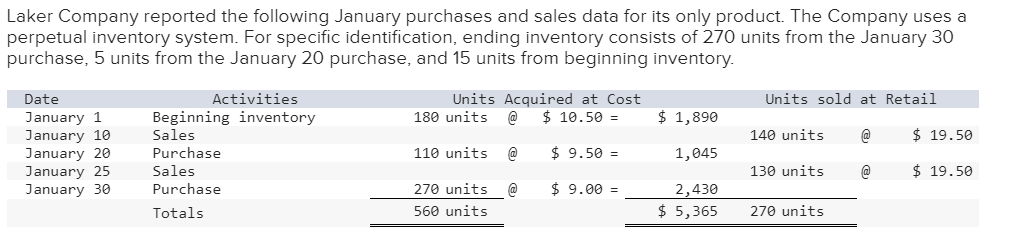
The Company uses a periodic inventory system. For specific identification, ending inventory consists of 270 units from the January 30 purchase, 5 units from the January 20 purchase, and 15 units from beginning inventory. Determine the cost assigned to ending inventory and to cost of goods sold using (a) specific identification, (b) weighted average, (c) FIFO, and (d) LIFO.
a) 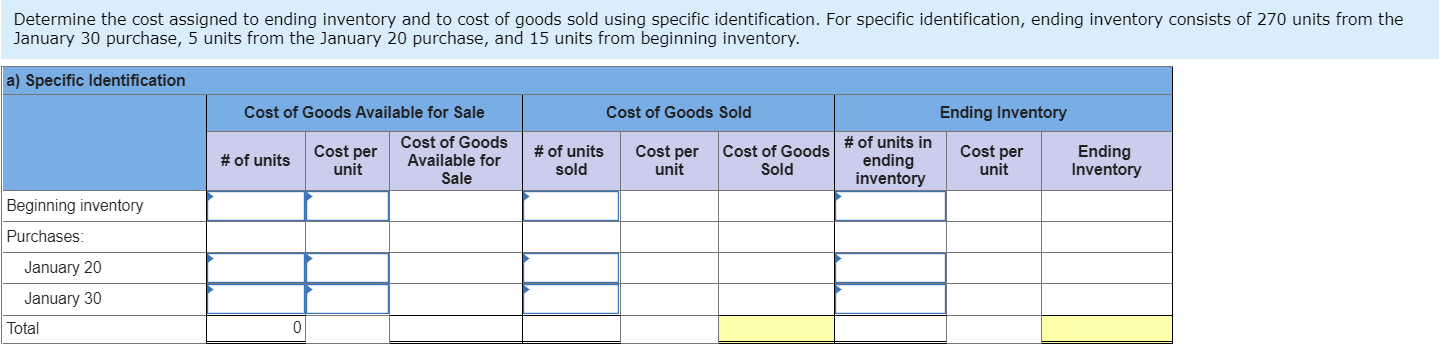 b)
b) 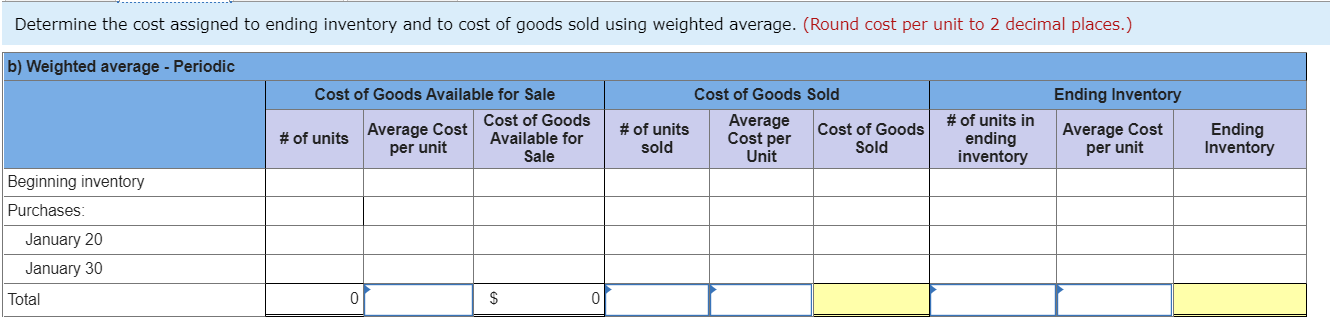 c)
c)
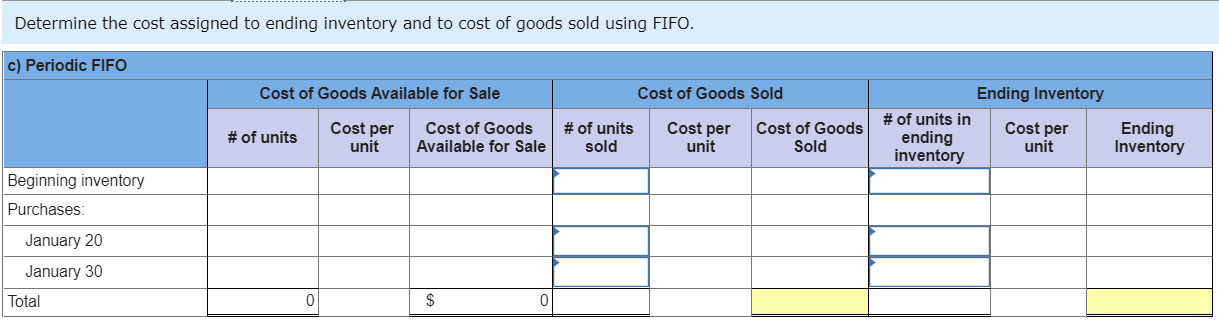 d)
d) 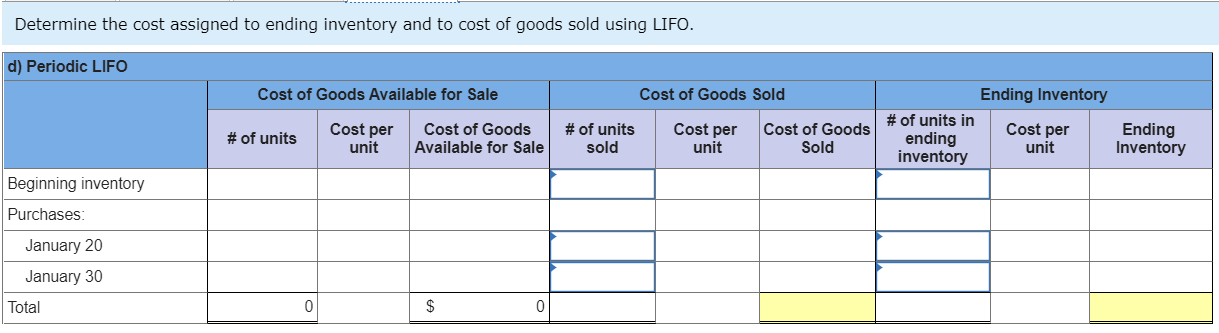
Laker Company reported the following January purchases and sales data for its only product. The Company uses a perpetual inventory system. For specific identification, ending inventory consists of 270 units from the January 30 purchase, 5 units from the January 20 purchase, and 15 units from beginning inventory. Determine the cost assigned to ending inventory and to cost of goods sold using specific identification. For specific identification, ending inventory consists of 270 units from the January 30 purchase, 5 units from the January 20 purchase, and 15 units from beginning inventory. a) Specific Identification Determine the cost assigned to ending inventory and to cost of goods sold using weighted average. (Round cost per unit to 2 decimal places.) b) Weighted average - Periodic Determine the cost assigned to ending inventory and to cost of goods sold using FIFO. Determine the cost assigned to ending inventory and to cost of goods sold using LIFO
Step by Step Solution
There are 3 Steps involved in it

Get step-by-step solutions from verified subject matter experts