







Question: QUESTION THREE When Demand Planning Goes Wrong: A case at United Airlines The mullion-dollar question: My forecasts will always be wrong. Should f over-forecast or
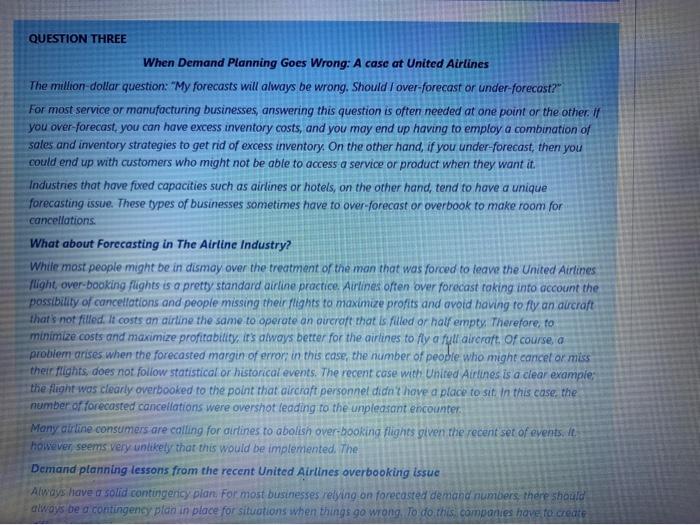
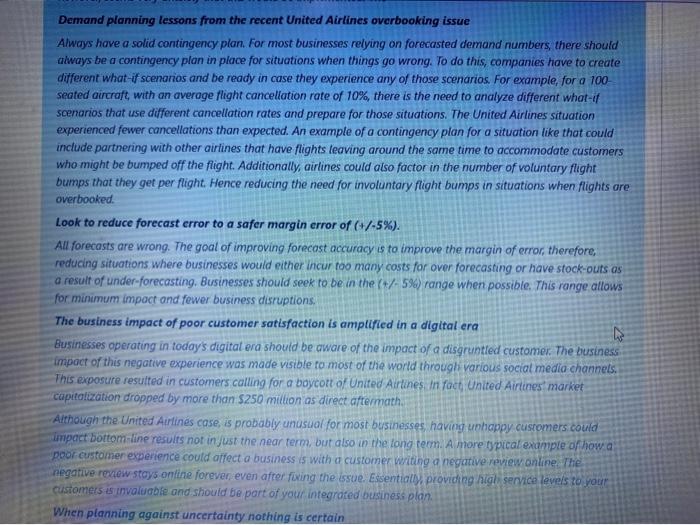
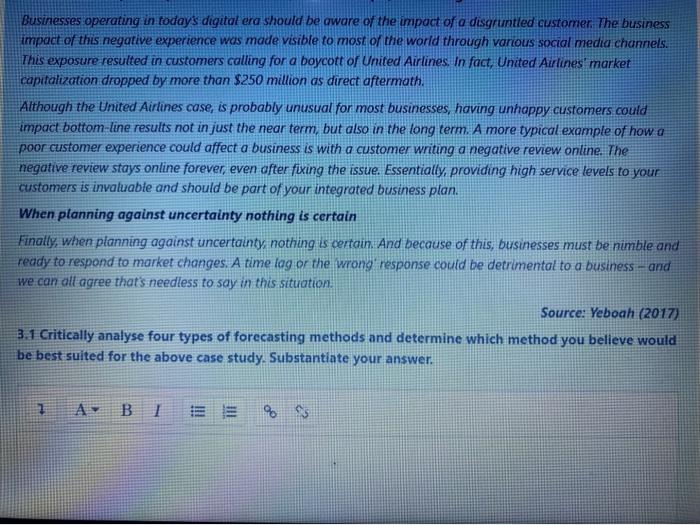
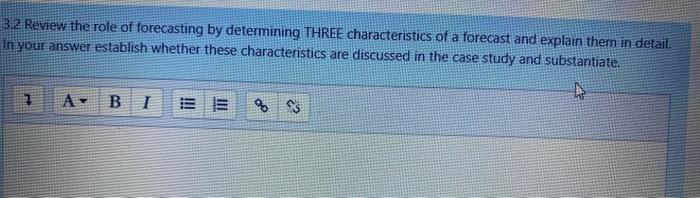
QUESTION THREE When Demand Planning Goes Wrong: A case at United Airlines The mullion-dollar question: "My forecasts will always be wrong. Should f over-forecast or under-forecost?" For most service or manufacturing businesses, answering this question is often needed at one point or the other. if you over-forecast, you can have excess inventory costs, and you may end up having to employ a combination of soles and inventory strategies to get rid of excess inventory. On the other hand, if you under-forecast, then you could end up with customers who might not be able to access a service or product when they want it. Industries that have fixed capacities such as airlines or hotels, on the other hand, tend to hove a unique forecasting issue. These types of businesses sometimes have to over-forecast or overbook to make room for cancellotions. What about forecasting in The Airline Industry? White most people might be in dismay over the treatment of the man that was forced to leave the United Airlines fight, over-booking fughts is a pretty standard airline practice. Airlines often over forecast raking into coccount the possibility of cancellations and people missing their flights to maximize profits and ovoid having to fly an aircraft that not filled. it costs an airtine the same to operate an oucroft that is fuled or half empty. Therefore, to minimize costs and maximize profitability, its alwoys better for the airlines to fly a full aircrath of course, a probiem arises when the forecasted margin of error; in this case, the number of peofle who might cancel or miss their flights, does not follow statistical or historical events. The recent case with Unifed Airtines is a clear example; the flight wos clearly overbooked to the point that aircraft personnel didn thove a place to sit in this case the number of forecasted cancellations were overshot leading to the unpleasant encounter. Mony airline consumers are calling for airlines to abolish over-booking flights given the recent set of events. it. however, seems very unlukely that this would be implemented, The Demand planning lessons from the recent United Airlines overbooking issue Always have a solid contingenicy plan for most businesses relying on forecasted demand numbers there should alwoys be a cortingensy plan in place for situotions when things go wrong, To do this campunies have to create Demand planning lessons from the recent United Airlines overbooking issue Always have a solid contingency plan. For most businesses relying on forecasted demand numbers, there should aways be a contingency plan in place for situations when things go wrong. To do this, companies have to create different what-if scenarios and be ready in case they experience any of those scenarias. For example, for a 100 seated aircraft, with an average flight cancellation rate of 10%, there is the need to analyze different what-if scenarios that use different cancellation rates and prepare for those situations. The United Alirlines situation experienced fewer cancellations than expected. An example of a contingency plan for a situation like that could include partnering with other airlines that have flights leaving around the same time to accommodate customers who might be bumped off the flight. Additionally, airlines could also factor in the number of voluntary flight bumps that they get per flight. Hence reducing the need for involuntary flight bumps in situations when flights ore overbooked. Look to reduce forecast error to a safer margin error of (+/5%). All forecasts are wrong. The goal of improving forecast accuracy is to improve the margin of error, therefore, reducing situotions where businesses would either incur too many costs for over forecasting or have stock-outs as a result of under-forecasting. Businesses should seek to be in the (+/59) range when possible. This range allows for minumum impoct and fewer business disruptions. The business impact of poor customer satisfaction is amplified in a digital era Businesses operating in todays digital era shoutd be aware of the impact of a disgruntfed customer. The business impoct of this negative experience was made visible ta most of the world through various social media channels. This exposure resuited in customers calling for a boycott of United Aurtines. In foct United Airtenes market capitalization dropped by more than $250 million as direct aftermath. Aithough the United Aurlines case, is probably unusual for most busihesses having unhappy customers could Impact bottem-line results not in just the near term, but also in the tong tem. A more typical example of how a poor eustomer experience could affect a business is with a customer writing a negativereview on line the negative rexew stcys ontine foreven even after foving the issue. Essentially, providing hal senvice fovels to yout customers is invaluable and shouid be part of your infegroted business plan. Businesses operating in todays digitol era should be aware of the impact of a disgrumtied customer The business impact of this negative experience was made visible to most of the world through various social media channels. Ihis exposure resulted in customers calling for a boycott of United Airlines in fact, United Airlines market capitalization dropped by more than $250 million as direct aftermath. Although the United Airlines case, is probably unusual for most businesses, having unhappy customers could impact bottom-line results not in just the near term, but also in the long term. A more typical example of how a poor customer experience could affect a business is with a customer writing a negative review online. The megative review stays online forever, even ofter fixing the issue. Essentially, providing high service levels to your customers is invaluabte and should be part of your integrated business plan. When planning against uncertainty nothing is certain Finally, when planning against uncertainty, nothing is dertain. And because of this, businesses must be numble and ready to respend to market changes. A time lag or the wrong response could be detrimental to a business - and we can all-agree that's.needless to say in this situration: Source: Yeboah (2017) 3.1 Critically analyse four types of forecasting methods and determine which method you believe would be best suited for the above case study. Substantiate your answer. 3.2 Review the role of forecasting by determining THREE characteristics of a forecast and explain them in detail. In your answer establish whether these characteristics are discussed in the case study and substantiate. 3.3 Determine the purpose of having measures in place to deal with forecast errors. Substantiate your answers by referring to the case study
Step by Step Solution
There are 3 Steps involved in it

Get step-by-step solutions from verified subject matter experts
 Study Help