







Question: Question # True False 1 2 3 4 Question Cash = + long-term debt + equity + current liabilities - current assets other than cash
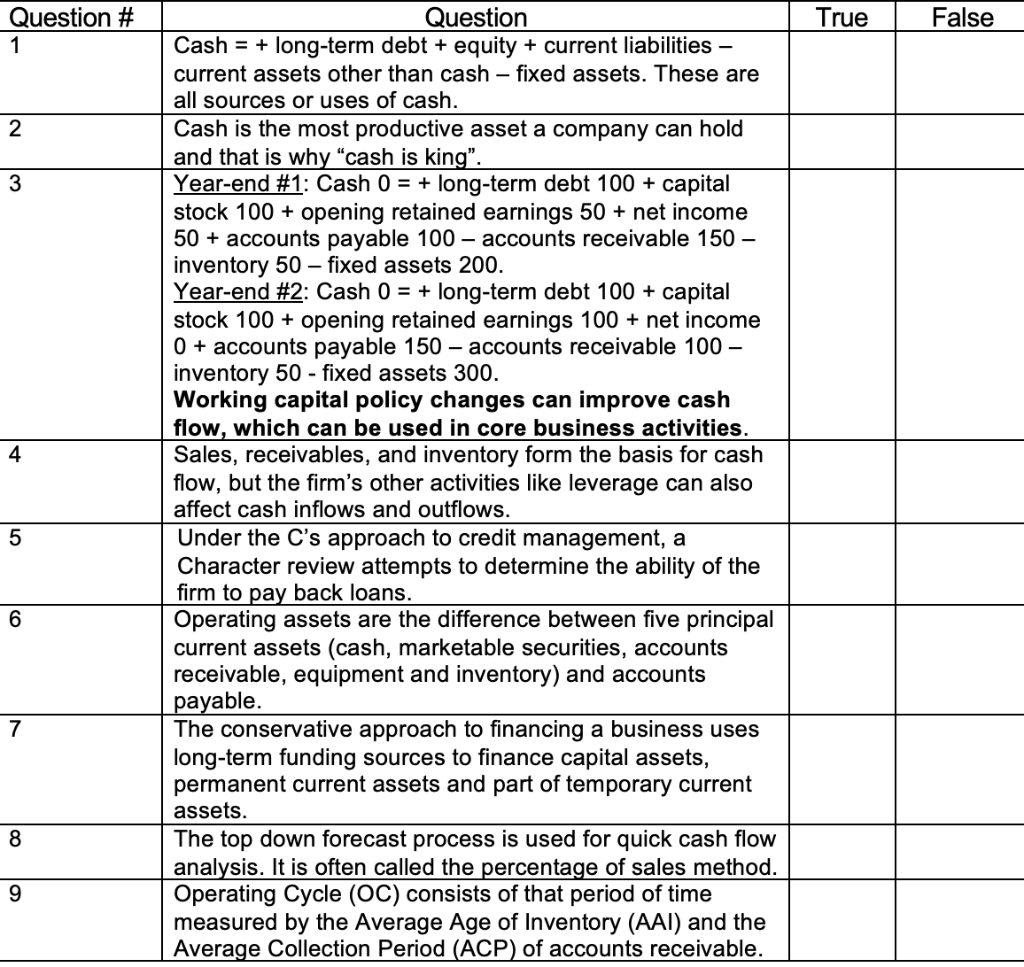
Question # True False 1 2 3 4 Question Cash = + long-term debt + equity + current liabilities - current assets other than cash fixed assets. These are all sources or uses of cash. Cash is the most productive asset a company can hold and that is why cash is king". Year-end #1: Cash 0 = + long-term debt 100 + capital stock 100 + opening retained earnings 50 + net income 50 + accounts payable 100 accounts receivable 150 inventory 50 fixed assets 200. Year-end #2: Cash 0 = + long-term debt 100 + capital stock 100 + opening retained earnings 100 + net income 0 + accounts payable 150 - accounts receivable 100 - inventory 50 - fixed assets 300. Working capital policy changes can improve cash flow, which can be used in core business activities. Sales, receivables, and inventory form the basis for cash flow, but the firm's other activities like leverage can also affect cash inflows and outflows. Under the C's approach to credit management, a Character review attempts to determine the ability of the firm to pay back loans. Operating assets are the difference between five principal current assets (cash, marketable securities, accounts receivable, equipment and inventory) and accounts payable. The conservative approach to financing a business uses long-term funding sources to finance capital assets, permanent current assets and part of temporary current assets. The top down forecast process is used for quick cash flow analysis. It is often called the percentage of sales method. Operating Cycle (OC) consists of that period of time measured by the Average Age of Inventory (AAI) and the Average Collection Period (ACP) of accounts receivable. 5 6 7 001 9
Step by Step Solution
There are 3 Steps involved in it

Get step-by-step solutions from verified subject matter experts
 Study Help