







Question: Questions 1. What is the problem in this case study? 2. What are the alternatives suggested and how do you evaluate these alternatives? 3. What
Questions
1. What is the problem in this case study?
2. What are the alternatives suggested and how do you evaluate these alternatives?
3. What are the other considerations are there in planning a product for this market?
4. What will the production people want to say about the problem? The finance people? The engineers? The public relations people?
5. How should DMCs program for this coming selling season?
6. What other recommendations should be made toward improving DMCs marketing programs?
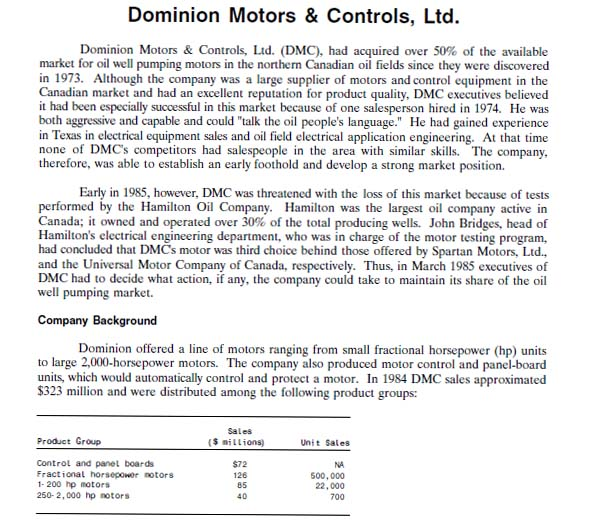
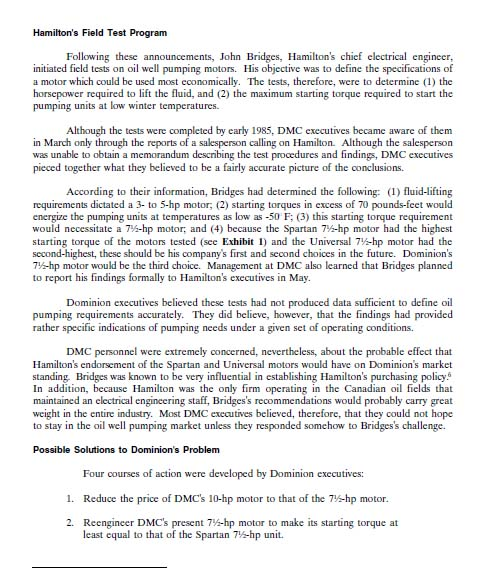
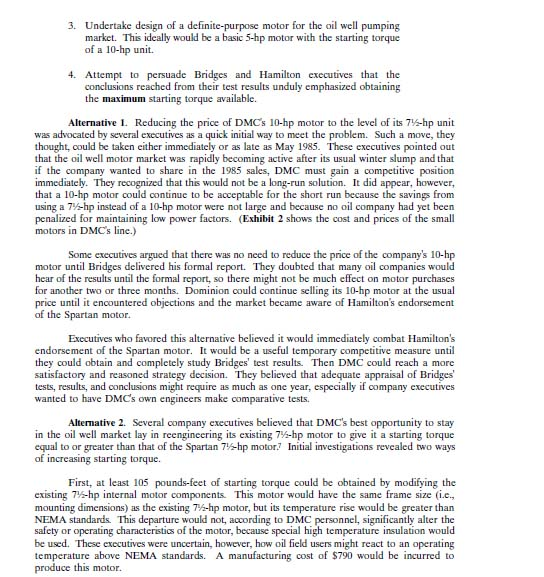
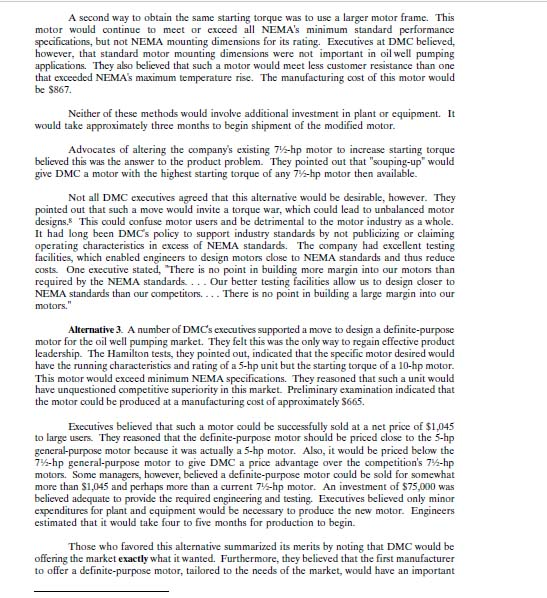
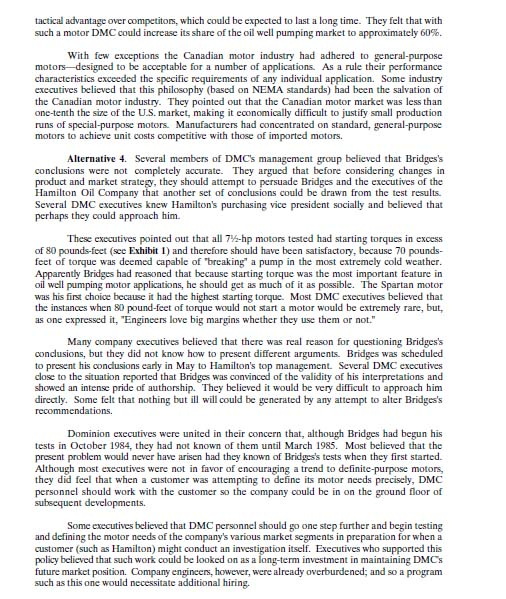
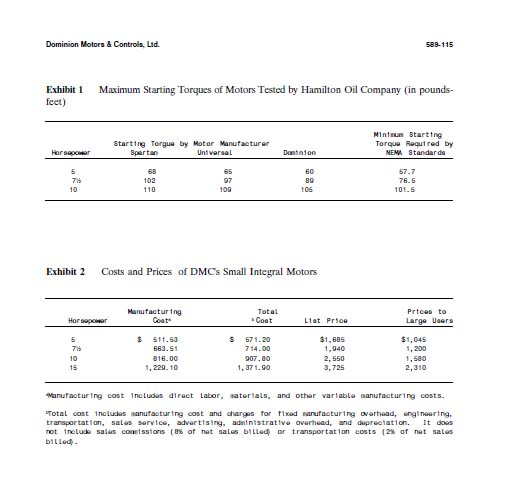
Dominion Motors & Controls, Ltd. Dominion Motors & Controls, Ltd. (DMC), had acquired over 50% of the available market for oil well pumping motors in the northern Canadian oil fields since they were discovered in 1973. Although the company was a large supplier of motors and control equipment in the Canadian market and had an excellent reputation for product quality, DMC executives believed it had been especially successful in this market because of one salesperson hired in 1974. He was both aggressive and capable and could "talk the oil people's language." He had gained experience in Texas in electrical equipment sales and oil field electrical application engineering. At that time none of DMCs competitors had salespeople in the area with similar skills. The company therefore, was able to establish an early foothold and develop a strong market position. Early in 1985, however, DMC was threatened with the loss of this market because of tests performed by the Hamilton Oil Company. Hamilton was the largest oil company active in Canada; it owned and operated over 30% of the total producing wells. John Bridges, head of Hamilton's electrical engineering department, who was in charge of the motor testing program, had concluded that DMCs motor was third choice behind those offered by Spartan Motors, Ltd., and the Universal Motor Company of Canada, respectively. Thus, in March 1985 executives of DMC had to decide what action, if any, the company could take to maintain its share of the oil well pumping market. Company Background Dominion offered a line of motors ranging from small fractional horsepower (hp) units to large 2,000-horsepower motors. The company also produced motor control and panel-board units, which would automatically control and protect a motor. In 1984 DMC sales approximated 5323 million and were distributed among the following product groups: Sales ($ millions) Product Group Unit Sales Control and panet boards Fractional horsepowor notors 1- 200 hp motors 250-2,000 hp notors $72 126 85 40 500,000 22,000 700
Step by Step Solution
There are 3 Steps involved in it

Get step-by-step solutions from verified subject matter experts
 Study Help