







Question: Questions 3, 4, and 6 each use a different estimation method. For each of them, identify the conditions that must be satisfied for us to
Questions 3, 4, and 6 each use a different estimation method. For each of them, identify the conditions that must be satisfied for us to trust the confidence intervals that we have calculated (i.e., for the intervals to be valid)?
I calculate Q3 by hand using Student's t distribution for standard error. I did Q4 using 2000 bootstrap samples and run the bootstrap code in R. I did Q6 using bbmle package in R.
Q3:
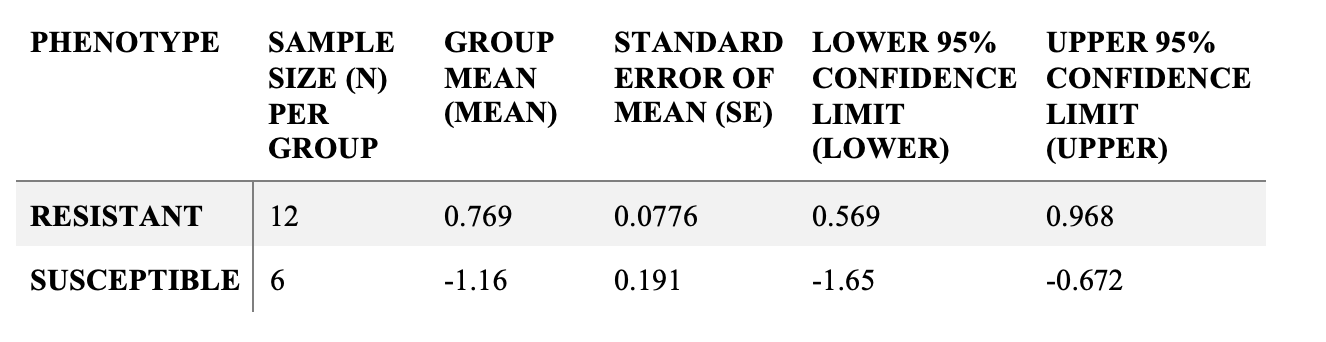
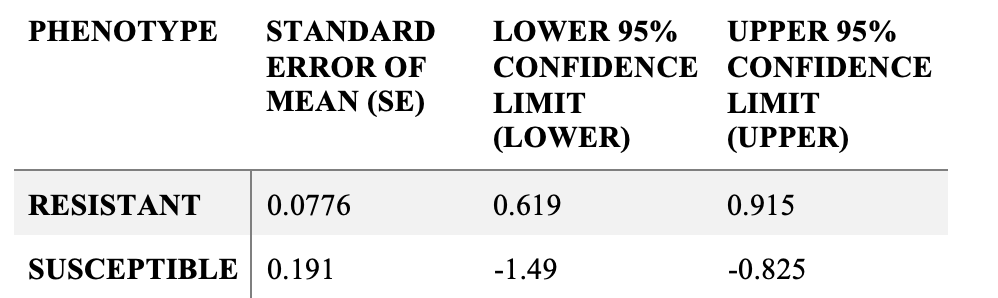
PHENOTYPE SAMPLE GROUP STANDARD LOWER 95% UPPER 95% SIZE (N) MEAN ERROR OF CONFIDENCE CONFIDENCE PER (MEAN) MEAN (SE) LIMIT LIMIT GROUP (LOWER) (UPPER) RESISTANT 12 0.769 0.0776 0.569 0.968 SUSCEPTIBLE 6 -1.16 0.191 -1.65 -0.672 PHENOTYPE STANDARD LOWER 95% UPPER 95% ERROR OF CONFIDENCE CONFIDENCE MEAN (SE) LIMIT LIMIT (LOWER) (UPPER) RESISTANT 0.0776 0.619 0.915 SUSCEPTIBLE 0.191 -1.49 -0.825
Step by Step Solution
There are 3 Steps involved in it

Get step-by-step solutions from verified subject matter experts
 Study Help