







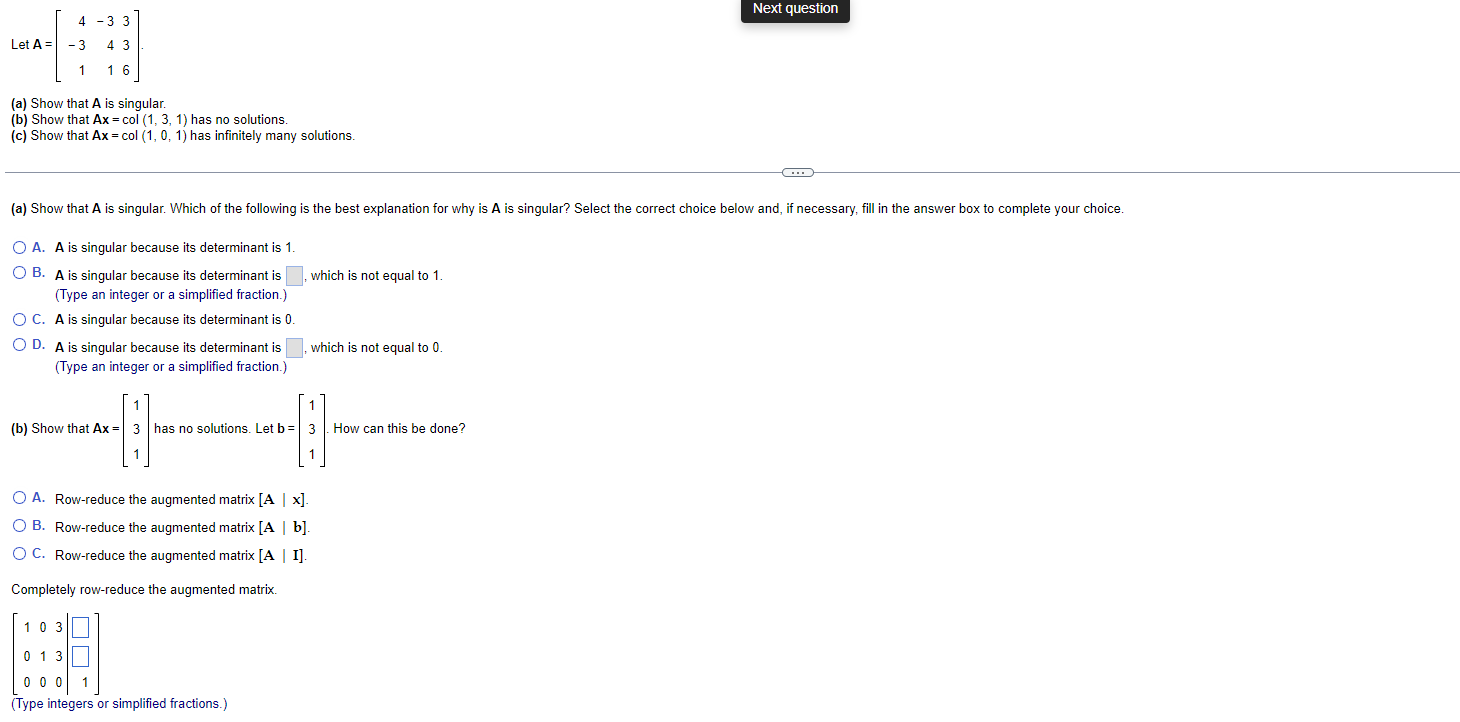
Question: questions below: Next question - 3 3 Let A = 3 6 (a) Show that A is singular. (b) Show that Ax = col (1,
questions below:
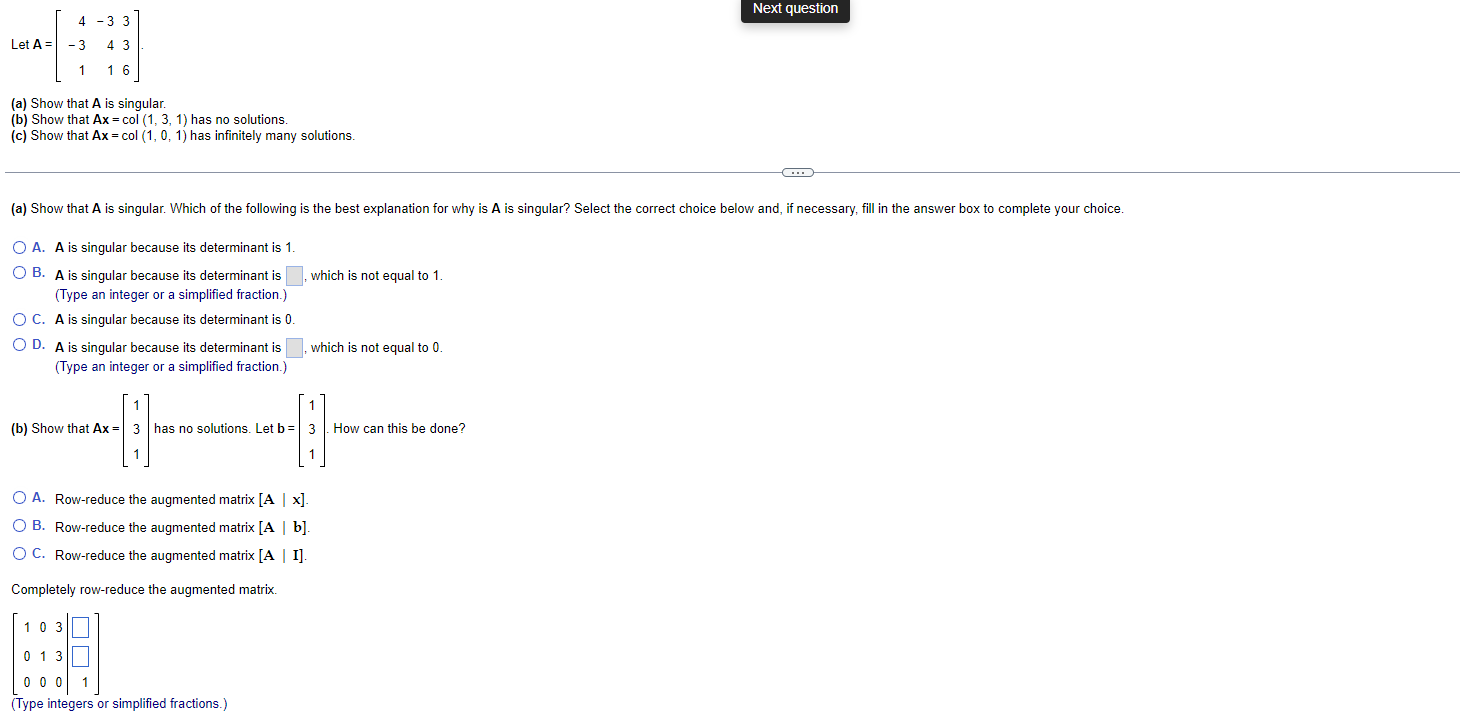
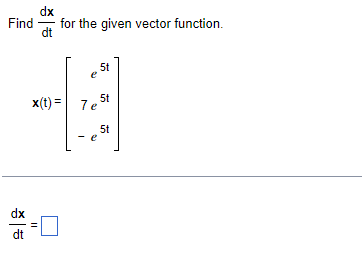
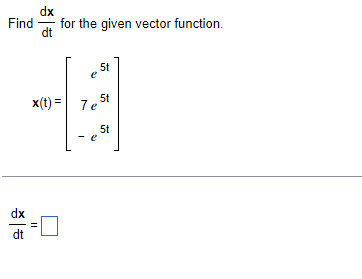
Next question - 3 3 Let A = 3 6 (a) Show that A is singular. (b) Show that Ax = col (1, 3, 1) has no solutions. (c) Show that Ax = col (1, 0, 1) has infinitely many solutions. (a) Show that A is singular. Which of the following is the best explanation for why is A is singular? Select the correct choice below and, if necessary, fill in the answer box to complete your choice. O A. A is singular because its determinant is 1. O B. A is singular because its determinant is , which is not equal to 1. (Type an integer or a simplified fraction.) O C. A is singular because its determinant is 0. O D. A is singular because its determinant is , which is not equal to 0. (Type an integer or a simplified fraction.) (b) Show that Ax = has no solutions. Let b = |3 . How can this be done? O A. Row-reduce the augmented matrix [A | x]. O B. Row-reduce the augmented matrix [A | b]. O C. Row-reduce the augmented matrix [A | I]. Completely row-reduce the augmented matrix. 1 3 0 3 0 0 0 (Type integers or simplified fractions.)dx Find - dt for the given vector function. 5t x(1) = 7e 5t 5t - dx = dt
Step by Step Solution
There are 3 Steps involved in it

Get step-by-step solutions from verified subject matter experts
 Study Help