



Question: Questions ****PLEASE COMPLETE BOTH PLEASE**** Tuna is caught in the territorial waters of American Samoa (by a ship registered in the USA and flying the
Questions ****PLEASE COMPLETE BOTH PLEASE****
- Tuna is caught in the territorial waters of American Samoa (by a ship registered in the USA and flying the American flag. Does the tuna qualify as wholly obtained or produced in the territory? Yes or no and why?
2. Based on your answers to question no. 1 above, using the provided Customs Tariff Schedule and Instructions for Completion of the Certificate of Origin, fill out field nos. 5, 6, 7, 8, and 10 of the following NAFTA Certificate of Origin.
The link (NAFTA Certificate of Origin) can be found on page 2 of this document. NOTE: Instruction on how to fill out the form can be found on that webpage.(nafta form web)
Hint: You will need to know where American Samoa is located, in order to fill out the Certificate of Origin.
KINDLY REVIEW THE DOCUMENTS BELOW
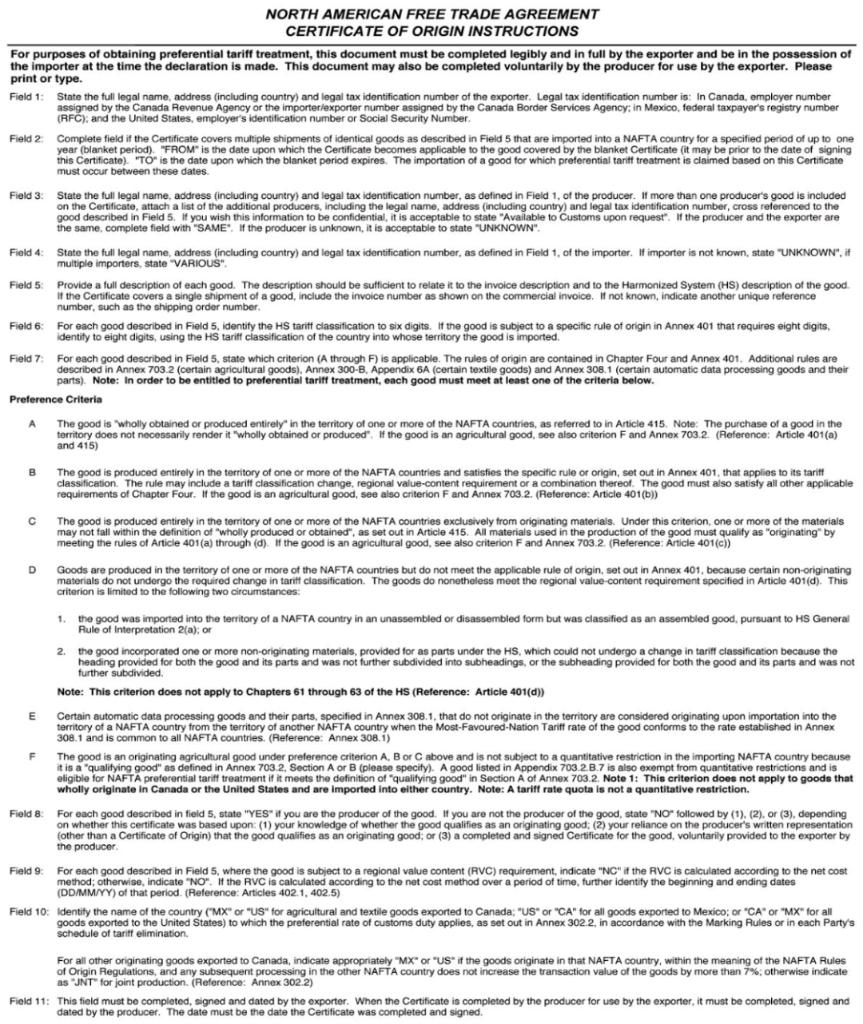
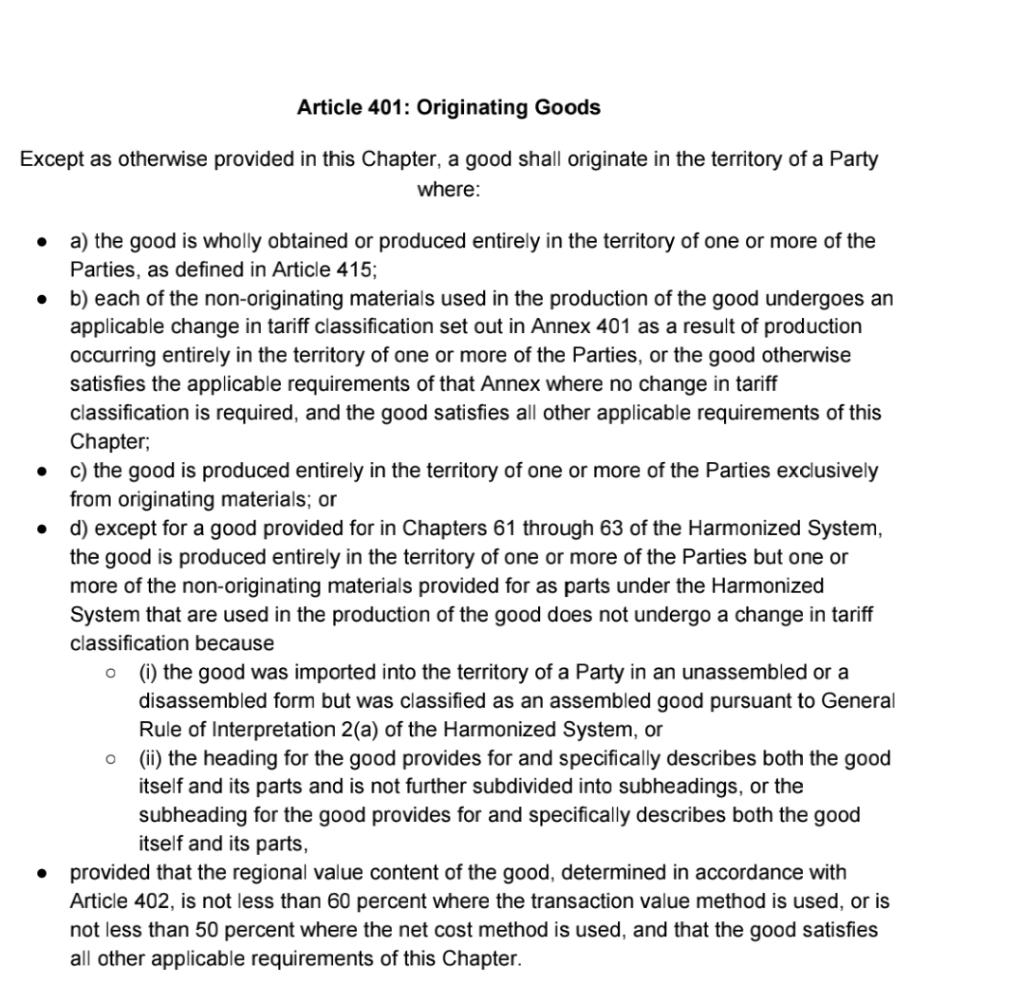
NORTH AMERICAN FREE TRADE AGREEMENT CERTIFICATE OF ORIGIN INSTRUCTIONS For purposes of obtaining preferential tariff treatment, this document must be completed legibly and in full by the exporter and be in the possession of the importer at the time the declaration is made. This document may also be completed voluntarily by the producer for use by the exporter. Please print or type. Field 1 State the full legal name, address (including country) and legal tax identification number of the exporter. Legal tax identification number is in Canada, employer number assigned by the Canada Revenue Agency or the importer/exporter number assigned by the Canada Border Services Agency in Mexico, federal taxpayer's registry number (RFC), and the United States, employer's identification number or Social Security Number Field 2 Complete field if the Certificate covers multiple shipments of identical goods as described in Field 5 that are imported into a NAFTA country for a specified period of up to one year (blanket period). "FROM" is the date upon which the Certificate becomes applicable to the good covered by the blanket Certificate (it may be prior to the date of signing this Certificate) "TO" is the date upon which the blanket period expires. The importation of a good for which preferential tarit treatment is claimed based on this Certificate must occur between these dates. Field 3 State the full legal name, address (including country) and legal tax identification number, as defined in Field 1, of the producer. If more than one producer's good is included on the Certificate, attach a list of the additional producers, including the legal name, address (including country) and legal tax identification number, cross referenced to the good described in Field 5. If you wish this information to be confidential, it is acceptable to state "Available to Customs upon request". If the producer and the exporter are the same, complete field with "SAME. If the producer is unknown, it is acceptable to state "UNKNOWN". Field 4: State the full legal name, address (including country) and legal tax identification number, as defined in Field 1, of the importer. It importer is not known, state "UNKNOWN", it multiple importers, state "VARIOUS" Field 5: Provide a full description of each good. The description should be sufficient to relate it to the invoice description and to the Harmonized System (HS) description of the good If the Certificate covers a single shipment of a good, include the invoice number as shown on the commercial invoice. I not known, indicate another unique reference number, such as the shipping order number Field 6 For each good described in Field 5, identify the HS tariff classification to six digits. If the good is subject to a specific rule of origin in Annex 401 that requires eight digits, identity to eight digits, using the HS tariff classification of the country into whose territory the good is imported. Field 7: For each good described in Field 5, state which criterion (A through F) is applicable. The rules of origin are contained in Chapter Four and Annex 401. Additional rules are described in n Annex 703.2 (certain agricultural goods), Annex 300-B, Appendix 6A (certain textile goods) and Annex 308.1 (certain automatic data processing goods and their parts). Note: In order to be entitled to preferential tariff treatment, each good must meet at least one of the criteria below. Preference Criteria The good is wholly obtained or produced entirely in the territory of one or more of the NAFTA countries, as referred to in Article 415. Note: The purchase of a good in the territory does not necessarily render it wholly obtained or produced. If the good is an agricultural good, see also criterion F and Annex 7032 (Reference: Article 401(a) and 415) B The good is produced entirely in the territory of one or more of the NAFTA countries and satisfies the specific rule or origin, set out in Annex 401, that applies to its tariff classification. The rule may include a tariff classification change, regional value-content requirement or a combination thereof. The good must also satisy all other applicable 703.2(: 401(b)) The good is produced entirely in the territory of one or more of the NAFTA countries exclusively from originating materials. Under this criterion, one or more of the materials may not fall within the definition of wholly produced or obtained", as set out in Article 415. All materials used in the production of the good must quality as "originating" by meeting the rules of Article 401(a) through (d). If the good is an agricultural good, see also criterion F and Annex 703 2 (Reference. Article 401(c)) D Goods are produced in the territory of one or more of the NAFTA countries but do not meet the applicable rule of origin, set out in Annex 401, because certain non-originating materials do not undergo the required change in tariff classification. The goods do nonetheless meet the regional value-content requirement specified in Article 401(d). This criterion is limited to the following two circumstances: 2 E the good was imported into the territory of a NAFTA country in an unassembled or disassembled form but was classified as an assembled good, pursuant to HS General Rule of Interpretation 2(a), or the good incorporated one or more non-originating materials, provided for as parts under the HS, which could not undergo a change in tariff classification because the heading provided for both the good and its parts and was not further subdivided into subheadings, or the subheading provided for both the good and its parts and was not further subdivided. Note: This criterion does not apply to Chapters 61 through 63 of the HS (Reference: Article 401(d)) Certain automatic data processing goods and their parts, specified in Annex 308.1, that do not originate in the territory are considered originating upon importation into the territory of a NAFTA country from the territory of another NAFTA country when the Most-Favoured-Nation Tariff rate of the good conforms to the rate established in Annex 308.1 and is common to all NAFTA countries (Reference: Annex 308.1) The good is an originating agricultural good under preference criterion A, B or C above and is not subject to a quantitative restriction in the importing NAFTA country because it is a "qualitying good" as defined in Annex 703 2. Section A or B (please specify). A good listed in Appendix 703 2.B.7 is also exempt from quantitative restrictions and is wholly originate in Canada or the United States and are imported into either country. Note: A tarift rate quota is not a quantitative restriction. 1apply to goods that For each good described in field 5, state "YES" if you are the producer of the good. If you are not the producer of the good, state "NO" followed by (1), (2), or (3), depending on whether this certificate was based upon: (1) your knowledge of whether the good qualifies as an originating good; (2) your reliance on the producer's written representation fother than a Certificate of Origin) that the good qualifies as an originating good, or (3) a completed and signed Certificate for the good, voluntarily provided to the exporter by the producer F Field 8 Field 9 For each good described in Fields, where the good is subject to a regional value content (RVC) requirement indicate "NG" if the RVC is calculated according to the net cost (DD/MM/YY) of that period. (Reference: Articles 402.1, 402.5) Field 10: Identity the name of the country ("MX or "US" for agricultural and textile goods exported to Canada: "US" or "CA" for all goods exported to Mexico; or "CA" or "Mx" for all goods exported to the United States) to which the preferential rate of customs duty applies, as set out in Annex 302 2. in accordance with the Marking Rules or in each Party's schedule of tariff elimination For all other originating goods exported to Canada, indicate appropriately "Mx" or "US" if the goods originate in that NAFTA country, within the meaning of the NAFTA Rules of Origin Regulations, and any subsequent processing in the other NAFTA country does not increase the transaction value of the goods by more than 7%, otherwise indicate as "UNT" for joint production. (Reference: Annex 302.2) Field 11: This field must be completed, signed and dated by the exporter. When the Certificate is completed by the producer for use by the exporter, it must be completed, signed and dated by the producer. The date must be the date the Certificate was completed and signed. Article 401: Originating Goods Except as otherwise provided in this Chapter, a good shall originate in the territory of a Party where: . . a) the good is wholly obtained or produced entirely in the territory of one or more of the Parties, as defined in Article 415; b) each of the non-originating materials used in the production of the good undergoes an applicable change in tariff classification set out in Annex 401 as a result of production occurring entirely in the territory of one or more of the Parties, or the good otherwise satisfies the applicable requirements of that Annex where no change in tariff classification is required, and the good satisfies all other applicable requirements of this Chapter; c) the good is produced entirely in the territory of one or more of the Parties exclusively from originating materials; or d) except for a good provided for in Chapters 61 through 63 of the Harmonized System, the good is produced entirely in the territory of one or more of the Parties but one or more of the non-originating materials provided for as parts under the Harmonized System that are used in the production of the good does not undergo a change in tariff classification because (i) the good was imported into the territory of a Party in an unassembled or a disassembled form but was classified as an assembled good pursuant to General Rule of Interpretation 2(a) of the Harmonized System, or (ii) the heading for the good provides for and specifically describes both the good itself and its parts and is not further subdivided into subheadings, or the subheading for the good provides for and specifically describes both the good itself and its parts, provided that the regional value content of the good, determined in accordance with Article 402, is not less than 60 percent where the transaction value method is used, or is not less than 50 percent where the net cost method is used, and that the good satisfies all other applicable requirements of this Chapter. o o
Step by Step Solution
There are 3 Steps involved in it
1 Expert Approved Answer
Step: 1 Unlock

Question Has Been Solved by an Expert!
Get step-by-step solutions from verified subject matter experts
Step: 2 Unlock
Step: 3 Unlock