







Question: Queuing Problem: Customers arrive to a service facility on average 28 minutes apart (exponentially distributed time between arrivals) The average service time is 25 minutes
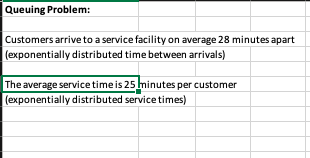
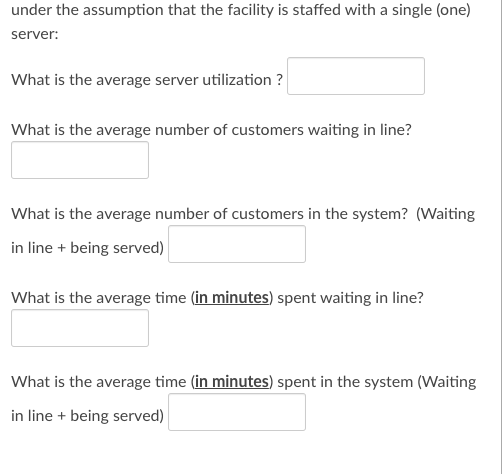
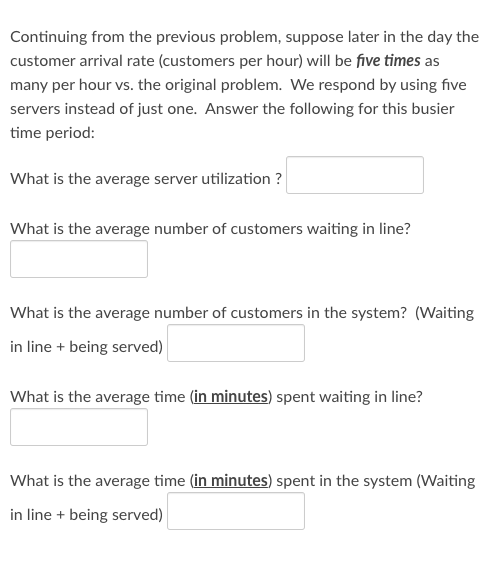
Queuing Problem: Customers arrive to a service facility on average 28 minutes apart (exponentially distributed time between arrivals) The average service time is 25 minutes per customer (exponentially distributed service times) under the assumption that the facility is staffed with a single (one) server: What is the average server utilization ? What is the average number of customers waiting in line? What is the average number of customers in the system? (Waiting in line + being served) What is the average time (in minutes) spent waiting in line? What is the average time (in minutes) spent in the system (Waiting in line + being served) Continuing from the previous problem, suppose later in the day the customer arrival rate (customers per hour) will be five times as many per hour vs. the original problem. We respond by using five servers instead of just one. Answer the following for this busier time period: What is the average server utilization ? What is the average number of customers waiting in line? What is the average number of customers in the system? (Waiting in line + being served) What is the average time (in minutes) spent waiting in line? What is the average time (in minutes) spent in the system (Waiting in line + being served)
Step by Step Solution
There are 3 Steps involved in it

Get step-by-step solutions from verified subject matter experts
 Study Help