







Question: R problem opiod Create a function named county. summary that has two arguments: df and county. The opiod data frame will be passed to the
R problem
opiod
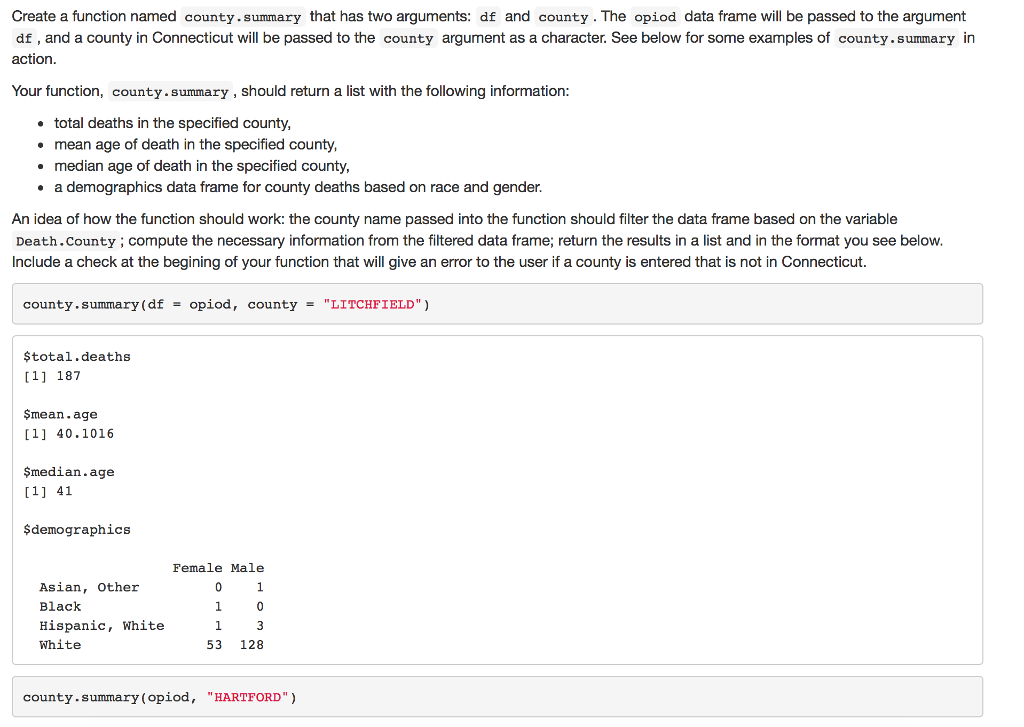
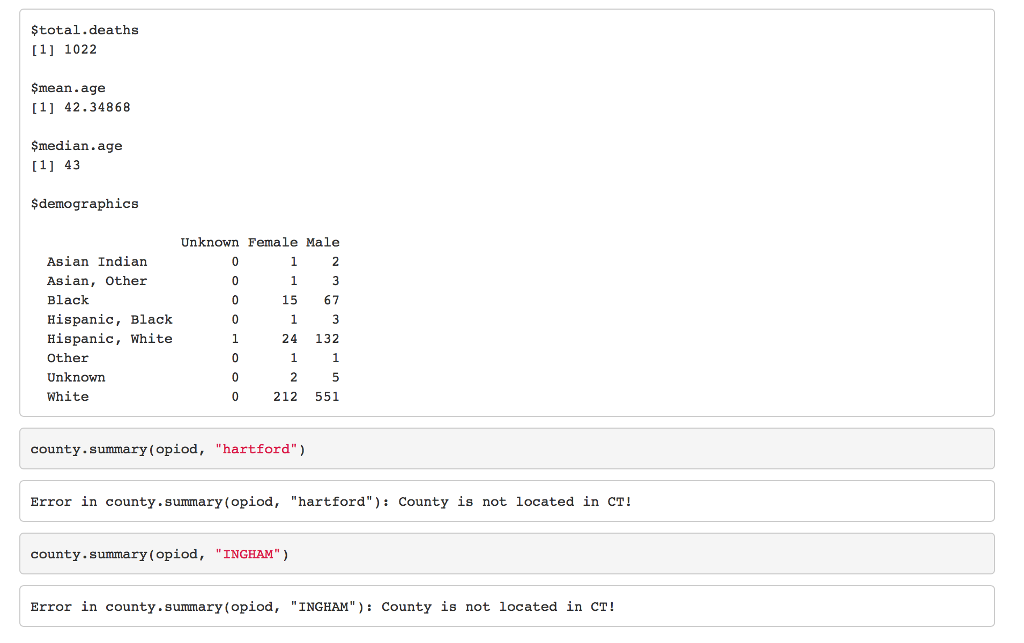
Create a function named county. summary that has two arguments: df and county. The opiod data frame will be passed to the argument df , and a county in Connecticut will be passed to the county argument as a character. See below for some examples of county.summary in action. Your function, county.summary , should return a list with the following information: total deaths in the specified county, mean age of death in the specified county, median age of death in the specified county a demographics data frame for county deaths based on race and gender An idea of how the function should work: the county name passed into the function should filter the data frame based on the variable Death.County; compute the necessary information from the filtered data frame; return the results in a list and in the format you see below Include a check at the begining of your function that will give an error to the user if a county is entered that is not in Connecticut county . summary (df opiod, county = "LITCHFIELD") - stotal.deaths [1 187 $mean.age [1] 40.1016 $median.age [1 41 $demographics Female Male 1 Asian, Other Black Hispanic, White White 53 128 county.summary (opiod, "HARTFORD
Step by Step Solution
There are 3 Steps involved in it

Get step-by-step solutions from verified subject matter experts
 Study Help