



Question: R]?{?.dll 45%-12:18 PM You are writing a small object that computes various temperature stats. After the object has been created (instantiated) you can add any
![R]?{?.dll 45%-12:18 PM You are writing a small object that computes](https://dsd5zvtm8ll6.cloudfront.net/si.experts.images/questions/2024/09/66f2f7d0acd62_18466f2f7d0177ab.jpg)
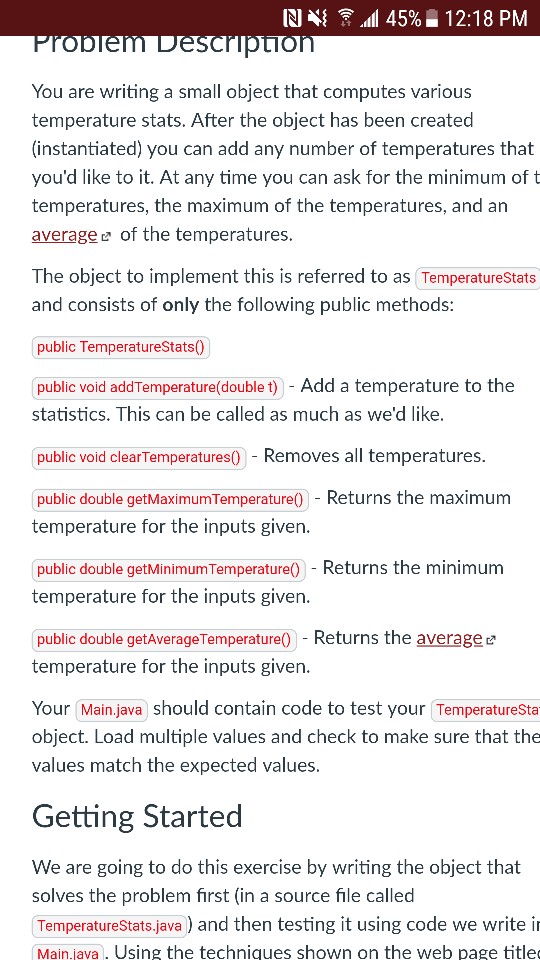
R]?{?.dll 45%-12:18 PM You are writing a small object that computes various temperature stats. After the object has been created (instantiated) you can add any number of temperatures that you'd like to it. At any time you can ask for the minimum of t temperatures, the maximum of the temperatures, and an average e of the temperatures The object to implement this is referred to as Temperature Stats and consists of only the following public methods public TemperatureStats0) public void addTemperature(double t) - Add a temperature to the statistics. This can be called as much as we'd like public void clearTemperatures()-Removes all temperatures. public double getMaximumTemperature0 - Returns the maximum temperature for the inputs given public double getMinimumTemperature) Returns the minimum temperature for the inputs given public double getAverageTemperature - Returns the average temperature for the inputs given Your Main.java should contain code to test your TemperatureSta object. Load multiple values and check to make sure that the values match the expected values Getting Started We are going to do this exercise by writing the obiect that solves the problem first (in a source file called TemperatureStats.java) and then testing it using code we write i Main.java. Using the techniques shown on the web page title
Step by Step Solution
There are 3 Steps involved in it

Get step-by-step solutions from verified subject matter experts