



Question: read case on the World Food Programme (WFP). Go to the WFP website, choose a country, identify four actions taken by the WFP in that
read case on the World Food Programme (WFP). Go to the WFP website, choose a country, 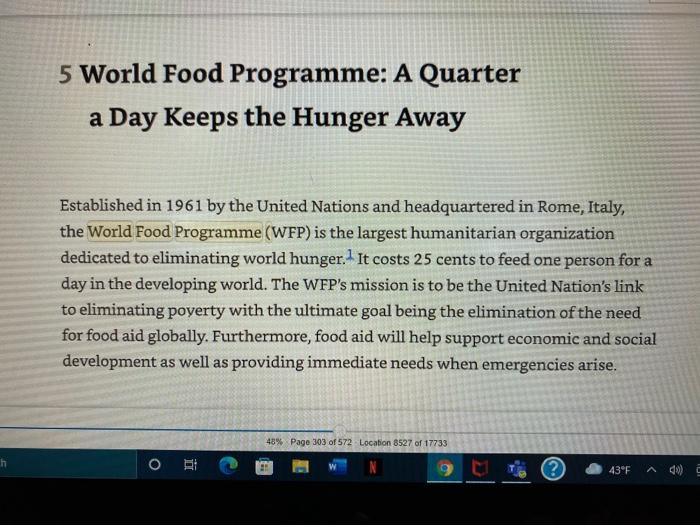
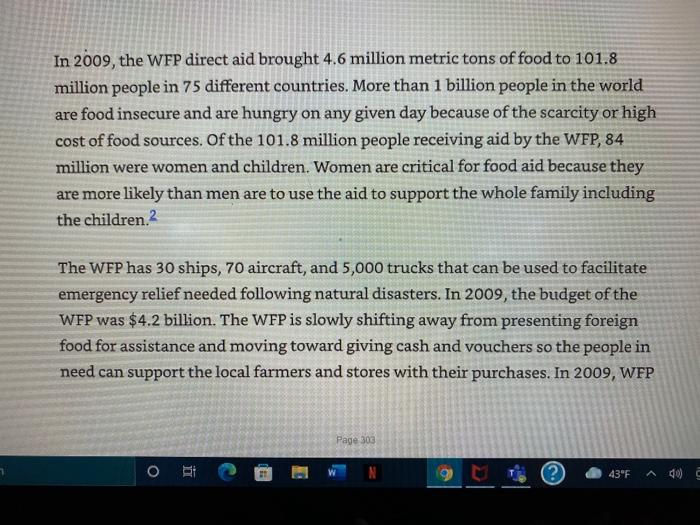
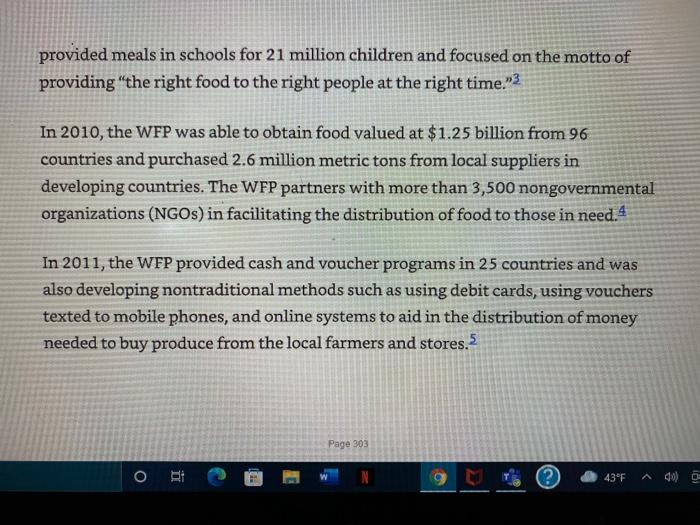
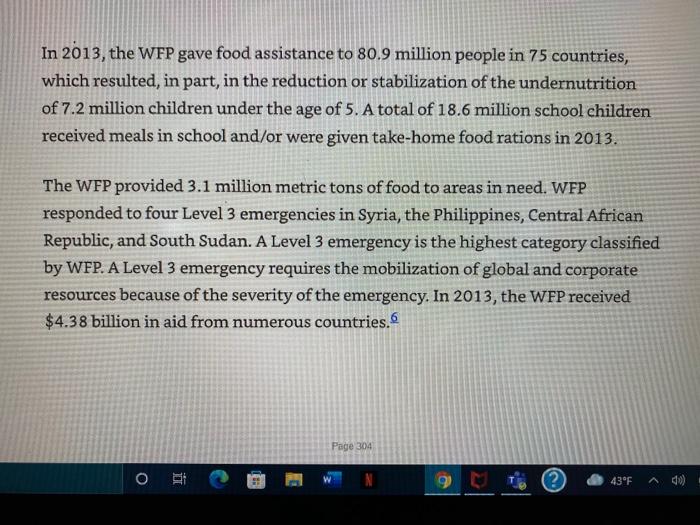
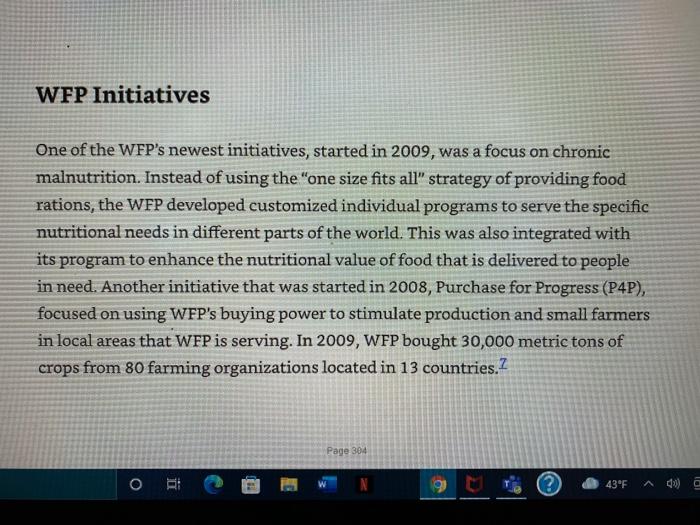
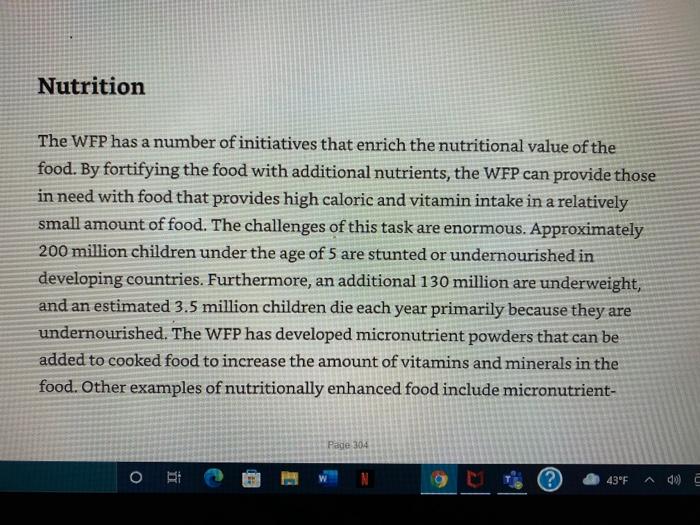
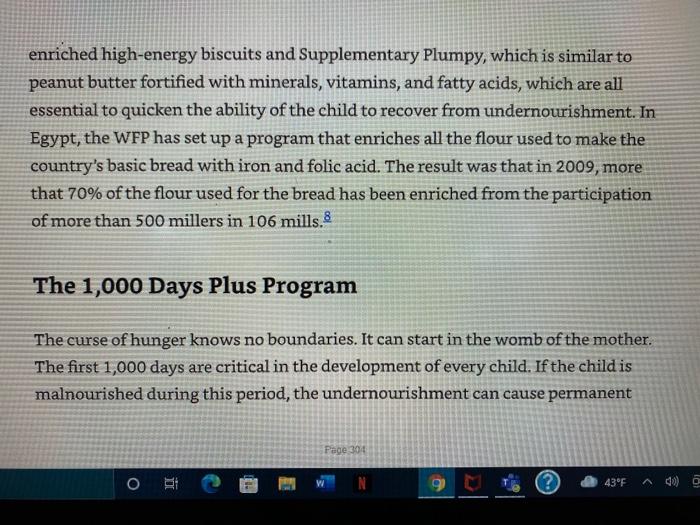
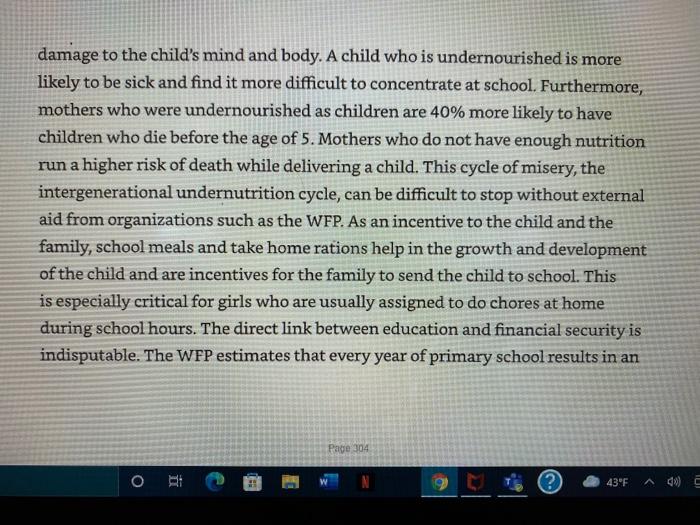
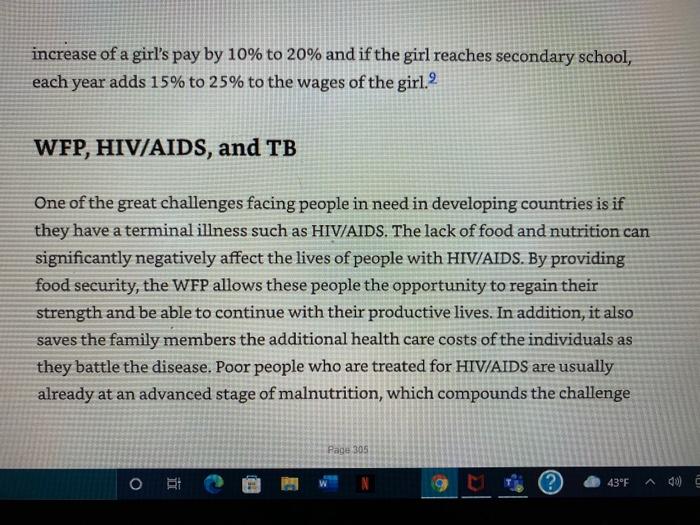
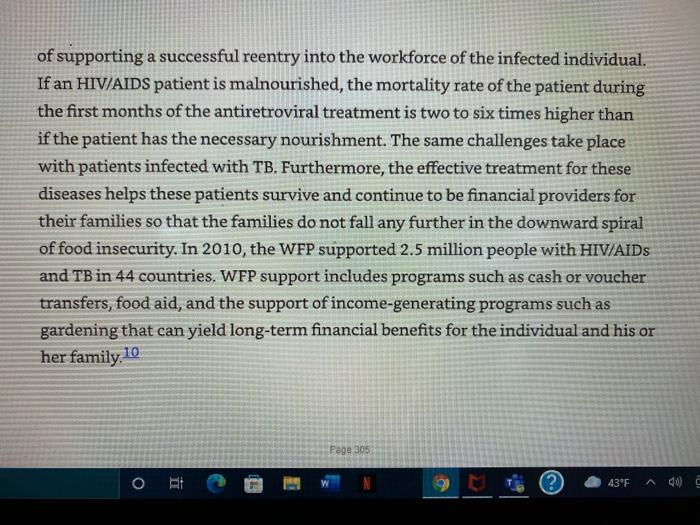
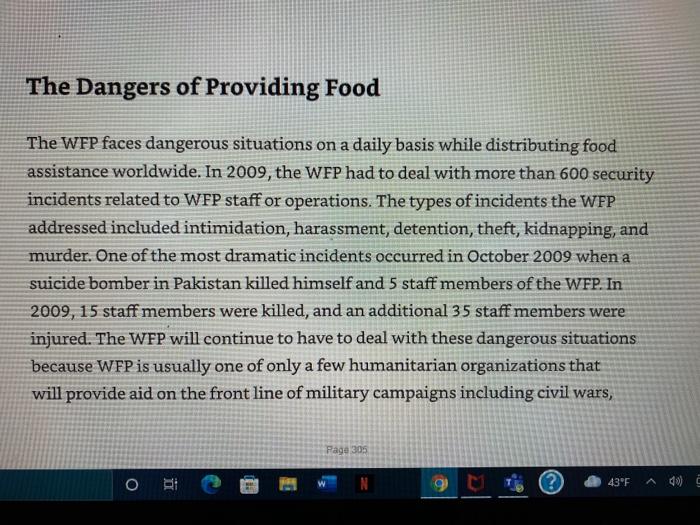
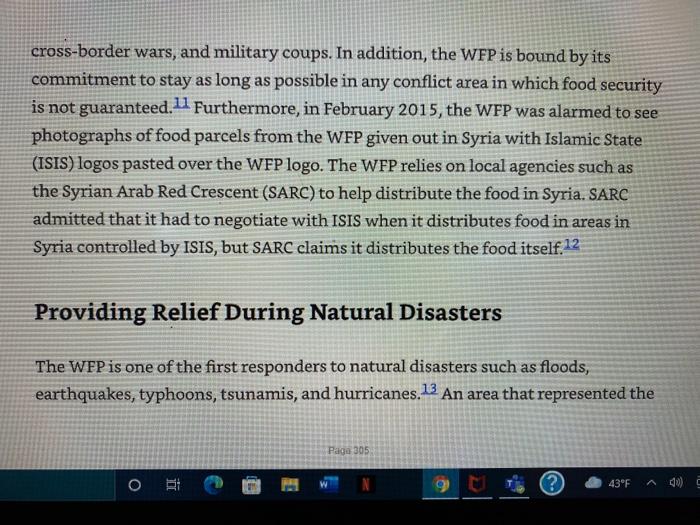
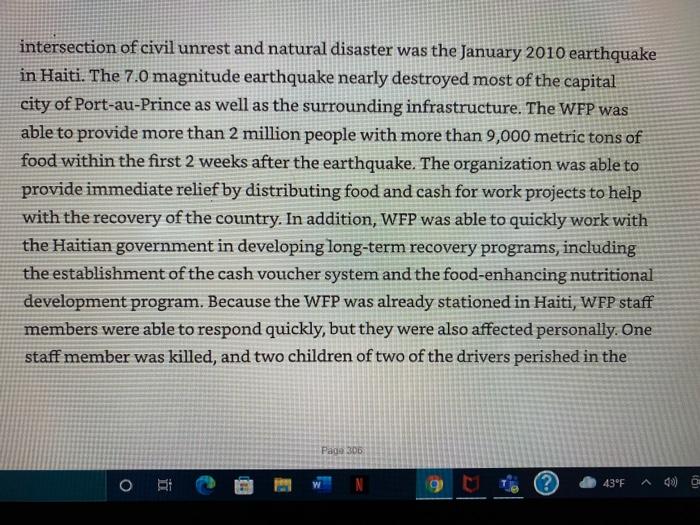
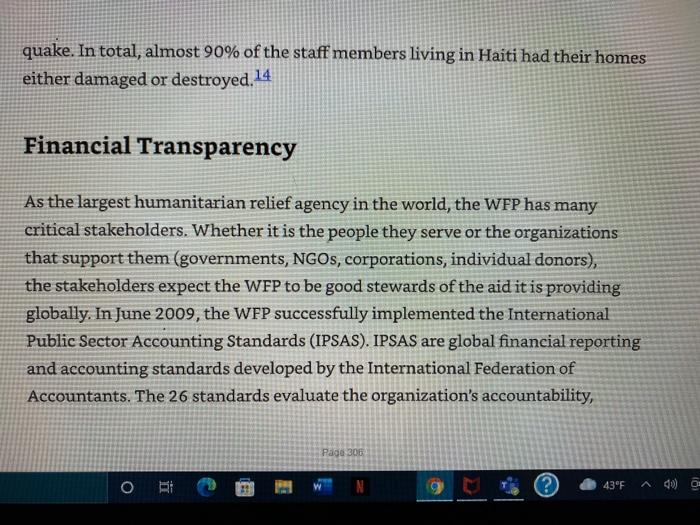
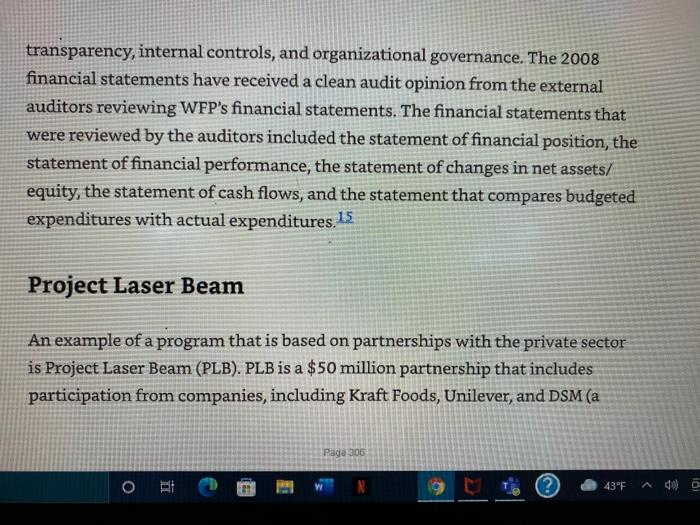
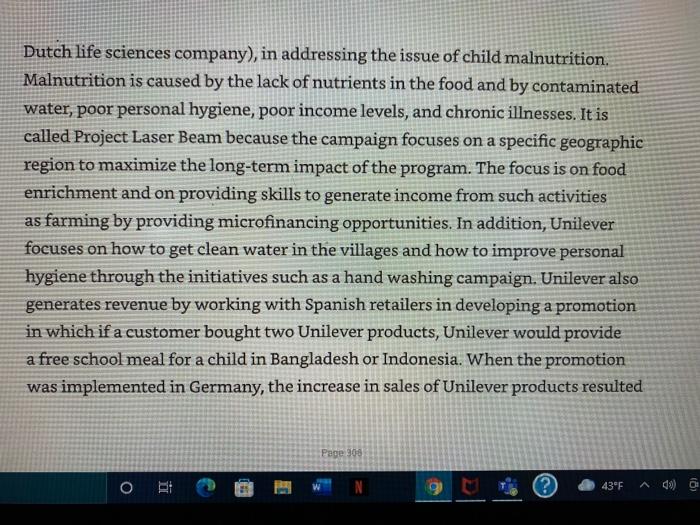
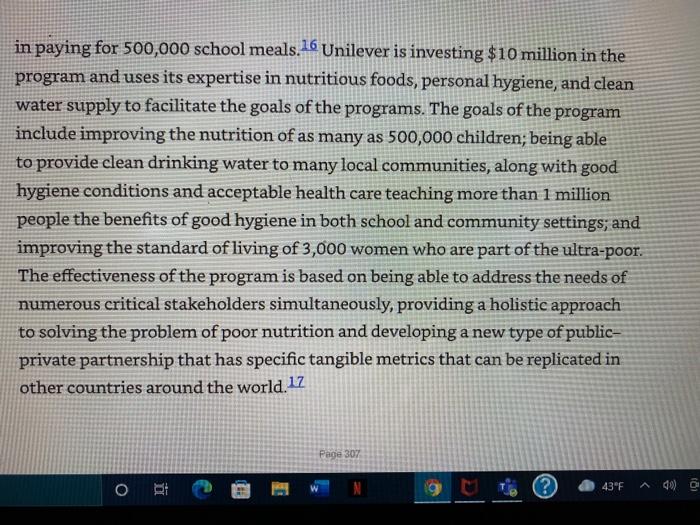
5 World Food Programme: A Quarter a Day Keeps the Hunger Away Established in 1961 by the United Nations and headquartered in Rome, Italy, the World Food Programme (WFP) is the largest humanitarian organization dedicated to eliminating world hunger. It costs 25 cents to feed one person for a day in the developing world. The WFP's mission is to be the United Nation's link to eliminating poverty with the ultimate goal being the elimination of the need for food aid globally. Furthermore, food aid will help support economic and social development as well as providing immediate needs when emergencies arise. 48% Page 303 of 572 Location 8527 of 17733 h OPE ? 43F In 2009, the WFP direct aid brought 4.6 million metric tons of food to 101.8 million people in 75 different countries. More than 1 billion people in the world are food insecure and are hungry on any given day because of the scarcity or high cost of food sources. Of the 101.8 million people receiving aid by the WFP, 84 million were women and children. Women are critical for food aid because they are more likely than men are to use the aid to support the whole family including the children. 2 The WFP has 30 ships, 70 aircraft, and 5,000 trucks that can be used to facilitate emergency relief needed following natural disasters. In 2009, the budget of the WFP was $4.2 billion. The WFP is slowly shifting away from presenting foreign food for assistance and moving toward giving cash and vouchers so the people in need can support the local farmers and stores with their purchases. In 2009, WFP Page 303 o O i M 43F provided meals in schools for 21 million children and focused on the motto of providing "the right food to the right people at the right time."3 In 2010, the WFP was able to obtain food valued at $1.25 billion from 96 countries and purchased 2.6 million metric tons from local suppliers in developing countries. The WFP partners with more than 3,500 nongovernmental organizations (NGOs) in facilitating the distribution of food to those in need.4 In 2011, the WFP provided cash and voucher programs in 25 countries and was also developing nontraditional methods such as using debit cards, using vouchers texted to mobile phones, and online systems to aid in the distribution of money needed to buy produce from the local farmers and stores. Page 303 O 0 DI 43F 40 In 2013, the WFP gave food assistance to 80.9 million people in 75 countries, which resulted, in part, in the reduction or stabilization of the undernutrition of 7.2 million children under the age of 5. A total of 18.6 million school children received meals in school and/or were given take-home food rations in 2013. The WFP provided 3.1 million metric tons of food to areas in need. WFP responded to four Level 3 emergencies in Syria, the Philippines, Central African Republic, and South Sudan. A Level 3 emergency is the highest category classified by WFP. A Level 3 emergency requires the mobilization of global and corporate resources because of the severity of the emergency. In 2013, the WFP received $4.38 billion in aid from numerous countries. Page 304 0 43F WFP Initiatives One of the WFP's newest initiatives, started in 2009, was a focus on chronic malnutrition. Instead of using the "one size fits all" strategy of providing food rations, the WFP developed customized individual programs to serve the specific nutritional needs in different parts of the world. This was also integrated with its program to enhance the nutritional value of food that is delivered to people in need. Another initiative that was started in 2008, Purchase for Progress (P4), focused on using WFP's buying power to stimulate production and small farmers in local areas that WFP is serving. In 2009, WFP bought 30,000 metric tons of crops from 80 farming organizations located in 13 countries.Z Page 304 OPI ? 43F 16) a Nutrition The WFP has a number of initiatives that enrich the nutritional value of the food. By fortifying the food with additional nutrients, the WFP can provide those in need with food that provides high caloric and vitamin intake in a relatively small amount of food. The challenges of this task are enormous. Approximately 200 million children under the age of 5 are stunted or undernourished in developing countries. Furthermore, an additional 130 million are underweight, and an estimated 3.5 million children die each year primarily because they are undernourished. The WFP has developed micronutrient powders that can be added to cooked food to increase the amount of vitamins and minerals in the food. Other examples of nutritionally enhanced food include micronutrient- Pade 364 ORI In: . 43F A4) 3 enriched high-energy biscuits and Supplementary Plumpy, which is similar to peanut butter fortified with minerals, vitamins, and fatty acids, which are all essential to quicken the ability of the child to recover from undernourishment. In Egypt, the WFP has set up a program that enriches all the flour used to make the country's basic bread with iron and folic acid. The result was that in 2009, more that 70% of the flour used for the bread has been enriched from the participation of more than 500 millers in 106 mills. The 1,000 Days Plus Program The curse of hunger knows no boundaries. It can start in the womb of the mother. The first 1,000 days are critical in the development of every child. If the child is malnourished during this period, the undernourishment can cause permanent Pago 304 O 3 I. 9 M ? 43F 40) damage to the child's mind and body. A child who is undernourished is more likely to be sick and find it more difficult to concentrate at school. Furthermore, mothers who were undernourished as children are 40% more likely to have children who die before the age of 5. Mothers who do not have enough nutrition run a higher risk of death while delivering a child. This cycle of misery, the intergenerational undernutrition cycle, can be difficult to stop without external aid from organizations such as the WFP. As an incentive to the child and the family, school meals and take home rations help in the growth and development of the child and are incentives for the family to send the child to school. This is especially critical for girls who are usually assigned to do chores at home during school hours. The direct link between education and financial security is indisputable. The WFP estimates that every year of primary school results in an Page 304 0 0 ? 43F A increase of a girl's pay by 10% to 20% and if the girl reaches secondary school, each year adds 15% to 25% to the wages of the girl.2 WFP, HIV/AIDS, and TB One of the great challenges facing people in need in developing countries is if they have a terminal illness such as HIV DS. The lack of food and nutrition can significantly negatively affect the lives of people with HIV/AIDS. By providing food security, the WFP allows these people the opportunity to regain their strength and be able to continue with their productive lives. In addition, it also saves the family members the additional health care costs of the individuals as they battle the disease. Poor people who are treated for HIV/AIDS are usually already at an advanced stage of malnutrition, which compounds the challenge Page 305 ot 3 43F 40) of supporting a successful reentry into the workforce of the infected individual. If an HIV/AIDS patient is malnourished, the mortality rate of the patient during the first months of the antiretroviral treatment is two to six times higher than if the patient has the necessary nourishment. The same challenges take place with patients infected with TB. Furthermore, the effective treatment for these diseases helps these patients survive and continue to be financial providers for their families so that the families do not fall any further in the downward spiral of food insecurity. In 2010, the WFP supported 2.5 million people with HIV/AIDS and TB in 44 countries. WFP support includes programs such as cash or voucher transfers, food aid, and the support of income-generating programs such as gardening that can yield long-term financial benefits for the individual and his or her family. 10 Page 305 O ME ? ? 43F A 000 The Dangers of Providing Food The WFP faces dangerous situations on a daily basis while distributing food assistance worldwide. In 2009, the WFP had to deal with more than 600 security incidents related to WFP staff or operations. The types of incidents the WFP addressed included intimidation, harassment, detention, theft, kidnapping, and murder. One of the most dramatic incidents occurred in October 2009 when a suicide bomber in Pakistan killed himself and 5 staff members of the WFP. In 2009, 15 staff members were killed, and an additional 35 staff members were injured. The WFP will continue to have to deal with these dangerous situations because WFP is usually one of only a few humanitarian organizations that will provide aid on the front line of military campaigns including civil wars, Page 305 O PRI 9 @ N 43F A 00 E cross-border wars, and military coups. In addition, the WFP is bound by its commitment to stay as long as possible in any conflict area in which food security is not guaranteed. Furthermore, in February 2015, the WFP was alarmed to see photographs of food parcels from the WFP given out in Syria with Islamic State (ISIS) logos pasted over the WFP logo. The WFP relies on local agencies such as the Syrian Arab Red Crescent (SARC) to help distribute the food in Syria. SARC admitted that it had to negotiate with ISIS when it distributes food in areas in Syria controlled by ISIS, but SARC claims it distributes the food itself.12 Providing Relief During Natural Disasters The WFP is one of the first responders to natural disasters such as floods, earthquakes, typhoons, tsunamis, and hurricanes. 13 An area that represented the Page 305 OP ? 43F intersection of civil unrest and natural disaster was the January 2010 earthquake in Haiti. The 7.0 magnitude earthquake nearly destroyed most of the capital city of Port-au-Prince as well as the surrounding infrastructure. The WFP was able to provide more than 2 million people with more than 9,000 metric tons of food within the first 2 weeks after the earthquake. The organization was able to provide immediate relief by distributing food and cash for work projects to help with the recovery of the country. In addition, WFP was able to quickly work with the Haitian government in developing long-term recovery programs, including the establishment of the cash voucher system and the food-enhancing nutritional development program. Because the WFP was already stationed in Haiti, WFP staff members were able to respond quickly, but they were also affected personally. One staff member was killed, and two children of two of the drivers perished in the Page 30 O Bi 43F quake. In total, almost 90% of the staff members living in Haiti had their homes either damaged or destroyed. 14 Financial Transparency As the largest humanitarian relief agency in the world, the WFP has many critical stakeholders. Whether it is the people they serve or the organizations that support them (governments, NGOs, corporations, individual donors), the stakeholders expect the WFP to be good stewards of the aid it is providing globally. In June 2009, the WFP successfully implemented the International Public Sector Accounting Standards (IPSAS). IPSAS are global financial reporting and accounting standards developed by the International Federation of Accountants. The 26 standards evaluate the organization's accountability, Page 30 ORI 430F A 40 transparency, internal controls, and organizational governance. The 2008 financial statements have received a clean audit opinion from the external auditors reviewing WFP's financial statements. The financial statements that were reviewed by the auditors included the statement of financial position, the statement of financial performance, the statement of changes in net assets/ equity, the statement of cash flows, and the statement that compares budgeted expenditures with actual expenditures. 15 Project Laser Beam An example of a program that is based on partnerships with the private sector is Project Laser Beam (PLB). PLB is a $50 million partnership that includes participation from companies, including Kraft Foods, Unilever, and DSM (a Page 30 0 N 43F 40) Dutch life sciences company), in addressing the issue of child malnutrition. Malnutrition is caused by the lack of nutrients in the food and by contaminated water, poor personal hygiene, poor income levels, and chronic illnesses. It is called Project Laser Beam because the campaign focuses on a specific geographic region to maximize the long-term impact of the program. The focus is on food enrichment and on providing skills to generate income from such activities as farming by providing microfinancing opportunities. In addition, Unilever focuses on how to get clean water in the villages and how to improve personal hygiene through the initiatives such as a hand washing campaign. Unilever also generates revenue by working with Spanish retailers in developing a promotion in which if a customer bought two Unilever products, Unilever would provide a free school meal for a child in Bangladesh or Indonesia. When the promotion was implemented in Germany, the increase in sales of Unilever products resulted a Page 305 O BE 43F Ad) @ in paying for 500,000 school meals. 16 Unilever is investing $10 million in the program and uses its expertise in nutritious foods, personal hygiene, and clean water supply to facilitate the goals of the programs. The goals of the program include improving the nutrition of as many as 500,000 children; being able to provide clean drinking water to many local communities, along with good hygiene conditions and acceptable health care teaching more than 1 million people the benefits of good hygiene in both school and community settings; and improving the standard of living of 3,000 women who are part of the ultra-poor. The effectiveness of the program is based on being able to address the needs of numerous critical stakeholders simultaneously, providing a holistic approach to solving the problem of poor nutrition and developing a new type of public- private partnership that has specific tangible metrics that can be replicated in other countries around the world. 17 Page 307 O A 3 u 43F A00) identify four actions taken by the WFP in that country and the concepts in the chapter that relate to those actions.
Step by Step Solution
There are 3 Steps involved in it
1 Expert Approved Answer
Step: 1 Unlock

Question Has Been Solved by an Expert!
Get step-by-step solutions from verified subject matter experts
Step: 2 Unlock
Step: 3 Unlock