







Question: Read the article , and analyze from the below perspective: 1.What is the relevant theory applied in the deciding a persons salary in the school.
Read the article , and analyze from the below perspective:
1.What is the relevant theory applied in the deciding a persons salary in the school.
2.What are the factors influencing the wage policy?
3.What makes the research carried in the secondary school?
4.What is the finding of the research?
Use given material to understand
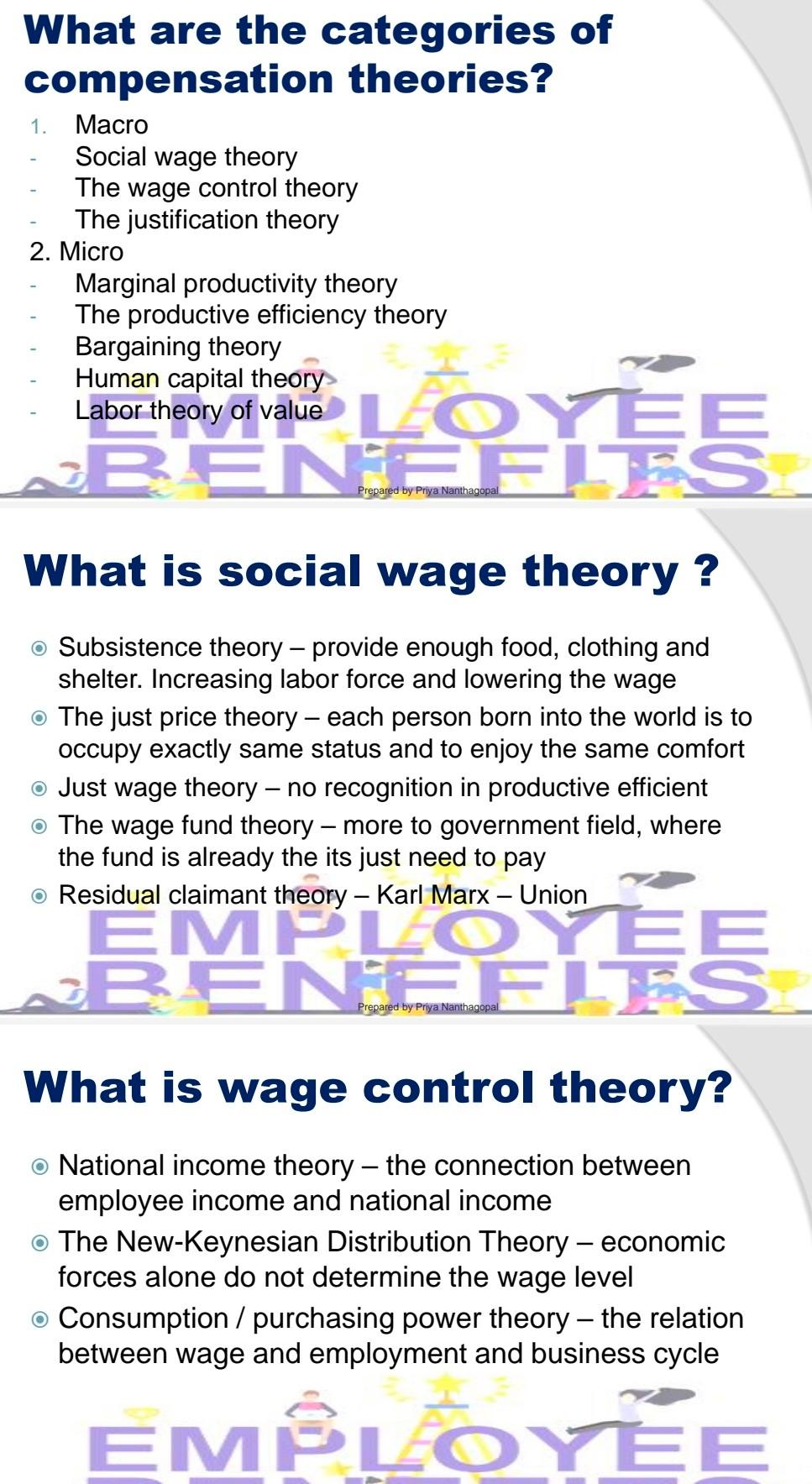
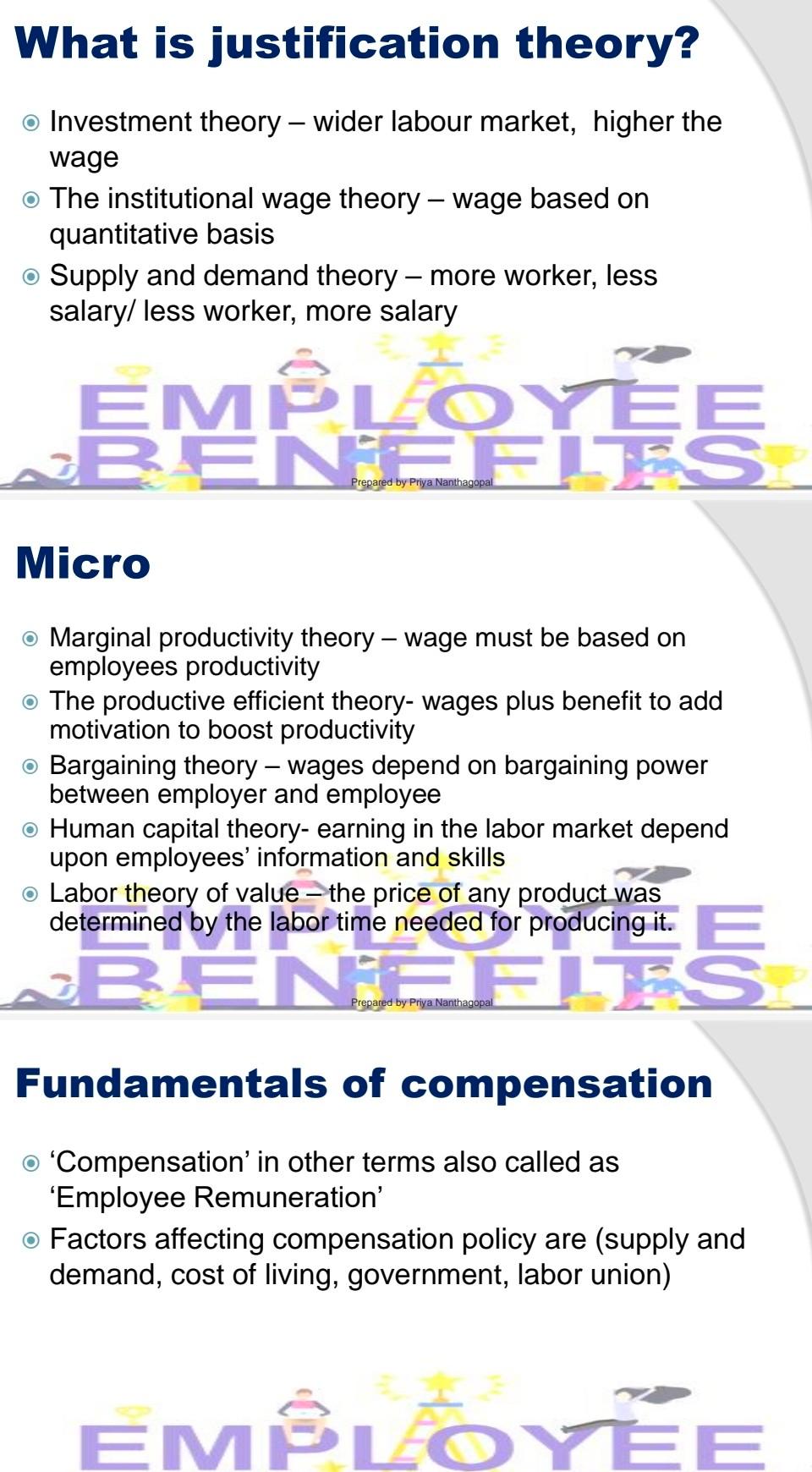
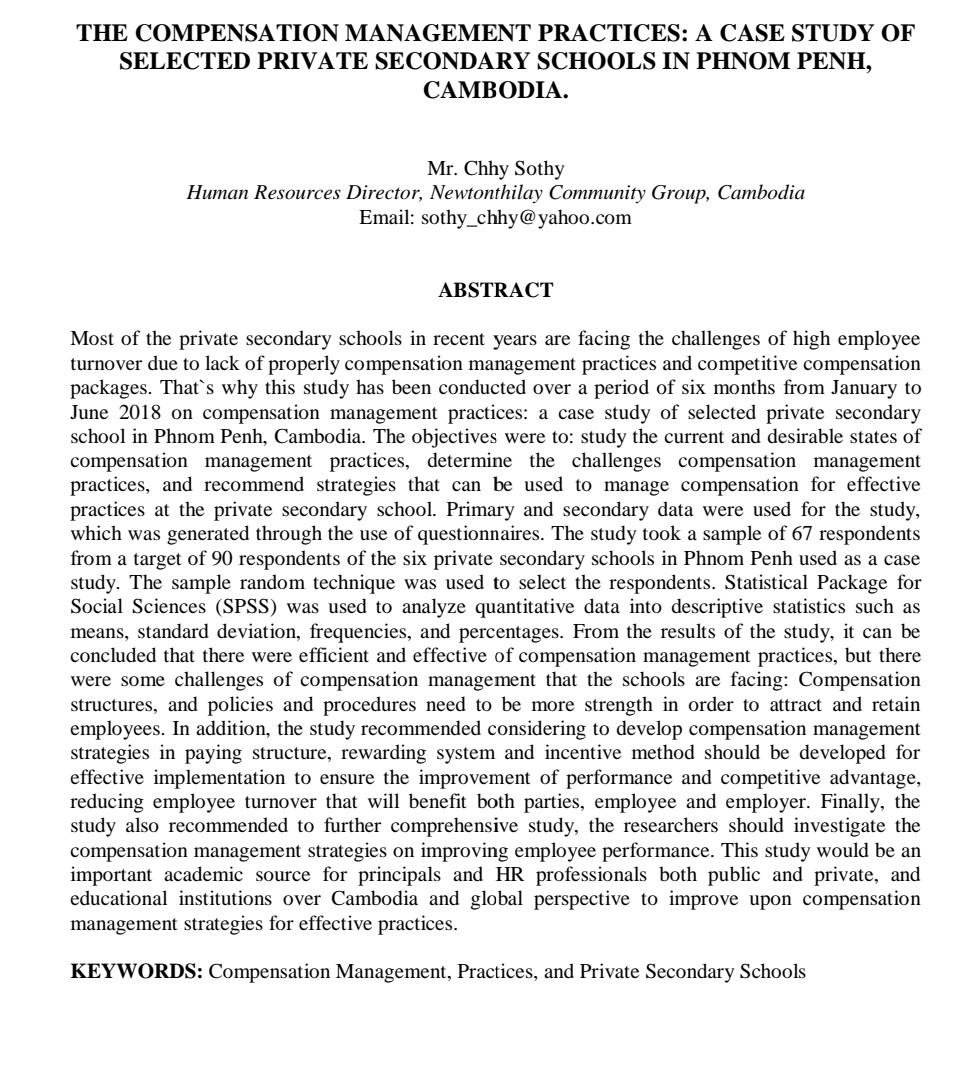
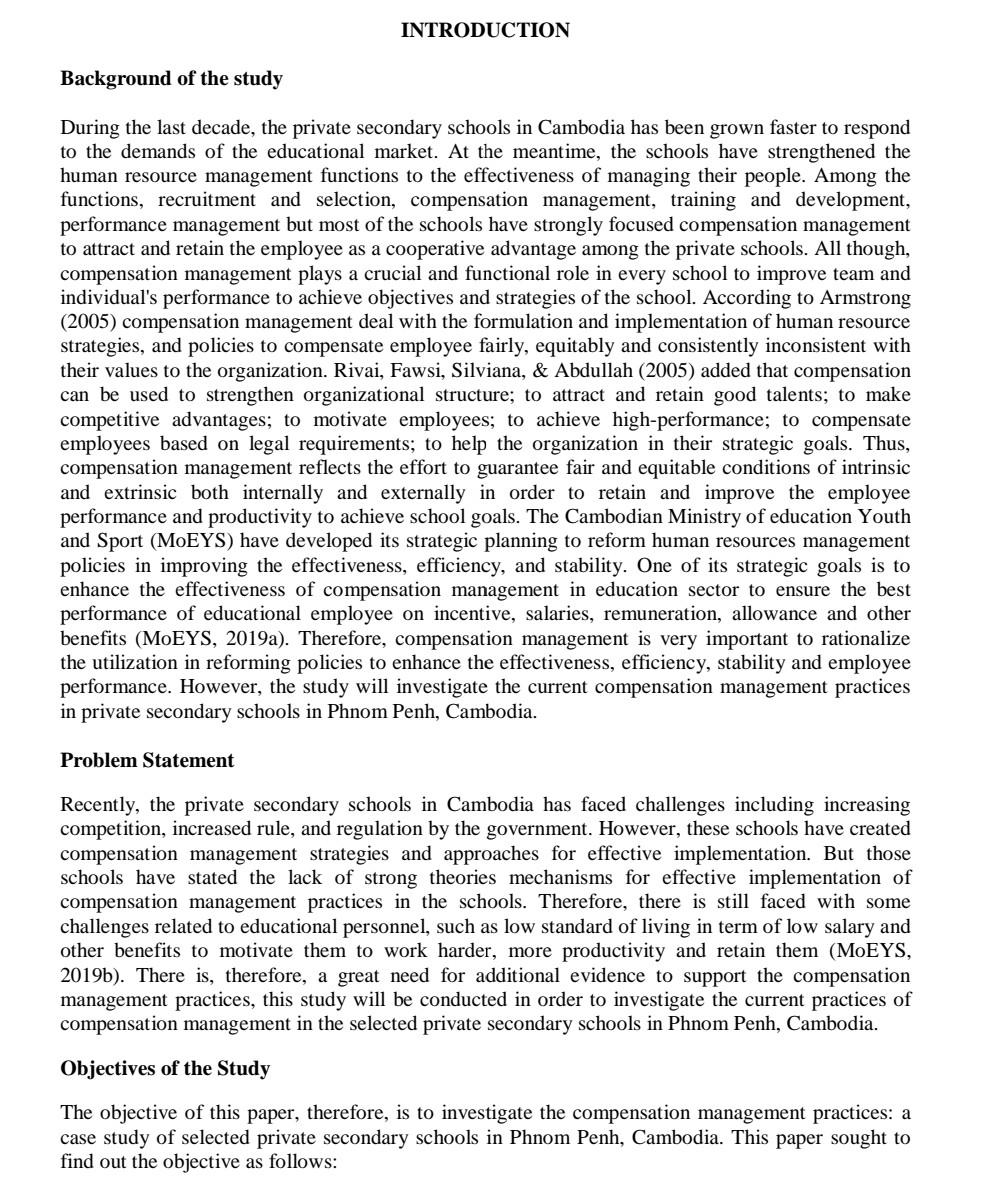
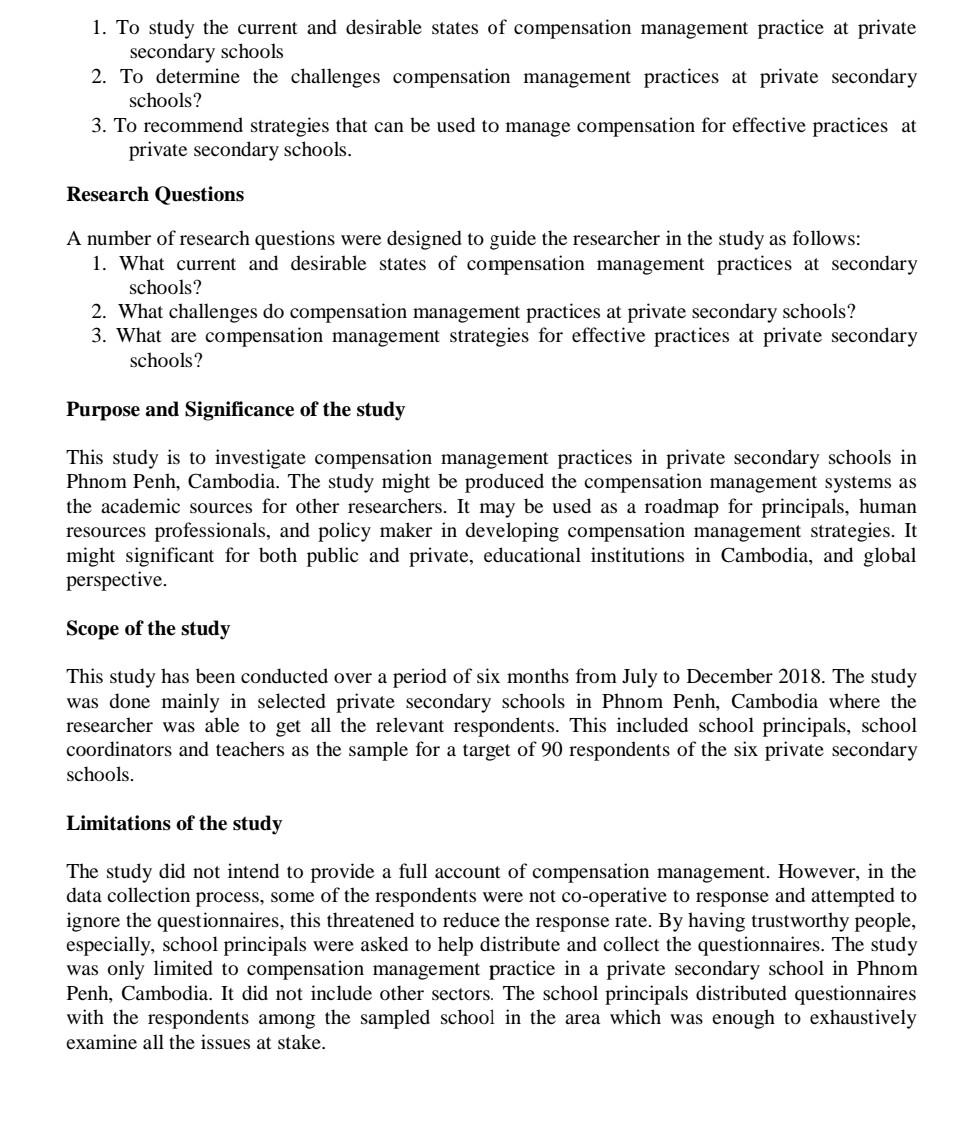
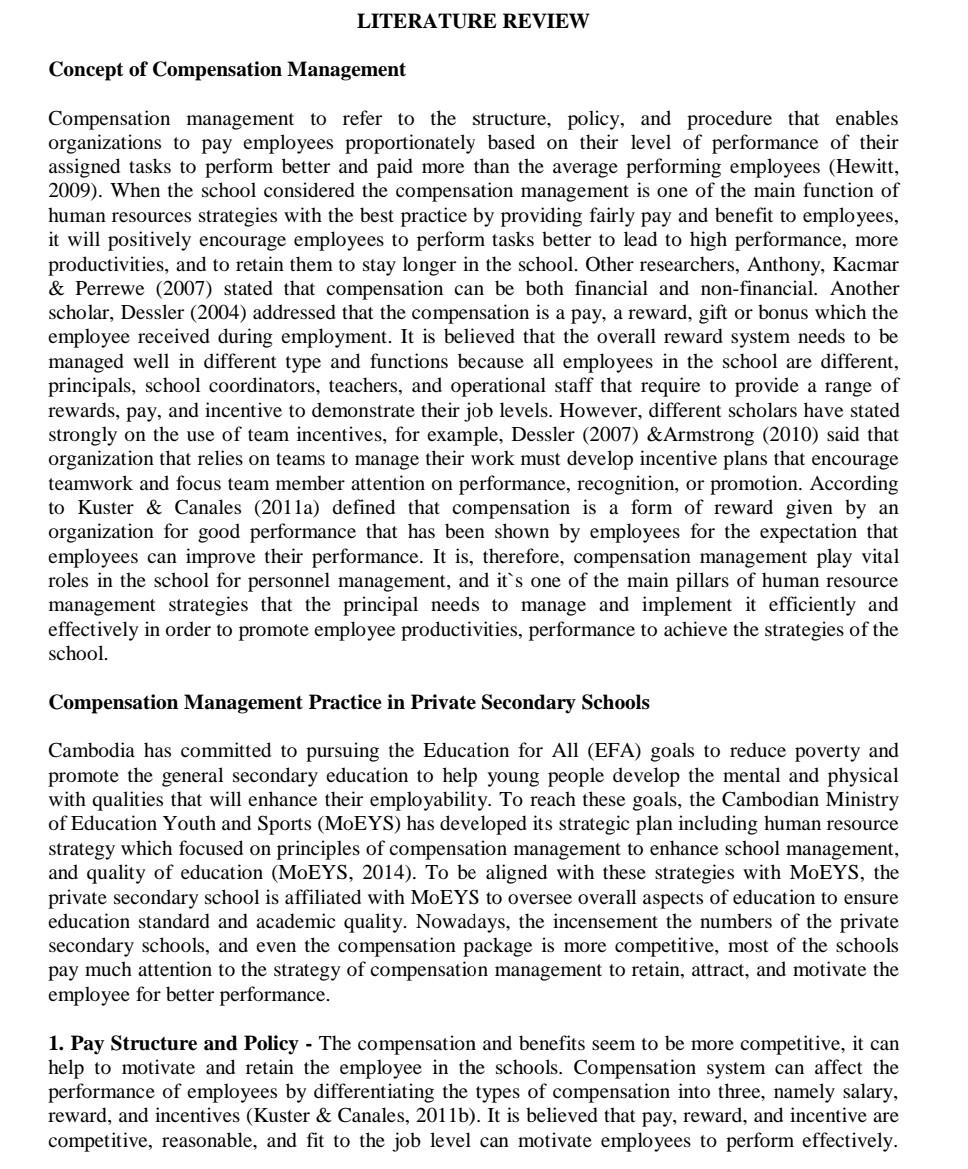
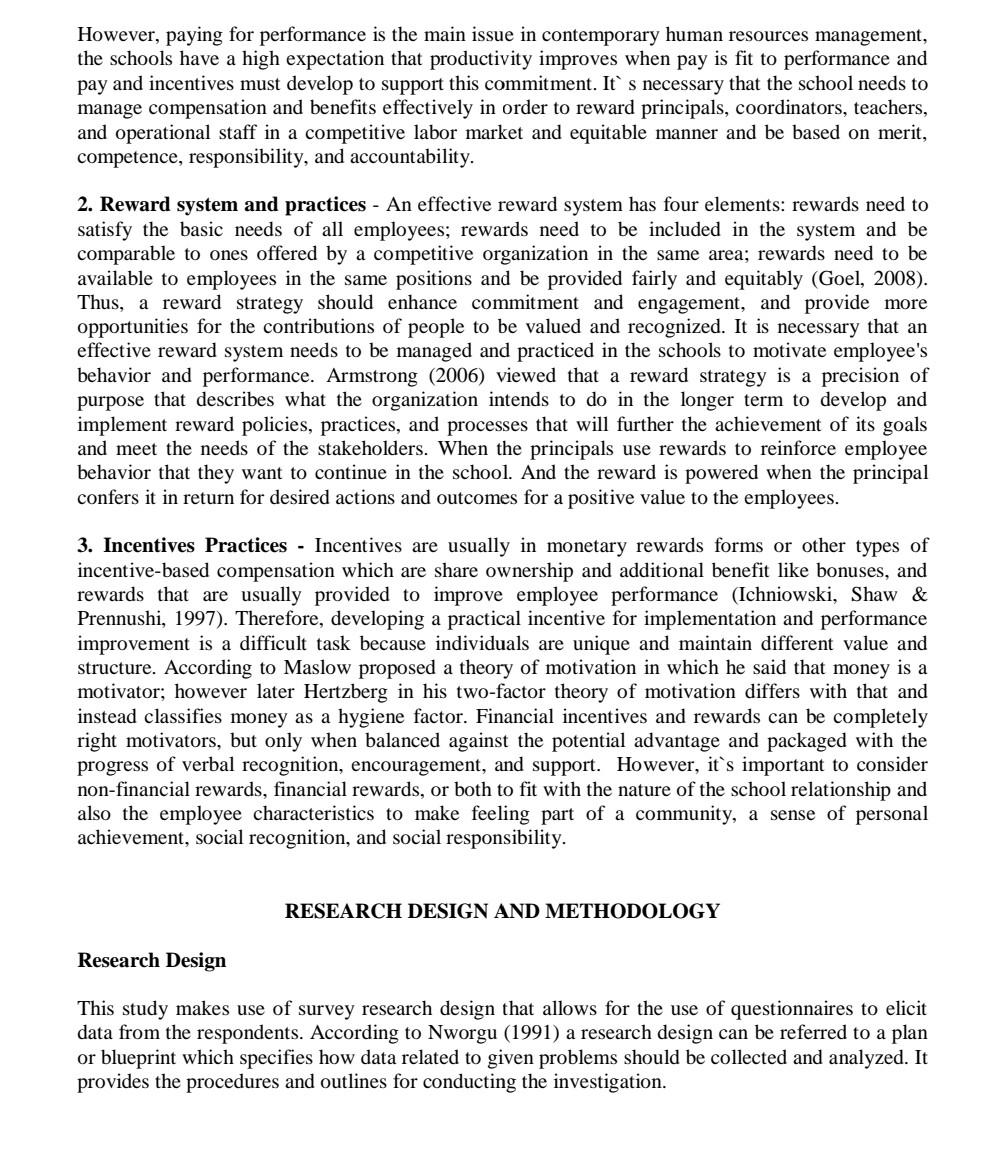
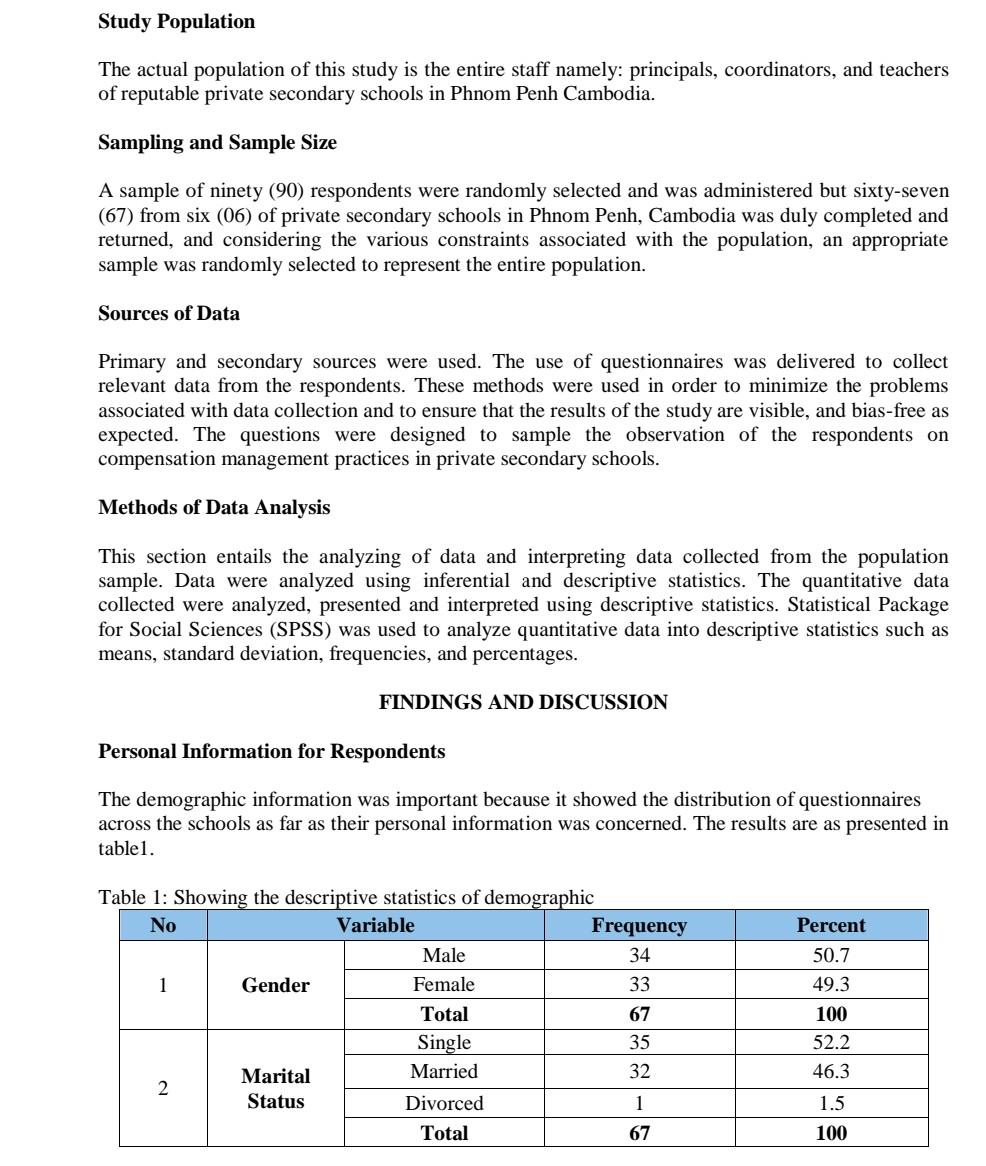
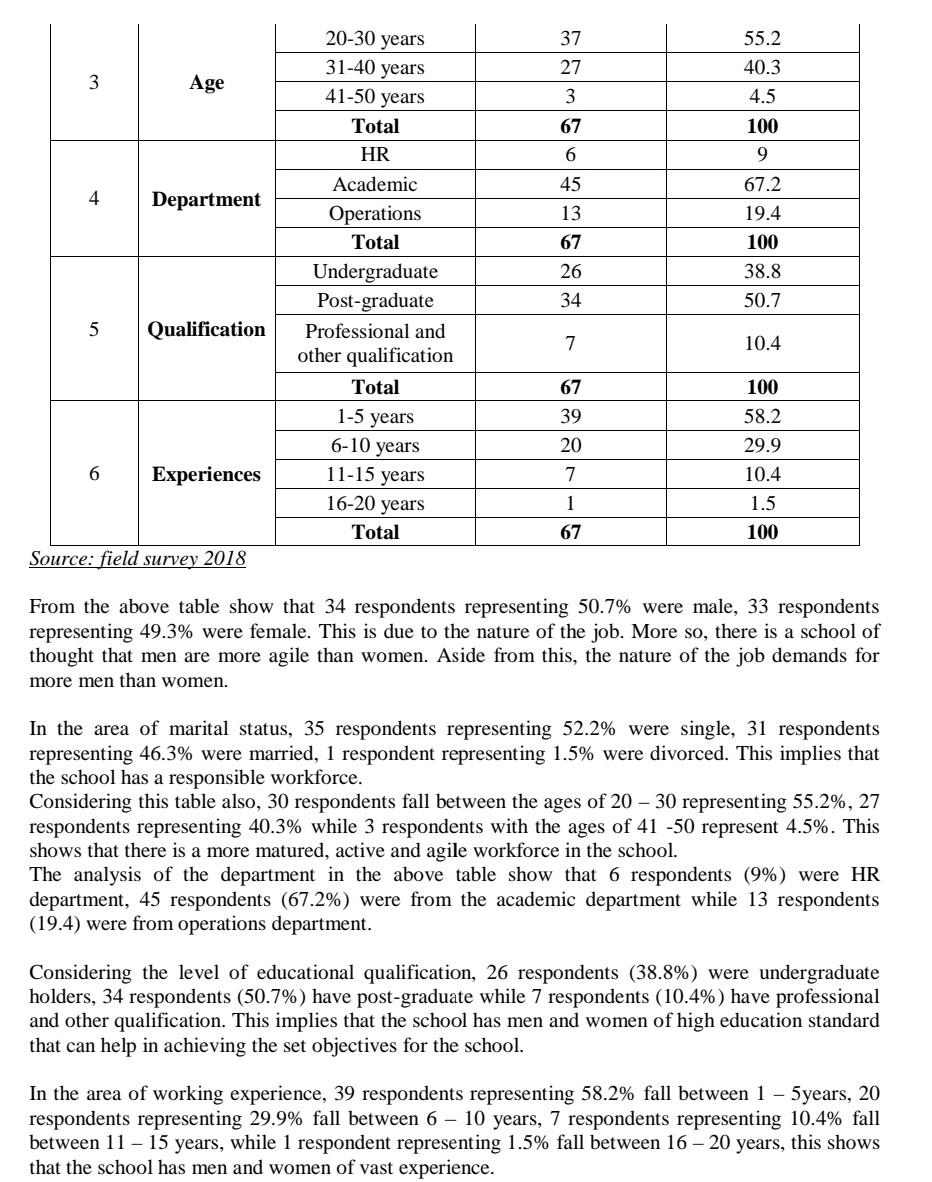
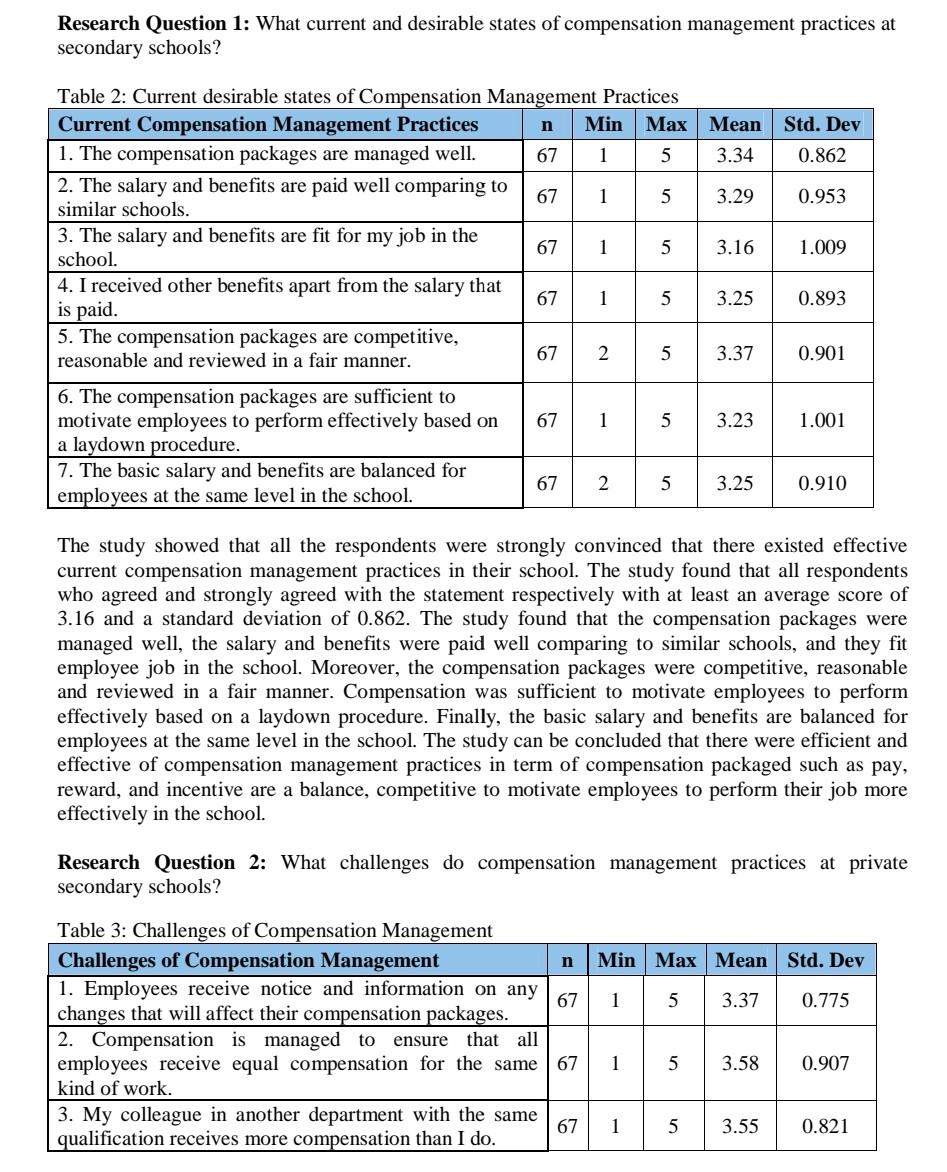
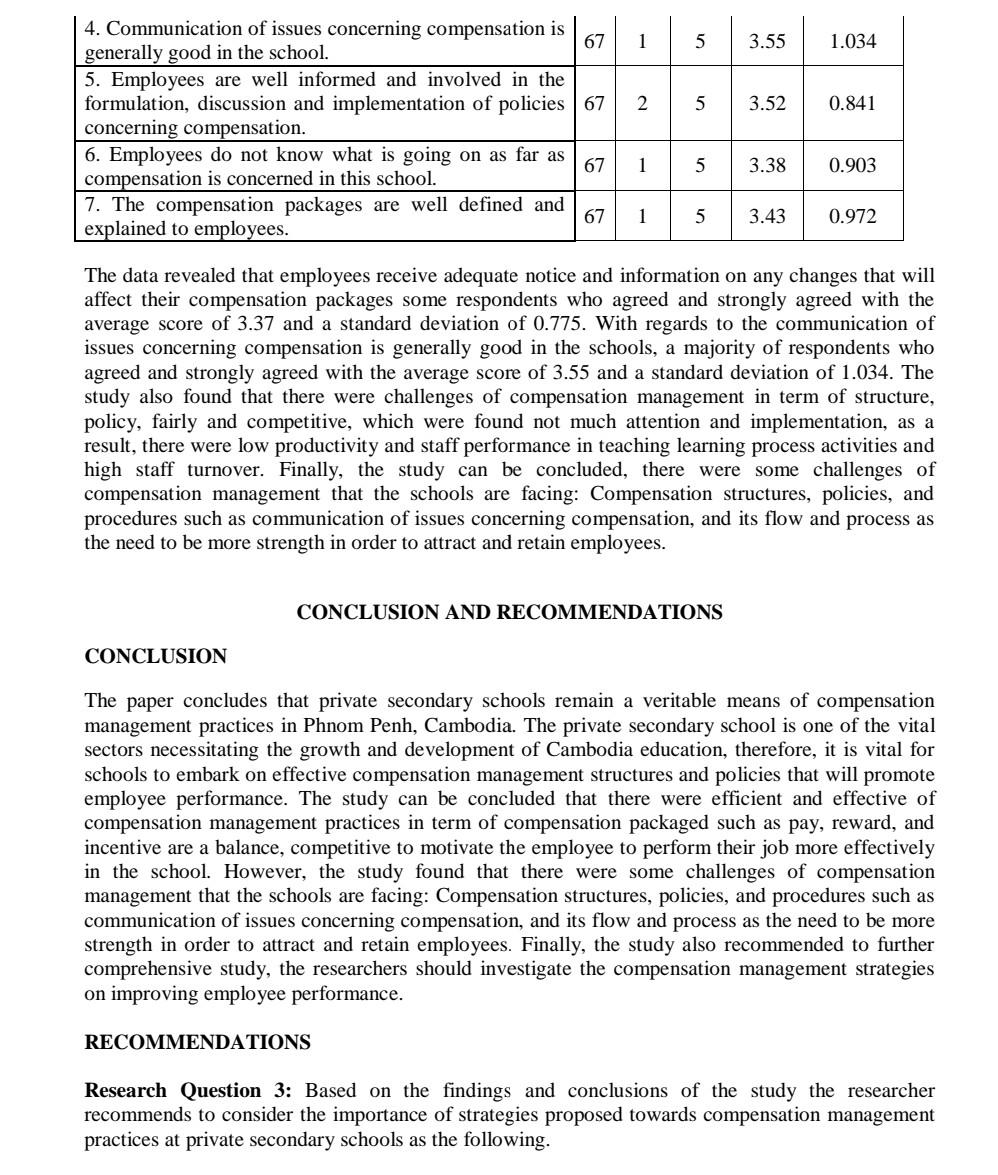
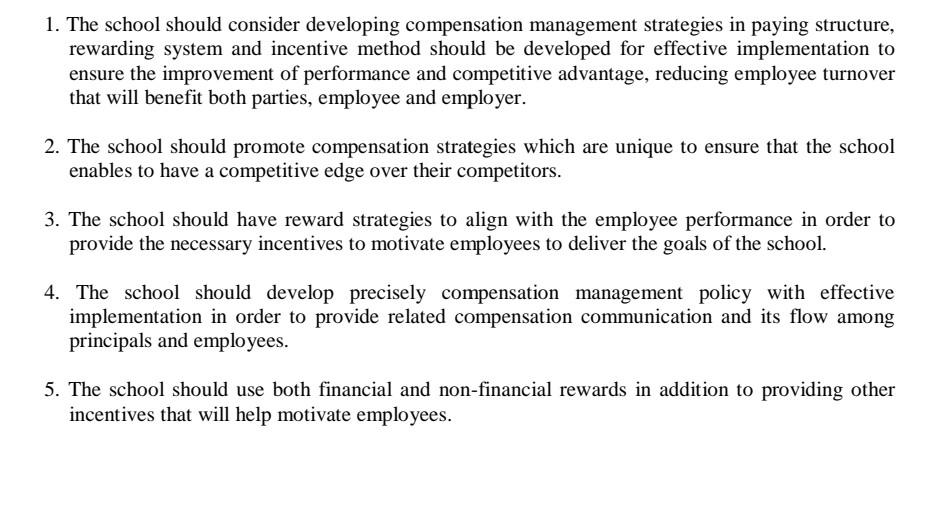
THE COMPENSATION MANAGEMENT PRACTICES: A CASE STUDY OF SELECTED PRIVATE SECONDARY SCHOOLS IN PHNOM PENH, CAMBODIA. Mr. Chhy Sothy Human Resources Director, Newtonthilay Community Group, Cambodia Email: sothy_chhy@yahoo.com ABSTRACT Most of the private secondary schools in recent years are facing the challenges of high employee turnover due to lack of properly compensation management practices and competitive compensation packages. That's why this study has been conducted over a period of six months from January to June 2018 on compensation management practices: a case study of selected private secondary school in Phnom Penh, Cambodia. The objectives were to: study the current and desirable states of compensation management practices, determine the challenges compensation management practices, and recommend strategies that can be used to manage compensation for effective practices at the private secondary school. Primary and secondary data were used for the study, which was generated through the use of questionnaires. The study took a sample of 67 respondents from a target of 90 respondents of the six private secondary schools in Phnom Penh used as a case study. The sample random technique was used to select the respondents. Statistical Package for Social Sciences (SPSS) was used to analyze quantitative data into descriptive statistics such as means, standard deviation, frequencies, and percentages. From the results of the study, it can be concluded that there were efficient and effective of compensation management practices, but there were some challenges of compensation management that the schools are facing: Compensation structures, and policies and procedures need to be more strength in order to attract and retain employees. In addition, the study recommended considering to develop compensation management strategies in paying structure, rewarding system and incentive method should be developed for effective implementation to ensure the improvement of performance and competitive advantage, reducing employee turnover that will benefit both parties, employee and employer. Finally, the study also recommended to further comprehensive study, the researchers should investigate the compensation management strategies on improving employee performance. This study would be an important academic source for principals and HR professionals both public and private, and educational institutions over Cambodia and global perspective to improve upon compensation management strategies for effective practices. KEYWORDS: Compensation Management, Practices, and Private Secondary Schools INTRODUCTION Background of the study During the last decade, the private secondary schools in Cambodia has been grown faster to respond to the demands of the educational market. At the meantime, the schools have strengthened the human resource management functions to the effectiveness of managing their people. Among the functions, recruitment and selection, compensation management, training and development, performance management but most of the schools have strongly focused compensation management to attract and retain the employee as a cooperative advantage among the private schools. All though, compensation management plays a crucial and functional role in every school to improve team and individual's performance to achieve objectives and strategies of the school. According to Armstrong (2005) compensation management deal with the formulation and implementation of human resource strategies, and policies to compensate employee fairly, equitably and consistently inconsistent with their values to the organization. Rivai, Fawsi, Silviana, & Abdullah (2005) added that compensation can be used to strengthen organizational structure; to attract and retain good talents; to make competitive advantages; to motivate employees; to achieve high-performance; to compensate employees based on legal requirements; to help the organization in their strategic goals. Thus, compensation management reflects the effort to guarantee fair and equitable conditions of intrinsic and extrinsic both internally and externally in order to retain and improve the employee performance and productivity to achieve school goals. The Cambodian Ministry of education Youth and Sport (MoEYS) have developed its strategic planning to reform human resources management policies in improving the effectiveness, efficiency, and stability. One of its strategic goals is to enhance the effectiveness of compensation management in education sector to ensure the best performance of educational employee on incentive, salaries, remuneration, allowance and other benefits (MoEYS, 2019a). Therefore, compensation management is very important to rationalize the utilization in reforming policies to enhance the effectiveness, efficiency, stability and employee performance. However, the study will investigate the current compensation management practices in private secondary schools in Phnom Penh, Cambodia. Problem Statement Recently, the private secondary schools in Cambodia has faced challenges including increasing competition, increased rule, and regulation by the government. However, these schools have created compensation management strategies and approaches for effective implementation. But those schools have stated the lack of strong theories mechanisms for effective implementation of compensation management practices in the schools. Therefore, there is still faced with some challenges related to educational personnel, such as low standard of living in term of low salary and other benefits to motivate them to work harder, more productivity and retain them (MoEYS, 2019b). There is, therefore, a great need for additional evidence to support the compensation management practices, this study will be conducted in order to investigate the current practices of compensation management in the selected private secondary schools in Phnom Penh, Cambodia. Objectives of the Study The objective of this paper, therefore, is to investigate the compensation management practices: a case study of selected private secondary schools in Phnom Penh, Cambodia. This paper sought to find out the objective as follows: 1. To study the current and desirable states of compensation management practice at private secondary schools 2. To determine the challenges compensation management practices at private secondary schools? 3. To recommend strategies that can be used to manage compensation for effective practices at private secondary schools. Research Questions A number of research questions were designed to guide the researcher in the study as follows: 1. What current and desirable states of compensation management practices at secondary schools? 2. What challenges do compensation management practices at private secondary schools? 3. What are compensation management strategies for effective practices at private secondary schools? Purpose and Significance of the study This study is to investigate compensation management practices in private secondary schools in Phnom Penh, Cambodia. The study might be produced the compensation management systems as the academic sources for other researchers. It may be used as a roadmap for principals, human resources professionals, and policy maker in developing compensation management strategies. It might significant for both public and private, educational institutions in Cambodia, and global perspective. Scope of the study This study has been conducted over a period of six months from July to December 2018. The study was done mainly in selected private secondary schools in Phnom Penh, Cambodia where the researcher was able to get all the relevant respondents. This included school principals, school coordinators and teachers as the sample for a target of 90 respondents of the six private secondary schools. Limitations of the study The study did not intend to provide a full account of compensation management. However, in the data collection process, some of the respondents were not co-operative to response and attempted to ignore the questionnaires, this threatened to reduce the response rate. By having trustworthy people, especially, school principals were asked to help distribute and collect the questionnaires. The study was only limited to compensation management practice in a private secondary school in Phnom Penh, Cambodia. It did not include other sectors. The school principals distributed questionnaires with the respondents among the sampled school in the area which was enough to exhaustively examine all the issues at stake. LITERATURE REVIEW Concept of Compensation Management Compensation management to refer to the structure, policy, and procedure that enables organizations to pay employees proportionately based on their level of performance of their assigned tasks to perform better and paid more than the average performing employees (Hewitt, 2009). When the school considered the compensation management is one of the main function of human resources strategies with the best practice by providing fairly pay and benefit to employees, it will positively encourage employees to perform tasks better to lead to high performance, more productivities, and to retain them to stay longer in the school. Other researchers, Anthony, Kacmar & Perrewe (2007) stated that compensation can be both financial and non-financial. Another scholar, Dessler (2004) addressed that the compensation is a pay, a reward, gift or bonus which the employee received during employment. It is believed that the overall reward system needs to be managed well in different type and functions because all employees in the school are different, principals, school coordinators, teachers, and operational staff that require to provide a range of rewards, pay, and incentive to demonstrate their job levels. However, different scholars have stated strongly on the use of team incentives, for example, Dessler (2007) & Armstrong (2010) said that organization that relies on teams to manage their work must develop incentive plans that encourage teamwork and focus team member attention on performance, recognition, or promotion. According to Kuster & Canales (2011a) defined that compensation is a form of reward given by an organization for good performance that has been shown by employees for the expectation that employees can improve their performance. It is, therefore, compensation management play vital roles in the school for personnel management, and it's one of the main pillars of human resource management strategies that the principal needs to manage and implement it efficiently and effectively in order to promote employee productivities, performance to achieve the strategies of the school. Compensation Management Practice in Private Secondary Schools Cambodia has committed to pursuing the Education for All (EFA) goals to reduce poverty and promote the general secondary education to help young people develop the mental and physical with qualities that will enhance their employability. To reach these goals, the Cambodian Ministry of Education Youth and Sports (MoEYS) has developed its strategic plan including human resource strategy which focused on principles of compensation management to enhance school management, and quality of education (MoEYS, 2014). To be aligned with these strat ies with MoEYS, the private secondary school is affiliated with MoEYS to oversee overall aspects of education to ensure education standard and academic quality. Nowadays, the incensement the numbers of the private secondary schools, and even the compensation package is more competitive, most of the schools pay much attention to the strategy of compensation management to retain, attract, and motivate the employee for better performance. 1. Pay Structure and Policy - The compensation and benefits seem to be more competitive, it can help to motivate and retain the employee in the schools. Compensation system can affect the performance of employees by differentiating the types of compensation into three, namely salary, reward, and incentives (Kuster & Canales, 2011b). It is believed that pay, reward, and incentive are competitive, reasonable, and fit to the job level can motivate employees to perform effectively. However, paying for performance is the main issue in contemporary human resources management, the schools have a high expectation that productivity improves when pay is fit to performance and pay and incentives must develop to support this commitment. It s necessary that the school needs to manage compensation and benefits effectively in order to reward principals, coordinators, teachers, and operational staff in a competitive labor market and equitable manner and be based on merit, competence, responsibility, and accountability. 2. Reward system and practices - An effective reward system has four elements: rewards need to satisfy the basic needs of all employees; rewards need to be included in the system and be comparable to ones offered by a competitive organization in the same area; rewards need to be available to employees in the same positions and be provided fairly and equitably (Goel, 2008). Thus, a reward strategy should enhance commitment and engagement, and provide more opportunities for the contributions of people to be valued and recognized. It is necessary that an effective reward system needs to be managed and practiced in the schools to motivate employee's behavior and performance. Armstrong (2006) viewed that a reward strategy is a precision of purpose that describes what the organization intends to do in the longer term to develop and implement reward policies, practices, and processes that will further the achievement of its goals and meet the needs of the stakeholders. When the principals use rewards to reinforce employee behavior that they want to continue in the school. And the reward is powered when the principal confers it in return for desired actions and outcomes for a positive value to the employees. 3. Incentives Practices - Incentives are usually in monetary rewards forms or other types of incentive-based compensation which are share ownership and additional benefit like bonuses, and rewards that are usually provided to improve employee performance (Ichniowski, Shaw & Prennushi, 1997). Therefore, developing a practical incentive for implementation and performance improvement is a difficult task because individuals are unique and maintain different value and structure. According to Maslow proposed a theory of motivation in which he said that money is a motivator; however later Hertzberg in his two-factor theory of motivation differs with that and instead classifies money as a hygiene factor. Financial incentives and rewards can be completely right motivators, but only when balanced against the potential advantage and packaged with the progress of verbal recognition, encouragement, and support. However, it's important to consider non-financial rewards, financial rewards, or both to fit with the nature of the school relationship and also the employee characteristics to make feeling part of a community, a sense of personal achievement, social recognition, and social responsibility. RESEARCH DESIGN AND METHODOLOGY Research Design This study makes use of survey research design that allows for the use of questionnaires to elicit data from the respondents. According to Nworgu (1991) a research design can be referred to a plan or blueprint which specifies how data related to given problems should be collected and analyzed. It provides the procedures and outlines for conducting the investigation. Study Population The actual population of this study is the entire staff namely: principals, coordinators, and teachers of reputable private secondary schools in Phnom Penh Cambodia. Sampling and Sample Size A sample of ninety (90) respondents were randomly selected and was administered but sixty-seven (67) from six (06) of private secondary schools in Phnom Penh, Cambodia was duly completed and returned, and considering the various constraints associated with the population, an appropriate sample was randomly selected to represent the entire population. Sources of Data Primary and secondary sources were used. The use of questionnaires was delivered to collect relevant data from the respondents. These methods were used in order to minimize the problems associated with data collection and to ensure that the results of the study are visible, and bias-free as expected. The questions were designed to sample the observation of the respondents on compensation management practices in private secondary schools. Methods of Data Analysis This section entails the analyzing of data and interpreting data collected from the population sample. Data were analyzed using inferential and descriptive statistics. The quantitative data collected were analyzed, presented and interpreted using descriptive statistics. Statistical Package for Social Sciences (SPSS) was used to analyze quantitative data into descriptive statistics such as means, standard deviation, frequencies, and percentages. FINDINGS AND DISCUSSION Personal Information for Respondents The demographic information was important because it showed the distribution of questionnaires across the schools as far as their personal information was concerned. The results are as presented in table1. Table 1: Showing the descriptive statistics of demographic No Variable Frequency Male 34 1 Gender Female 33 Total 67 Single 35 Marital Married 32 2 Status Divorced 1 Total 67 Percent 50.7 49.3 100 52.2 46.3 1.5 100 20-30 years 31-40 years 41-50 years 55.2 40.3 3 Age 37 27 3 67 4.5 100 6 9 45 4 Department 13 67.2 19.4 100 67 Total HR Academic Operations Total Undergraduate Post-graduate Professional and other qualification Total 38.8 26 34 50.7 5 Qualification 7 10.4 67 100 39 20 6 Experiences 1-5 years 6-10 years 11-15 years 16-20 years Total 7 58.2 29.9 10.4 1.5 100 1 67 Source: field survey 2018 From the above table show that 34 respondents representing 50.7% were male, 33 respondents representing 49.3% were female. This is due to the nature of the job. More so, there is a school of thought that men are more agile than women. Aside from this, the nature of the job demands for more men than women. In the area of marital status, 35 respondents representing 52.2% were single, 31 respondents representing 46.3% were married, 1 respondent representing 1.5% were divorced. This implies that the school has a responsible workforce. Considering this table also, 30 respondents fall between the ages of 20 - 30 representing 55.2%, 27 respondents representing 40.3% while 3 respondents with the ages of 41 -50 represent 4.5%. This shows that there is a more matured, active and agile workforce in the school. The analysis of the department in the above table show that 6 respondents (9%) were HR department, 45 respondents (67.2%) were from the academic department while 13 respondents (19.4) were from operations department. Considering the level of educational qualification, 26 respondents (38.8%) were undergraduate holders, 34 respondents (50.7%) have post-graduate while 7 respondents (10.4%) have professional and other qualification. This implies that the school has men and women of high education standard that can help in achieving the set objectives for the school. In the area of working experience, 39 respondents representing 58.2% fall between 1 - 5years, 20 respondents representing 29.9% fall between 6 - 10 years, 7 respondents representing 10.4% fall between 11 - 15 years, while 1 respondent representing 1.5% fall between 16 - 20 years, this shows that the school has men and women of vast experience. Research Question 1: What current and desirable states of compensation management practices at secondary schools ? n Std. Dev 0.862 0.953 1.009 Table 2: Current desirable states of Compensation Management Practices Current Compensation Management Practices Min Max Mean 1. The compensation packages are managed well. 67 1 5 3.34 2. The salary and benefits are paid well comparing to 67 1 5 3.29 similar schools. 3. The salary and benefits are fit for my job in the 67 1 5 3.16 school. 4. I received other benefits apart from the salary that 67 1 5 3.25 is paid. 5. The compensation packages are competitive, 67 reasonable and reviewed in a fair manner. 2 5 3.37 6. The compensation packages are sufficient to motivate employees to perform effectively based on 67 5 3.23 a laydown procedure. 7. The basic salary and benefits are balanced for 67 2 5 3.25 employees at the same level in the school. 0.893 0.901 1.001 0.910 The study showed that all the respondents were strongly convinced that there existed effective current compensation management practices in their school. The study found that all respondents who agreed and strongly agreed with the statement respectively with at least an average score of 3.16 and a standard deviation of 0.862. The study found that the compensation packages were managed well, the salary and benefits were paid well comparing to similar schools, and they fit employee job in the school. Moreover, the compensation packages were competitive, reasonable and reviewed in a fair manner. Compensation was sufficient to motivate employees to perform effectively based on a laydown procedure. Finally, the basic salary and benefits are balanced for employees at the same level in the school. The study can be concluded that there were efficient and effective of compensation management practices in term of compensation packaged such as pay, reward, and incentive are a balance, competitive to motivate employees to perform their job more effectively in the school. Research Question 2: What challenges do compensation management practices at private secondary schools? n Table 3: Challenges of Compensation Management Challenges of Compensation Management Min Max Mean Std. Dev 1, Employees receive notice and information on any 67 1 5 3.37 0.775 changes that will affect their compensation packages. 2. Compensation is managed to ensure that all employees receive equal compensation for the same 67 5 3.58 0.907 kind of work. 3. My colleague in another department with the same 67 1 5 3.55 qualification receives more compensation than I do. 0.821 1 1 5 3.55 1.034 672 5 3.52 4. Communication of issues concerning compensation is 67 generally good in the school. 5. Employees are well informed and involved in the formulation, discussion and implementation of policies 67 concerning compensation. 6. Employees do not know what is going on as far as 67 compensation is concerned in this school. 7. The compensation packages are well defined and 67 explained to employees. 0.841 1 5 3.38 0.903 1 5 3.43 0.972 The data revealed that employees receive adequate notice and information on any changes that will affect their compensation packages some respondents who agreed and strongly agreed with the average score of 3.37 and a standard deviation of 0.775. With regards to the communication of issues concerning compensation is generally good in the schools, a majority of respondents who agreed and strongly agreed with the average score of 3.55 and a standard deviation of 1.034. The study also found that there were challenges of compensation management in term of structure, policy, fairly and competitive, which were found not much attention and implementation, as a result, there were low productivity and staff performance in teaching learning process activities and high staff turnover. Finally, the study can be concluded, there were some challenges of compensation management that the schools are facing: Compensation structures, policies, and procedures such as communication of issues concerning compensation, and its flow and process as the need to be more strength in order to attract and retain employees. CONCLUSION AND RECOMMENDATIONS CONCLUSION The paper concludes that private secondary schools remain a veritable means of compensation management practices in Phnom Penh, Cambodia. The private secondary school is one of the vital sectors necessitating the growth and development of Cambodia education, therefore, it is vital for schools to embark on effective compensation management structures and policies that will promote employee performance. The study can be concluded that there were efficient and effective of compensation management practices in term of compensation packaged such as pay, reward, and incentive are a balance, competitive to motivate the employee to perform their job more effectively in the school. However, the study found that there were some challenges of compensation management that the schools are facing: Compensation structures, policies, and procedures such as communication of issues concerning compensation, and its flow and process as the need to be more strength in order to attract and retain employees. Finally, the study also recommended to further comprehensive study, the researchers should investigate the compensation management strategies on improving employee performance. RECOMMENDATIONS Research Question 3: Based on the findings and conclusions of the study the researcher recommends to consider the importance of strategies proposed towards compensation management practices at private secondary schools as the following. 1. The school should consider developing compensation management strategies in paying structure, rewarding system and incentive method should be developed for effective implementation to ensure the improvement of performance and competitive advantage, reducing employee turnover that will benefit both parties, employee and employer. 2. The school should promote compensation strategies which are unique to ensure that the school enables to have a competitive edge over their competitors. 3. The school should have reward strategies to align with the employee performance in order to provide the necessary incentives to motivate employees to deliver the goals of the school. 4. The school should develop precisely compensation management policy with effective implementation in order to provide related compensation communication and its flow among principals and employees. 5. The school should use both financial and non-financial rewards in addition to providing other incentives that will help motivate employees. 1. What are the categories of compensation theories? Macro Social wage theory The wage control theory The justification theory 2. Micro Marginal productivity theory The productive efficiency theory Bargaining theory Human capital theory Labor theory of value LOYEE BENEFITS What is social wage theory ? Subsistence theory - provide enough food, clothing and shelter. Increasing labor force and lowering the wage The just price theory - each person born into the world is to occupy exactly same status and to enjoy the same comfort Just wage theory no recognition in productive efficient The wage fund theory more to government field, where the fund is already the its just need to pay o Residual claimant theory Karl Marx - Union sidel claimant there har EE BENEFES Prepared by Priya Nanthagopal What is wage control theory? National income theory the connection between employee income and national income o The New-Keynesian Distribution Theory - economic forces alone do not determine the wage level o Consumption / purchasing power theory the relation between wage and employment and business cycle EMLOYEE What is justification theory? o Investment theory wider labour market, higher the wage o The institutional wage theory wage based on quantitative basis Supply and demand theory more worker, less salary/ less worker, more salary BENEFITES E Prepared by Priya Nanthag Micro o Marginal productivity theory wage must be based on employees productivity o The productive efficient theory- wages plus benefit to add motivation to boost productivity o Bargaining theory wages depend on bargaining power between employer and employee o Human capital theory- earning in the labor market depend upon employees' information and skills o Labor theory of value the price of any product was determined by the labor time needed for producing it. OB BENEFITS . Prepared by Priya Nanthagopal Fundamentals of compensation o 'Compensation' in other terms also called as Employee Remuneration' o Factors affecting compensation policy are (supply and demand, cost of living, government, labor union) EMLOYEE
Step by Step Solution
There are 3 Steps involved in it
1 Expert Approved Answer
Step: 1 Unlock

Question Has Been Solved by an Expert!
Get step-by-step solutions from verified subject matter experts
Step: 2 Unlock
Step: 3 Unlock
 Study Help