Question: Read the assigned example essay below. (Keep in mind that it is an example of writing a research essay about a play, and not an
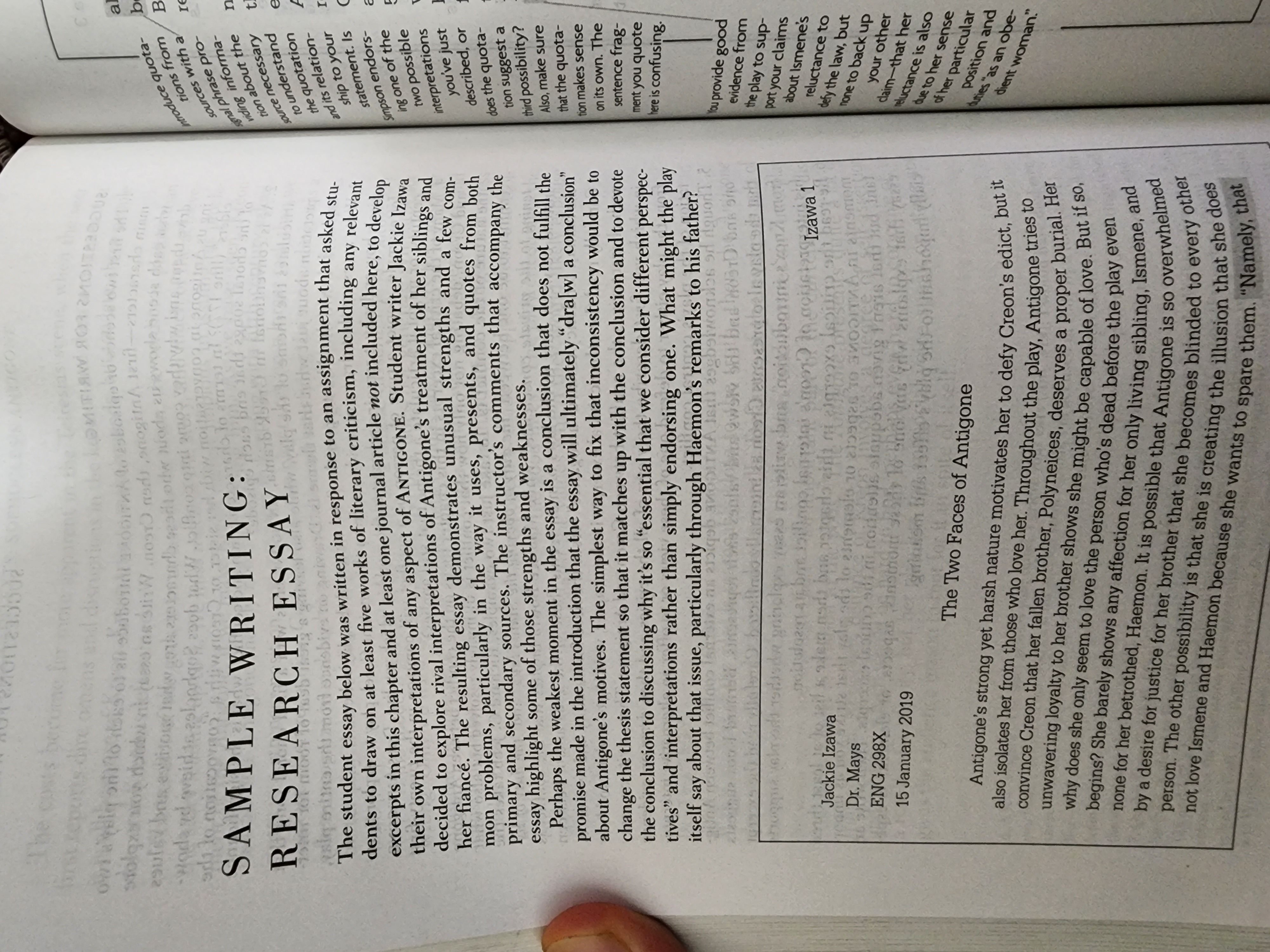
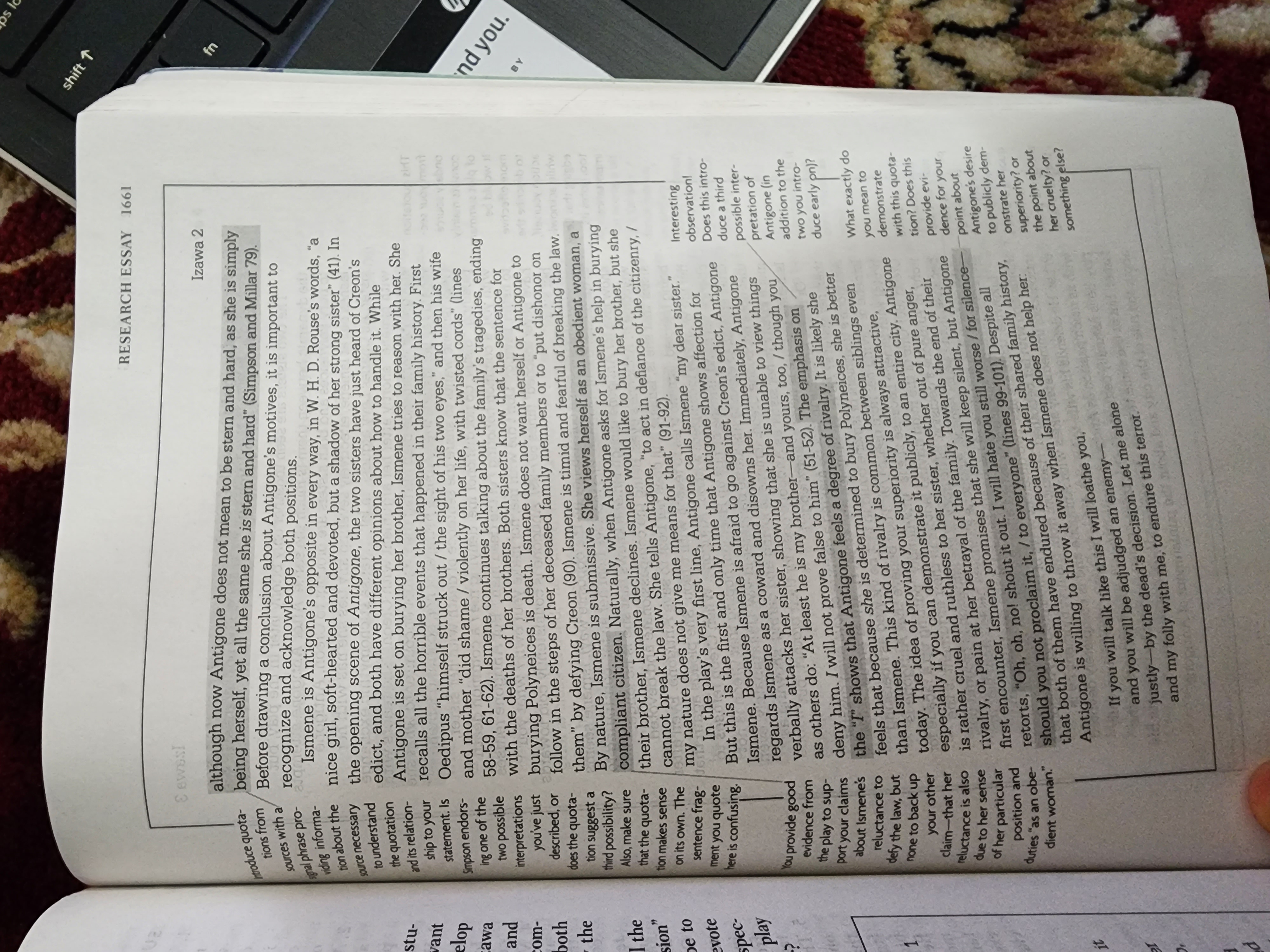
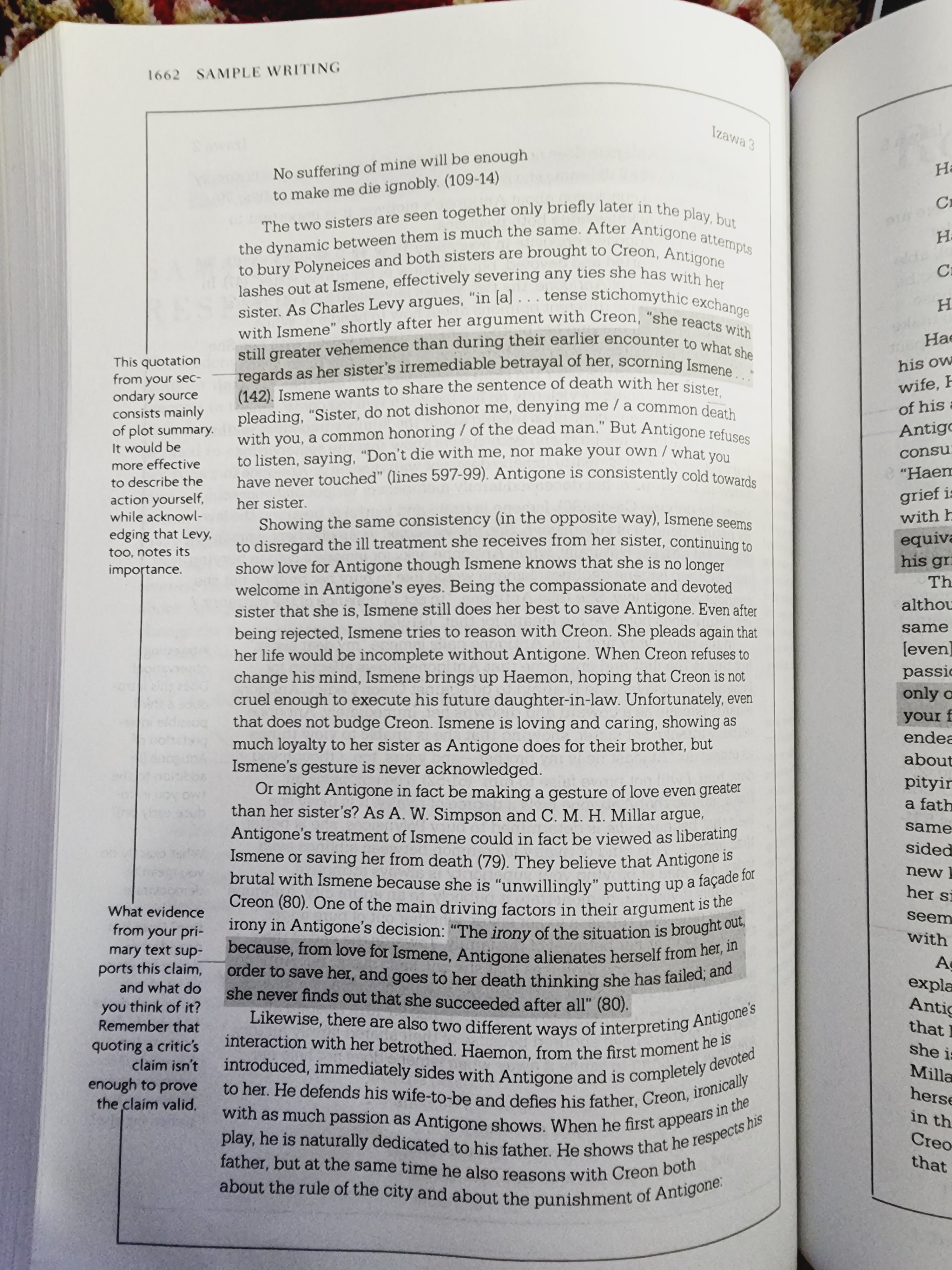
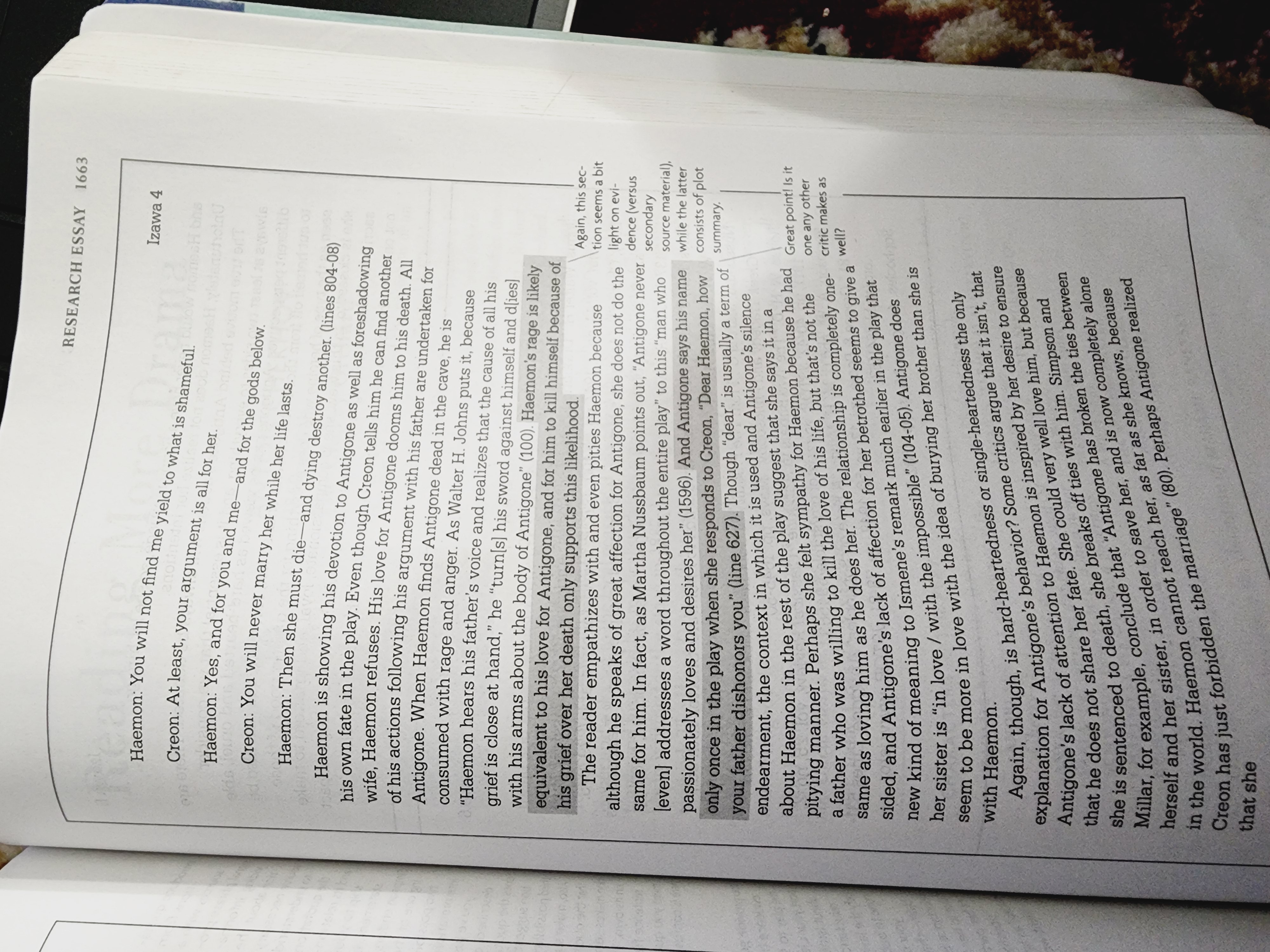
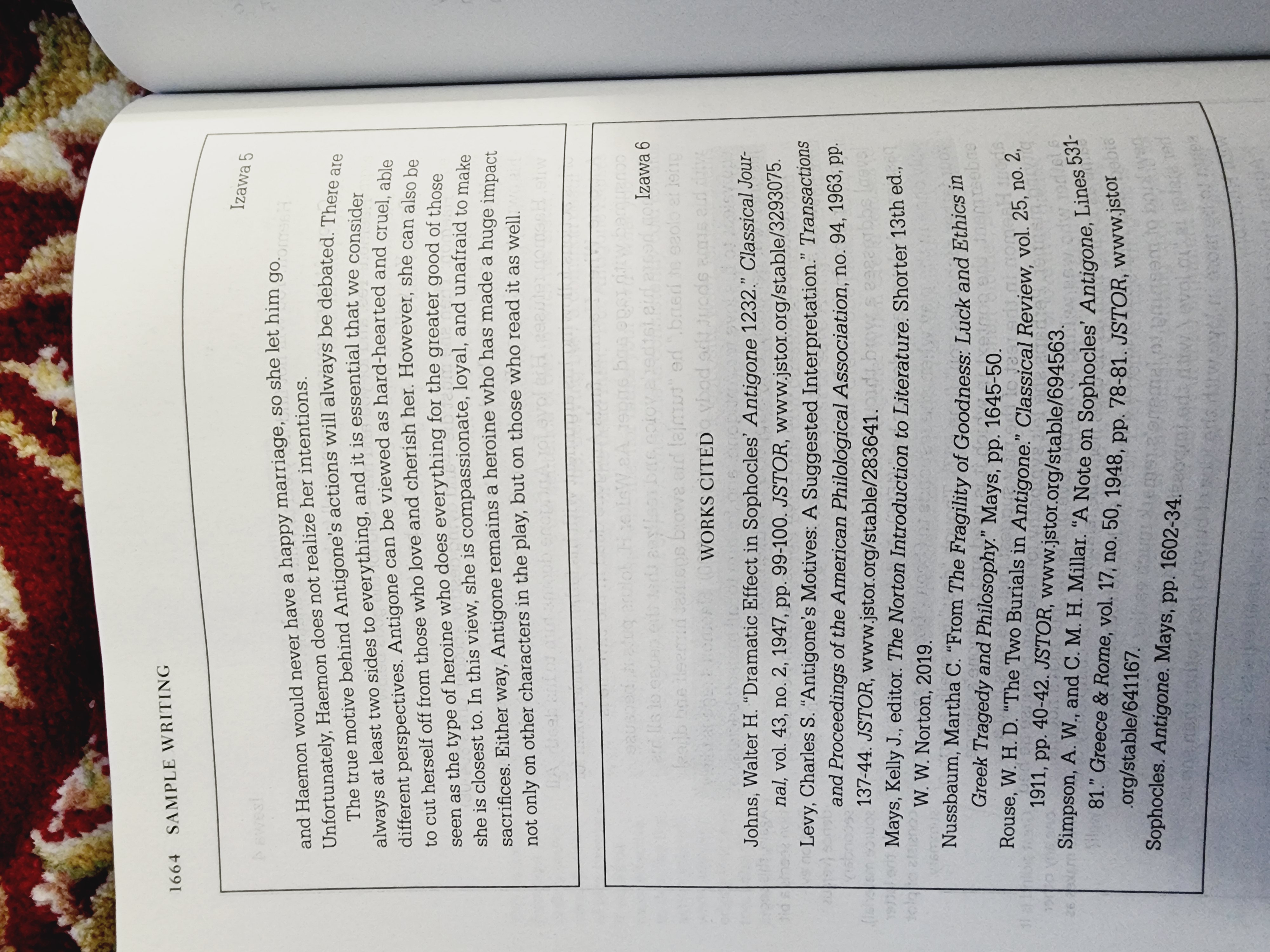
Read the assigned example essay below. (Keep in mind that it is an example of writing a research essay about a play, and not an exact example of the essay you are assigned.)
Write a rough outline of your essay that includes the following information. You may use any format that is helpful to your writing process.
What is your interpretive question that you plan to use as the basis for Essay 3?
What historical or cultural contexts do you plan to integrate into your essay?
What literary elements of the play do you plan to analyze in relationship to the historical and cultural contextual material?
At the end of the outline, answer the following question:
After reading the example and writing an outline of the assignment, what questions about the essay do you have about the assigned essay?
The costs become for searly order wodn en ewodahrosa doas well Introduce quota- tions from sources with a SAMPLE WRITING: signal phrase pro- viding informa- tion about the RESEARCH ESSAY onohso5 source necessary to understand But suode nude the quotation The student essay below was written in response to an assignment that asked sty- and its relation- ship to your dents to draw on at least five works of literary criticism, including any relevant statement. Is excerpts in this chapter and at least one journal article not included here, to develop Simpson endors- their own interpretations of any aspect of ANTIGONE. Student writer Jackie Izawa ing one of the two possible decided to explore rival interpretations of Antigone's treatment of her siblings and interpretations her fiance. The resulting essay demonstrates unusual strengths and a few com- you've just mon problems, particularly in the way it uses, presents, and quotes from both described, or primary and secondary sources. The instructor's comments that accompany the does the quota- tion suggest a essay highlight some of those strengths and weaknesses. third possibility? Perhaps the weakest moment in the essay is a conclusion that does not fulfill the Also, make sure promise made in the introduction that the essay will ultimately "dra[w] a conclusion" that the quota- tion makes sense about Antigone's motives. The simplest way to fix that inconsistency would be to on its own. The change the thesis statement so that it matches up with the conclusion and to devote sentence frag- the conclusion to discussing why it's so "essential that we consider different perspec- ment you quote tives" and interpretations rather than simply endorsing one. What might the play here is confusing. itself say about that issue, particularly through Haemon's remarks to his father? You provide good evidence from the play to sup- port your claims about Ismene's reluctance to Dr. Mays Jackie Izawa dadi lo ainsists 10 elpages to anoory Ani amoment defy the law, but none to back up ENG 298X your other 15 January 2019 claim-that her reluctance is also due to her sense The Two Faces of Antigone of her particular Antigone's strong yet harsh nature motivates her to defy Creon's edict, but it position and aunties " as an obe- also isolates her from those who love her. Throughout the play, Antigone tries to dient woman." convince Creon that her fallen brother, Polyneices, deserves a proper burial. Her unwavering loyalty to her brother shows she might be capable of love. But if so, why does she only seem to love the person who's dead before the play even begins? She barely shows any affection for her only living sibling, Ismene, and none for her betrothed, Haemon. It is possible that Antigone is so overwhelmed by a desire for justice for her brother that she becomes blinded to every other person . The other possibility is that she is creating the illusion that she does not love Ismene and Haemon because she wants to spare them. "Namely, thatshift T RESEARCH ESSAY 1661 E ewest Izawa 2 introduce quota although now Antigone does not mean to be stern and hard, as she is simply tions from being herself, yet all the same she is stern and hard" (Simpson and Millar 79). sources with a signal phrase pro- Before drawing a conclusion about Antigone's motives, it is important to recognize and acknowledge both positions. viding informa- tion about the Ismene is Antigone's opposite in every way, in W. H. D. Rouse's words, "a source necessary nice girl, soft-hearted and devoted, but a shadow of her strong sister" (41). In to understand the opening scene of Antigone, the two sisters have just heard of Creon's the quotation stu- edict, and both have different opinions about how to handle it. While and its relation- vant Antigone is set on burying her brother, Ismene tries to reason with her. She ship to your recalls all the horrible events that happened in their family history. First elop Simpson endors- statement. Is Oedipus "himself struck out / the sight of his two eyes," and then his wife most awa ing one of the and mother "did shame / violently on her life, with twisted cords" (lines and two possible 58-59, 61-62). Ismene continues talking about the family's tragedies, ending com- interpretations with the deaths of her brothers. Both sisters know that the sentence for you've just burying Polyneices is death. Ismene does not want herself or Antigone to nd you. both described, or the does the quota- follow in the steps of her deceased family members of to "put dishonor on tion suggest a them" by defying Creon (90). Ismene is timid and fearful of breaking the law. third possibility? By nature, Ismene is submissive. She views herself as an obedient woman, a I the Also, make sure compliant citizen. Naturally, when Antigone asks for Ismene's help in burying that the quota- ion tion makes sense their brother, Ismene declines. Ismene would like to bury her brother, but she e to on its own. The cannot break the law. She tells Antigone, "to act in defiance of the citizenry, / sentence frag- my nature does not give me means for that" (91-92). vote ment you quote In the play's very first line, Antigone calls Ismene "my dear sister." Interesting pec here is confusing. But this is the first and only time that Antigone shows affection for observation! Does this intro- play Ismene. Because Ismene is afraid to go against Creon's edict, Antigone duce a third regards Ismene as a coward and disowns her. Immediately, Antigone possible inter- You provide good evidence from verbally attacks her sister, showing that she is unable to view things pretation of the play to sup- as others do: "At least he is my brother-and yours, too, / though you Antigone (in addition to the port your claims deny him. I will not prove false to him" (51-52). The emphasis on two you intro about Ismene's the "I" shows that Antigone feels a degree of rivalry. It is likely she duce early on)? reluctance to feels that because she is determined to bury Polyneices, she is better defy the law, but than Ismene. This kind of rivalry is common between siblings even What exactly do none to back up you mean to today. The idea of proving your superiority is always attractive, demonstrate your other claim-that her especially if you can demonstrate it publicly, to an entire city. Antigone with this quota- is rather cruel and ruthless to her sister, whether out of pure anger, tion? Does this reluctance is also provide evi- due to her sense rivalry, or pain at her betrayal of the family. Towards the end of their dence for your of her particular first encounter, Ismene promises that she will keep silent, but Antigone point about position and retorts, "Oh, oh, no! shout it out. I will hate you still worse / for silence- Antigone's desire duties "as an obe- should you not proclaim it, / to everyone" (lines 99-101). Despite all to publicly dem- dient woman." onstrate her that both of them have endured because of their shared family history, superiority? or Antigone is willing to throw it away when Ismene does not help her: the point about her cruelty? or If you will talk like this I will loathe you, something else? and you will be adjudged an enemy justly- by the dead's decision. Let me alone and my folly with me, to endure this terror.1662 SAMPLE WRITING Izawa 3 No suffering of mine will be enough H to make me die ignobly. (109-14) The two sisters are seen together only briefly later in the play, but the dynamic between them is much the same. After Antigone attempts H to bury Polyneices and both sisters are brought to Creon, Antigone lashes out at Ismene, effectively severing any ties she has with her sister. As Charles Levy argues, "in [al . . . tense stichomythic exchange H with Ismene" shortly after her argument with Creon, "she reacts with Ha This quotation still greater vehemence than during their earlier encounter to what she regards as her sister's irremediable betrayal of her, scorning Ismene . ." his ow from your sec- ondary source (142). Ismene wants to share the sentence of death with her sister, wife, consists mainly pleading, "Sister, do not dishonor me, denying me / a common death of his of plot summary. Antig It would be with you, a common honoring / of the dead man." But Antigone refuses consu more effective to listen, saying, "Don't die with me, nor make your own / what you to describe the have never touched" (lines 597-99). Antigone is consistently cold towards "Haer action yourself, her sister. grief i while acknowl edging that Levy, Showing the same consistency (in the opposite way), Ismene seems with equiv too, notes its to disregard the ill treatment she receives from her sister, continuing to importance. show love for Antigone though Ismene knows that she is no longer his gr welcome in Antigone's eyes. Being the compassionate and devoted Th sister that she is, Ismene still does her best to save Antigone. Even after althou being rejected, Ismene tries to reason with Creon. She pleads again that same her life would be incomplete without Antigone. When Creon refuses to even change his mind, Ismene brings up Haemon, hoping that Creon is not passi cruel enough to execute his future daughter-in-law. Unfortunately, even only that does not budge Creon. Ismene is loving and caring, showing as your much loyalty to her sister as Antigone does for their brother, but ende Ismene's gesture is never acknowledged. about UpNOW Or might Antigone in fact be making a gesture of love even greater pityi than her sister's? As A. W. Simpson and C. M. H. Millar argue, a fath Antigone's treatment of Ismene could in fact be viewed as liberating same Ismene or saving her from death (79). They believe that Antigone is side brutal with Ismene because she is "unwillingly" putting up a facade for new What evidence Creon (80). One of the main driving factors in their argument is the her s from your pri- irony in Antigone's decision: "The irony of the situation is brought out, seem mary text sup- because, from love for Ismene, Antigone alienates herself from her, in with ports this claim, order to save her, and goes to her death thinking she has failed; and A and what do she never finds out that she succeeded after all" (80). expla you think of it? Anti Remember that Likewise, there are also two different ways of interpreting Antigone's that quoting a critic's interaction with her betrothed. Haemon, from the first moment he is she claim isn't enough to prove introduced, immediately sides with Antigone and is completely devoted Milla the claim valid. to her. He defends his wife-to-be and defies his father, Creon, ironically with as much passion as Antigone shows. When he first appears in the hers in th play, he is naturally dedicated to his father. He shows that he respects me Creo father, but at the same time he also reasons with Creon both that about the rule of the city and about the punishment of Antigone:RESEARCH ESSAY 1663 Haemon: You will not find me yield to what is shameful. Izawa 4 Creon: At least, your argument is all for her. BangholaU Haemon: Yes, and for you and me-and for the gods below. Creon: You will never marry her while her life lasts. Haemon: Then she must die-and dying destroy another. (lines 804-08) Haemon is showing his devotion to Antigone as well as foreshadowing his own fate in the play. Even though Creon tells him he can find another wife, Haemon refuses. His love for Antigone dooms him to his death. All of his actions following his argument with his father are undertaken for Antigone. When Haemon finds Antigone dead in the cave, he is consumed with rage and anger. As Walter H. Johns puts it, because "Haemon hears his father's voice and realizes that the cause of all his grief is close at hand," he "turn(s] his sword against himself and dlies] with his arms about the body of Antigone" (100). Haemon's rage is likely equivalent to his love for Antigone, and for him to kill himself because of his grief over her death only supports this likelihood. Again, this sec- The reader empathizes with and even pities Haemon because tion seems a bit although he speaks of great affection for Antigone, she does not do the light on evi- same for him. In fact, as Martha Nussbaum points out, "Antigone never dence (versus secondary [even] addresses a word throughout the entire play" to this "man who source material). passionately loves and desires her" (1596). And Antigone says his name while the latter only once in the play when she responds to Creon, "Dear Haemon, how consists of plot your father dishonors you" (line 627). Though "dear" is usually a term of | summary. endearment, the context in which it is used and Antigone's silence about Haemon in the rest of the play suggest that she says it in a pitying manner. Perhaps she felt sympathy for Haemon because he had Great point! Is it one any other a father who was willing to kill the love of his life, but that's not the critic makes as same as loving him as he does her. The relationship is completely one- sided, and Antigone's lack of affection for her betrothed seems to give a well? new kind of meaning to Ismene's remark much earlier in the play that her sister is "in love / with the impossible" (104-05). Antigone does seem to be more in love with the idea of burying her brother than she is Again, though, is hard-heartedness or single-heartedness the only with Haemon. explanation for Antigone's behavior? Some critics argue that it isn't, that Antigone's lack of attention to Haemon is inspired by her desire to ensure that he does not share her fate. She could very well love him, but because she is sentenced to death, she breaks off ties with him. Simpson and Millar, for example, conclude that "Antigone has broken the ties between herself and her sister, in order to save her, and is now completely alone in the world . Haemon cannot reach her, as far as she knows, because Creon has just forbidden the marriage" (80). Perhaps Antigone realized that she1664 SAMPLE WRITING Izawa 5 SWest and Haemon would never have a happy marriage, so she let him go. Unfortunately, Haemon does not realize her intentions. The true motive behind Antigone's actions will always be debated. There are always at least two sides to everything, and it is essential that we consider different perspectives. Antigone can be viewed as hard-hearted and cruel, able to cut herself off from those who love and cherish her. However, she can also be seen as the type of heroine who does everything for the greater good of those she is closest to. In this view, she is compassionate, loyal, and unafraid to make sacrifices. Either way, Antigone remains a heroine who has made a huge impact not only on other characters in the play, but on those who read it as well. strw feelb bre ileemin carireps blowa eid (almus" ed ". bred me szolo et long WORKS CITED vbad ent Jueds amas and drive Johns, Walter H. "Dramatic Effect in Sophocles' Antigone 1232." Classical Jour- nal, vol. 43, no. 2, 1947, pp. 99-100. JSTOR, www.jstor.org/stable/3293075. Levy, Charles S. "Antigone's Motives: A Suggested Interpretation." Transactions and Proceedings of the American Philological Association, no. 94, 1963, pp. 137-44. JSTOR, www.jstor.org/stable/283641. andI b Mays, Kelly J., editor. The Norton Introduction to Literature. Shorter 13th ed., W. W. Norton, 2019. Nussbaum, Martha C. "From The Fragility of Goodness: Luck and Ethics in Greek Tragedy and Philosophy." Mays, pp. 1645-50 Rouse, W. H. D. "The Two Burials in Antigone." Classical Review, vol. 25, no. 2, 1911, pp. 40-42. JSTOR, www.jstor.org/stable/694563. Simpson, A. W., and C. M. H. Millar. "A Note on Sophocles' Antigone, Lines 531- 81." Greece & Rome, vol. 17, no. 50, 1948, pp. 78-81. JSTOR, www.jstoria org/stable/641167. Sophocles. Antigone. Mays, pp. 1602-34. avalon aimedatTell
Step by Step Solution
There are 3 Steps involved in it
1 Expert Approved Answer
Step: 1 Unlock
Question Has Been Solved by an Expert!
Get step-by-step solutions from verified subject matter experts
Step: 2 Unlock
Step: 3 Unlock
Students Have Also Explored These Related Mathematics Questions!









 Study Help