







Question: Read the case below and answer the following questions: Problems: List the apparent problems (or, in some instances, potential problems). Causes: List out the causes
Read the case below and answer the following questions:
- Problems: List the apparent problems (or, in some instances, potential problems).
- Causes: List out the causes to the problems. Problems are just the symptoms (e.g., low profits), while causes aim at identifying the underlying reason that the problem exists (e.g., pricing too high).
- Recommendations: List out two or three recommendations that you consider to be the most appropriate in solving, or reducing the severity of, the existing problems. provide the most detail and justify your choice of recommendations.
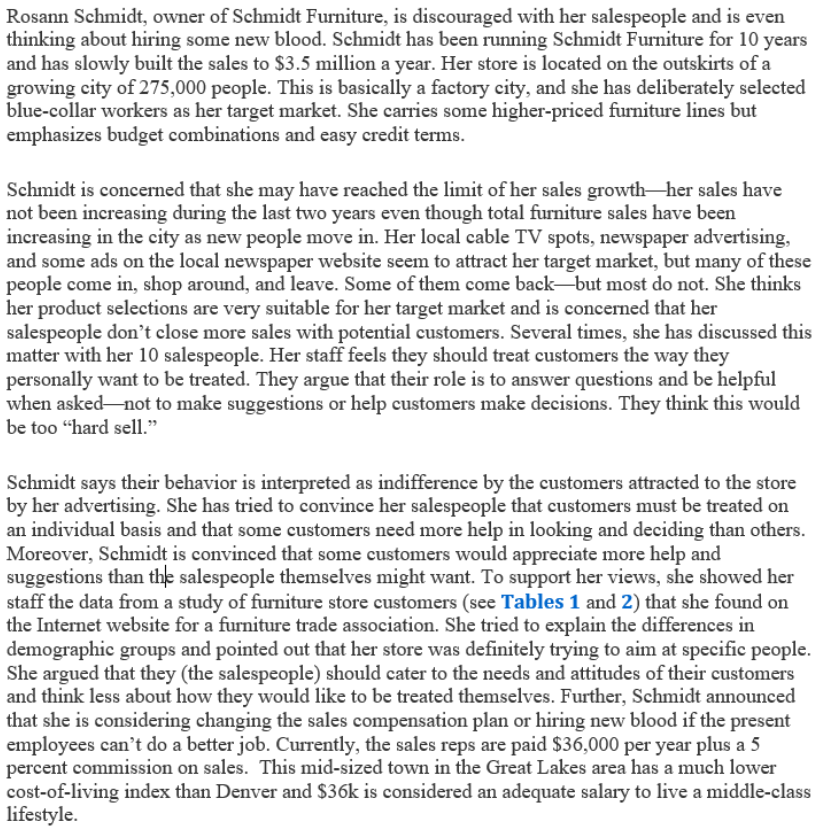
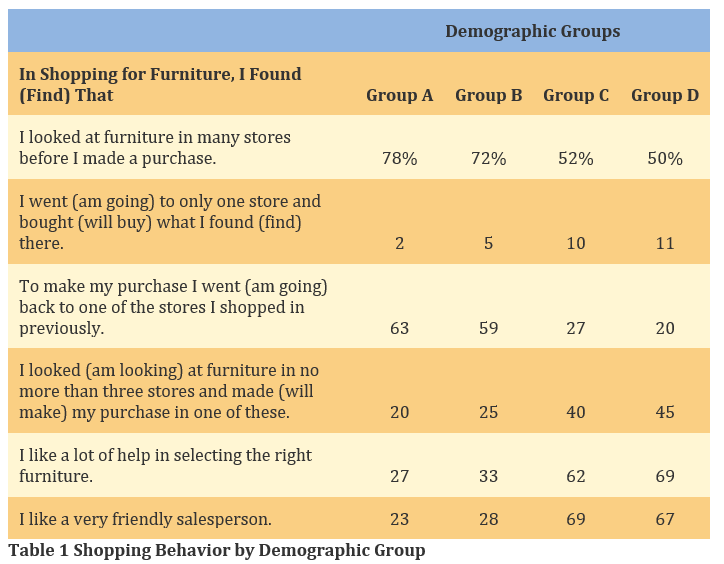
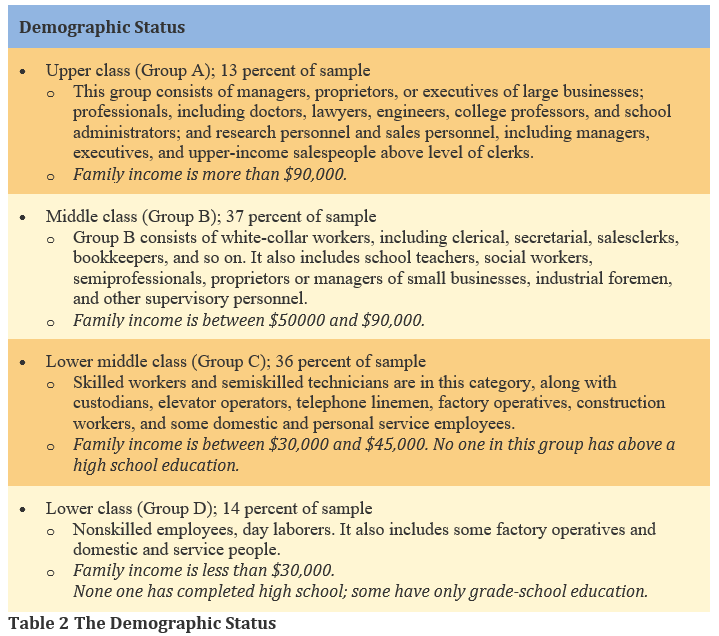
Rosann Schmidt, owner of Schmidt Furniture, is discouraged with her salespeople and is even thinking about hiring some new blood. Schmidt has been running Schmidt Furniture for 10 years and has slowly built the sales to $3.5 million a year. Her store is located on the outskirts of a growing city of 275,000 people. This is basically a factory city, and she has deliberately selected blue-collar workers as her target market. She carries some higher-priced furniture lines but emphasizes budget combinations and easy credit terms. Schmidt is concerned that she may have reached the limit of her sales growthher sales have not been increasing during the last two years even though total furniture sales have been increasing in the city as new people move in. Her local cable TV spots, newspaper advertising, and some ads on the local newspaper website seem to attract her target market, but many of these people come in, shop around, and leave. Some of them come back-but most do not. She thinks her product selections are very suitable for her target market and is concerned that her salespeople don't close more sales with potential customers. Several times, she has discussed this matter with her 10 salespeople. Her staff feels they should treat customers the way they personally want to be treated. They argue that their role is to answer questions and be helpful when askednot to make suggestions or help customers make decisions. They think this would be too "hard sell." Schmidt says their behavior is interpreted as indifference by the customers attracted to the store by her advertising. She has tried to convince her salespeople that customers must be treated on an individual basis and that some customers need more help in looking and deciding than others. Moreover, Schmidt is convinced that some customers would appreciate more help and suggestions than the salespeople themselves might want. To support her views, she showed her staff the data from a study of furniture store customers (see Tables 1 and 2) that she found on the Internet website for a furniture trade association. She tried to explain the differences in demographic groups and pointed out that her store was definitely trying to aim at specific people. She argued that they (the salespeople) should cater to the needs and attitudes of their customers and think less about how they would like to be treated themselves. Further, Schmidt announced that she is considering changing the sales compensation plan or hiring new blood if the present employees can't do a better job. Currently, the sales reps are paid $36,000 per year plus a 5 percent commission on sales. This mid-sized town in the Great Lakes area has a much lower cost-of-living index than Denver and $36k is considered an adequate salary to live a middle-class lifestyle. Demographic Groups In Shopping for Furniture, I Found (Find) That Group A Group B Group C Group D I looked at furniture in many stores before I made a purchase. 78% 72% 52% 50% I went (am going) to only one store and bought (will buy) what I found (find) there. 2 5 10 11 To make my purchase I went (am going) back to one of the stores I shopped in previously. 63 59 27 20 I looked (am looking) at furniture in no more than three stores and made (will make) my purchase in one of these. 20 25 40 45 I like a lot of help in selecting the right furniture. 27 33 62 69 28 69 67 I like a very friendly salesperson. 23 Table 1 Shopping Behavior by Demographic Group Demographic Status Upper class (Group A); 13 percent of sample This group consists of managers, proprietors, or executives of large businesses; professionals, including doctors, lawyers, engineers, college professors, and school administrators; and research personnel and sales personnel, including managers, executives, and upper-income salespeople above level of clerks. o Family income is more than $90,000. . Middle class (Group B); 37 percent of sample o Group B consists of white collar workers, including clerical, secretarial, salesclerks, bookkeepers, and so on. It also includes school teachers, social workers, semiprofessionals, proprietors or managers of small businesses, industrial foremen, and other supervisory personnel. Family income is between $50000 and $90,000. Lower middle class (Group C); 36 percent of sample Skilled workers and semiskilled technicians are in this category, along with custodians, elevator operators, telephone linemen, factory operatives, construction workers, and some domestic and personal service employees. Family income is between $30,000 and $45,000. No one in this group has above a high school education. Lower class (Group D); 14 percent of sample Nonskilled employees, day laborers. It also includes some factory operatives and domestic and service people. o Family income is less than $30,000. None one has completed high school; some have only grade-school education. Table 2 The Demographic Status Rosann Schmidt, owner of Schmidt Furniture, is discouraged with her salespeople and is even thinking about hiring some new blood. Schmidt has been running Schmidt Furniture for 10 years and has slowly built the sales to $3.5 million a year. Her store is located on the outskirts of a growing city of 275,000 people. This is basically a factory city, and she has deliberately selected blue-collar workers as her target market. She carries some higher-priced furniture lines but emphasizes budget combinations and easy credit terms. Schmidt is concerned that she may have reached the limit of her sales growthher sales have not been increasing during the last two years even though total furniture sales have been increasing in the city as new people move in. Her local cable TV spots, newspaper advertising, and some ads on the local newspaper website seem to attract her target market, but many of these people come in, shop around, and leave. Some of them come back-but most do not. She thinks her product selections are very suitable for her target market and is concerned that her salespeople don't close more sales with potential customers. Several times, she has discussed this matter with her 10 salespeople. Her staff feels they should treat customers the way they personally want to be treated. They argue that their role is to answer questions and be helpful when askednot to make suggestions or help customers make decisions. They think this would be too "hard sell." Schmidt says their behavior is interpreted as indifference by the customers attracted to the store by her advertising. She has tried to convince her salespeople that customers must be treated on an individual basis and that some customers need more help in looking and deciding than others. Moreover, Schmidt is convinced that some customers would appreciate more help and suggestions than the salespeople themselves might want. To support her views, she showed her staff the data from a study of furniture store customers (see Tables 1 and 2) that she found on the Internet website for a furniture trade association. She tried to explain the differences in demographic groups and pointed out that her store was definitely trying to aim at specific people. She argued that they (the salespeople) should cater to the needs and attitudes of their customers and think less about how they would like to be treated themselves. Further, Schmidt announced that she is considering changing the sales compensation plan or hiring new blood if the present employees can't do a better job. Currently, the sales reps are paid $36,000 per year plus a 5 percent commission on sales. This mid-sized town in the Great Lakes area has a much lower cost-of-living index than Denver and $36k is considered an adequate salary to live a middle-class lifestyle. Demographic Groups In Shopping for Furniture, I Found (Find) That Group A Group B Group C Group D I looked at furniture in many stores before I made a purchase. 78% 72% 52% 50% I went (am going) to only one store and bought (will buy) what I found (find) there. 2 5 10 11 To make my purchase I went (am going) back to one of the stores I shopped in previously. 63 59 27 20 I looked (am looking) at furniture in no more than three stores and made (will make) my purchase in one of these. 20 25 40 45 I like a lot of help in selecting the right furniture. 27 33 62 69 28 69 67 I like a very friendly salesperson. 23 Table 1 Shopping Behavior by Demographic Group Demographic Status Upper class (Group A); 13 percent of sample This group consists of managers, proprietors, or executives of large businesses; professionals, including doctors, lawyers, engineers, college professors, and school administrators; and research personnel and sales personnel, including managers, executives, and upper-income salespeople above level of clerks. o Family income is more than $90,000. . Middle class (Group B); 37 percent of sample o Group B consists of white collar workers, including clerical, secretarial, salesclerks, bookkeepers, and so on. It also includes school teachers, social workers, semiprofessionals, proprietors or managers of small businesses, industrial foremen, and other supervisory personnel. Family income is between $50000 and $90,000. Lower middle class (Group C); 36 percent of sample Skilled workers and semiskilled technicians are in this category, along with custodians, elevator operators, telephone linemen, factory operatives, construction workers, and some domestic and personal service employees. Family income is between $30,000 and $45,000. No one in this group has above a high school education. Lower class (Group D); 14 percent of sample Nonskilled employees, day laborers. It also includes some factory operatives and domestic and service people. o Family income is less than $30,000. None one has completed high school; some have only grade-school education. Table 2 The Demographic Status
Step by Step Solution
There are 3 Steps involved in it

Get step-by-step solutions from verified subject matter experts
 Study Help