







Question: Read the case study below and answer the questions that follow. How Businesses Use Information Systems Source: https://www. iistr.org/final-print/ian2019/How-Business-Use-Information-Systems.pdf The use of information technology in
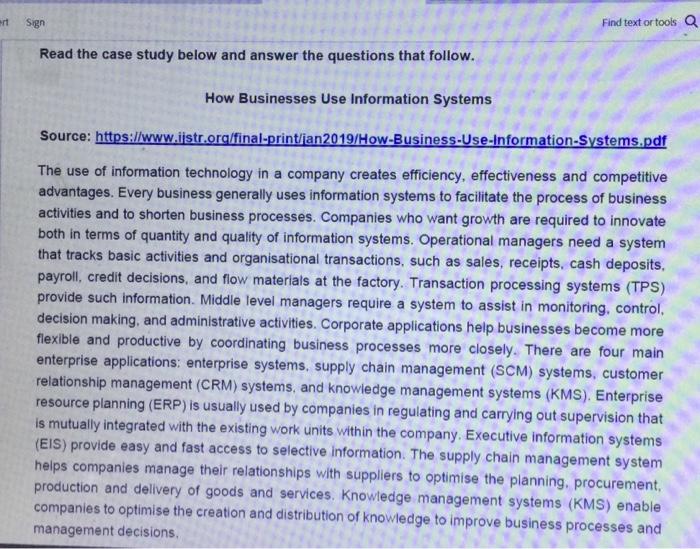
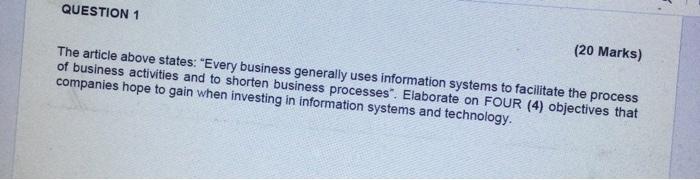
Read the case study below and answer the questions that follow. How Businesses Use Information Systems Source: https://www. iistr.org/final-print/ian2019/How-Business-Use-Information-Systems.pdf The use of information technology in a company creates efficiency, effectiveness and competitive advantages. Every business generally uses information systems to facilitate the process of business activities and to shorten business processes. Companies who want growth are required to innovate both in terms of quantity and quality of information systems. Operational managers need a system that tracks basic activities and organisational transactions, such as sales, receipts, cash deposits, payroll, credit decisions, and flow materials at the factory. Transaction processing systems (TPS) provide such information. Middle level managers require a system to assist in monitoring, control, decision making, and administrative activities. Corporate applications help businesses become more flexible and productive by coordinating business processes more closely. There are four main enterprise applications: enterprise systems, supply chain management (SCM) systems, customer relationship management (CRM) systems, and knowledge management systems (KMS). Enterprise resource planning (ERP) is usually used by companies in regulating and carrying out supervision that is mutually integrated with the existing work units within the company. Executive information systems (EIS) provide easy and fast access to selective information. The supply chain management system helps companies manage their relationships with suppliers to optimise the planning. procurement, production and delivery of goods and services. Knowledge management systems (KMS) enable companies to optimise the creation and distribution of knowledge to improve business processes and management decisions. of business activities and to shorten businesally uses information systems to facilitate the process companies hope to gain when investing in infs processes". Elaborate on FOUR (4) objectives that
Step by Step Solution
There are 3 Steps involved in it

Get step-by-step solutions from verified subject matter experts
 Study Help