







Question: Read the Case Study below and answer the questions that follow: Daimler - Chrysler Merger: A Cultural Mismatch? Introduction In May 1 9 9 8
Read the Case Study below and answer the questions that follow:
DaimlerChrysler Merger: A Cultural Mismatch?
Introduction
In May DaimlerBenz and Chrysler Corporation, two of the world's leading car manufacturers, agreed to combine their businesses in what they claimed to be a "merger of equals." The DaimlerChrysler DCX merger took approximately one year to finalize. The process began when Jurgen Schrempp and Robert Eaton met to discuss the possible merger on January After receiving approval from a number of groups, the merger was completed on November
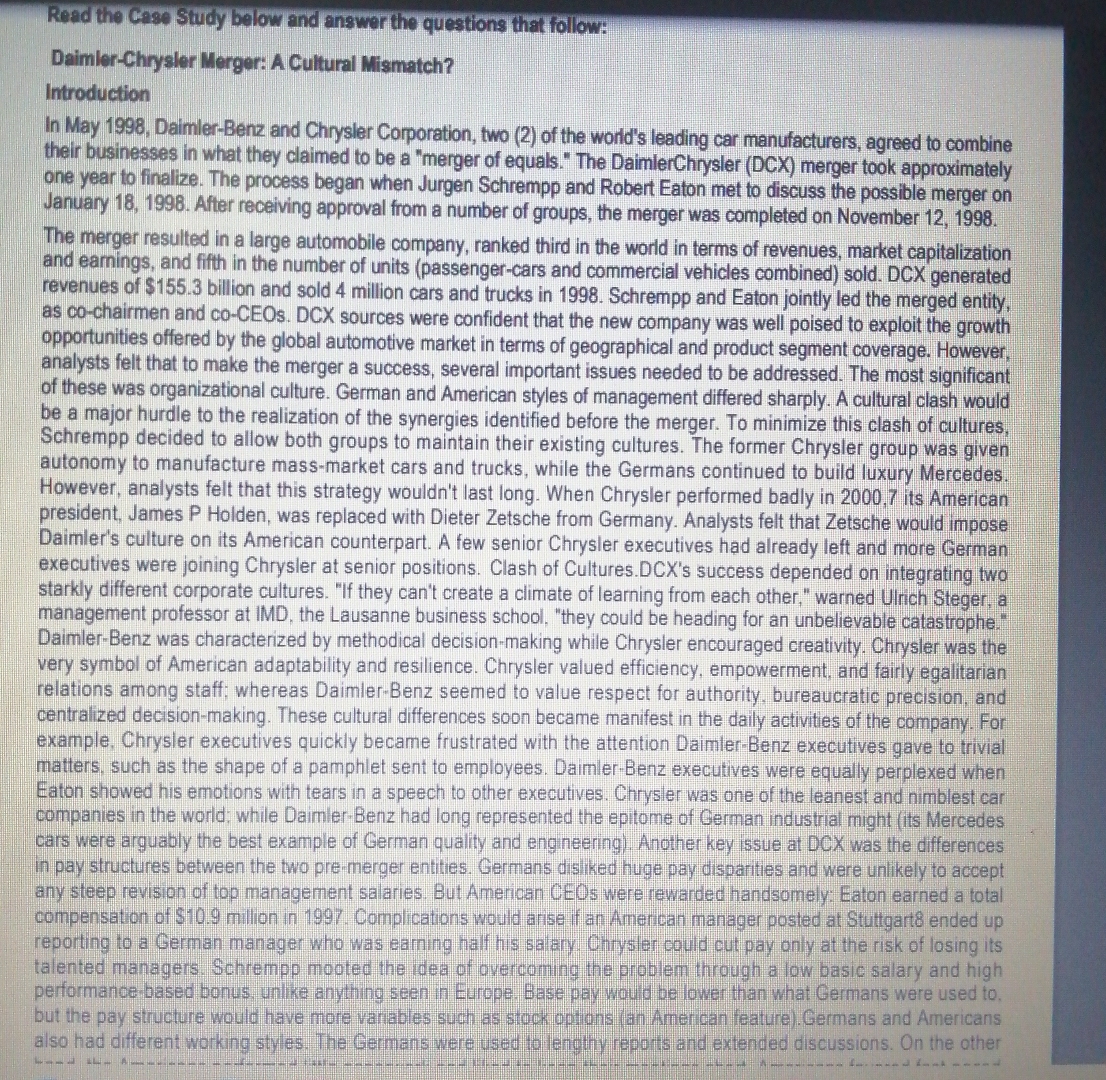
The merger resulted in a large automobile company, ranked third in the world in terms of revenues, market capitalization and eamings, and fifth in the number of units passengercars and commercial vehicles combined sold. DCX generated revenues of $ billion and sold million cars and trucks in Schrempp and Eaton jointly led the merged entity, as cochairmen and coCEOs. DCX sources were confident that the new company was well poised to exploit the growth opportunities offered by the global automotive market in terms of geographical and product segment coverage. However, analysts felt that to make the merger a success, several important issues needed to be addressed. The most significant of these was organizational culture. German and American styles of management differed sharply. A cultural clash would be a major hurdle to the realization of the synergies identified before the merger. To minimize this clash of cultures, Schrempp decided to allow both groups to maintain their existing cultures. The former Chrysler group was given autonomy to manufacture massmarket cars and trucks, while the Germans continued to build luxury Mercedes. However, analysts felt that this strategy wouldn't last long. When Chrysler performed badly in its American president, James P Holden, was replaced with Dieter Zetsche from Germany. Analysts felt that Zetsche would impose Daimler's culture on its American counterpart. A few senior Chrysler executives had already left and more German executives were joining Chrysler at senior positions. Clash of Cultures. DCXs success depended on integrating two starkly different corporate cultures. If they can't create a climate of learning from each other," warned Ulich Steger, a management professor at IMD, the Lausanne business school, "they could be heading for an unbelievable catastrophe. DaimlerBenz was characterized by methodical decisionmaking while Chrysler encouraged creativity. Chrysler was the very symbol of American adaptability and resilience. Chrysler valued efficiency, empowerment, and fairly egalitarian relations among staff; whereas DaimlerBenz seemed to value respect for authority, bureaucratic precision, and centralized decisionmaking. These cultural differences soon became manifest in the daily activities of the company. For example, Chrysler executives quickly became frustrated with the attention DaimlerBenz executives gave to trivial matters, such as the shape of a pamphlet sent to employees. DaimlerBenz executives were equally perplexed when Eaton showed his emotions with tears in a speech to other executives. Chrysler was one of the leanest and nimblest car companies in the world; while DaimlerBenz had long represented the epitome of German industrial might its Mercedes cars were arguably the best example of German quality and engineering Another key issue at was the differences in pay structures between the two premerger entities. Germans disliked huge pay disparities and were unlikely to accept any steep revision of top management salaries. But American CEOs were rewarded handsomely: Eaton earned a total compensation of $ million in Complications would anise if an American manager posted at Stuttgart ended up reporting to a German manager who was eaming half his salary. Chrysler could cut pay only at the risk of losing its talented managers. Schrempp mooted the idea of overcoming the problem through a low basic salary and high performance based bonus. unlike anything seen in Europe. Base pay would be lower than what Germans were used to but the pay structure would have more variables such as stock options an American feature Germans and Americans also had different working styles. The Germans were used to lengthy reports and extended discussions. On the other
Step by Step Solution
There are 3 Steps involved in it
1 Expert Approved Answer
Step: 1 Unlock

Question Has Been Solved by an Expert!
Get step-by-step solutions from verified subject matter experts
Step: 2 Unlock
Step: 3 Unlock
 Study Help