







Question: Read the case study below. OPG will be using a qualitative modelling forecast to assess its demand for technicians. Keeping the Delphi Technique and the
Read the case study below. OPG will be using a qualitative modelling forecast to assess its demand for technicians. Keeping the Delphi Technique and the Nominal Group Technique in mind, discuss which FACTORS should be taken into consideration.
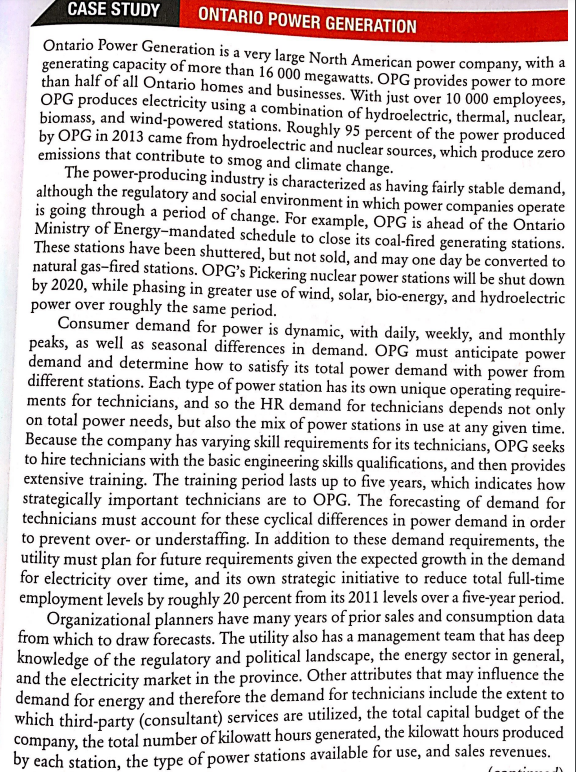
UNTARIO POWER GENERATION Ontario Power Generation is a very large North American power company, with a generating capacity of more than 16000 megawatts. OPG provides power to more than half of all Ontario homes and businesses. With just over 10000 employees, OPG produces electricity using a combination of hydroelectric, thermal, nuclear, biomass, and wind-powered stations. Roughly 95 percent of the power produced by OPG in 2013 came from hydroelectric and nuclear sources, which produce zero emissions that contribute to smog and climate change. The power-producing industry is characterized as having fairly stable demand, although the regulatory and social environment in which power companies operate is going through a period of change. For example, OPG is ahead of the Ontario Ministry of Energy-mandated schedule to close its coal-fired generating stations. These stations have been shuttered, but not sold, and may one day be converted to natural gas-fired stations. OPG's Pickering nuclear power stations will be shut down by 2020 , while phasing in greater use of wind, solar, bio-energy, and hydroelectric power over roughly the same period. Consumer demand for power is dynamic, with daily, weekly, and monthly peaks, as well as seasonal differences in demand. OPG must anticipate power demand and determine how to satisfy its total power demand with power from different stations. Each type of power station has its own unique operating requirements for technicians, and so the HR demand for technicians depends not only on total power needs, but also the mix of power stations in use at any given time. Because the company has varying skill requirements for its technicians, OPG seeks to hire technicians with the basic engineering skills qualifications, and then provides extensive training. The training period lasts up to five years, which indicates how strategically important technicians are to OPG. The forecasting of demand for technicians must account for these cyclical differences in power demand in order to prevent over- or understaffing. In addition to these demand requirements, the utility must plan for future requirements given the expected growth in the demand for electricity over time, and its own strategic initiative to reduce total full-time employment levels by roughly 20 percent from its 2011 levels over a five-year period. Organizational planners have many years of prior sales and consumption data from which to draw forecasts. The utility also has a management team that has deep knowledge of the regulatory and political landscape, the energy sector in general, and the electricity market in the province. Other attributes that may influence the demand for energy and therefore the demand for technicians include the extent to which third-party (consultant) services are utilized, the total capital budget of the company, the total number of kilowatt hours generated, the kilowatt hours produced by each station, the type of power stations available for use, and sales revenues
Step by Step Solution
There are 3 Steps involved in it

Get step-by-step solutions from verified subject matter experts
 Study Help