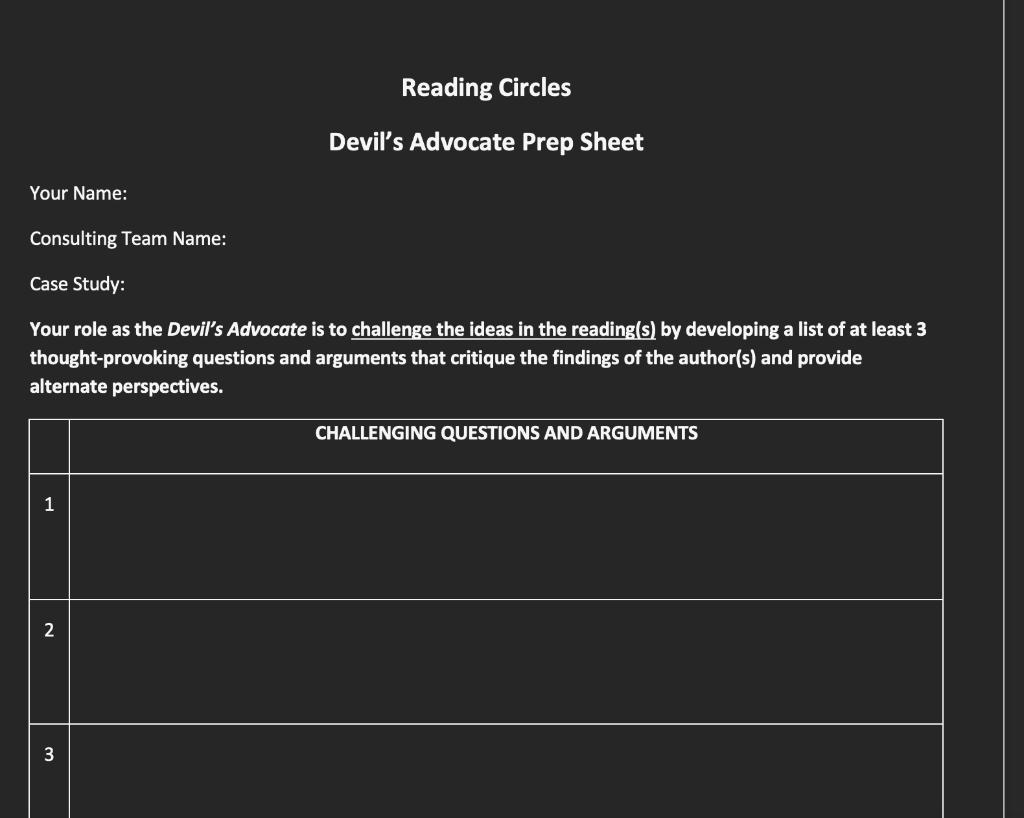
Read the case that is on the first page and then challenge the ideas from it in the second picture (total of 3 )
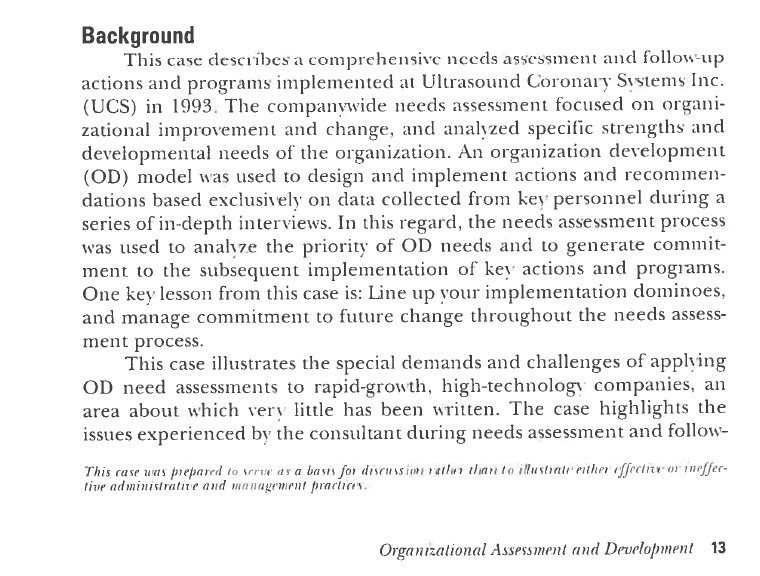
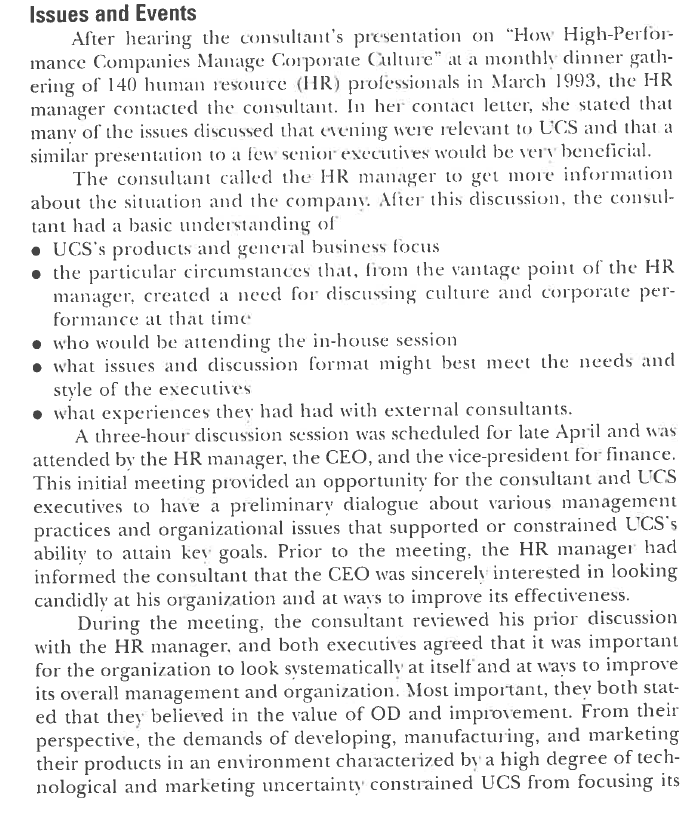
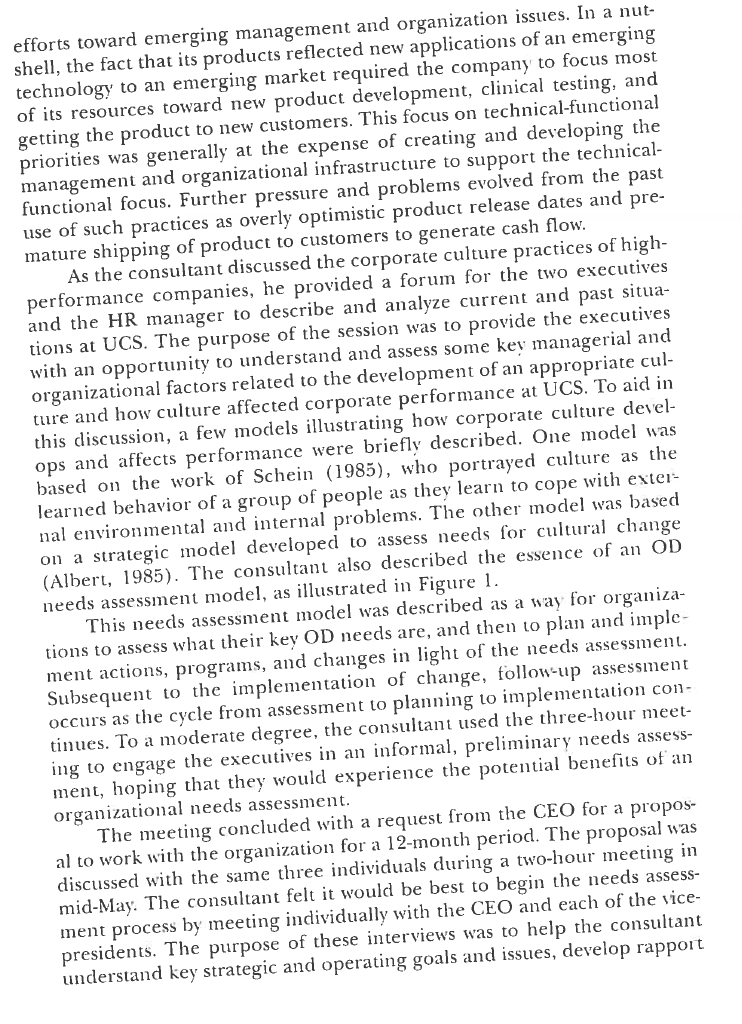
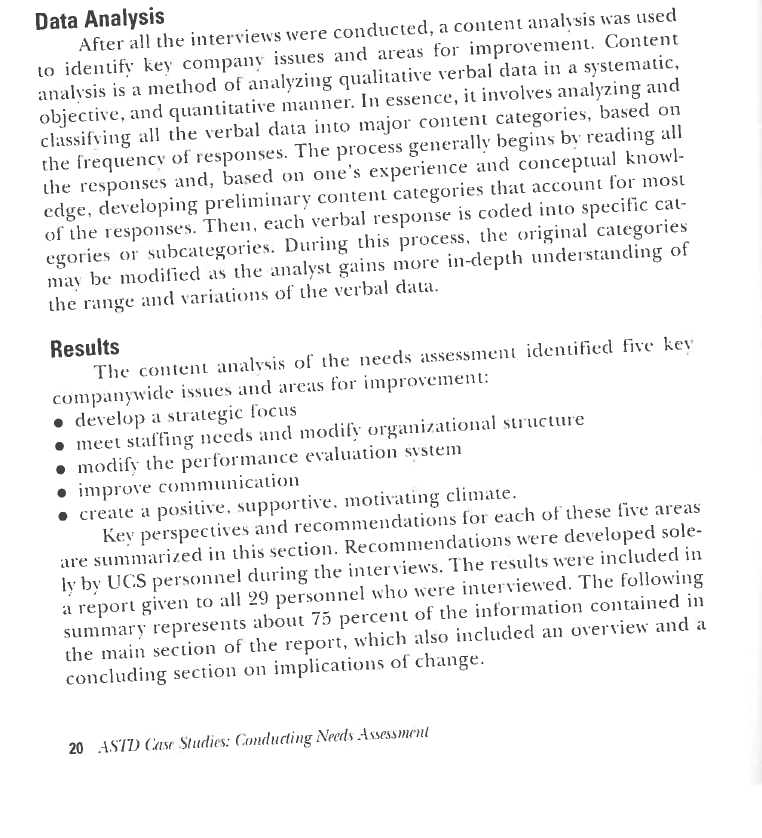
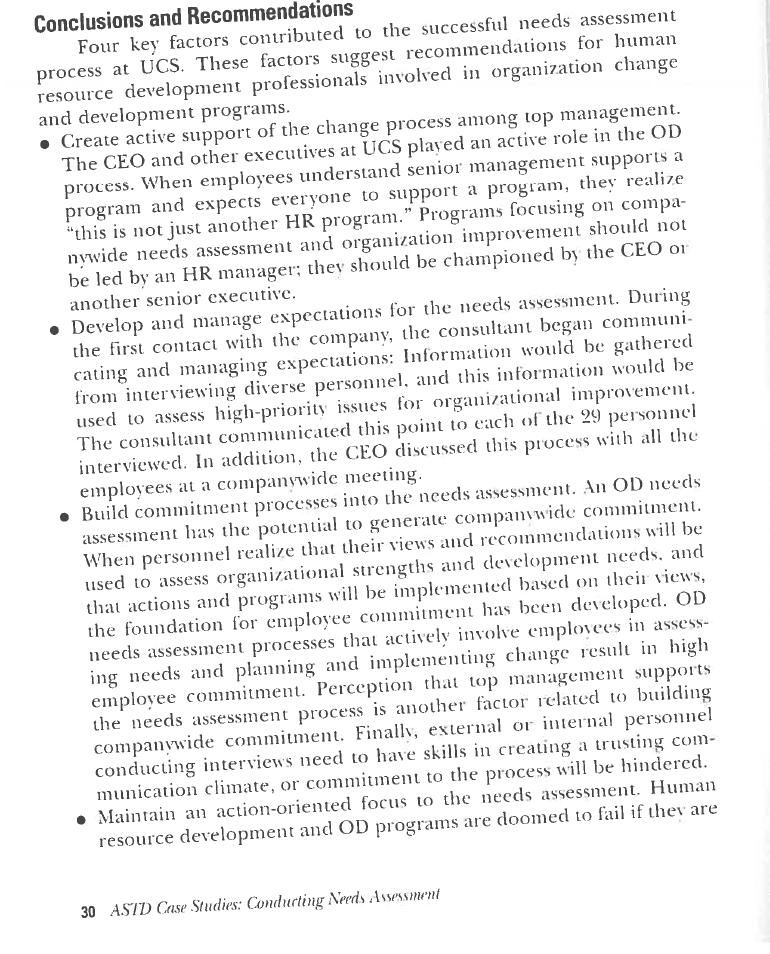
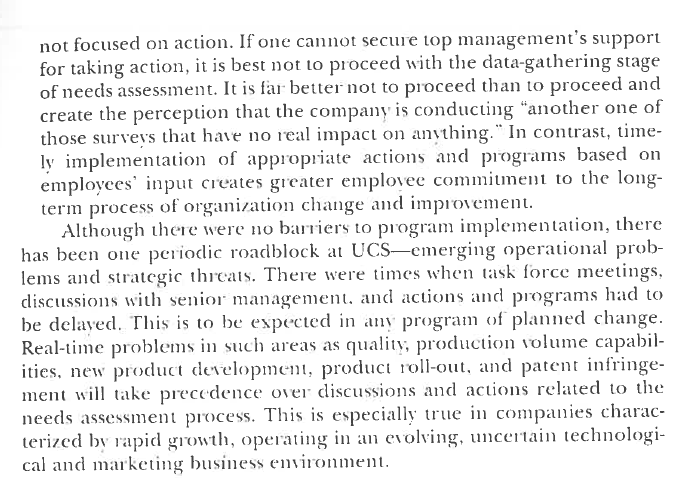
Background This case describes a comprehensive needs assessment and follow-up actions and programs implemented at Ultrasound Coronary Systems Inc. (UCS) in 1993. The companywide needs assessment focused on organi- zational improvement and change, and analyzed specific strengths and developmental needs of the organization. An organization development (OD) model was used to design and implement actions and recommen- dations based exclusively on data collected from key personnel during a series of in-depth interviews. In this regard, the needs assessment process was used to analyze the priority of OD needs and to generate commit- ment to the subsequent implementation of key actions and programs. One key lesson from this case is: Line up your implementation dominoes, and manage commitment to future change throughout the needs assess- ment process. This case illustrates the special demands and challenges of applving OD need assessments to rapid-growth, high-technology companies, an area about which very little has been written. The case highlights the issues experienced by the consultant during needs assessment and follow- This case uus prepared to serve as a basis for discussion ratli lian to illustrate either effective or ineffer live administrative and management practices. Organizational Assessment and Development 13 Issues and Events After hearing the consultant's presentation on "How High-Perfor mance Companies Manage Corporate Culture" at a monthly dinner gath- ering of 140 human resource (HR) professionals in March 1993, the HR manager contacted the consultant. In her contact letter, she stated that many of the issues discussed that evening were relevant to UCS and that a similar presentation to a few senior executives would be very beneficial. The consultant called the HR manager to get more information about the situation and the company. After this discussion, the consul- tant had a basic understanding of UCS's products and general business focus the particular circumstances that, fiom the vantage point of the HR manager, created a need for discussing culture and corporate per- formance at that time who would be attending the in-house session what issues and discussion format might best meet the needs and style of the executives what experiences they had had with external consultants. A three-hour discussion session was scheduled for late April and was attended by the HR manager, the CEO, and the vice-president for finance. This initial meeting provided an opportunity for the consultant and UCS executives to have a preliminary dialogue about various management practices and organizational issues that supported or constrained UCS's ability to attain key goals. Prior to the meeting, the HR manager had informed the consultant that the CEO was sincerely interested in looking candidly at his organization and at ways to improve its effectiveness. During the meeting, the consultant reviewed his prior discussion with the HR manager, and both executives agreed that it was important for the organization to look systematically at itself and at ways to improve its overall management and organization. Most important, they both stat- ed that they believed in the value of OD and improvement. From their perspective, the demands of developing, manufacturing, and marketing their products in an environment characterized by a high degree of tech- nological and marketing uncertainty constrained UCS from focusing its efforts toward emerging management and organization issues. In a nut- shell, the fact that its products reflected new applications of an emerging technology to an emerging market required the company to focus most of its resources toward new product development, clinical testing, and getting the product to new customers. This focus on technical-functional priorities was generally at the expense of creating and developing the management and organizational infrastructure to support the technical- functional focus. Further pressure and problems evolved from the past use of such practices as overly optimistic product release dates and pre- mature shipping of product to customers to generate cash flow. As the consultant discussed the corporate culture practices of high- performance companies, he provided a forum for the two executives and the HR manager to describe and analyze current and past situa- tions at UCS. The purpose of the session was to provide the executives with an opportunity to understand and assess some key managerial and organizational factors related to the development of an appropriate cul- ture and how culture affected corporate performance at UC$. To aid in this discussion, a few models illustrating how corporate culture devel- ops and affects performance were briefly described. One model was based on the work of Schein (1985), who portrayed culture as the learned behavior of a group of people as they learn to cope with exter- nal environmental and internal problems. The other model was based on a strategic model developed to assess needs for cultural change (Albert, 1985). The consultant also described the essence of an OD needs assessment model, as illustrated in Figure 1. This needs assessment model was described as a way for organiza- tions to assess what their key OD needs are, and then to plan and imple- ment actions, programs, and changes in light of the needs assessment. Subsequent to the implementation of change, follow-up assessment occurs as the cycle from assessment to planning to implementation con- tinues. To a moderate degree, the consultant used the three-hour meet- ing to engage the executives in an informal, preliminary needs assess- ment, hoping that they would experience the potential benefits of an organizational needs assessment. The meeting concluded with a request from the CEO for a propos- al to work with the organization for a 12-month period. The proposal was discussed with the same three individuals during a two-hour meeting in mid-May. The consultant felt it would be best to begin the needs assess- ment process by meeting individually with the CEO and each of the vice- presidents. The purpose of these interviews was to help the consultant understand key strategic and operating goals and issues, develop rapport Data Analysis After all the interviews were conducted, a content analysis was used to identify key company issues and areas for improvement. Content analysis is a method of analyzing qualitative verbal data in a systematic, objective, and quantitative manner. In essence, it involves analyzing and classifving all the verbal data into major content categories, based on the frequency of responses. The process generally begins by reading all the responses and, based on one's experience and conceptual knowl- edge, developing preliminary content categories that account for most of the responses. Then, each verbal response is coded into specific cat- egories or subcategories. During this process, the original categories may be modified as the analyst gains more in-depth understanding of the range and variations of the verbal data. Results The content analysis of the needs assessment identified five kev companywide issues and areas for improvement: develop a strategic focus meet staffing needs and modify organizational structure modify the performance evaluation system improve communication create a positive, supportive, motivating climate. Key perspectives and recommendations for each of these five areas are summarized in this section. Recommendations were developed sole- ly by UCS personnel during the interviews. The results were included in a report given to all 29 personnel who were interviewed. The following summary represents about 75 percent of the information contained in the main section of the report, which also included an overview and a concluding section on implications of change. 20 ASTD Case Studies: Conducting Needs Assessment Conclusions and Recommendations Four key factors contributed to the successful needs assessment process at UCS. These factors suggest recommendations for human resource development professionals involved in organization change and development programs. Create active support of the change process among top management. The CEO and other executives at UCS played an active role in the OD process. When employees understand senior management supports a program and expects everyone to support a program, they realize "this is not just another HR program." Programs focusing on compa- nywide needs assessment and organization improvement should not be led by an HR manager; they should be championed by the CEO ON another senior executive. Develop and manage expectations for the needs assessment. During the first contact with the company, the consultant began communi- cating and managing expectations: Information would be gathered from interviewing diverse personnel, and this information would be used to assess high-priority issues for organizational improvement. The consultant communicated this point to each of the 29 personnel interviewed. In addition, the CEO discussed this process with all the employees at a companywide meeting, Build commitment processes into the needs assessment. An OD needs assessment has the potential to generate companvwide commitment. When personnel realize that their views and recommendations will be used to assess organizational strengths and development needs, and that actions and programs will be implemented based on their views, the foundation for employee commitment has been developed. OD needs assessment processes that actively involve emplovees in assess- ing needs and planning and implementing change result in high employee commitment. Perception that top management supports the needs assessment process is another factor related to building companywide commitment. Finally, external or internal personnel conducting interviews need to have skills in creating a trusting com- munication climate, or commitment to the process will be hindered. Maintain an action-oriented focus to the needs assessment. Human resource development and OD programs are doomed to fail if they are 30 ASTD Case Studies: Conducting Needs Assessment not focused on action. If one cannot secure top management's support for taking action, it is best not lo proceed with the data-gathering stage of needs assessment. It is far better not to proceed than to proceed and create the perception that the company is conducting another one of those surveys that have no real impact on anything." In contrast, time- ly implementation of appropriate actions and programs based on employees' input creates greater emplovee commitment to the long- term process of organization change and improvement. Although there were no barriers to program implementation, there has been one periodic roadblock at UCS-emerging operational prob- lems and strategic threats. There were times when task force meetings, discussions with senior management, and actions and programs had to be delaved. This is to be expected in any program of planned change. Real-time problems in such areas as quality, production volume capabil- ities, new product development, product roll-out, and patent infringe- ment will take precedence over discussions and actions related to the needs assessment process. This is especially true in companies charac- terized by rapid growth, operating in an evolving, uncertain technologi- cal and marketing business environment. Reading Circles Devil's Advocate Prep Sheet Your Name: Consulting Team Name: Case Study: Your role as the Devil's Advocate is to challenge the ideas in the reading(s) by developing a list of at least 3 thought-provoking questions and arguments that critique the findings of the author(s) and provide alternate perspectives. CHALLENGING QUESTIONS AND ARGUMENTS 1 2 3




