







Question: Read the Custom Drapes Inc. Case Study For the paper answer the following questions: 1. What has set this business apart from other similar businesses?
Read the Custom Drapes Inc. Case Study For the paper answer the following questions:
1. What has set this business apart from other similar businesses? Who is their market? 2. It is mentioned in the article that 18% of the factory work must be reworked during production. What impact(s) does the rework have? 3. Regional furniture stores have asked Custom Drapes Inc. to manufacture draperies for them. These are not custom drapes and would be sold in the store. Do you see any problems with this? If so, what and if not, why not? 4. Lilly has a plan to make the manufactured non-custom drapes and there are several sizable costs involved. The new drapes will be priced at $100, and her typical cost would be $78.90. Do you think this is enough margin on the drapes? If you think it is, why? If you think there are problems here, name them. 5. What would be your recommendations to Lilly about how to run her business and what she should be focusing on? Can she be everything to everyone?
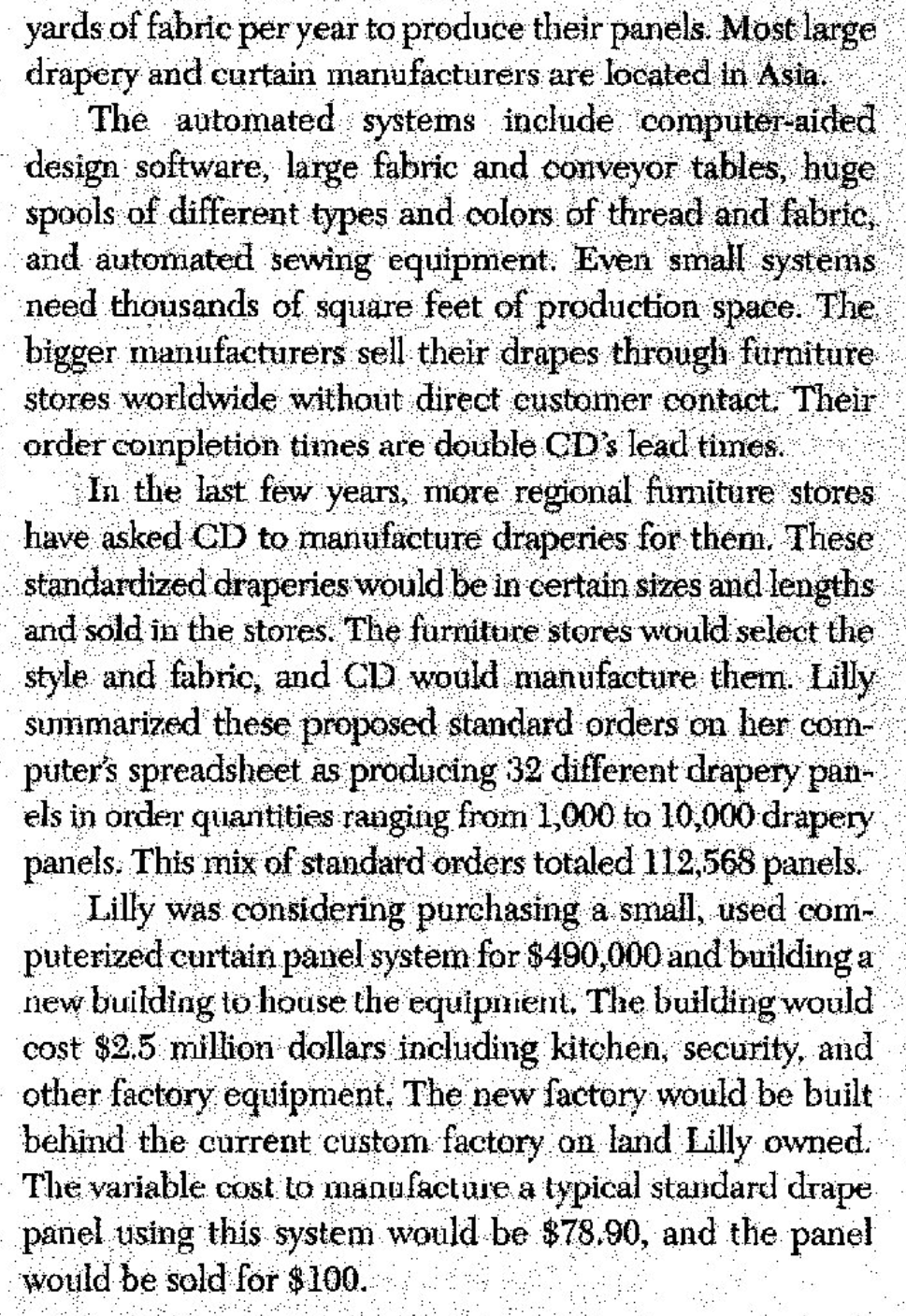
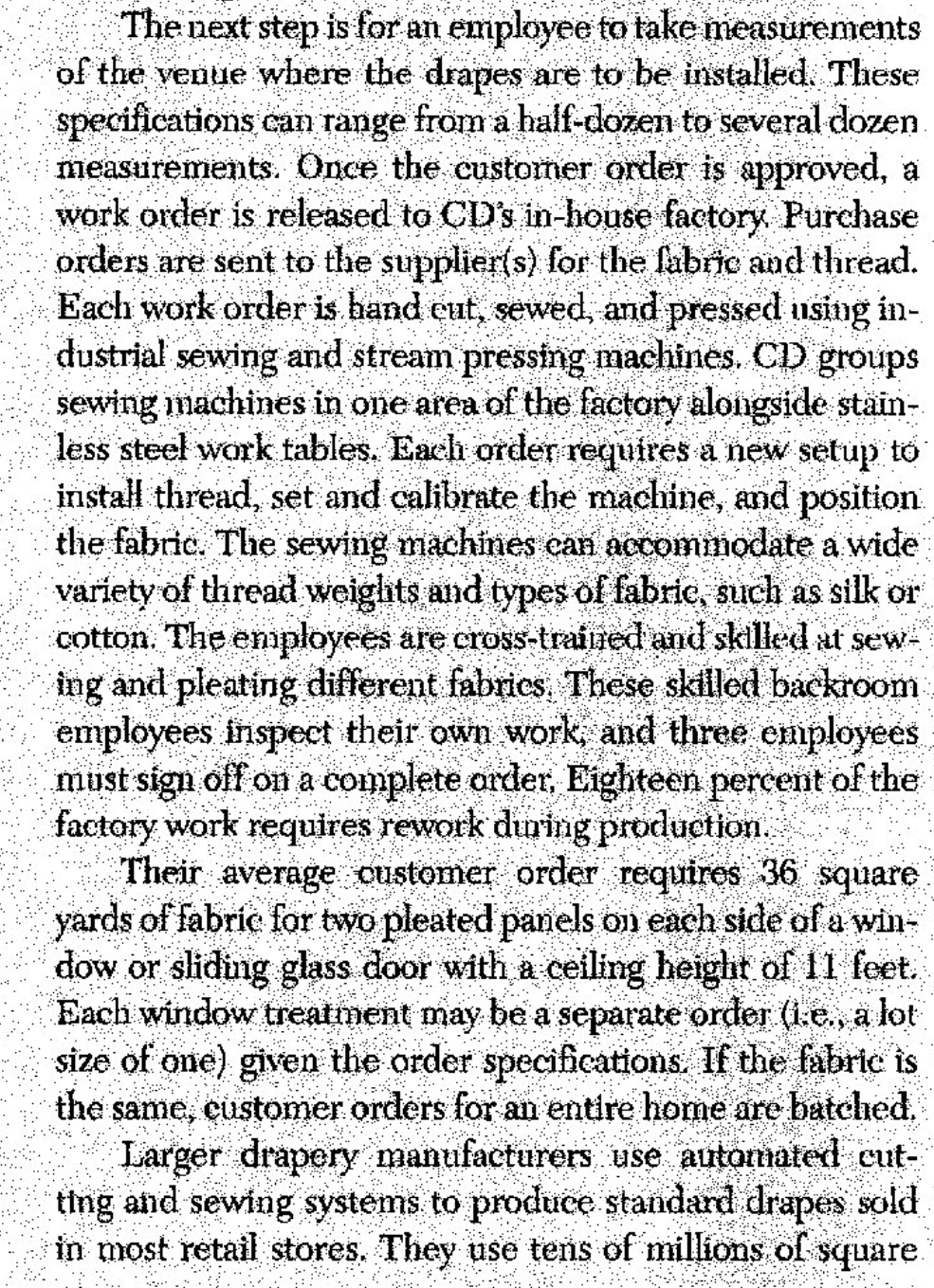
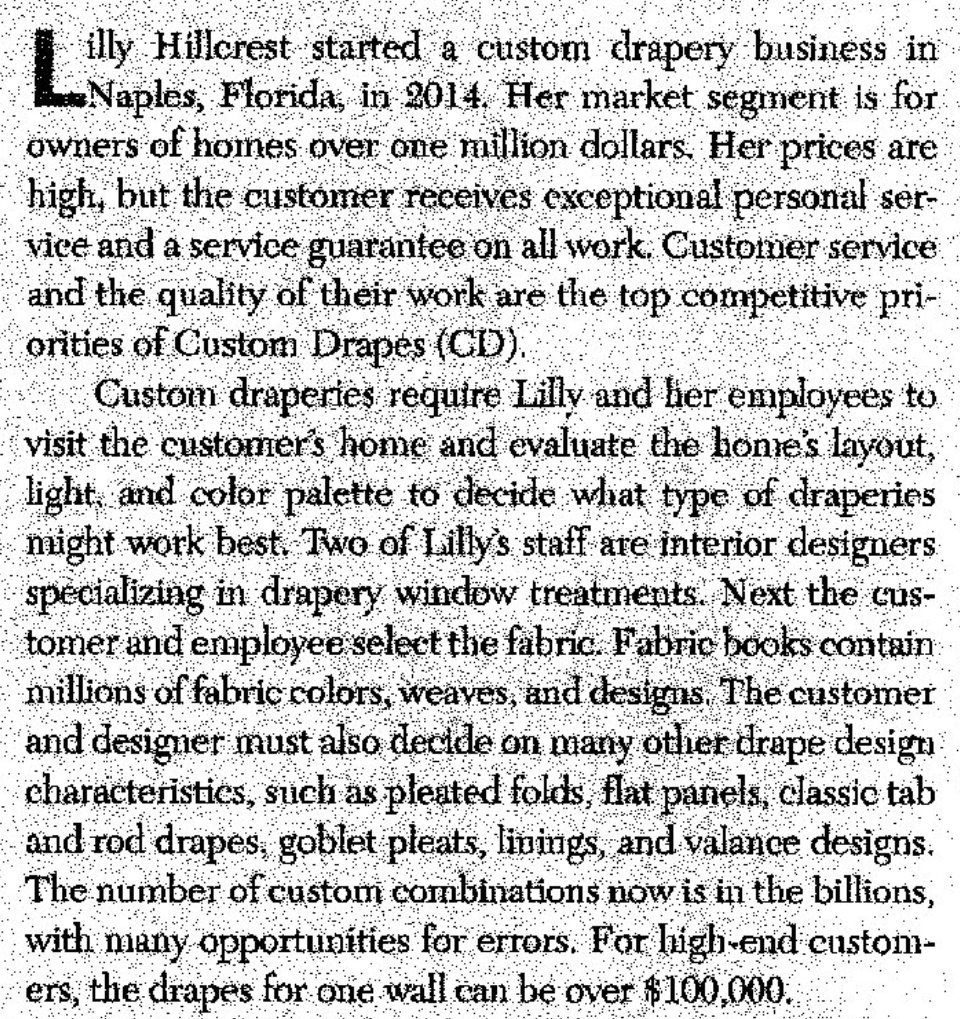
The next step is for an employee to take neasurements of the venue where the drapes are to be installed. These specifications can range from a half-dozen to several dozen meastirements Once the customer order is opproved, a work order is released to CD's in-house factory Purchase orders are sent to the supplierst for the fabto and thread. Each work order is band ent, sewed, and pressed using industral sewing and stream pressng nachines. CD groups sewing machines in one area of the factory alongside stainless steel work tables. Each order requires a new setup to install thread, set and calibrate the machine, and position the fabru. The sewing machines can accommodate a wide variety of thread veights and types of fabrie, such as silk or cotton The enployees are cross-trained and sklled at sewing and pleating different fabries. These skilled backroom employees nispect their own work, and three enployees must sign off on a complete order, Eighteen percent of the factory work requires rework dunig production. Their average oustomer order requires 36 square yards of fabric for two pleated panels on each side of a window or sliding glass door with a celling height of 11 feet. Each window treathent may be a se parate order fle, a lot size of one) given the order specifications If the fabric is the same, customer orders for an entire home are batched. Jarger drapery manufacturers use autontated cutthing and sewing systems to produce standard drapes sold in most retal stores. They use tens of millions of square yards of fabric per year to produce their panels Most large drapery and curtain manufacturers are 10catednAsia. The automated systems include computer ained design software, large fabric and conveyor tables, huge spools of different types and colons of thread and fabric, and autonated sewing equipment Even small systens need thousands of square feet of production space. The bigger manufacturers sel then drapes through furniture stores worldwide withat direct eustomer contact Their order completion times are double CD s lead times. In the last few years, more regional fumiture stores have asked CD to manufacture draperies for then, These standardized draperies would be in certain sizes and lengths and sold in the stores. The furniture stores would select the style and fabric, and Cl would manufacture them Lilly summarized these proposed standard orders on her computers spreadsheet as producing 32 different drapery panels in order quantities raiging from 1,000 to 10,000 drapery panels This mix of standard onders totaled 112,568 panels. Lilly was considering purchasing a small, used computerized curtain parel system for $490,000 and building a new building to house the equipment. The building would cost $2.5 million dollars noluding kitchen, security, and other factory equipment The new factory would be built behind the current custom factory on land Lilly owned. The yariable cost to manufacture a typical standard drape panel using this system would be $78,90, and the panel would be sold for $100. I1ly Hillcrest started a custom drapery business in aNaples, Florida, in 2014 Her market segment is for owners of homes over one millon dollars Her prices are high, but the customer receives exceptional personal ser viee and a service guarantee on all work Customer service and the quality of their work are the top competitive prionties of Custom Drapes (CV). Custom draperies require Lilly and her employees to visit the customers home and cualuate the lones layout, light and color palette to decide what type of draperies nught work best. Two of Lilly's staff are intenor destgners specalizing in draper window treatments. Next the costomer and enployee select the fabric rabric books contain millions of fabic colors, weaves, and desigis. The customer and designer nust also declde on many other drape design characteristics, such as pleated folds flat panels, classic tab and rod drapes, goblet pleats, linings, and valance designs. The number of custon combinations now is th the billions; with nuny opportunities for errors. For lighlend customers, the drapes for one wall can be over 100,000
Step by Step Solution
There are 3 Steps involved in it

Get step-by-step solutions from verified subject matter experts
 Study Help